Kalanchoe Care: Watering, Light and Getting Your Christmas Kalanchoe to Rebloom

Kalanchoe care is simple. Give it bright light, water only when the soil has dried out, and keep it warm, above about 50°F. It is a succulent with thick, water-storing leaves, so too much water is the main thing that kills it. If you remember nothing else, remember to let the pot dry between drinks.
Getting it to bloom again is the part people ask about most, and it is easier than it sounds. Kalanchoe sets flower buds when nights are long, so about six weeks of 14-hour dark nights in fall usually brings a fresh crop of flowers by winter. That red, pink or yellow plant you got as a holiday or hostess gift can easily last for years.
Key facts
- Water: soak, then let the top inch or two dry before watering again
- Light: bright, with some direct sun in winter
- Rebloom: about 6 weeks of 14-hour dark nights
- Outdoors year round only in about zones 10 to 12
- The ASPCA lists kalanchoe as toxic to cats and dogs
The kalanchoe checker below asks two things. Pick your zone: zone 8 or colder, zone 9, or zones 10 to 12. Then pick where it sits indoors: a sunny south or west window, a bright east window, or a dim room or north window. You get a watering schedule, an answer on whether it can live outdoors where you are, and the long-night routine to rebloom.
Garden Advice Guide · free calculator
Kalanchoe Checker by Zone: Watering, Rebloom and Outdoor Living
Pick your zone and the light your kalanchoe gets. You get a watering schedule, whether it can live outdoors and the long-night routine to rebloom.
Need more? Open the free Frost Dates.
 Planting Zones
 Frost Dates
 Planting Calendar
Quick reference: kalanchoe by window
| Where it sits | Typical watering indoors | Light verdict |
|---|---|---|
| Sunny south or west window | About every 7 to 10 days | Ideal in winter; sheer curtain in summer |
| Bright east window | About every 10 to 14 days | Good; blooms well |
| Dim room or north window | About every 2 to 3 weeks | Too dim; stems stretch, few flowers |
Which kalanchoe do you have?
The holiday plant in stores is almost always florist kalanchoe, Kalanchoe blossfeldiana, from Madagascar. It has glossy, scalloped, dark green leaves and tight clusters of small four-petaled flowers in red, pink, orange, yellow or white. Calandiva is a popular double-flowered strain with little rose-like blooms. Growers time these plants to flower for December, so they are often sold as Christmas kalanchoe.
Other kalanchoes are grown more for their leaves. Panda plant has fuzzy silver leaves with brown tips, paddle plant has flat, round leaves that blush red in sun, and mother of thousands grows tiny plantlets along its leaf edges. They share the same basic needs, bright light and dry soil, but this guide focuses on the flowering florist type.
Watering a succulent that flowers
Push a finger an inch or two into the pot. If it is dry, water slowly until water runs out the bottom, then empty the saucer after 10 minutes. If it still feels damp, wait a few days and check again. That simple test beats any fixed schedule.
In a warm, sunny room that might mean watering every week or so. In a cool winter room it can stretch to every two or three weeks. Plants in bloom drink a little more than resting plants, and clay pots dry faster than plastic ones.
The leaves tell you how you are doing. Thick, firm, plump leaves mean the plant is happy. Wrinkled, thin or soft-but-dry leaves mean it is thirsty. Yellow, translucent leaves, soft black stems, or a plant that wobbles in the pot mean too much water and possible root rot. If you are not sure which you are seeing, our guide to overwatered vs underwatered succulents walks through three quick checks that work for kalanchoe too.
Light: the brighter the better
Kalanchoe wants bright light all year. In winter, a south or west window with direct sun is ideal, because winter sun is weak and days are short. An east window is a good second choice. In summer, the same south or west window can be hot enough to redden or scorch leaves, so pull the plant back a foot or use a sheer curtain.
In a dim room or north window, the stems stretch toward the light, the gaps between leaves get longer, and new flowers rarely form. If that is the only spot you have, a small grow light on a timer for 10 to 12 hours a day helps a lot, but turn it off at night once you start the rebloom routine. Our grow lights for houseplants guide covers distances and hours.
Soil, pots and the foil sleeve
Use a cactus or succulent mix, or regular potting mix with about a third perlite or coarse sand stirred in, in a pot with a drainage hole. Terracotta is a good choice because it breathes and dries quickly. Most gift kalanchoes come wrapped in foil or a decorative sleeve with no drainage. Take it off or poke holes in the bottom so water cannot pool around the roots, which is one of the quickest ways to lose a holiday plant.
Kalanchoe likes to be a little snug. Repot in spring only when roots fill the pot, and go just one size bigger. Feed with a diluted houseplant or succulent fertilizer about once a month from spring through summer, and stop in fall and winter.
After the flowers fade
A gift kalanchoe often blooms for six to eight weeks. When the flowers turn brown, snip the old flower stalks back to the first set of healthy leaves. Keep the plant in bright light and water a little less for a month or so while it rests. It will put out new leaves for a while, which is normal.
In spring, pinch back leggy stems by an inch or two to keep the plant bushy and compact. Bushier plants have more stem tips, and more stem tips mean more flower clusters next winter. Stop pinching by late summer so the plant has time to mature before the rebloom routine.
The long-night rebloom routine
Kalanchoe is a short-day plant, which means it sets buds when nights are long and uninterrupted, the same trick used for poinsettias and holiday cactus. Here is how to do it.
Start about six to eight weeks before you want flowers. For blooms around the holidays, that is roughly late September to early October. Every evening, give the plant 14 hours of real darkness: a closet, a spare room with no lamps, or a cardboard box over the plant all work. Even a few minutes of lamp light in the middle of the night can reset the clock. Each morning, bring it back into bright light so it still gets about 10 hours of good daylight. Water lightly during this time and skip the fertilizer.
Here is a worked example. Say you start on October 1. Each night you cover the plant at 6 pm and uncover it at 8 am. By about mid November, after roughly six weeks, you should see small clusters of buds at the stem tips. Stop the dark routine then, keep the plant in bright light, and the buds usually open over the next three to four weeks, right around mid December.
If that sounds fussy, there is an easier way. Put the plant in a bright spare room you do not use at night, starting in early fall. Natural long nights in October and November often do the job on their own, as long as no one switches on a light. A healthy plant may also rebloom in late winter or spring without any help.
Growing new plants from cuttings
Kalanchoe roots easily. In spring or early summer, cut a stem tip 3 to 4 inches long, pull off the lowest pair of leaves, and let the cut end dry for two or three days until it forms a callus. Then push it an inch deep into dry or barely damp succulent mix. Keep it in bright, indirect light and water lightly once the mix dries. Roots usually form in about two to three weeks; a gentle tug that meets resistance tells you it has taken. The spring pinchings from your main plant make perfect cuttings, and a single leaf with its stalk will often root too, just more slowly.
Can kalanchoe live outdoors?
Only in warm places. Kalanchoe can stay outdoors year round in about zones 10 to 12, in a spot with morning sun and some afternoon shade and soil that drains fast. In zone 9, it can grow outside much of the year but needs to come inside or be covered on frosty nights, because frost turns the juicy leaves to mush. Our guide on how to protect plants from frost explains covers that work for one cold night.
In zone 8 and colder, treat it as a houseplant that can spend summer outside. Move it out once nights stay above about 50°F, starting in light shade for a week so the leaves do not burn, and bring it back before cool fall nights. Our frost dates by ZIP code tool shows your average first fall frost. Not sure of your zone? Use the growing zone finder. If you want succulents that actually survive cold winters outdoors, see our list of cold hardy succulents.
Pests and problems
Soft, black or mushy stems mean root rot from too much water. Let the plant dry out, cut off any soft parts, take healthy stem tips as cuttings, and repot what is left in dry cactus mix. Tall, stretched stems mean too little light. Leaves dropping in winter usually point to cold drafts or a sudden move. White, powdery spots are powdery mildew, which shows up in still, humid air; remove spotted leaves and give more air and light, and see our powdery mildew treatment guide.
Mealybugs look like small tufts of white cotton tucked where leaves meet the stem. Aphids cluster on flower buds and new growth. Wipe or rinse them off and check every few days; our aphid guide covers the simple water method. Your local cooperative extension office can help with anything you cannot identify.
Is kalanchoe safe around pets?
No. The ASPCA lists kalanchoe as toxic to cats and dogs. Chewing it can cause vomiting and diarrhea, and in rare cases it can affect the heart rhythm. Set it up high or in a room your pets do not use, and do not try home remedies. If you think your pet ate some, call your vet or the ASPCA Animal Poison Control Center right away.
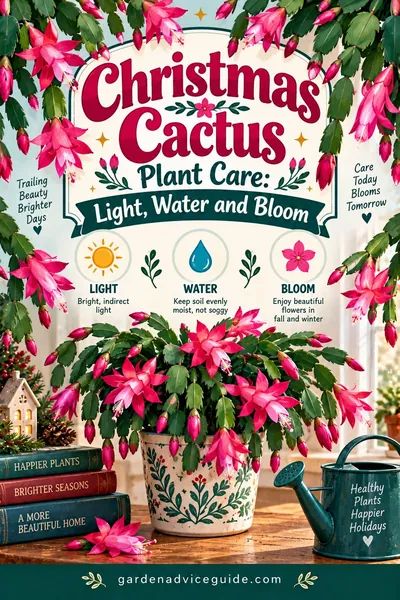
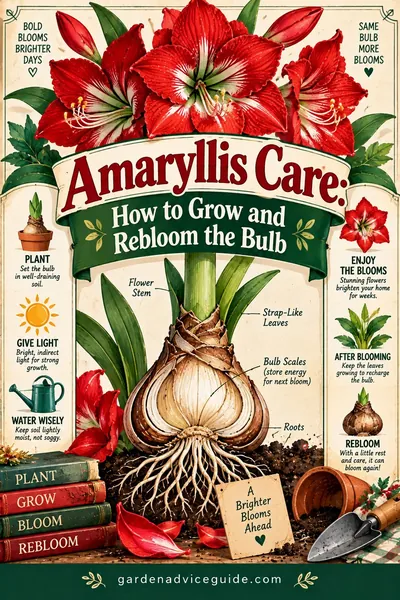
For a pet-safe holiday plant, the ASPCA lists Christmas cactus as non-toxic; see our Christmas cactus plant care guide. If you received several gift plants this season, our poinsettia care and amaryllis care guides will help too, and the Garden Advice Guide home page has frost and zone lookups.
Quick answers about kalanchoe
How often should you water a kalanchoe?
Only when the soil is dry an inch or two down. That is often about once a week in a warm, sunny room and every two to three weeks in a cool winter room. Water until it drains, then always empty the saucer so the roots never sit in water.
How do you get a kalanchoe to bloom again?
Give it about six weeks of long nights, with 14 hours of real darkness each night and bright light during the day. Start in late September or early October for holiday flowers. When buds appear, stop the routine and the flowers open over the next few weeks.
What do you do with a kalanchoe after it blooms?
Snip the old flower stalks back to healthy leaves, keep it in bright light, and water a little less while it rests. Pinch leggy stems in spring to keep it bushy, feed monthly through summer, then start the long-night routine in early fall.
Is kalanchoe an indoor or outdoor plant?
Both. It is grown indoors in most places and can live outdoors year round only in about zones 10 to 12. In zone 9 it needs cover on frosty nights. Elsewhere it can summer outside once nights stay above about 50°F, then come back in before fall.
Why is my kalanchoe getting tall and leggy?
It needs more light. Move it to a south or west window, or add a grow light, and pinch the stems back by an inch or two in spring. Root the pinched tips as cuttings to fill out the pot or start new plants.
Can I root a kalanchoe cutting?
Yes. Cut a 3 to 4 inch stem tip, remove the lowest leaves, and let the end dry for two or three days. Push it into succulent mix, keep it in bright, indirect light and water lightly. Roots usually form in two to three weeks.
Is kalanchoe toxic to cats and dogs?
Yes. The ASPCA lists kalanchoe as toxic to cats and dogs, with vomiting and diarrhea and, rarely, heart rhythm changes. Keep it out of reach, and if your pet chews it, call your vet or the ASPCA Animal Poison Control Center right away.