Grow Lights for Houseplants: Do You Need One, How Many Hours and How Far Away

Most houseplants get by without a grow light in summer, but many need one in winter. If a plant sits more than about 6 feet from a window, lives by a north window, or is stretching and leaning toward the glass, a grow light is the fix. Use a full-spectrum white LED, hang it about 12 to 24 inches above leafy plants (closer for herbs and succulents), and run it about 10 to 14 hours a day on a timer.
That covers the basics, and the details depend on the plant. A snake plant in a dim hallway wants far less than a pot of basil on the kitchen counter. Below you will find a chart of hours and distances by plant type, how to tell if your plant is short on light, how to choose between bulbs, bars and panels, and the mistakes that make a good light useless.
Key facts
- Full-spectrum white LEDs are the easy choice for a home.
- Most houseplants want about 8 to 14 hours of light a day, daylight included.
- Give every plant at least about 8 hours of darkness.
- Start leafy plants 12 to 24 inches below the light; herbs and succulents 6 to 12.
- Keep lights off Christmas cactus and poinsettias in fall while they set buds.
The grow light checker below gives you a starting point for your own spot. Choose your window, from a south window, an east or west window, a north window, or no window or a dark corner. Then choose your plant: low-light foliage such as snake plant, pothos or ZZ; medium-light foliage such as philodendron, calathea or ferns; flowering plants such as African violet or orchid; or succulents, cacti and herbs. It tells you whether the plant needs a grow light, how many hours to run it and how high to hang it.
Garden Advice Guide · free calculator
Grow Light Checker: Hours and Hanging Distance for Your Plant
Pick your window and the kind of plant. You get whether it needs a grow light, how many hours to run it and how high to hang it.
Need more? Open the free Frost Dates.
 Planting Zones
 Frost Dates
 Planting Calendar
Quick reference: hours and hanging distance
| Plant type | Light a day | Start the light at |
|---|---|---|
| Low-light foliage (snake plant, pothos, ZZ) | 8 to 10 hours | 18 to 24 inches |
| Medium-light foliage (philodendron, calathea, ferns) | 10 to 12 hours | 12 to 18 inches |
| Flowering (African violet, orchid) | 12 to 14 hours | 8 to 12 inches |
| Succulents, cacti, herbs | 12 to 14 hours | 6 to 12 inches |
| Seedlings | 14 to 16 hours | 2 to 6 inches (low-power strips) |
Distances are starting points for typical full-spectrum LEDs. Always check the maker's suggested distance too, since stronger lights need more room.
Signs your plant is short on light
Plants run on light the way we run on food, and they show hunger in a few clear ways. New growth comes in pale, small or stretched out, with long bare stem between the leaves. The whole plant leans hard toward the window, even after you turn the pot. Variegated leaves, the ones with white, cream or yellow patterns, slowly turn plain green as the plant tries to make more chlorophyll. Flowering plants such as African violets or orchids stop blooming.
Light shortage also makes watering harder. A plant in dim light uses water slowly, so the soil stays wet longer and roots can rot. If leaves are yellowing and the soil feels damp days after watering, low light may be part of the story. Our watering guide helps you sort out the watering side.
What your window really gives in winter
From November to February, days are short and the sun sits low. A window that flooded a plant with light in July may give only a fraction of that in January. Direction matters too.
A south window in the Northern Hemisphere is the brightest spot in most homes and often needs no grow light at all for foliage plants, though herbs and succulents may still want a boost on cloudy weeks. East and west windows give a few hours of direct sun each day; foliage plants usually manage there, while flowering plants and herbs often do better with a few extra hours of lamp light. A north window gives soft, indirect light all day, which suits low-light plants but leaves most others hungry in winter. A dark corner or a room with no window needs a grow light for nearly any plant.
Distance from the glass counts as much as direction. Light drops quickly as you move into a room, so a plant 8 feet back from a bright window may be in deep shade.
Picking a light: bulbs, bars and panels
For a home, a full-spectrum white LED is the simple answer. It looks like normal light in a living room, uses little electricity and runs cool, so it will not scorch leaves at a sensible distance.
Choose the shape by how many plants you have. A grow bulb screws into a regular lamp or clip light and suits one or two plants. Light bars or strips mount under a shelf, which is perfect for a plant shelf, a row of herbs or a seed-starting rack. Panels cover a wider area, like a table full of plants.
Purple or pink lights that give only red and blue light grow plants fine, but they look odd in a home and make it hard to spot pests or yellowing leaves. Most people are happier with white. Old-style incandescent bulbs give off a lot of heat and little useful light, so skip those.
Setting the timer: light hours and dark hours
Count the total light the plant gets, daylight plus lamp. Low-light foliage plants are happy with about 8 to 10 hours. Medium-light foliage wants about 10 to 12. Flowering houseplants, succulents, cacti and herbs want about 12 to 14, and seedlings about 14 to 16.
Darkness matters as much as light. Plants use the night to rest, so give them at least about 8 hours of dark. Running a light 24 hours a day does not help and can stress the plant. A plug-in timer is the single best grow light accessory you can buy, because it keeps the schedule steady on days you forget. Setting the lamp to run from early morning into late afternoon usually lines it up nicely with the daylight the plant already gets.
Getting the height right
Light weakens fast with distance, so height is where most setups go wrong. Use the chart above as a starting point, then read the plant. If it is still stretching after two weeks, move the light a few inches closer or add an hour. If leaves are bleaching, curling, or getting crispy brown patches on the top surface, move the light farther away.
Make one change at a time and give it a week or two before judging. New leaves show the difference first, because the leaves already on the plant were built under the old light. Plants with a wide spread, such as a big fern, may need the light raised so it covers the whole plant rather than blasting the middle.
A worked example: a pothos in a dim hallway
Say a pothos sits on a bookshelf about 10 feet from an east window. In summer it looked fine. Now its new leaves are small and the vines are long and bare. Clip a full-spectrum LED bulb into a desk lamp aimed down at the plant, about 18 inches above the top leaves. Set a timer from 7 a.m. to 5 p.m., which gives 10 hours.
After two weeks, look at the newest leaves. If they are bigger and closer together on the vine, keep the setup as it is. If the vines are still stretching, lower the light to about 12 inches or add an hour. In spring, when days lengthen, cut back to 8 hours or turn the lamp off. Any long, bare vines you trim off along the way can become new plants; our guide on how to propagate pothos shows how.
Flowering plants and the long-night exception
African violets are one of the best-known houseplants to grow under lights, and many growers keep them on a shelf under LED bars for steady blooms. Our African violet care guide covers the rest of their needs. Orchids also benefit from a light in a dim winter room; see our orchid care guide for their watering and rebloom routine.
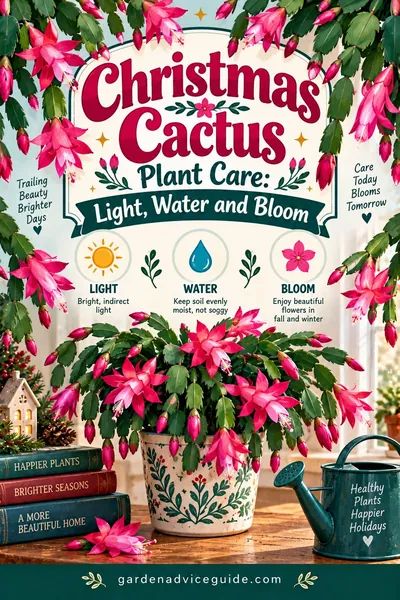
One big exception: Christmas cactus and poinsettias need long, uninterrupted dark nights in fall to set flower buds. Keep grow lights, and even bright room lamps, off them from about October until buds form. Our Christmas cactus care guide explains the timing in detail.
Herbs and seedlings under lights
Herbs on a winter windowsill are often the plants that need a grow light most. Basil, rosemary and other sun lovers stretch and lose flavor in weak light. A light bar 6 to 12 inches above the pots for 12 to 14 hours a day keeps them compact. Our guide to growing herbs in pots for beginners explains which herbs handle indoor life best.
Seedlings need the most light of all and the closest placement, about 2 to 6 inches under low-power strips for 14 to 16 hours. Raise the light as they grow. To know when to start each crop indoors, our seed starting calculator counts back from your last frost date.
Mistakes that waste a good light
The most common mistake is hanging the light too high. A lamp across the room does almost nothing for a plant. The second is running it all day and night; plants need their dark hours. The third is forgetting that a plant under a light grows faster and dries out sooner, so check the soil more often once the light is on.
More light will not save roots sitting in wet soil, so fix overwatering first. And be kind to your eyes. Bright LEDs are hard to look at, so aim them down at the plants, not across the room at the sofa.
Plants that manage without one
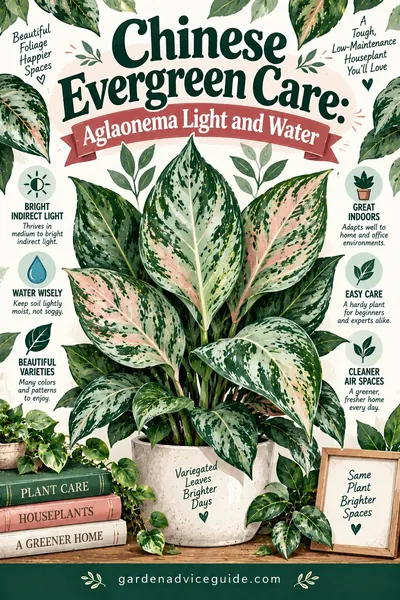
If you would rather skip the gadget, choose plants that handle dim rooms. Our list of low light houseplants has the toughest ones, and Chinese evergreen and spider plants are two easy starters. Even these grow faster and fuller near a window. For more plant and garden tools, see the Garden Advice Guide home page.
Quick answers about grow lights
Do houseplants need grow lights?
Not always. Plants near a bright south, east or west window often do fine, especially in summer. In winter, by a north window, or more than about 6 feet from any window, a grow light keeps plants from stretching, fading and stalling. Flowering plants, herbs and seedlings need extra light more often than leafy foliage plants.
How many hours a day should a grow light be on?
Count daylight plus lamp light. Aim for about 8 to 10 hours for low-light foliage, 10 to 12 for medium-light foliage, 12 to 14 for flowering plants, succulents and herbs, and 14 to 16 for seedlings. Always leave at least about 8 hours of darkness, and use a timer so the schedule stays steady.
How far should a grow light be from plants?
For a typical full-spectrum LED, start about 18 to 24 inches above low-light foliage, 12 to 18 inches above medium-light foliage, 8 to 12 inches above flowering plants and 6 to 12 inches above succulents and herbs. Check the maker's suggested distance, then move closer if plants stretch or farther if leaves bleach.
Can I leave a grow light on 24 hours a day?
It is not a good idea. Most houseplants need a nightly rest, and constant light can stress them rather than help. Use a timer and give your plants at least about 8 hours of darkness each day. If a plant still looks hungry, move the light closer before adding more hours.
Will a regular LED bulb work as a grow light?
A bright white household LED placed close to a plant helps a little, especially for low-light foliage. A full-spectrum grow bulb puts out more useful light for the same space, so it works better for herbs, succulents and flowering plants. Either way, closeness matters more than the label on the box.
What color grow light is best for houseplants?
Full-spectrum white is the easiest to live with and works well for nearly every houseplant. Red and blue lights also grow plants, but the purple glow looks strange in a home and hides problems like yellowing leaves or pests, which you would rather spot early.
Can a grow light burn my plant?
Yes, if it is too close. Signs are bleached, pale or curled leaves, or crispy brown patches on the top surface of the leaves nearest the light. Raise the light a few inches and give it a week or two. LEDs run cool, so true heat damage is rare at sensible distances.