When to Pick Chili Peppers

Pick chili peppers once they reach full size for the variety and the skin turns glossy and firm, which is usually 65 to 85 days after transplant. That green stage is perfectly good eating. If you want the sweeter, fruitier, generally hotter version, leave the same pod on the plant another 2 to 3 weeks until it turns its final color. Always cut the stem with snips instead of pulling, because pepper branches snap clean off.
Not sure where your crop sits on the calendar? Our free when to harvest tool gives per-crop maturity windows and ripeness signs for your zone, so you can plan the picking date instead of guessing.
Updated September 2026
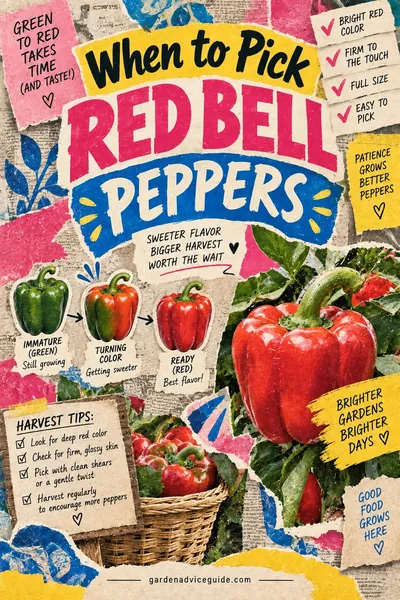
The confusion here is the same one that trips people up with bell peppers. There is no separate green chili plant and red chili plant. Every pod starts green and ripens to red, orange, yellow, purple, or brown depending on the variety. So the real question isn't whether your pepper is ready. It's which of the two ready stages you want.
Green Stage or Colored Stage? What Actually Changes
A chili pepper does two jobs in order. First it expands to full size and thickens its walls. Then it stops growing and starts ripening. Those are separate processes and picking at the boundary between them gives you a completely different pepper than waiting.
| Green stage | Fully colored stage | |
|---|---|---|
| Timing | 65 to 85 days from transplant | 2 to 3 weeks later |
| Flavor | Grassy, bright, slightly bitter | Sweet, fruity, deeper |
| Heat | Present but flatter | Usually hotter, and it lingers longer |
| Skin | Firm, satin to slightly glossy | Polished, thinner, more fragile |
| Best for | Pickling, salsa verde, poppers, fresh crunch | Drying, hot sauce, flakes, roasting |
| Shelf life fresh | Longer | Shorter |
| Effect on the plant | Encourages more flowers | Slows new fruit set |
That last row is the one people miss. A plant carrying fully ripe fruit gets a hormonal signal that its job is done and slows or stops setting new flowers. Every pod you take all the way to red occupies the plant for roughly an extra 20 days and costs you fruit somewhere else. Picking green and often is how you get volume. Picking colored is how you get flavor. Most gardeners do a mix.
The Four Signs a Chili Pepper Is Ready
Days to maturity on a seed packet assumes ideal weather, and nobody's summer is ideal. Use the plant instead.
1. Full size for the variety. Look up what your variety is supposed to reach and measure one. A jalapeno that should be 3 inches and is only 2 is still filling out. Size stops changing before color starts changing, so a pod that hasn't grown in a week has finished stage one.
2. Gloss. Ripening changes the skin surface. An immature pod looks satin or slightly dull. A finished one looks polished and throws a bright highlight when you turn it in the light.
3. Firm walls with a solid, heavy feel. Squeeze gently. It should resist without flexing. Softness means it's gone past ripe and started to break down, and those come off the plant today.
4. It releases with a clean snip. If the stem is still green and rubbery all the way to the branch, the pod is young. A mature pod has a woody, slightly dry stem where it joins the plant.
For colored-stage picking, add a fifth check: the color must run all the way to the shoulders and down into the creases. A pod that's 80 percent red with a green patch under the cap is still developing sugar in that patch. Wait.
One more field test that costs you one pepper: pick a single pod and cut it open. Mature seeds are cream to tan and firmly attached. Watery, tiny, translucent seeds mean the whole crop is still young.
When to Pick Chili Peppers by Variety
Days below are from transplant, not from seed sowing. Most peppers spend another 56 to 70 days in a seed tray before they ever hit the garden, which is why they get started so early indoors.
| Variety | Full size | Green pick at | Colored pick at | Final color | Notes |
|---|---|---|---|---|---|
| Shishito | 3 to 4 in | 60 to 65 days | 75 to 85 days | Red | Almost always picked green; roughly one in ten pods is hot |
| Banana / Hungarian wax | 5 to 6 in | 60 to 70 days | 80 to 90 days | Orange to red | Pale yellow is the "green" stage here, not unripe |
| Poblano | 4 to 5 in | 65 to 75 days | 85 to 95 days | Dark red to brown | Dried red poblano is an ancho |
| Jalapeno | 3 to 4 in | 70 to 75 days | 85 to 95 days | Red | Corking lines are a ripeness sign, not damage |
| Cayenne | 5 to 7 in | 70 to 75 days | 85 to 90 days | Red | Nearly always taken red for drying |
| Anaheim | 6 to 8 in | 75 to 80 days | 90 to 100 days | Red | Green stage for chiles rellenos |
| Serrano | 1.5 to 2.5 in | 75 to 80 days | 90 to 100 days | Red or orange | Fine green, excellent red |
| Thai bird | 1 to 2 in | 70 to 80 days | 90 to 100 days | Red | Ripens unevenly, pick over the plant repeatedly |
| Habanero | 1 to 2 in | Not recommended | 90 to 100 days | Orange or red | Green habaneros taste harsh and vegetal |
| Ghost / bhut jolokia | 2 to 3 in | Not recommended | 100 to 120 days | Red | Needs a long, hot season |
| Carolina Reaper | 1.5 to 2 in | Not recommended | 120 days and up | Red | Start indoors extremely early in zone 6 and colder |
The superhots are the exception to everything. Habanero, ghost, scorpion, and reaper types are not worth picking green. The fruity character that makes them interesting only develops at full color, and the green pods taste flatly bitter. They also need a much longer season, which is the real reason people in cool zones end up with a plant full of green pods in October.
Jalapeno corking deserves its own note. Those fine white or tan lines that appear on the shoulders of a jalapeno are stretch marks in the skin, and they signal a mature, well developed pod. Mexican cooking prizes corked jalapenos. They are not a disease and not a watering problem.
How to Pick Without Wrecking the Plant
Pepper branches are brittle, and the joint where a pod attaches is stronger than the branch it's growing from. Pull a pepper and you'll frequently take a whole branch with it, losing every flower and small pod on that limb.
- Use snips or small pruners. Cut the stem about a half inch above the cap. Kitchen scissors work fine.
- Support the branch with your other hand. One hand steadies, one hand cuts.
- Pick in the morning. Pods are fully hydrated and firm, and the plant recovers better from handling before the heat of the day.
- Wear gloves for anything hotter than a jalapeno. Capsaicin oil transfers from your fingers to your eyes hours later and it does not wash off easily with plain water.
- Pick over the whole plant every 3 to 5 days in peak season. Small hot types especially ripen a few pods at a time.
- Take everything at the end. Late in the season, strip the plant rather than leaving pods to soften.
Worked Example: Jalapenos in Zone 6
Say you're in zone 6 with a last frost around May 10 and a first fall frost around October 15. You started jalapeno seed indoors on March 1 and set transplants out on May 25, two weeks after last frost, once night temperatures were reliably above 55F.
Here's how the season plays out.
- March 1: seed sown indoors. Peppers need 56 to 70 days from sowing to a transplant-ready seedling.
- May 25: transplant goes in. The days-to-maturity clock starts now, not in March.
- Late June: first flowers. Expect some to drop if you get a run of nights above 75F or days above 90F.
- August 3 (day 70): first pods at full size, glossy, firm. Start picking green.
- August 18 (day 85): the pods you left are showing corking and first blush of red.
- Late August into September: pick green every 4 days for volume, and leave a dozen pods to go fully red for drying and hot sauce.
- October 10: frost forecast. Strip the plant completely, green pods included.
That's roughly 10 weeks of harvest from one planting date. If you'd left every pod to turn red, you'd have gotten maybe a third the total count off the same plant.
Working out those dates for your own garden starts with your frost window. Pull yours from our frost dates tool, then check the sowing math in when to plant peppers.
Harvesting Ahead of Frost
Peppers are fully tender. A light frost ends the plant and damages any exposed fruit, and there is no recovering from it, so covering the plant on one borderline night can be worth a whole extra picking. So the last harvest is a hard deadline, not a suggestion.
Watch the forecast starting about three weeks before your average first frost. When the first night below 40F shows up in the ten day forecast, plan the strip harvest.
- Take everything, at every stage. Even small green pods are usable.
- Cut, don't pull. Same reason as always.
- Sort as you go. Fully colored to the kitchen, mature green to storage or pickling, immature small pods to whatever you'll use fast.
- Consider pulling the whole plant. A pepper plant hung upside down in a garage or basement will finish ripening some of its remaining pods over one to two weeks, using what's stored in the stem.
Container plants have one more option. A pepper in a pot can come indoors and overwinter in a bright window, going semi-dormant and restarting the following spring with a head start. Cut it back by about half and expect it to drop most of its leaves.
Do Chili Peppers Ripen After Picking?
Partly, and it depends on how far along they were.
A pod that has already started to blush, meaning it shows any streak or patch of its final color, will usually finish on a counter over 3 to 10 days at room temperature. Put it in a paper bag with a ripe apple or banana and it moves faster, since the ethylene those fruits give off pushes the color change.
A pod picked fully green with no blush at all will mostly just sit there, then soften. Some varieties will turn partially, but the sugar development that happens on the plant does not happen off it, so the flavor never catches up. That's the honest tradeoff for picking early.
Never refrigerate peppers you're trying to ripen. Cold stops the process and cold damage shows up as pitting on the skin.
Storing, Drying, and Freezing
Fresh. Whole, unwashed, in the refrigerator crisper in a loose bag. Green pods keep a couple of weeks, fully ripe ones closer to one.
Freezing. Chilis freeze better than almost any other garden vegetable and need no blanching. Wash, dry, remove stems, and freeze whole or sliced on a tray before bagging. Texture goes soft on thawing, which is irrelevant for cooking.
Drying. Thin-walled types like cayenne, Thai bird, and serrano dry beautifully. String them through the stems into a ristra and hang somewhere warm with moving air, or run a dehydrator at low heat until they're brittle enough to snap. Thick-walled types like jalapeno and poblano are better smoked or oven dried, because they mold before they dry in humid air.
Seed saving. Take seed only from fully ripe, fully colored pods. Green-stage seed is immature and germinates poorly. Peppers cross readily with other peppers nearby, so isolate or bag flowers if the variety matters. The full method is in our seed saving guide, and general plant care is covered in how to grow peppers.
What Goes Wrong
Pods stop growing and stay small. Usually heat stress or a plant carrying too much fruit at once. Pick the mature pods to take load off the plant and it often restarts.
Flowers drop with no fruit. Nights above 75F or days above 90F interrupt pollination. It resolves on its own when the weather breaks. Nothing you apply fixes it.
Sunken, leathery dark patches on the blossom end. That's blossom end rot, a calcium delivery problem driven by uneven watering rather than a calcium shortage in the soil. Details and the fix are in our guide to blossom end rot.
Pale, papery patches on the sun-facing shoulder. Sunscald, from fruit suddenly exposed after leaf loss or heavy pruning. Still edible, just cut around it.
Everything went red at once in September. Shortening days and cooling nights push the whole plant to finish. That's the plant reading the calendar correctly. Harvest and preserve.
Peppers are hotter than the seed packet said. Heat rises with drought stress, high temperatures, and time on the plant. The same variety grown in a dry, hot summer can be dramatically hotter than last year's. If you want them milder, keep the water steady and pick green. For a milder crop overall, our when to pick red bell peppers guide covers the sweet side of the same family.
FAQ
Should I pick chili peppers green or wait for them to turn red?
Both work, and they give you different peppers. Green pods are firmer, grassier, and better for pickling and salsa verde. Red pods are sweeter, fruitier, usually hotter, and better for drying and sauce. Picking green also makes the plant set more fruit, so a mix gives you the best total harvest.
How do I know if my chili peppers are ripe?
Full size for the variety, glossy skin, firm heavy walls, and a woody stem where the pod joins the branch. For colored-stage ripeness, the final color has to reach the shoulders and the creases with no green left under the cap.
Do chili peppers get hotter the longer you leave them on the plant?
Generally yes. Capsaicin accumulates as the pod matures, so a red jalapeno is usually hotter than the same pod picked green, and the heat lingers longer. Drought stress and hot weather push it further in the same direction.
Can I pick chili peppers before the first frost if they are still green?
Yes, and you should. Peppers are killed by frost with no recovery, so strip the plant when the first night below 40F appears in the forecast. Green pods are fully usable, and any pod already showing a blush will often finish coloring indoors.
How often should I pick chili peppers?
Every 3 to 5 days during peak season. Small hot types like Thai bird and serrano ripen a few pods at a time, and pods left too long soften and shut down new flower production.
Why are my chili peppers not turning red?
Usually not enough time, not enough heat, or a plant carrying too much fruit. Ripening runs fastest between about 70F and 80F and slows badly below 60F, which is why an October pod can sit half colored for weeks. Superhot varieties simply need a longer season than a cool zone provides.
What are the white lines on my jalapenos?
Corking. They're stretch marks in the skin that appear as the pod matures, and they signal a well developed, flavorful pepper rather than a problem. Many cooks specifically look for corked jalapenos.
Do I need gloves to pick hot peppers?
For jalapeno and milder, most people are fine bare-handed. For habanero and up, wear gloves. Capsaicin oil stays on skin through several hand washes and transfers to eyes and other sensitive skin hours later.