How to Grow Peppers

Start pepper seeds indoors 8 to 10 weeks before your last frost, then transplant only after night temperatures hold above 55F and the soil has reached 65F. Give them 8 hours of sun, 18 to 24 inches of space, steady water at about 1 to 1.5 inches a week, and go light on nitrogen once flowers appear. Peppers are slower and fussier about heat than tomatoes, and almost every disappointing pepper season traces back to putting plants out too early into cold ground.
A pepper set into 55F soil can sit and sulk for three weeks. One planted two weeks later into 70F soil passes it and never looks back.
Not sure of your window? Check your dates with our free When-to-Plant Lookup before you sow a single seed.
When to Plant Peppers by Zone
Peppers need a long lead time, which is why they're started indoors almost everywhere in the US. Count backward from your last frost date, add the 8 to 10 weeks of indoor growing, and then add another 2 weeks of buffer after the frost date before anything goes outside.
| Zone | Typical last frost | Start seed indoors | Set transplants out |
|---|---|---|---|
| 3 | May 15 to Jun 1 | Mid to late March | Mid June |
| 4 | May 5 to May 20 | Early to mid March | Early June |
| 5 | Apr 25 to May 10 | Late February | Late May to early June |
| 6 | Apr 10 to Apr 25 | Mid February | Mid to late May |
| 7 | Mar 25 to Apr 10 | Late January | Early to mid May |
| 8 | Mar 10 to Mar 25 | Early January | Mid April |
| 9 | Feb 5 to Feb 25 | Late November to December | Mid to late March |
| 10 | Frost rare | September and December sowings | October and February |
Notice that the transplant column runs later than it does for tomatoes. Tomatoes go out 1 to 2 weeks after last frost; peppers do better at 2 to 3 weeks after, because their minimum is 55F nights rather than 50F. Our when to plant peppers guide breaks the same math down by specific city if you want a tighter number.
Read these dates as regional averages, not promises. Frost tables and USDA zone maps come from 30-year weather station averages spread across a wide area, so your own yard can run 1 to 2 weeks off the printed date in either direction. Elevation is the big one: a garden at 900 feet and one at 2,300 feet in the same county are not on the same calendar. A slope that drains cold air downhill, a pond, a city block full of pavement, or a south-facing brick wall all shift your real frost date. Your county extension office keeps local frost data and usually knows those pockets by name, and calling them costs nothing. You can also compare your station's numbers in our frost dates tool and confirm your zone with the growing zones lookup.
Why soil temperature beats the calendar
Push a soil thermometer 4 inches down at around 9 a.m. and look for a steady 65F before you transplant. Peppers will survive at 60F, but survive is the right word. Below 60F, root function slows to almost nothing, the plant stops taking up phosphorus, leaves turn a purple-bronze color, and growth stalls for two to three weeks even after the weather warms.
That stall costs you real fruit. A pepper that loses three weeks in June is still trying to ripen its first colored fruit when September frost arrives.
If you're impatient, warm the bed instead of gambling. Lay black plastic or landscape fabric over the planting area for 10 to 14 days before transplanting and you'll gain 5 to 8 degrees of soil temperature.
How to Grow Peppers from Seed Indoors
Pepper seed germinates slowly and unevenly at room temperature. Warmth is the whole trick.
- Sow depth: 1/4 inch, in a light seed-starting mix, not garden soil.
- Germination temperature: 80 to 85F at the soil surface. A seedling heat mat is close to mandatory for hot peppers. At 70F, expect 14 to 21 days and patchy results. At 82F, expect 6 to 10 days and near-full germination.
- After sprouting: pull them off the heat mat and drop to 70 to 75F days, 65F nights, under lights.
- Light: 14 to 16 hours a day, with the fixture 2 to 3 inches above the leaves. Windowsill light produces leggy seedlings that never fully recover.
- First feed: a half-strength balanced liquid fertilizer once the first true leaves open, then every 10 to 14 days.
- Pot up to 3 or 4 inch pots when roots reach the edge of the cell, usually around week 4.
Our seed starting guide covers lights, damping off, and the hardening off schedule in more detail.
Harden off over 7 to 10 days. Peppers hate a sudden move. Start with 2 hours in filtered shade, add roughly an hour a day, and skip any day under 55F or windy. Skipping this step is how people lose a whole flat in one afternoon of sun.
Sweet Peppers vs Hot Peppers: Timing Differences
They're the same species in most cases, but they don't run on the same clock.
| Sweet peppers (bell, banana, pimento) | Hot peppers (jalapeno, cayenne, habanero) | |
|---|---|---|
| Indoor start | 8 weeks before last frost | 10 to 12 weeks before last frost |
| Germination speed at 82F | 6 to 9 days | 10 to 21 days (habanero at the long end) |
| Days to first harvest from transplant | 60 to 75 green, 80 to 95 colored | 70 to 90 green, 95 to 120 colored |
| Ideal day temperature | 70 to 85F | 75 to 90F |
| Plant size | 18 to 30 in | 24 to 48 in |
| Spacing | 18 to 24 in | 18 to 24 in |
| Heat effect | Blossom drop above 90F | Tolerates heat better, and gets hotter |
| Fruit per plant | 6 to 12 bells | 25 to 100+ small fruits |
Two practical notes. First, superhots like habanero and ghost need the full 12 weeks indoors and are not worth attempting from seed in zone 4 or colder without a greenhouse; buy transplants instead. Second, heat and drought stress genuinely make hot peppers hotter, because capsaicin production rises under stress. A jalapeno grown in a dry August is a different pepper than one grown in a wet June.
Soil and Sun
Peppers want 8 hours of direct sun, and unlike lettuce, more is better right up to the point where daytime temperatures cross 90F.
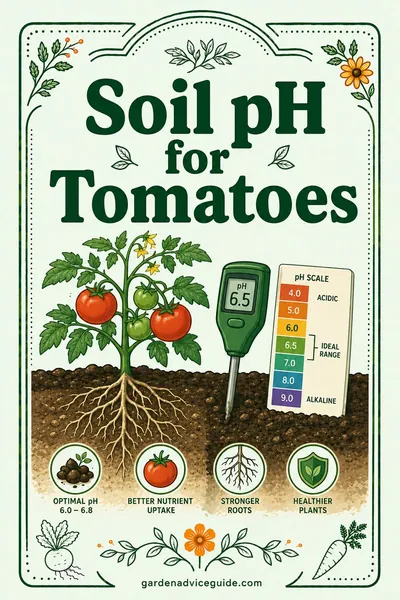
Target soil pH is 6.2 to 6.8, the same window that works for tomatoes, which is convenient since the two often share a bed rotation. Below 5.8, calcium uptake gets unreliable and blossom end rot becomes much more likely.
Bed prep that pays off:
- Work 2 to 3 inches of finished compost into the top 8 inches. Peppers have shallower, finer roots than tomatoes, mostly in the top 10 to 12 inches, so the top layer is what matters.
- Keep nitrogen modest. This is the single most common pepper mistake and it gets its own section below.
- Add a calcium source at planting if your soil test shows a deficit. Gypsum works without moving pH; lime works if you also need to raise pH, but apply it in fall since it moves slowly.
- Rotate. Don't plant peppers where peppers, tomatoes, eggplant, or potatoes grew in the last 2 to 3 years. They share bacterial spot, verticillium, and phytophthora.
- Mulch, but wait. Put straw or shredded leaf mulch down only after the soil has warmed through, usually 2 to 3 weeks after transplanting. Mulch applied too early locks cold into the ground.
If you're filling a new raised bed, our raised bed soil calculator works out cubic feet and the compost-to-topsoil ratio.
Spacing and Planting
Do not bury the stem. This is the biggest difference between peppers and tomatoes, and it catches experienced tomato growers every year. Tomatoes root along a buried stem; peppers do not. Bury a pepper stem and you get stem rot, not roots. Plant at exactly the same depth it grew in the pot.
Spacing:
- Bell and sweet peppers: 18 to 24 inches apart in row, 24 to 30 inches between rows.
- Hot peppers and compact varieties: 18 inches apart in row.
- Tall hot types (cayenne, some habaneros): 24 inches apart.
- Containers: one plant per 5 gallon pot minimum, 7 to 10 gallons for a full-size bell.
There's a case for the tighter end of that range. Peppers planted 18 inches apart shade each other's fruit, and pepper fruit sunscalds easily. Slight crowding is a feature here, not a flaw, as long as you're not in a humid region fighting bacterial spot. Use the plant spacing calculator to see how many plants a specific bed actually holds.
Stake them. A loaded bell pepper plant will fall over or snap at the crotch in a summer storm. One 3 to 4 foot stake per plant, or a short cage, put in on planting day. Driving a stake next to an established plant tears the shallow roots you can't see.
Worked example. A 4x8 raised bed, 32 square feet, planted with bell peppers at 18 inches in row and 24 inches between rows. The 8-foot length holds 5 plants per row at 18 inches, and the 4-foot width holds 2 rows at 24 inches, so 10 plants total. At 6 to 12 bells per plant, that bed produces roughly 60 to 120 peppers across the season. Water need runs about 1 gallon per plant per week early and 1.75 gallons in peak July heat, so 10 to 17.5 gallons for the bed weekly, split into two deep waterings. At 2 inches of mulch across 32 square feet you'll need about 5.3 cubic feet of mulch, which is two standard bags.
Watering Peppers
Peppers need 1 to 1.5 inches of water per week, which works out to roughly 1 to 1.75 gallons per plant in the ground. That's slightly less than tomatoes, but consistency matters just as much.
Rules that hold up:
- Water the soil, not the leaves. Drip line, soaker hose, or a wand at the base. Wet foliage spreads bacterial spot, which is the disease most likely to end a pepper season in a humid summer.
- Morning, not evening. Leaves should be dry within an hour.
- Two deep soakings beat seven sips. Shallow daily watering builds shallow roots that cook in a heat wave.
- Check by finger. Dig 2 inches down. Dry at 2 inches means water today.
- Containers dry out 3 to 4 times faster. A 5 gallon pot in July heat may need water every day, sometimes twice.
Our watering guide tool converts inches per week into actual minutes on your specific hose or drip line.
Peppers get blossom end rot too
Most people think of blossom end rot as a tomato problem, but peppers get it just as readily, and it looks different enough that gardeners misdiagnose it as sunscald or rot. On a pepper it shows up as a sunken, tan-to-brown, papery patch on the side or bottom of the fruit, often starting while the fruit is still small.
The cause is the same. Calcium travels through the plant only dissolved in water, and it can't be moved once deposited. Let the soil go dry for two days while fruit is expanding and the cells at the far end of the fruit get built without enough calcium. The damage appears a week or two later, so the weather that caused it has usually passed by the time you see it.
The fix is water consistency and mulch, not calcium spray. Our full blossom end rot guide covers the diagnosis and what actually works, including why foliar calcium sprays mostly don't.
Feeding: Why Too Much Nitrogen Gives You Leaves and No Fruit
If you take one thing from this guide, take this. Peppers respond to nitrogen by building a big, dark green, beautiful plant that sets almost no fruit.
Here's the mechanism. Nitrogen drives vegetative growth: stems and leaves. A plant with abundant nitrogen has no reason to shift into reproductive mode, so it keeps making foliage. Flower buds either don't form or abort. Meanwhile all that dense leaf canopy shades the interior, holds humidity, and invites disease. You end up with a 3-foot green bush and four peppers.
The schedule that works:
At planting: a light balanced starter such as 5-10-10, worked into the hole, or a shovel of compost. Skip anything with a first number above 10.
Until first flowers: nothing. The plant has what it needs from the compost.
Once fruit sets: a low-nitrogen, higher-potassium feed every 2 to 3 weeks. 5-10-10 or a dedicated tomato and vegetable fertilizer both work. Potassium drives fruit sizing and wall thickness.
Never: lawn fertilizer, fresh manure, or a general-purpose 20-20-20 all season. And if peppers follow a heavy compost or manure application from that spring, cut your fertilizer plan in half.
The tell is easy to read. Vigorous dark green growth with few flowers means too much nitrogen. Stop feeding entirely, water normally, and the plant usually shifts to flowering within 2 to 3 weeks.
Blossom Drop: The 90F and 60F Problem
Pepper flowers falling off with no fruit behind them is the most common complaint in July, and it's almost never a disease.
Pepper pollen becomes sterile or fails to shed when:
- Daytime temperature exceeds about 90F, and it gets worse above 95F.
- Night temperature exceeds about 75F, which is often the real culprit in the South.
- Night temperature falls below about 60F, which is the spring version of the same problem.
- Humidity is very low, under about 30 percent, so pollen dries before it can germinate.
- Humidity is very high, over about 90 percent, so pollen clumps and won't shed.
The flower opens, doesn't get pollinated, and the plant drops it rather than spending resources on it. This is normal plant behavior, not a failure.
What actually helps:
- Shade cloth. 30 to 40 percent shade cloth over the row during a heat wave can pull leaf-level temperature down 5 to 10 degrees. Take it off when the wave breaks.
- Mulch and consistent water. Cooler root zone, less compounding stress.
- Tap the plant midday on still, dry days. Peppers are self-pollinating and a light shake helps pollen shed. Same idea as a bumblebee.
- Wait. Once nights drop back under 75F, a healthy plant sets fruit again within 7 to 10 days. Southern gardens routinely get a poor July and an excellent September off the same plants.
Do not pull a plant that's dropping flowers in a heat wave. It's doing what it should.
Common Pepper Problems
| What you see | Likely cause | What to do |
|---|---|---|
| Flowers drop, no fruit | Over 90F, under 60F, or too much nitrogen | Shade cloth, stop nitrogen, wait |
| Sunken papery patch on fruit | Blossom end rot | Even water and mulch, see blossom end rot |
| White or tan patch on the sun side of fruit | Sunscald | Leave foliage on, don't over-prune |
| Purple-bronze leaves, stalled growth | Cold soil, phosphorus lockout | Wait for warmth, warm the bed next year |
| Small raised scabby spots on leaves and fruit | Bacterial spot | Remove worst leaves, water at soil level, rotate |
| Curled tips, sticky residue, ants | Aphids | Blast with water, see how to get rid of aphids |
| Stippled pale leaves, fine webbing | Spider mites | Spray undersides, raise humidity |
| Holes in fruit, frass inside | Pepper maggot or corn earworm | Remove affected fruit, don't compost |
| Plant wilts overnight and never recovers | Phytophthora root rot | Improve drainage, rotate 3 years |
If you also grow tomatoes, most of these overlap. Our how to grow tomatoes guide covers the shared disease pressure and rotation planning, and the companion planting chart shows what belongs next to peppers and what doesn't.
Harvesting Peppers: Green vs Colored
Every pepper starts green and ripens to its final color. Green bell peppers aren't a different variety; they're unripe ones.
Green (mature green stage): full size, firm, glossy, walls thickened. The fruit has stopped growing but hasn't started converting starch to sugar. Flavor is grassy and slightly bitter. This is 60 to 75 days from transplant for most bells.
Colored (red, yellow, orange, purple, chocolate): another 2 to 3 weeks on the plant. Sugar content roughly doubles, vitamin C rises sharply, and the flavor turns sweet and fruity. This is 80 to 95 days from transplant.
Here's the tradeoff that decides your strategy. Picking green raises total yield. A pepper plant carrying ripening fruit slows or stops setting new flowers, because ripening fruit sends a hormonal signal that suppresses further fruit set. Strip the mature green fruit and the plant immediately starts another round. Leave everything to color up and you get fewer, better peppers.
A practical split: pick the first two flushes green to keep the plant productive through midsummer, then let the August and September fruit ripen to color, since the plant won't have time to finish another round anyway.
Cut, don't pull. Pepper branches are brittle and pulling takes a whole limb with it. Use snips and leave a short stem on the fruit. Our when to harvest tool gives per-crop maturity windows if you want to plan the calendar out.
End of season: peppers are killed by the first light frost. Pick everything the day before, including small fruit. Anything that has reached mature green will ripen indoors on a counter over 1 to 2 weeks.
Storing Peppers
- Fresh, whole: in the fridge crisper, unwashed, in a loose bag. Green peppers last 2 weeks, colored ones 1 week since they're already fully ripe.
- Never below 45F for long. Peppers get chilling injury: pitted skin and soft spots. A standard fridge at 38F is fine for a week or two but not a month.
- Counter ripening: mature green peppers finish coloring at room temperature in 7 to 14 days. Not as sweet as vine-ripened, but close.
- Freezing: the easiest preservation of any garden vegetable. Wash, dry, core, chop, freeze on a tray, then bag. No blanching required, because peppers aren't high in the enzymes blanching is meant to stop. Texture softens, flavor holds, and they go straight into cooking.
- Drying hot peppers: thread on a string in a dry airy spot, or dehydrate at 125 to 135F for 8 to 12 hours until brittle. Grind to flakes.
- Canning: peppers are a low-acid food. Water bath canning is only safe for pickled peppers using a tested recipe with the specified vinegar ratio. Plain peppers require a pressure canner. Follow the USDA Complete Guide to Home Canning here rather than a blog recipe.
FAQ
How long does it take to grow peppers from seed?
Figure 8 to 10 weeks from seed to transplant size indoors, then another 60 to 95 days from transplant to harvest depending on whether you pick green or colored. Total is roughly 4 to 5 months from sowing to the first green bell, and 5 to 6 months to the first fully red one. Hot peppers run at the long end, and superhots like habanero can need 120 days from transplant.
Why are my pepper flowers falling off?
Temperature, nine times out of ten. Pepper pollen fails above about 90F daytime or 75F at night, and again below 60F at night, so the flower opens, doesn't pollinate, and drops. The other common cause is too much nitrogen, which pushes the plant into leaf production instead of fruit. Shade cloth during heat waves and stopping high-nitrogen fertilizer both help, but mostly you wait for the weather to change.
Can peppers and tomatoes be planted together?
Yes, they want nearly identical soil pH, sun, and water, so they're easy neighbors. The catch is disease. They share bacterial spot, verticillium wilt, and phytophthora, so planting them together means any outbreak hits both crops, and it complicates rotation since you can't follow one with the other. If you have the space, separate beds and a 3-year rotation is the safer setup.
How far apart should pepper plants be?
Bell and sweet peppers go 18 to 24 inches apart in the row with 24 to 30 inches between rows. Hot peppers and compact types are fine at 18 inches. Unlike most crops, slightly tight spacing helps peppers, because the leaf canopy shades developing fruit and prevents sunscald. Only open the spacing up if you garden somewhere humid where bacterial spot is a regular problem.
Should I pick peppers green or wait for them to turn color?
Colored peppers are noticeably sweeter and have far more vitamin C, but they take 2 to 3 extra weeks on the plant and cut your total harvest, since ripening fruit suppresses new flower set. Picking green keeps the plant producing. Most gardeners get the best of both by picking the early flushes green and letting the late-summer fruit color up.
Why are my pepper plants big and green with no peppers?
That's a nitrogen problem. Excess nitrogen tells the plant to keep making leaves and stems, so flower buds either never form or abort before opening. Stop all fertilizer, water normally, and give it 2 to 3 weeks. Most plants shift into flowering on their own once the nitrogen supply drops. Going forward, use a 5-10-10 style feed and only after fruit has set.
Do peppers need full sun?
They want at least 8 hours of direct sun and produce noticeably better with more, up until daytime temperatures top 90F. In zones 8 through 10, afternoon shade during July and August actually improves fruit set, because the plants stop dropping flowers. In cooler zones, give them the sunniest spot you have and consider a reflective wall or black plastic mulch to boost soil temperature.
Can you grow peppers in pots?
Peppers are one of the better container vegetables because their root systems are compact and shallow. Use 5 gallons minimum for a hot pepper or compact variety and 7 to 10 gallons for a full-size bell, with potting mix rather than garden soil and plenty of drainage holes. The tradeoff is water: a pot in July heat can need daily watering, and those dry-out swings are what cause blossom end rot in containers.
Updated August 2026