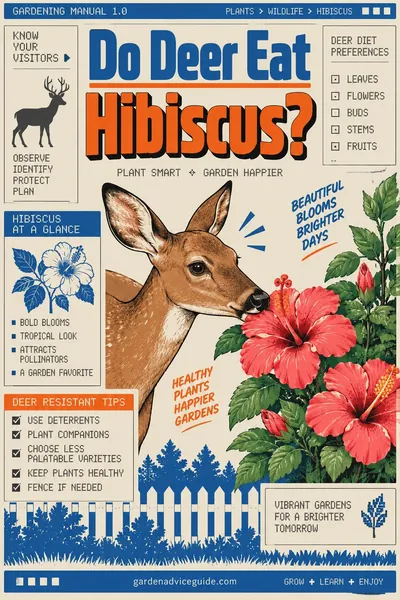
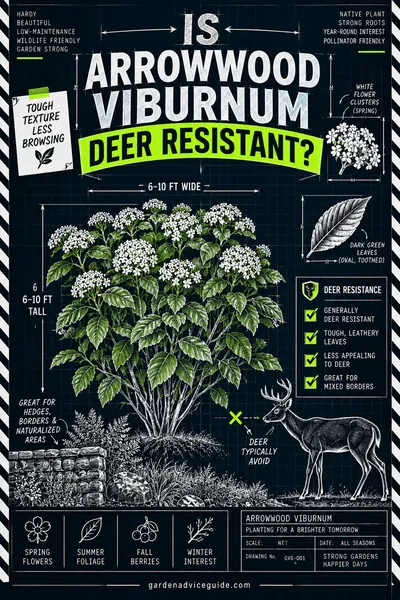
Do Deer Eat Azaleas?

Yes, deer eat azaleas, and they eat them enthusiastically. Azaleas and rhododendrons sit in the top handful of most-browsed landscape shrubs in North America, alongside hostas, daylilies, arborvitae, and yew. Evergreen azaleas are worst off because they stay green and soft through winter, exactly when deer run out of everything else, and a hungry herd can strip a mature plant to bare twigs between December and March.
There is no such thing as a deer resistant azalea. Cultivar names, repeat-blooming series, native versus hybrid: none of it changes the outcome. If you want azaleas in deer country, you protect them or you plant something else, and this page covers both.
Before you replace anything, check what will actually survive your winters with our free planting zone tool, because the best azalea substitutes are zone-specific.
Updated September 2026
Do deer eat azaleas all year, or only in winter?
Both, but the damage looks completely different by season, and that matters because the fix is different too.
| Season | What deer take | Damage look | Consequence |
|---|---|---|---|
| December to March | Evergreen leaves and whole twig tips | Bare stems below about 5 ft, shrub thins from the outside in | Worst damage of the year, kills small plants |
| Late March to April | Swelling flower buds | Plant looks healthy but doesn't bloom | Zero flowers, no obvious explanation |
| May to June | Soft new growth after bloom | Ragged tips, growth stalls | Shrub stays small, gets sparse |
| July to August | Little, usually | Occasional nibbling | Minor, other food is abundant |
| September to November | Leaves and tips again, plus buck rubs | Shredded bark on main stems | Rubs can girdle and kill a stem |
Winter is where azaleas lose the most tissue, and spring is where they lose the thing you planted them for.
The spring bud loss is the sneakiest problem in the whole list. A shrub that leafs out fine but never blooms usually got its fat flower buds eaten in the weeks before they opened, and most people blame pruning, frost, or fertilizer instead.
Aren't azaleas toxic? Why do deer eat them anyway?
Azaleas and rhododendrons contain grayanotoxins, which are genuinely dangerous to horses, cattle, sheep, goats, dogs, and cats. Small amounts cause drooling, vomiting, weakness, and heart rhythm problems.
Deer eat them regardless. Whitetail deer have a rumen full of microbes that handle plant compounds most animals can't, and they browse in small mouthfuls across many plants rather than gorging on one. Practically speaking, azalea toxicity protects your azaleas from your neighbor's horse and not from the deer walking through at 4 a.m.
Yew is the classic parallel: it's lethal to livestock and deer strip it to a stick every winter.
What azalea deer damage actually looks like
Get the diagnosis right before you buy anything, because rabbits, voles, and winter burn all leave marks people blame on deer.
Deer have no upper front teeth. They grip a twig and tear, which leaves a ragged, stringy, torn-off end. Rabbits have sharp incisors and leave a clean cut at a 45 degree angle. Voles chew bark at ground level, under mulch.
| Sign | Deer | Rabbit | Vole | Winter burn |
|---|---|---|---|---|
| Cut end | Ragged, frayed, torn | Clean 45 degree slice | Bark gnawed, wood exposed | Nothing cut, leaves stay on |
| Height of damage | Up to 5 or 6 ft | Under 24 in, higher over snow | Below the mulch line | All over, worst on the windward side |
| Leaf appearance | Missing entirely | Missing on low stems | Present but plant wilts | Present, tan or brown at the edges |
| Extra evidence | Split hoof prints, pellet piles, shredded bark on stems | Round pellets, tracks in snow | Surface runways in the mulch | No animal sign at all |
| Pattern | Even browse line across several shrubs | One or two low plants | One shrub collapses suddenly | Worst on the south and west sides |
The signature of deer is the browse line: a flat, level height across a whole row of shrubs, as if someone ran a hedge trimmer along at chest height. Nothing else in the yard produces that.
Our roundup of plants deer love has the fuller identification chart if the damage is spread across several types of plant.
Are some azaleas less attractive to deer than others?
Slightly, and the difference is about exposure, not flavor.
Deciduous azaleas are safer in winter, riskier in spring. They drop their leaves, so there's nothing green for deer to find in January. But their flower buds sit on bare twigs at eye level from February on, which makes them easy pickings right before bloom.
Evergreen azaleas are the year-round target. Kurume, Satsuki, Gable, Glenn Dale, and the Encore repeat-blooming series all hold leaves through winter, and that green foliage is what draws deer in when the woods are bare.
Rhododendrons are worse than azaleas. Big evergreen rhododendrons carry more edible leaf per plant and are a documented critical winter browse in the eastern deer range.
Size is the only real defense. A shrub tall enough that most of its growth sits above 6 feet keeps that part safe. That rules out almost every azalea, which mostly top out between 2 and 6 feet.
| Type | Mature height | Winter risk | Spring bud risk | Recovery from browse |
|---|---|---|---|---|
| Kurume evergreen azalea | 2 to 4 ft | Very high | High | Good, resprouts from old wood |
| Satsuki evergreen azalea | 2 to 3 ft | Very high | High | Good, but slow |
| Encore repeat bloomer | 3 to 5 ft | Very high | High | Good |
| Glenn Dale hybrid | 4 to 6 ft | Very high | High | Good |
| Native deciduous azalea | 4 to 8 ft | Low in winter | Very high | Excellent, suckers freely |
| Exbury or Knap Hill hybrid | 4 to 6 ft | Low in winter | Very high | Good |
| Large-leaf rhododendron | 6 to 12 ft | Extreme | High | Slow, and old wood may not resprout |
The one honest recommendation in that table: if you want the ericaceous look in a deer yard, a tall deciduous azalea planted where snow doesn't build up under it gives you the best odds, because the browse line stays low and the plant suckers back.
Will a browsed azalea recover?
Usually yes, and faster than it looks. Azaleas break dormant buds on old wood readily, which is why hard renovation pruning works on them.
Light browse, tips only: full recovery in one season. Do nothing except protect it next winter.
Heavy winter browse, stripped to bare twigs below 4 feet: the plant is alive if the twigs are green under a scratched bit of bark. Cut damaged wood back to a healthy node in early spring after bloom time passes, feed lightly with an acid fertilizer, mulch 2 to 3 inches deep, and water through the first summer. Expect the shrub to look thin for one year and fill in during the second.
Stems shredded by buck rubs: a stem girdled all the way around will die. Cut it off at the base. The plant will send up new growth if the root crown is intact.
Repeat browse three winters running: this is what kills azaleas. Each stripping burns stored energy, and a plant that never keeps a full season of leaves eventually runs out. That's why protection beats recovery.
Timeline for bloom: azaleas set next year's flower buds in early to mid summer. A shrub cut back in April will bloom the following spring. A shrub cut back in August will skip a year, so do the pruning in spring.
Seven ways to protect azaleas from deer
Ranked by how well they hold up over a full winter.
1. A fence, if you're fencing anything. Deer clear 6 feet standing still, so 8 feet is the working height. Two parallel 4-foot fences set 4 to 5 feet apart also work, because deer judge depth poorly and won't jump into a narrow landing zone.
2. Netting or burlap in winter. For foundation shrubs, this is the practical answer. Wrap or cage the plants from late November through early April with plastic deer netting on stakes, or burlap on a light frame. Keep the material off the foliage, since anything pressed against evergreen leaves causes burn.
3. Repellent on a real rotation. Repellents work on azaleas better than on most plants because azalea leaves are long-lived, so a spray stays on the tissue instead of being outgrown in a week. The catch is winter: most products need application above 40°F, so you have to catch mild days.
| Repellent type | Duration in winter | Reapply after | Notes |
|---|---|---|---|
| Putrescent egg solids | 4 to 8 weeks on evergreen leaves | Heavy rain, new growth | Most reliable class, scent based |
| Capsaicin (hot pepper) | 3 to 4 weeks | Rain | Deer must taste it to learn |
| Garlic and clove oil | 2 to 4 weeks | Rain | Gentler smell, moderate results |
| Bittering agents | 4 to 6 weeks | New growth | Good on buds specifically |
Rotate between two different classes rather than sticking with one. Deer acclimate to a smell they encounter for months.
4. Spray the buds in February. The single highest-value application of the year. One treatment when buds start to swell protects the entire bloom.
5. Placement. Move new plantings close to the house, near a door you use daily, inside a fenced courtyard, or against a wall where deer can't circle. Deer avoid tight spaces with one exit.
6. A resistant screen on the approach side. Aromatic and prickly plants don't shield azaleas by scent, but they make the first few steps into the yard less rewarding, which shifts traffic. Our deer resistant shrubs guide has the full list with zones.
7. Scare devices, with expectations. Motion-activated sprinklers work in the warm months and are useless once you shut the water off for winter. Move them every two weeks so they stay a surprise.
Worked example: 12 foundation azaleas in zone 7
A common situation. Twelve Kurume azaleas, 3 feet tall, in a bed across the front of a house, with woods 200 feet behind. Deer pass through most nights.
| Date | Job | Time needed |
|---|---|---|
| Nov 20 | Drive 4 ft stakes, wrap the bed in 7 ft deer netting, leave a gap for the front walk | 90 min |
| Nov 20 | Spray egg-solids repellent on any foliage near the netting edge | 15 min |
| Jan 10 | Check netting after storms, re-stake anything sagging | 15 min |
| Feb 15 | Mild day, spray buds with a second repellent class | 20 min |
| Mar 20 | Second bud spray as buds swell | 20 min |
| Apr 5 | Remove netting and stakes, store for next year | 45 min |
| Apr 20 | Prune out any dead wood, mulch 2 in, first feed | 60 min |
| May, June, July | Spray new growth once a month | 15 min each |
Total hands-on time for the year: about five hours, most of it in one November afternoon.
The version that fails: no netting, one repellent application in October, nothing after. Deer find the bed in early January when the woods are stripped. By mid-February, all 12 shrubs are browsed to a flat line at 4 feet with bare stems below, and no flower buds survive. The plants live, but the bed looks wrong for two full growing seasons and there are no blooms that spring.
Five hours, or two years of a bad front yard. That's the trade.
Replace them instead: shrubs that give you the same look
If you're tired of the fight, these hold their shape in deer country and fill the same role in a foundation bed or woodland edge. None are deer proof, because nothing is, but deer eat them last.
| Replacement | Zones | Fills the role of | Why deer skip it |
|---|---|---|---|
| Japanese pieris (Pieris japonica) | 5 to 8 | Evergreen azalea, same acid soil, same shade | Same plant family, much higher toxin load, rarely browsed |
| Fothergilla | 5 to 8 | Deciduous azalea, spring flower and fall color | Aromatic foliage |
| Koreanspice viburnum | 4 to 8 | Fragrant spring shrub, 4 to 6 ft | Fuzzy leaves, strong scent |
| Weigela | 4 to 8 | Spring color at azalea height | Coarse texture, low palatability |
| Inkberry holly (Ilex glabra) | 4 to 9 | Evergreen structure, 3 to 5 ft | Leathery evergreen leaves |
| Boxwood | 5 to 9 | Evergreen mass in a foundation bed | Bitter alkaloids, one of the most reliable |
| Summersweet (Clethra alnifolia) | 4 to 9 | Wet shade, fragrant summer bloom | Aromatic, poor forage |
| Bayberry (Myrica pensylvanica) | 3 to 7 | Semi-evergreen screen | Waxy aromatic leaves |
| Virginia sweetspire (Itea virginica) | 5 to 9 | Arching shade shrub, fall color | Rarely browsed |
| Spirea | 3 to 8 | Low flowering mass | Fine texture, low preference |
Pieris is the closest substitute by far. It wants the same acidic, humus-rich, part-shade conditions, it holds evergreen leaves at the same scale, and it flowers in early spring. Match it to your zone first, then to your light.
For evergreen structure specifically, our guide to deer resistant evergreens covers the conifers and broadleaf evergreens that survive winter browse, which is where arborvitae and yew go so badly wrong. The broader plant-by-plant list lives in deer resistant plants.
Frequently asked questions
Are azaleas deer resistant at all?
No. Azaleas are near the top of every deer preference list published by state extension programs, usually rated "frequently severely damaged," which is the worst category. Any nursery tag or listing that calls an azalea deer resistant is describing something deer eat routinely.
Are Encore azaleas deer resistant?
No more than any other azalea. Encore azaleas are evergreen repeat bloomers, so they carry green foliage all winter and set buds multiple times a year, which arguably gives deer more to eat rather than less. Treat them exactly like other evergreen azaleas.
Do deer eat azalea flowers and buds?
Yes, and buds are the bigger loss. Deer take swelling flower buds in late winter and early spring, and they'll browse open flowers too. A plant that leafs out normally but produces no blooms was almost certainly stripped of buds in the six weeks before it should have flowered.
Will my azalea come back after deer ate it?
Almost always. Azaleas resprout readily from old wood, so a browsed shrub with green tissue under the bark will recover. Prune damaged wood back to a healthy node in spring after the normal bloom period, mulch, water through summer, and expect it to look thin for one season and normal by the second.
What is the best deer repellent for azaleas?
Putrescent egg solids give the longest hold on evergreen azalea foliage, often 4 to 8 weeks in cool weather, because azalea leaves last for a year or more so the spray isn't outgrown. Rotate with a second class such as capsaicin or a bittering agent, and make sure one application lands in February when flower buds swell.
Do deer eat rhododendrons too?
Yes, and generally worse than azaleas. Large-leaf evergreen rhododendrons are a major winter food source across the eastern deer range, and their thick leaves make an efficient meal. They also recover more slowly than azaleas, since old rhododendron wood is less willing to break new buds.
How high do I need to protect azaleas from deer?
Plan for 6 feet, since deer feed comfortably from the ground to about that height and can stretch a little higher on level footing. Where snow accumulates, add the average snow depth to that number, because deer stand on packed snow and reach that much further up the shrub.
Does planting garlic or marigolds around azaleas keep deer away?
Not reliably. Companion planting shifts where deer prefer to walk, but it does not create a barrier around a plant they want. Aromatic plants on the approach side of a bed are a useful nudge stacked with other measures, and a poor substitute for netting or repellent on their own.
The short version
Deer eat azaleas, they eat them hardest in winter and again just before bloom, and no variety changes that. Evergreen types lose leaves and twigs from December through March, deciduous types lose flower buds in early spring, and three consecutive bad winters is what turns damage into a dead shrub.
Pick one of two paths and commit. Either net or cage the shrubs from late November to early April and rotate a repellent with a February bud spray, or swap them for pieris, fothergilla, koreanspice viburnum, or inkberry. Check what suits your climate with our free planting zone tool, then use deer resistant shrubs to fill the bed with plants you never have to defend.