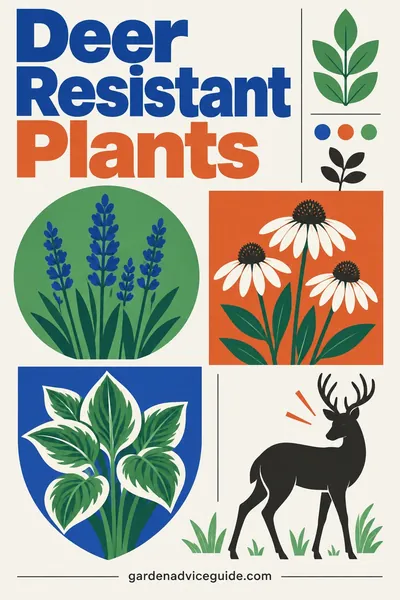
Do Deer Eat Coneflowers?

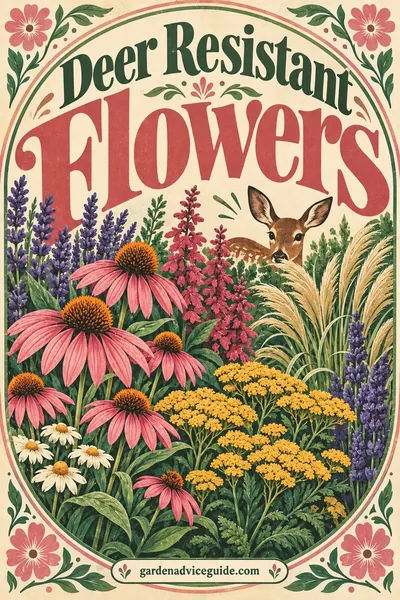
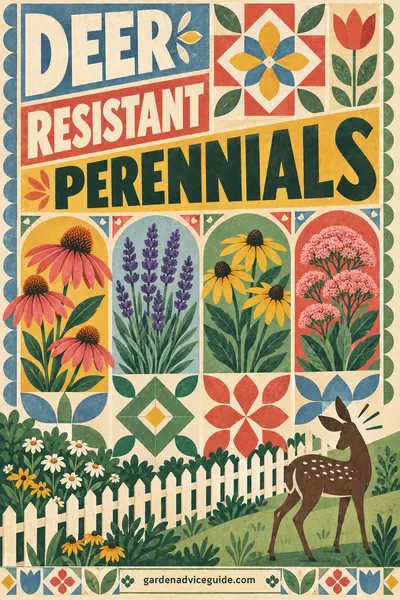
Sometimes, and almost always the same part: the fat flower buds in the days right before they open. Deer generally leave the coarse, bristly coneflower leaves alone, which is why Echinacea shows up on every deer resistant list. Then they walk down the row in late July and take the buds off the top of every stem, which is the most annoying possible timing. Coneflowers sit in the middle of the deer resistance scale, not the top.
Coneflowers are hardy from zone 3 to zone 9. Find your zone free with our Growing Zone Lookup, then use the browse-risk table below before you decide where to plant them.
Updated September 2026
The good news is that this is a predictable, seasonal problem with a narrow window, not a plant that gets eaten to the ground. If you know the four weeks that matter in your zone, you can protect coneflowers with a couple of spray dates instead of a fence.
What part of the coneflower deer actually eat
Deer feed selectively, and on a coneflower they have clear preferences.
Flower buds, first and most often. The developing bud is the sweetest, softest, highest-nitrogen tissue on the whole plant. It is also right at deer nose height on a 30-inch stem. This is the classic damage: stems that look fine, standing at full height, topped with a ragged stub where a bud used to be.
Fresh petals, second. A newly opened flower still has soft ray petals. Deer will strip them and leave the bristly cone behind, which is why you sometimes find a bed of bare orange cones on intact stems.
Young spring foliage, occasionally. The first flush of leaves in April is softer and less bristly than summer growth. In a yard with real deer pressure and little else green, those leaves get grazed. Mature summer leaves are rough and hairy and mostly get skipped.
Almost never: the dry seed heads. Once the cone dries in fall, deer have no interest. Leave them standing for goldfinches, which do want them.
That pattern is why coneflower gets rated "moderate" rather than "rarely damaged." The leaves defend themselves. The flowers do not.
Do deer eat coneflowers every year, or only in some?
Only in some, and the pattern is consistent enough to plan around. Three factors decide it.
Deer pressure. A yard that sees a doe walk through twice a week usually loses nothing. A yard with a resident herd bedding in the woodlot behind it loses buds every summer. That difference matters more than anything about the plant.
Rainfall. This is the big one. In a wet summer, the woods are full of soft green browse and coneflower buds are not worth the walk. In a dry August, when the field edge is crisp and the lawn is brown, an irrigated perennial bed becomes the only tender food in the area. Bud loss spikes in drought years.
What else is available nearby. Coneflower sits mid-scale, so it gets eaten when the higher-preference plants are gone. If your neighbor stopped growing hostas and daylilies this year, the herd moves down the preference list, and your coneflowers move up.
The practical read: assume you are fine in a normal, rainy season, and assume you will need to spray in a drought year. That is the honest version of "moderately deer resistant."
Deer damage or something else? A quick ID table
Half the coneflower problems blamed on deer are not deer. Check this before you buy repellent.
| What you see | Most likely cause | Tell it apart by |
|---|---|---|
| Buds gone, stems intact, ragged torn tip | Deer | Torn, not cut. Damage above 24 in. Hoofprints in mulch |
| Whole stems clipped at a clean 45 degree angle, low | Rabbit | Sharp diagonal cut, damage below 18 in, pellets nearby |
| Plants sheared off at ground level, whole clump | Groundhog | Wide flattened path, burrow within 50 ft |
| Petals shredded, holes in leaves | Japanese beetles | Insects visible on the flower in July. See our Japanese beetle guide |
| Cones turn green, deformed, leafy tufts sprout from the cone | Aster yellows disease | Not an animal. Remove and destroy the plant |
| Buds form but dry up brown without opening | Drought stress or root rot | Check soil moisture 3 in down |
| Flopping stems, no chew marks | Too much shade or rich soil | Move to full sun, stop fertilizing |
Deer have no upper incisors. They grip and tear, so every deer-damaged stem ends in a torn, stringy tip. Rabbits and voles have sharp incisors top and bottom and leave a cut like a pruner. That one detail settles most arguments.
Aster yellows deserves a mention because it looks like nothing else. The cone turns green, the petals go stunted and greenish, and small leafy shoots erupt from the flower head. It is spread by leafhoppers, has no cure, and the plant has to come out roots and all so it does not infect the rest of the bed.
Which coneflowers get browsed most
Deer preference across Echinacea is not identical, and the pattern gardeners report is consistent even though it has never been formally measured.
| Type | Examples | Height | Browse risk | Notes |
|---|---|---|---|---|
| Straight species purple coneflower | E. purpurea | 24 to 40 in | Moderate | The baseline. Bristly leaves, sweet buds |
| Narrow-leaf species | E. angustifolia, E. pallida | 18 to 36 in | Low to moderate | Thinner, hairier leaves, prairie tough |
| Yellow coneflower | E. paradoxa | 24 to 36 in | Low to moderate | Species toughness, yellow petals |
| Modern colored hybrids | Big Sky, Sombrero, PowWow series | 18 to 30 in | Moderate to high | Softer growth, heavier feeding, more bud loss reported |
| Double-flowered types | Double Scoop, Cone-fections, 'Razzmatazz' | 24 to 32 in | Moderate to high | Big soft flower heads, more tissue worth eating |
| Dwarf front-of-border types | 'Kim's Knee High', PowWow Wild Berry | 16 to 24 in | Moderate | Lower flowers sit closer to rabbit height too |
The takeaway. If deer are a real problem in your yard, plant the straight species or one of the narrow-leaf natives, not the fancy sunset-colored doubles. The species are hardier, longer lived, better for pollinators, and slightly less tempting. The hybrid series are gorgeous and worth growing, but treat them as plants that need protection rather than plants that provide it.
Our wider list of deer resistant flowers explains where coneflower ranks against the genuinely safe options.
Worked example: protecting a 16-foot coneflower bed
Say you have a 16-foot sunny bed of purple coneflower in zone 6, deer walk the property line every night, and last August you lost the buds on most of it.
Step 1: count the plants. Coneflower matures 18 to 24 inches wide. On 20-inch centers, 16 ft = 192 inches, divided by 20 = 9 plants per row. A two-row bed staggered 18 inches apart is 9 + 8 = 17 plants.
Step 2: find your bud window. Buds form roughly three weeks before first bloom. Work backward from your zone.
| Zone | First coneflower bloom | Bud window to protect |
|---|---|---|
| 3 to 4 | Mid to late July | Late June to mid July |
| 5 | Early to mid July | Mid June to early July |
| 6 | Late June to early July | Early to late June |
| 7 | Mid to late June | Late May to mid June |
| 8 to 9 | Early to mid June | Mid May to early June |
Those are ranges, not dates. The reliable local signal is the plant itself: the moment you can see tight green buds forming at the stem tips, the clock has started.
Step 3: spray on a schedule, not on discovery. In zone 6, that means an application in the first week of June, a second two weeks later, and a third after any heavy rain. Rotate between two different repellent types (an egg-based one and a capsaicin or mint-based one) because deer habituate to a single scent within about a month.
Step 4: stop spraying at full bloom. Once the flowers are open and the petals have hardened off, browse pressure drops sharply. In a drought year, add one more application in the first week of August, when the second flush of buds is forming and natural browse is gone.
Step 5: what the schedule saves. Three to four spray dates across six weeks, versus losing the entire flower display on 17 plants. That is the whole trade, and it takes about 10 minutes each time.
Step 6: hedge the bed. Plant catmint or salvia along the deer-facing edge. Both are strongly aromatic and both bloom before coneflower, so the bed reads as unappetizing from the approach side. See deer resistant perennials for the full companion list.
How to protect coneflowers without building a fence
Rotate repellents, and start before damage appears. Repellents work by teaching avoidance, and a deer that has already eaten well in your bed is much harder to retrain. Spray at bud formation, not after the first stems are stripped. Reapply after rain and after 10 to 14 days of new growth, because the new tissue is unsprayed.
Use scent as a perimeter. Coneflower defends itself poorly, so surround it with plants that defend themselves well. Catmint, salvia, Russian sage, lavender, bee balm, mountain mint, and yarrow all work. Our guide to bee balm and deer explains why mint-family oils are so effective, and butterfly weed covers the bitter-sap approach.
Put coneflower in the interior, not the edge. Deer commit to a bed edge far more readily than they walk into the middle of a planting. Move the moderate-risk plants two or three feet back from the approach side.
Add motion or noise if the herd is resident. Motion-activated sprinklers work well for a season, then deer learn the pattern. Move them every few weeks.
Accept that a fence is the only guarantee. For a bed you refuse to lose, an 8-foot fence is the real answer. Deer clear 6 feet from a standing start when they want to. Nothing sprayable is a guarantee.
Growing coneflowers so they are worth defending
Full sun, six hours minimum. Shade produces floppy stems and half the flowers. Coneflowers are prairie plants.
Average to lean, well-drained soil. Do not enrich the bed. Rich soil produces soft, tall, flopping growth that also happens to be more attractive to deer. Coneflower is at its best in soil most people would call mediocre.
No fertilizer. Seriously. A coneflower fed like a rose grows leggy, blooms less, and dies out over winter in wet ground.
Water deeply the first summer, then rarely. Established coneflower is drought tough. Our watering guide covers how deeply to soak a new perennial bed.
Deadhead the first flush for more flowers, or leave it for birds. Cutting spent flowers back to a leaf node pushes a second lighter round in late summer. Leaving them means goldfinches on the seed heads in September and October. Do half and half.
Leave the stems standing over winter. Cut back in late winter, not fall. The hollow stems shelter insects and the seed heads feed birds. Our fall garden cleanup guide has the full list of what to leave up.
Divide every three to four years in spring. Clumps thin out in the middle. Lift, split, and replant the vigorous outer sections.
Expect the fancy hybrids to be shorter lived. Many of the colored series behave like three-year plants in cold, wet-winter gardens. The straight species routinely lives a decade.
FAQ
Are coneflowers deer resistant?
Moderately. Deer usually leave the coarse, bristly leaves alone but take the flower buds right before they open, which is the worst possible timing. In light deer traffic coneflowers are fine on their own. With a resident herd, expect losses in dry years and pair them with catmint or salvia as a scent barrier.
Why did my coneflowers lose all their buds overnight?
That is the signature deer pattern. Stems left standing at full height with torn, ragged tips where buds used to be means deer, not rabbits. Rabbits cut whole stems cleanly at an angle low to the ground. Check the height of the damage: deer feed from about 2 to 5 feet up.
Will coneflowers grow back after deer eat them?
Yes. Bud loss costs you that round of flowers, not the plant. Most coneflowers push a second, lighter flush four to six weeks later, especially if you cut the damaged stems back to a leaf node. The roots are never at risk, so the plant returns at full strength the following spring.
Do rabbits eat coneflowers?
Yes, more than deer do in some yards. Rabbits go for young spring shoots and low stems, leaving a clean 45 degree cut within about 18 inches of the ground. A ring of chicken wire around new plants for the first month of spring growth handles it, and it also protects the crown over the first winter.
Which coneflower is the most deer resistant?
The narrow-leaf prairie species, E. angustifolia and E. pallida, get browsed slightly less than the big purple coneflower hybrids, mostly because their leaves are thinner and hairier and their buds are smaller. Skip the double-flowered and modern colored series if deer are a problem, since those carry the most soft tissue.
Should I spray repellent on open coneflowers?
You can, but the payoff drops once flowers are open. Deer target the developing buds, so the spray dates that matter are the three to four weeks before bloom. Spraying open flowers also coats them for the pollinators using them, so time your applications for bud stage and stop.
Do deer eat black-eyed Susans too?
Less often than coneflowers. Black-eyed Susan holds up reasonably well thanks to its coarse, bristly leaves, and its buds are smaller and less appealing. Neither plant belongs in the front line of a deer-defended bed, but if you had to pick one for a high-pressure yard, black-eyed Susan is the safer bet.
My coneflower cones turned green and sprouted leaves. Is that deer?
No, that is aster yellows, a disease spread by leafhoppers. The cone goes green, petals turn stunted and distorted, and small leafy shoots erupt from the flower head. There is no cure. Dig the plant out with its roots and throw it away rather than composting it, so the disease does not spread through the bed.