Norfolk Island Pine Care: Keep Your Living Christmas Tree Green All Year

Norfolk Island pine care comes down to three things: bright light, water when the top inch of soil is dry, and extra humidity, especially in winter when the heat is running. Keep it away from heat vents and cold drafts, give the pot a quarter turn each week, and it can live for many years as a houseplant.
That is good news if you picked one up as a living Christmas tree. Many of them are sold in December wrapped in foil and dusted with glitter, and many are thrown out by February. With a little care, yours can be your Christmas tree again next year, and the year after that, a little taller each time.
Key facts
- Bright light, with a little gentle direct sun.
- Water when the top inch is dry; empty the saucer.
- Likes about 50% humidity, more than most heated homes.
- Outdoors year-round only in zones 10 and 11.
- Lost lower branches do not grow back.
The checker below asks two questions. Pick your zone: zone 8 or colder, zone 9, zone 10, or zone 11 or warmer. Then pick the light your pine gets indoors: a bright window with a few hours of sun, bright indirect light all day, or lower light, such as a north window or across the room. You get an answer on whether it can live outdoors all year where you are, a watering rhythm for that light, and tips for keeping the air humid enough.
Garden Advice Guide · free calculator
Norfolk Pine Checker by Zone: Indoors or Out, and How Often to Water
Pick your zone and the light your pine gets indoors. You get an outdoors-year-round answer, a watering rhythm and humidity tips.
Need more? Open the free Frost Dates.
 Planting Zones
 Frost Dates
 Planting Calendar
Quick reference: indoors or out, by zone
| Your zone | Can it live outside all year? | What to do |
|---|---|---|
| Zone 8 or colder | No | Houseplant; summer outside optional |
| Zone 9 | Risky; frost damages it | Pot it and bring it in on cold nights |
| Zone 10 | Yes, in most years | Plant well away from the house |
| Zone 11 or warmer | Yes | Can grow into a very large tree |
The first week after the store
Start by unwrapping it. Take off the foil, plastic sleeve or decorative wrap so water can drain and air can reach the soil. Foil sleeves trap water around the roots, and that is one of the most common ways these trees die in January. If the pot has no drainage hole, move the tree into one that does, or at least into a plastic nursery pot that can sit inside a nicer one.
Look at the soil. Stores often keep them very wet or let them go bone dry. If it feels dry an inch down, water slowly until water runs out the bottom. If it is soggy, set it somewhere bright and let it dry before watering again.
Many stores sell several seedlings planted together in one pot, so what looks like one bushy tree may be three or four. That is fine for years. If you want one strong tree later, you can separate them in spring, but it is not needed. Glitter-sprayed trees are fine to keep too. The sprayed tips may brown, but new growth at the top comes in clean and green.
What kind of tree this really is
Despite its name, the Norfolk Island pine is not a true pine. It is Araucaria heterophylla, a conifer from Norfolk Island, a small island in the South Pacific. Its relatives include the monkey puzzle tree. Its soft needles, neat layers of branches and tidy triangle shape make it look like a miniature Christmas tree, which is exactly why stores stock so many in December.
It is a tropical tree. In its home climate and in the warmest parts of Florida, California and Hawaii it can grow 50 feet tall or more. Indoors, it grows slowly, often adding a new tier of branches each year and reaching 3 to 8 feet over many years. It is happiest at ordinary room temperatures of about 60 to 75°F and suffers below about 50°F.
Light and turning
Give it the brightest spot you have that does not bake it. A few feet from an east or south window is ideal, or right in front of a bright west window with a sheer curtain. A little gentle direct sun is welcome. Hot afternoon sun through the glass in summer can scorch the needles, so pull it back a little then.
Norfolk pines grow toward the light, and they do it fast enough that you will notice a lean within a few weeks. Give the pot a quarter turn every week, always in the same direction, and the tree will stay straight and even. In winter, when days are short, a grow light makes a real difference in a darker home. Our grow lights for houseplants chart shows the hours and distances to use.
In lower light, such as a north window or across the room from any window, it will survive for a while, but lower branches yellow and drop and the new growth gets thin. If that is the only space you have, consider a palm instead; our indoor trees guide lists better choices for dim rooms.
Watering by touch: a worked example
Water by touch, not by the calendar. Push a finger into the soil. If the top inch is dry, water slowly until it runs out the bottom, wait 15 minutes, and empty the saucer. If it still feels damp, wait a few days and check again. A pot that feels light when you lift it usually needs water.
Here is how that tends to work out. Say your pine sits in a bright south window in a heated room in January, in an 8-inch plastic pot. The warm, dry air and good light mean the top inch often dries in about a week, so you will usually water once a week. Move that same tree to a spot with bright, indirect light, and it might go 7 to 10 days. In a cool room or lower light, 10 to 14 days is common. Outdoors in a pot in summer, it can need water every few days in hot, dry weather.
These are rough guides. Clay pots dry faster than plastic, and small pots dry faster than big ones. The one thing to avoid is small sips every day. That keeps the top wet and the roots soggy, and it is one of the surest ways to yellow the lower branches. For more on reading soil and pots, our watering guide covers the basics.
Humidity in a heated home
Norfolk pines like about 50% humidity. A heated home in winter is often much drier, sometimes around 20 to 30%. Dry air is the main reason for brown, crispy needle tips. The easiest fix is a humidifier in the room, set to around 40 to 50%. A pebble tray helps a little: fill a tray with pebbles and water, keep the water just below the top of the pebbles, and stand the pot on it so it is not sitting in water. Grouping several plants together also raises the humidity around them a bit.
Misting feels helpful, but the effect lasts only a few minutes. Moving the tree away from heater vents, radiators and fireplaces makes a bigger difference than any amount of misting. Cold drafts from doors and leaky windows cause damage too, so find a spot that is bright and steady.
Brown needles and dropping branches
Brown, crispy tips on the needles usually point to dry air or a dry spell. Raise the humidity, move it off vents, and water as soon as the top inch is dry. Lower branches that turn yellow and drop one by one often mean too little light or soil that stays soggy. Move it to a brighter spot and let the top inch dry between waterings.
Whole branches turning brown in winter often follow a cold draft or a long dry spell. Branches that droop down can mean it is thirsty or that the roots have been wet too long, so check the soil to know which. A lean is just the tree reaching for the window, and weekly turning fixes it.
One honest note: branches that fall off do not grow back. Norfolk pines only add new growth at the very top. Snip dead branches cleanly near the trunk and fix the cause, and the tree will look better from the top down as it grows. Spider mites sometimes show up in dry winter air as fine webbing and speckled needles; our spider mites page explains a simple rinse routine.
Feeding, repotting and why you never cut the top
Feed with a balanced houseplant fertilizer at half strength about once a month in spring and summer. Skip feeding in fall and winter, when growth slows. Repot every 3 to 4 years in spring, into a pot only one size larger, using a fast-draining potting mix. Norfolk pines do not mind a snug pot, and a pot that is too big stays wet.
Do not prune the top. Cutting the main leader ruins the tree's shape, and it will not grow a new single top. If a tree is too tall for your ceiling, the kindest choice is to give it to someone with a taller room or, in zones 10 and 11, plant it outdoors.
Summer outside and back in
In zone 9 and colder, a Norfolk pine is a houseplant that can take a summer vacation outdoors. Wait until nights stay above about 50°F. A good guide is a couple of weeks after your last spring frost; look up the average date on our frost dates by ZIP code tool. Start it in full shade, then move it to bright shade or morning sun over a week or two so the needles do not scorch.
Bring it back in before fall nights drop to about 50°F, which in most cold regions is well before your first frost. Rinse it with the hose and check for bugs before it comes inside. In zones 10 and 11, you can plant it in the ground, but give it a lot of room, well away from the house, roofs and power lines, since it can become a very large tree. Not sure of your zone? Use our planting zone finder.
Decorating it for the holidays
Yes, you can decorate a Norfolk pine, lightly. Its branches are soft and bend easily. Use small, light ornaments made of felt, paper or thin plastic, and cool LED mini lights, never hot bulbs. Skip heavy garlands and thick tinsel. Take everything off once the holidays are over, so the branches do not stay bent.
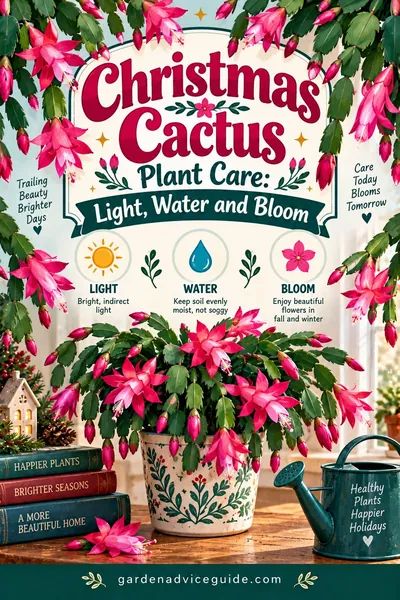
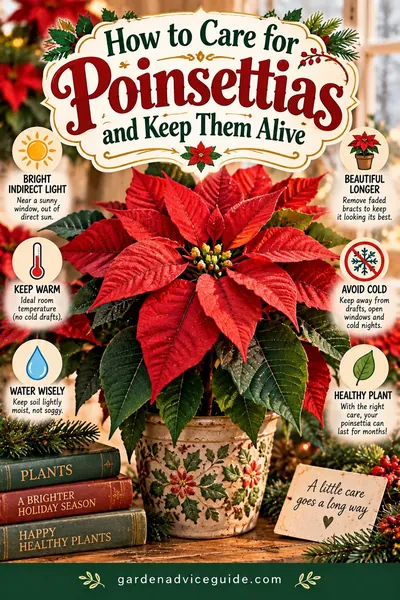
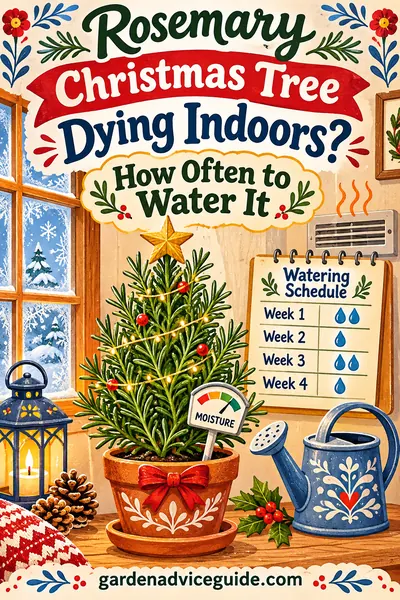
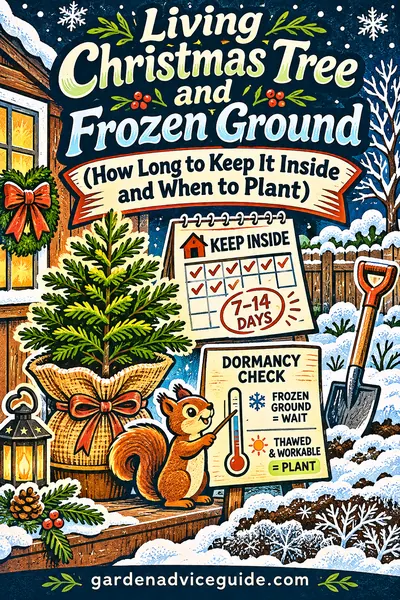
If you like the idea of a living tree, a rosemary tree is the other popular choice; see how often to water a rosemary Christmas tree. If you bought a potted spruce or fir instead, those are outdoor trees, and when to plant a living Christmas tree explains how to get it in the ground. For other plants that last past December, see poinsettia care and Christmas cactus care.
Pets and Norfolk pines
Norfolk Island pine is best treated as not pet-safe. Some pet sources describe it as mildly irritating if chewed, causing upset stomach, so keep it where cats and dogs cannot nibble the needles, and check the ASPCA plant lists if you are unsure. If your pet chews it and you are worried, call your vet or the ASPCA Animal Poison Control Center. Our houseplants safe for cats guide lists safer choices. For more free garden tools, visit the Garden Advice Guide home page.
Quick answers about Norfolk Island pines
How do you keep a Norfolk pine alive after Christmas?
Take off the foil and decorations, give it the brightest indirect light you have, and water only when the top inch of soil is dry. Raise the humidity with a humidifier or pebble tray, keep it away from heat vents and cold drafts, and give it a quarter turn each week.
How often should I water a Norfolk Island pine?
When the top inch of soil feels dry. Indoors in winter that is often about once a week in a bright, warm spot, and every 10 to 14 days in a cooler or dimmer one. Water deeply until it drains, and never let the pot sit in water.
Why is my Norfolk pine turning brown?
Brown, crispy tips usually mean dry air or underwatering. Yellow lower branches that drop often mean too little light or soggy soil. Whole brown branches can follow a cold draft. Lost branches do not grow back, so fix the cause and the new growth will come in healthy.
Can a Norfolk pine live outside?
All year only in zones 10 and 11, where it can grow into a very large tree. In colder zones it can spend summer outside in bright shade once nights stay above about 50°F, then come in before fall nights drop to that level again.
Is a Norfolk Island pine a real pine?
No. It is an Araucaria, a different family of conifers from the South Pacific, related to the monkey puzzle tree. It looks like a soft little pine, which is why it is sold as a living Christmas tree, but it is tropical and cannot take frost.
Can I cut the top off a Norfolk pine that is too tall?
It is best not to. The tree will not grow a new single top, and the shape is lost for good. Instead, give a tall tree to someone with a higher ceiling, or in zones 10 and 11, plant it outdoors with plenty of room.
Why are the branches on my Norfolk pine drooping?
Drooping usually means the tree is thirsty or the roots stayed wet too long. Check the soil. If it is dry an inch down, water deeply. If it is wet, let it drain and dry a little before watering again, and make sure the pot has a drainage hole.