What Do the Numbers on Fertilizer Mean?

Three numbers sit on the front of every bag of fertilizer sold in the United States, something like 10-10-10 or 32-0-4 or 5-10-10. They are the guaranteed analysis, and they are percentages by weight of nitrogen, phosphate and potash, always in that order. A 50 pound bag of 10-10-10 holds 5 pounds of nitrogen, 5 pounds of phosphate, 5 pounds of potash, and 35 pounds of other material. That is the short answer to what do the numbers on fertilizer mean, and the rest of this page turns it into decisions you can make standing in the aisle.
This is the what to buy page. It covers what each nutrient does, why a low number is not a weak product, how to convert a percentage into pounds spread over a real lawn or bed, and which ratio suits grass, vegetables, bulbs and shrubs. Timing lives elsewhere.
Working out how much to spread? Use our free lawn care calculator to turn your lawn's square footage and a bag's analysis into an actual setting and an actual weight.
Updated September 2026
What Do the Numbers on Fertilizer Mean on the Bag
Every bag carries a guaranteed analysis, which is a legal declaration regulated at the state level. The three headline numbers are always N-P-K in that fixed order:
| Position | Symbol | What is actually guaranteed | Common name |
|---|---|---|---|
| First | N | Total nitrogen, as a percentage of product weight | Nitrogen |
| Second | P | Available phosphate, expressed as P2O5 | Phosphorus, or phosphate |
| Third | K | Soluble potash, expressed as K2O | Potassium, or potash |
Two details trip people up.
First, the order never changes. There is no bag anywhere with the potassium number in front. If you remember only one thing, remember the mnemonic gardeners have used for generations: Up, Down, All Around. Nitrogen drives the growth you see above ground, phosphate supports roots and flowering below, and potassium works on the whole plant's general toughness.
Second, the second and third numbers are not pure phosphorus and potassium. They are reported in the oxide forms P2O5 and K2O, a convention inherited from nineteenth century fertilizer chemistry that nobody has managed to retire. A 0-20-20 bag does not contain 20 percent phosphorus by element. It contains 20 percent phosphate, which works out to roughly 8.7 percent actual phosphorus. This rarely matters for garden decisions, since every product on the shelf uses the same convention, but it does matter if you are comparing a soil test report that lists elemental phosphorus against a bag that lists phosphate.
What Nitrogen, Phosphorus and Potassium Each Do
| Nutrient | Job in the plant | Deficiency looks like | Excess looks like |
|---|---|---|---|
| Nitrogen (N) | Builds chlorophyll, leaves, stems and green growth. The engine of top growth | Uniform pale yellowing starting with the oldest, lowest leaves. Stunted, thin growth | Dark, floppy, soft leaves. Lots of foliage and few flowers or fruit. Weak stems that flop and invite disease |
| Phosphate (P) | Energy transfer, root establishment, flowering and seed set | Stunted plants, dull dark green or purplish leaf undersides, poor rooting, late flowering | Rarely visible on the plant. Locks up iron and zinc, and runs off into waterways |
| Potash (K) | Regulates water movement, cell wall strength, cold and drought tolerance, disease resistance | Yellowing and scorching along leaf margins on older leaves, weak stalks, poor fruit quality | Rarely visible. Can interfere with magnesium and calcium uptake |
Nitrogen is the one you keep supplying because it moves. It leaches out of the soil with rain and irrigation, it gasses off, and grass clippings and harvested vegetables carry it away. Phosphate and potash hold in the soil far longer, which is why many established gardens and lawns already have plenty of both and need nothing but nitrogen.
That is not a guess you should make. A soil test tells you which of the three you actually lack, and it is the difference between feeding a plant and feeding a problem. Our guide to how to test garden soil walks through pulling a representative sample and reading the report you get back.
Why the Numbers Are Percentages, and Why Low Is Not Weak
The single most useful reframe is this: the numbers describe concentration, not power. A bag of 4-3-3 composted poultry manure is not a weaker fertilizer than a bag of 24-0-4 lawn food. It is a more dilute one. You apply more of it to deliver the same amount of nutrient.
Multiply the percentage by the bag weight to get the pounds of nutrient inside:
| Product | Bag weight | Nitrogen inside | Phosphate inside | Potash inside |
|---|---|---|---|---|
| 10-10-10 | 40 lb | 4.0 lb | 4.0 lb | 4.0 lb |
| 5-10-10 | 40 lb | 2.0 lb | 4.0 lb | 4.0 lb |
| 32-0-4 | 15 lb | 4.8 lb | 0 lb | 0.6 lb |
| 4-3-3 organic | 25 lb | 1.0 lb | 0.75 lb | 0.75 lb |
| 46-0-0 urea | 50 lb | 23.0 lb | 0 lb | 0 lb |
Look at the 15 pound bag of 32-0-4 against the 40 pound bag of 10-10-10. The small bag holds more nitrogen than the large one. This is why comparing bags by size, or by how heavy they feel, tells you nothing. The only fair comparison is pounds of nutrient delivered per unit of area.
The remainder of the bag, the part that is not N, P or K, is called filler or carrier. It is usually sand, limestone, granulated clay, or in an organic product the manure or meal itself. Filler is not a scam. It is what lets you spread a tiny amount of concentrated nutrient evenly over a large area without burning stripes into the lawn.
The Pounds of Nitrogen Per 1,000 Square Feet Math
Lawn and garden fertilizer recommendations are almost always written as pounds of actual nitrogen per 1,000 square feet, usually somewhere between 0.5 and 1.0 pounds per application. Converting that into a weight of product is one division.
The formula: pounds of product = pounds of nitrogen wanted ÷ (first number ÷ 100)
Or more simply, divide 100 by the first number to find how many pounds of product deliver 1 pound of nitrogen.
| Analysis | Product needed for 1 lb N | Product needed for 0.5 lb N |
|---|---|---|
| 46-0-0 | 2.2 lb | 1.1 lb |
| 32-0-4 | 3.1 lb | 1.6 lb |
| 24-0-6 | 4.2 lb | 2.1 lb |
| 16-4-8 | 6.3 lb | 3.1 lb |
| 10-10-10 | 10.0 lb | 5.0 lb |
| 5-10-5 | 20.0 lb | 10.0 lb |
| 4-3-3 organic | 25.0 lb | 12.5 lb |
A worked example. Your lawn measures 4,800 square feet, which is 4.8 units of 1,000. The recommendation is 0.75 pounds of nitrogen per 1,000 square feet, and the bag on the shelf is 24-0-6 in a 15 pound sack.
- Pounds of product per 1,000 square feet: 0.75 ÷ 0.24 = 3.1 pounds.
- Total product for the whole lawn: 3.1 × 4.8 = 15.0 pounds.
- Nitrogen actually applied: 15.0 × 0.24 = 3.6 pounds across the lawn.
So one 15 pound bag covers this lawn for one application, which is why bag coverage claims are usually printed as a range: the same bag covers a much larger area at a light rate than at a heavy one.
Do the same math for the second and third numbers if a soil test called for phosphate or potash. In the example above, 15 pounds of 24-0-6 also delivers 0.9 pounds of potash and no phosphate at all, which is fine on a soil already testing high in phosphorus.
One caution that applies to every calculation on this page: a single application of more than about 1 pound of fast-release nitrogen per 1,000 square feet risks burning the grass. If a recommendation totals more than that for the season, it is meant to be split across several applications, which is the whole logic behind a lawn care schedule.
Quick Release Versus Slow Release
Two bags can carry the identical analysis and behave completely differently, because the nitrogen inside is in a different chemical form. The label tells you which, in the fine print under the guaranteed analysis, usually as a line reading something like "3.2% slowly available nitrogen from methylene urea."
| Quick release | Slow release | |
|---|---|---|
| Typical sources | Urea, ammonium sulfate, ammonium nitrate, calcium nitrate, most liquid feeds | Sulfur coated urea, polymer coated urea, methylene urea, IBDU, and most organic sources such as feather meal or composted manure |
| Response time | 2 to 7 days | 3 to 12 weeks, gradually |
| Burn risk | High if over-applied or applied to dry turf | Very low |
| Leaching risk | High on sandy soil and in heavy rain | Low |
| Best for | Correcting a visible deficiency fast, cool soil in early spring, container plants | The backbone of a lawn program, beds you do not want to revisit, sandy soils |
A useful habit is to read the percentage of slow release nitrogen as a quality signal. A bag whose nitrogen is 50 percent or more slowly available feeds evenly for weeks, resists burning, and holds up in rain. A bag that is entirely quick release gives you a fast green-up and then nothing.
Organic sources sit at the far slow end by default, because the nutrients are locked in organic matter that soil microbes have to break down. That releases nutrients only when the soil is warm and biologically active, which is a real limitation in cold spring soil and a real advantage in July. Compost belongs in this category too, and our guide on how to compost covers building the supply.
Complete Versus Incomplete Fertilizer
A complete fertilizer contains all three of N, P and K, so 10-10-10 and 16-4-8 both qualify. An incomplete fertilizer is missing at least one, such as 46-0-0 urea, 0-0-60 muriate of potash, or 32-0-4.
Complete does not mean better. It means broader. Incomplete products exist because most soils do not need all three in equal measure, and adding what you already have is wasteful at best. Excess phosphate in particular does not stay put in a garden. It moves with eroded soil into streams and lakes, which is why several states now restrict phosphorus in lawn fertilizer to new seedings and soil-test-documented deficiencies only. If your lawn bag shows a zero in the middle, that is a deliberate regulatory design, not a defect.
Ratio versus analysis. The ratio is the analysis reduced to its simplest form. A 10-10-10 and a 5-5-5 are both 1-1-1 ratio products, and a 16-4-8 and a 24-6-12 are both 4-1-2. Recommendations are often written as a ratio, because it lets you buy whatever concentration is available and adjust the amount.
| Ratio | Example analyses | Character |
|---|---|---|
| 1-1-1 | 10-10-10, 5-5-5, 13-13-13 | Balanced, general purpose, the default when you have no soil test |
| 3-1-2 or 4-1-2 | 12-4-8, 16-4-8, 24-6-12 | The classic turf ratio, matching what grass removes |
| 1-2-2 or 1-2-1 | 5-10-10, 5-10-5 | Root, flower and fruit weighted. Bulbs, tubers, transplant beds |
| High N only | 46-0-0, 32-0-0, 21-0-0 | Nitrogen alone, for soils already high in P and K |
| High K only | 0-0-50, 0-0-60 | Potassium correction on a soil test deficiency |
Secondary Nutrients and Micronutrients
Below the three headline numbers, many labels list more. These are the nutrients plants need in smaller quantities, and a bag only has to declare what it guarantees.
Secondary nutrients, needed in amounts comparable to phosphorus:
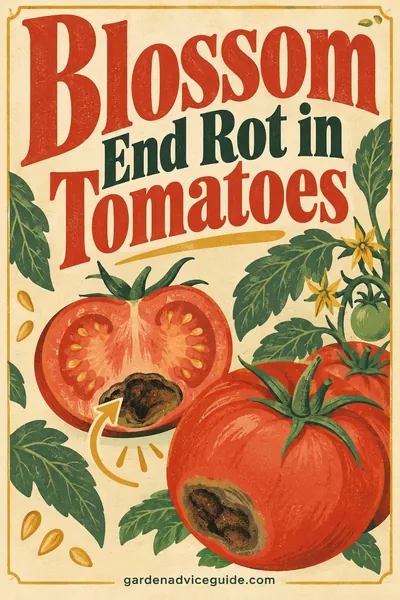
- Calcium (Ca). Cell wall structure. Deficiency shows as blossom end rot in tomatoes and tip burn in lettuce, though both are more often a watering problem than a soil shortage. Usually supplied by lime or gypsum rather than fertilizer.
- Magnesium (Mg). The center atom of every chlorophyll molecule. Deficiency yellows the tissue between the veins of older leaves while the veins stay green. Supplied by dolomitic lime or magnesium sulfate.
- Sulfur (S). Part of several amino acids. Deficiency looks like nitrogen deficiency but starts on the newest leaves rather than the oldest. Common on sandy soils, and often supplied incidentally by ammonium sulfate.
Micronutrients, needed in trace amounts: iron, manganese, zinc, copper, boron, molybdenum, chlorine and nickel. Iron is the one that shows up most in home gardens, as yellowing between the veins of new growth on azaleas, blueberries, rhododendrons and some lawns growing in soil with a high pH.
That last point matters more than any product. Micronutrient availability is governed largely by soil pH, not by how much is in the ground. Iron can be abundant in an alkaline soil and completely unavailable to the plant. Adding chelated iron treats the symptom for a season. Correcting pH treats the cause. A soil test reports pH alongside the nutrient levels, which is the argument for testing before buying anything.
Matching a Ratio to the Job
| What you are feeding | Ratio to look for | Why |
|---|---|---|
| Established cool season lawn | 3-1-2 or 4-1-2, ideally with 50 percent or more slow release N, zero P unless a test says otherwise | Grass is a leaf crop that you cut and remove. Nitrogen is what it consumes |
| New lawn seeding or new sod | A starter analysis with real phosphate, such as 12-24-12 or 18-24-12 | Phosphate supports root establishment, and this is the exception most state phosphorus rules allow |
| Tomatoes, peppers, squash | Balanced to phosphate-leaning at planting, such as 5-10-10, then lighter nitrogen once fruit sets (see when to fertilize tomatoes for the timing) | Heavy nitrogen after flowering gives you a large plant with little fruit |
| Leafy greens, brassicas, herbs | Nitrogen-leaning, such as a 3-1-2 or a balanced feed applied more often | The leaf is the harvest, so nitrogen is the point |
| Root crops, carrots, beets, onions | Low nitrogen, higher potash, such as 5-10-10 | Excess nitrogen produces lush tops and small roots |
| Spring bulbs | Low nitrogen, higher phosphate and potash, such as 5-10-10, worked into the planting area | Bulbs build next year's flower from stored reserves, not from soft top growth |
| Established trees and shrubs | Usually nothing, or a light nitrogen-only feed | Mature woody plants in mulched beds are rarely short of anything |
| Acid-loving plants | A fertilizer formulated for acid-loving plants, plus attention to pH | The issue is usually availability, not supply |
| Container plants | A balanced soluble feed at reduced strength, applied often | Frequent watering flushes nutrients out of a pot continuously |
Two rules cut across all of it. Feed the soil first, since organic matter improves the nutrient holding capacity that makes any fertilizer work harder, and our mulch guide covers the slow version of that. If you would rather have the whole plot mapped out month by month, our vegetable garden fertilizer schedule turns these ratios into dates. And do not fix a problem you have not diagnosed, because yellow leaves are caused by overwatering, poor drainage, root damage and pH far more often than by a genuine shortage of nitrogen.
Reading the Rest of the Label
Past the three numbers, four more things on the bag are worth a look before it goes in the cart.
- Derived from. This line lists the actual sources. It tells you whether the nitrogen is urea, ammonium sulfate, or feather meal, which is what determines the release speed and the burn risk.
- Slowly available nitrogen percentage. The fine print under the guaranteed analysis. Higher is gentler and longer lasting.
- Application rate table. Nearly every bag prints a rate in pounds per 1,000 square feet, and often a spreader setting for common models. Treat printed spreader settings as a starting point and calibrate by weighing what actually goes out over a measured strip.
- Any herbicide in the mix. Weed and feed products combine fertilizer with a herbicide, which means the correct application date is set by the weed, not the grass, and the product is unsafe under trees and shrubs whose roots run under the lawn.
On comparing products without prices. The fair comparison is cost per pound of actual nitrogen delivered, not cost per bag, and you can compute it yourself for whatever is on the shelf: divide the bag weight by 100 and multiply by the first number to get pounds of nitrogen in that bag, then compare bags on that basis. Factor in the slow release percentage, since a product that feeds for ten weeks replaces two or three applications of a quick release one. For a large area, ask a farm supply or landscape supplier what they carry in bulk and get quotes on the same analysis from two or three of them so the comparison is like for like.
FAQ
What does 10-10-10 mean on a fertilizer bag?
It means the product is 10 percent nitrogen, 10 percent available phosphate and 10 percent soluble potash by weight. A 40 pound bag therefore contains 4 pounds of each, with the remaining 28 pounds being carrier material that lets you spread the nutrients evenly. It is a balanced, general purpose analysis, appropriate when you have no soil test to point you somewhere more specific.
What does the middle number in fertilizer do?
The middle number is available phosphate, which supports root development, energy transfer, flowering and seed set. Most established gardens and lawns already hold plenty of it, since phosphate binds to soil particles and does not leach the way nitrogen does. Several states restrict phosphorus in lawn fertilizer to new seedings or documented soil test deficiencies, which is why so many lawn bags show a zero there.
Is a higher first number better?
No, it is only more concentrated. A 46-0-0 and a 4-3-3 can deliver identical nitrogen to your lawn if you apply proportionally more of the dilute one. What matters is pounds of actual nitrogen per 1,000 square feet, how much of that nitrogen is slow release, and whether your soil needs the other two nutrients at all.
How do I calculate how much fertilizer to use?
Divide the pounds of nitrogen you want per 1,000 square feet by the first number expressed as a decimal. For 0.75 pounds of nitrogen using a 24-0-6 product, that is 0.75 ÷ 0.24, or 3.1 pounds of product per 1,000 square feet. Multiply by your area in thousands of square feet for the total. Keep any single fast-release application at or under 1 pound of nitrogen per 1,000 square feet.
What is the difference between slow release and quick release fertilizer?
Quick release nitrogen dissolves immediately and greens a plant within a few days, but it burns easily and washes out in heavy rain. Slow release nitrogen is coated, chemically modified or bound in organic matter, so it feeds gradually over three to twelve weeks with very little burn or leaching risk. Most good lawn products blend the two, and the bag states what percentage is slowly available.
Do I need a complete fertilizer with all three numbers?
Only if your soil is short of all three. A complete fertilizer contains N, P and K, while an incomplete one such as 46-0-0 or 32-0-4 leaves out what most soils already have. Applying phosphate that is not needed is wasteful and contributes to runoff, so a soil test is the way to decide rather than defaulting to a balanced bag.
What NPK ratio should I use for vegetables?
Use a balanced or phosphate-leaning analysis such as 5-10-10 worked into the bed before planting, then ease off nitrogen once fruiting crops set flowers. Leafy greens and brassicas want more nitrogen throughout, since the leaf is the harvest, while root crops like carrots, beets and onions want low nitrogen and higher potash so the energy goes underground rather than into tops.
What do secondary nutrients and micronutrients do?
Secondary nutrients are calcium, magnesium and sulfur, needed in quantities similar to phosphorus and involved in cell walls, chlorophyll and amino acids. Micronutrients are iron, manganese, zinc, copper, boron, molybdenum, chlorine and nickel, needed in trace amounts. Deficiencies of the micronutrients are usually availability problems caused by soil pH rather than an actual shortage in the ground, so a pH correction often works better than adding more.