How Often to Water Tomatoes

Tomatoes growing in the ground need roughly 1 to 2 inches of water a week, and they want it in two or three deep soakings rather than a daily sprinkle. Tomatoes in containers are a different animal: a 5-gallon pot in real summer heat usually needs water every single day, and sometimes twice. Whichever way you grow them, the number that actually decides your crop isn't the total, it's how steady you keep it.
That last point is the whole article in one line. Tomatoes handle a bit too much water and a bit too little far better than they handle swinging between the two.
Want your own weekly number instead of a range? Work out how much your plants need with our free watering guide, which factors in pot size, weather and plant stage.
Why Consistency Beats Volume
Two of the most common tomato complaints in home gardens are not diseases at all. They're watering schedule problems wearing a disguise.
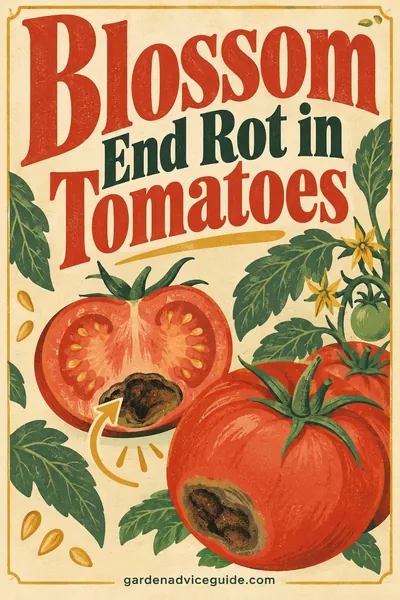
Blossom end rot is the sunken brown patch on the bottom of the fruit. Calcium can only travel through a plant dissolved in water, so when the soil dries hard and then gets flooded, the fruit that was expanding during the dry stretch builds cells with no calcium arriving. Days later you see the patch. Adding calcium doesn't fix it because your soil almost certainly has plenty already. Steady moisture fixes it. The full version of that story is in our guide to blossom end rot.
Split and cracked fruit is the same failure running the other direction. A tomato that's been coasting through a dry week has skin that's stopped stretching. Give it two inches of rain overnight, the fruit takes up water faster than the skin can expand, and it splits. Concentric rings around the shoulder or a vertical crack down the side both come from that.
So the goal isn't "lots of water." The goal is a soil that never goes bone dry and never stays swampy. Everything below is in service of that.
Clemson Cooperative Extension and University of Minnesota Extension both give the same practical target for garden tomatoes: about 1 to 2 inches of water per week including rainfall, applied deeply and evenly rather than in daily light doses.
How Often to Water Tomatoes by Growing Situation
Where the plant lives changes the answer more than anything else does. A raised bed dries faster than the ground beside it. A fabric grow bag dries faster than either. Here's the honest breakdown.
| Growing situation | Typical frequency | Volume per plant | Adjust when |
|---|---|---|---|
| In-ground bed | Every 3 to 4 days | 1.5 to 2.5 gallons per soak | Sandy soil, cut to every 2 days; clay, stretch to every 5 |
| Raised bed, 12 in deep | Every 2 to 3 days | 1.5 to 2 gallons per soak | Beds on legs or with open bottoms dry faster still |
| 5-gallon pot | Daily in summer, twice on 90°F+ days | 0.5 to 0.75 gallon per watering | Every 2 to 3 days in spring and fall |
| 10-gallon pot | Daily in summer heat | 1 to 1.5 gallons | Every 2 days once nights cool below 60°F |
| 15-gallon pot or half barrel | Every 1 to 2 days | 2 to 3 gallons | Can stretch to 3 days in cool, overcast weather |
| Fabric grow bag, 7 gal | Daily, often twice in heat | 0.75 to 1 gallon | Sides dry through the fabric, so mulch the surface |
| Hot, dry climate (AZ, NM, inland CA, TX) | Add roughly 50% to every row above | Same per event, more events | Afternoon shade cloth cuts demand substantially |
Two things worth saying plainly about that table.
First, it's a starting point, not a schedule. No fixed schedule survives contact with real weather. A cool overcast week and a 98°F week are not the same week, and a plant with a full canopy in August drinks several times what the same plant drank in June.
Second, the frequency column assumes you're watering deeply each time. Two gallons delivered slowly at the base is a real watering. Two gallons sprayed over the leaves in thirty seconds is mostly evaporation.
How Much Water Do Tomatoes Need in Actual Gallons
The "1 to 2 inches a week" number confuses people because nobody waters in inches. Here's the conversion.
One inch of water over one square foot is about 0.62 gallons. A mature in-ground tomato plant occupies roughly 4 square feet of root zone. So:
- 1 inch/week over 4 sq ft = about 2.5 gallons per plant per week
- 2 inches/week over 4 sq ft = about 5 gallons per plant per week
Split across two waterings, that's 1.25 to 2.5 gallons per plant per session. Across three waterings, roughly 0.8 to 1.7 gallons each time.
Rain counts. Put a straight-sided container in the garden, a tuna can works, and check it after storms. An inch in the can means you can skip a watering. Most gardeners overwater after rain because they never actually measure it.
Container plants don't follow the inches math at all, because the pot has a fixed volume of mix and no reservoir of surrounding soil to pull from. For pots, the rule is simpler: water until it runs freely out the drainage holes, then stop. That's a full watering regardless of pot size.
The Finger Test, and How Deep to Check
Forget the surface. The top half inch of any soil dries within hours of watering and tells you nothing.
Push a finger straight down 3 inches next to the plant, a few inches out from the stem so you don't tear roots. Indoors the same test runs shallower, and a holiday cactus waits until the top inch dries.
- Dry at 3 inches: water now.
- Barely damp at 3 inches: water today or tomorrow.
- Clearly moist and cool at 3 inches: wait.
For containers, use the same 3-inch depth but also learn the weight. Lift the pot right after a full watering, then lift it again when it's dry. You'll be able to tell in one second from then on, and it's more reliable than looking at the surface.
A cheap wooden dowel works too. Push it 6 inches into the soil, pull it out, and look at where the dark damp line stops. That gives you a picture of how deep your last watering actually reached, which is information the finger test can't give you.
Water at the Soil Line, Never Over the Leaves
This one costs nothing and prevents two of the worst tomato diseases.
Point the hose at the ground, at the base of the plant, and keep the foliage dry. Overhead watering does two bad things: it splashes soil onto the lower leaves, and it leaves those leaves wet for hours.
Early blight and Septoria leaf spot both overwinter in soil and old plant debris. They infect through wet leaf surfaces, and they get onto those leaves by splashing up from the ground. A sprinkler is essentially a delivery system for both. If you're already seeing spotted, yellowing lower leaves working their way up the plant, that's the pattern described in our guide to tomato blight.
Three habits that make a real difference:
- Water at the base, slowly, letting it soak in rather than run off.
- Mulch the soil surface, which stops the splash entirely.
- Water in the morning, so anything that does get wet dries within an hour or two.
Morning watering also puts moisture in the root zone before the day's heat arrives, which is exactly when the plant needs it. Evening watering isn't a disaster, and it beats not watering, but it leaves the soil surface and any wet foliage damp all night, which is when fungal spores germinate.
Deep and Infrequent vs Shallow and Frequent
This is the single biggest difference between gardeners who fight their tomatoes all summer and gardeners who don't.
Shallow, frequent watering wets the top 2 or 3 inches. Roots grow where the water is, so the plant builds a shallow, wide root mat right at the surface. That root system has no reserve. Miss one hot day and the plant wilts hard, and you're locked into daily watering for the rest of the season.
Deep, infrequent watering wets 8 to 12 inches down. Roots follow it down, and a tomato can root 2 feet deep or more when it's given a reason to. That plant rides out a hot afternoon, a forgotten weekend, and a dry spell without missing a beat.
Getting depth is about flow rate, not total volume. Water slowly. A hose on a trickle for 10 minutes at the base of a plant soaks in. The same hose on full blast for 90 seconds mostly runs sideways across the surface and off the bed.
If your soil is compacted or crusted, build a shallow basin of soil around each plant, a ring about 12 inches out, and fill it twice. The water goes down instead of away.
Mulch: The Cheapest Consistency Tool You Have
Two to three inches of mulch over the root zone does more for steady soil moisture than any watering technique.
It cuts surface evaporation dramatically, keeps soil temperature stable, blocks disease splash from the soil, and suppresses the weeds that compete for the same water. In practice, a mulched in-ground bed often needs one fewer watering per week than an unmulched one in the same conditions.
Good options: straw (not hay, which carries weed seed), shredded leaves, grass clippings applied thin and dry, or untreated wood chips on paths. Keep mulch pulled back an inch or two from the stem itself so the stem stays dry.
Wait until the soil has warmed, usually 2 to 3 weeks after transplanting, before mulching in-ground plants. Mulching cold spring soil keeps it cold.
Containers benefit too. A half inch of fine bark or a layer of straw on top of the mix noticeably slows drying on a windy deck.
Drip Lines and Soaker Hoses
If you grow more than four or five plants, this is the upgrade that matters most.
Soaker hose is the simple version. A porous hose laid along the row on the soil surface, under the mulch, weeping water slowly along its length. Run it 30 to 60 minutes depending on pressure and soil, then check with the dowel to see how deep it reached. Keep runs under about 100 feet or the far end gets much less than the near end.
Drip line with emitters is more precise. Half-inch tubing with 1 or 2 gallon-per-hour emitters at each plant. Two emitters per plant, one on each side, gives even coverage. A 1 GPH emitter running 45 minutes delivers 0.75 gallon, so two emitters for 90 minutes puts down about 3 gallons per plant.
Either one on an inexpensive battery hose timer removes the biggest variable in tomato growing, which is you being busy on a Thursday. Set it, then verify depth once a month and after any weather change.
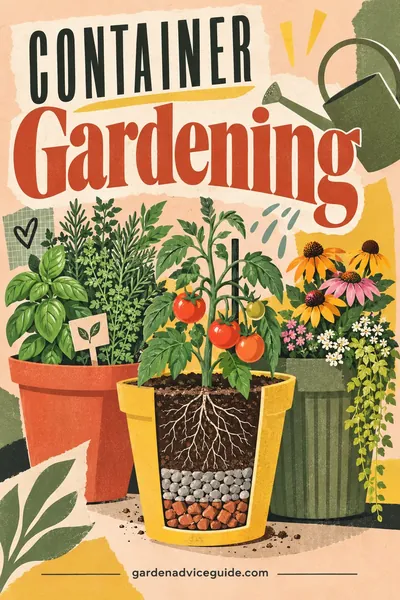
Watering Tomatoes in Pots and Containers
Container tomatoes fail from drought far more often than from anything else, so this deserves its own section.
Pot size is the whole game. The mix in a 5-gallon pot holds roughly a gallon of plant-available water once drained. A mature indeterminate tomato in August can transpire close to that in a single hot day. A 15-gallon pot holds several times as much and buys you a day or two of margin.
Minimums that actually work:
- 5 gallons: absolute floor, determinate or patio varieties only, expect daily watering
- 10 gallons: comfortable for determinates, workable for indeterminates
- 15 gallons or a half barrel: what an indeterminate variety really wants
Grow bags dry fastest because they breathe through the sides as well as the top. That air pruning is great for root structure and hard on your schedule. Expect to water a 7-gallon fabric bag daily from July onward, and mulch the surface to slow it down.
Other container specifics:
- Water until it runs out the bottom, every time. Partial watering leaves a dry pocket at the base of the pot and concentrates fertilizer salts.
- If water races straight through in five seconds, the mix has pulled away from the sides and gone hydrophobic. Set the pot in a tub of water for 20 minutes to rewet it fully, then resume normal watering.
- Light-colored pots run cooler. A black plastic pot in full afternoon sun can cook roots on the sunny side and drives water use up.
- Saucers are a trap in summer and a lifesaver in a heat wave. Standing water invites root rot most of the year, but during a 100°F stretch, an inch of water in the saucer for a few hours mid-day can save a plant. Empty it afterward.
More on pot selection and mix in our guide to growing vegetables in pots for beginners.
Watering by Growth Stage
The right frequency changes three times over a season.
Transplants, first 2 to 3 weeks. A new transplant has a tiny root ball and can't reach water even an inch away. Water lightly and often, roughly every day or every other day, keeping the top 3 to 4 inches consistently moist. This is the one stage where frequent shallow watering is correct.
Establishment through flowering. Shift to deep and infrequent. Stretch the interval deliberately so roots chase the water down. In-ground plants go to every 3 or 4 days here.
Fruit set and fill. Peak demand. The plant is carrying a full canopy and expanding fruit at the same time, and this is the stage where inconsistency shows up as blossom end rot. Hold the schedule steady and don't let a busy week create a gap.
Ripening. Here's the technique worth knowing: easing back slightly on water once fruit begins coloring concentrates sugars and acids, and the tomatoes taste better. Commercial growers use controlled deficit irrigation for exactly this reason.
The tradeoff is real, though, so be honest about it. Cut back too far and you get smaller fruit, lower total yield, and a plant primed to split the moment it rains. Practical version: reduce by about 25%, meaning stretch from every 3 days to every 4, and stop entirely if the plant wilts in the morning. Never try it with container plants, which have no buffer at all.
Diagnosing Watering Problems From the Plant
Your tomatoes will tell you what's wrong. Here's the translation.
| What you see | What it means | What to do |
|---|---|---|
| Wilting at 2 pm, recovered by evening | Normal. Leaves transpire faster than roots can supply during peak heat | Nothing. Check soil at 3 in before reacting |
| Still wilted at 7 am | Real drought stress, or root damage/rot | Check soil. Dry means soak deeply. Wet means a drainage problem |
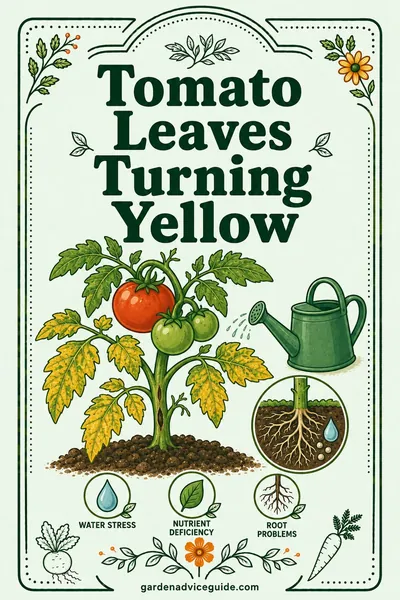
| Lower leaves yellowing, working upward | Often overwatering or nitrogen leaching; can also be blight | Check drainage first. See tomato leaves turning yellow |
| Sunken brown patch on fruit bottom | Blossom end rot from uneven moisture | Even out the schedule. Mulch. See blossom end rot |
| Rings of cracks on fruit shoulder | Growth spurt after dry spell, usually post-rain | Water more consistently. Pick ripening fruit before big storms |
| Vertical splits down the side | Severe, fast water uptake | Same fix. Mulch buffers this well |
| Leaves curling upward and inward | Often heat and wind, not drought | Verify soil moisture before adding water |
| Soil surface green with algae | Chronically overwatered or poor drainage | Cut frequency, improve drainage, check pot holes |
The midday wilt point matters because it's the most common reason people overwater. A tomato in 95°F sun droops in the afternoon even with perfectly moist soil. Check the soil before you reach for the hose.
Worked Example: Zone 6, August Heat Wave
Here's a real week for a garden with three in-ground plants and two 10-gallon containers, during a stretch of 92 to 96°F days with no rain in the forecast.
The setup: - Three indeterminate tomatoes in a loam bed, mulched with 3 inches of straw - Two determinate tomatoes in 10-gallon plastic pots on a south-facing patio - Watering by hose at the base, morning
In-ground math: target 2 inches this week because of the heat. That's about 5 gallons per plant, so 15 gallons total for the bed. Split across three sessions: 5 gallons per session across the bed, or roughly 1.7 gallons per plant each time.
Container math: a 10-gallon pot with a mature plant needs about 1.25 gallons to run out the bottom. In this heat, that's daily.
The week:
| Day | In-ground | Containers |
|---|---|---|
| Mon | 1.7 gal per plant, slow soak at base | 1.25 gal each, until it drains |
| Tue | Skip. Finger test at 3 in: still moist | 1.25 gal each |
| Wed | Skip | 1.25 gal each |
| Thu | 1.7 gal per plant | 1.25 gal each, plus a second half-gallon at 4 pm (97°F day) |
| Fri | Skip | 1.25 gal each |
| Sat | Skip. Test at 3 in: dry, so move Sunday's up | 1.25 gal each |
| Sun | 1.7 gal per plant | 1.25 gal each |
Weekly totals: about 15 gallons for three in-ground plants, about 18 gallons for two containers. The two pots drink more than the three garden plants. That surprises people every year, and it's the clearest argument for the biggest containers you can manage.
How long that takes with a hose: a standard garden hose at moderate flow puts out roughly 5 to 8 gallons per minute wide open, but you want a trickle. At about 1 gallon per minute, the in-ground session is around 5 minutes of standing there. Which is exactly why a soaker hose and a timer, neither of them expensive, pay for themselves in one season.
Mistakes That Cost a Harvest
- Watering on a calendar regardless of weather. Two inches of Tuesday rain plus your Wednesday watering equals a drowned root zone.
- Light daily sprinkles. Builds shallow roots and guarantees you can never take a weekend off.
- Overhead sprinklers. Cheap way to give yourself early blight.
- Skipping mulch. The single largest avoidable source of moisture swing.
- Panicking at afternoon wilt. Check at 3 inches before you water.
- Undersized pots. A 3-gallon nursery pot cannot support a tomato through August, no matter how attentive you are.
- Watering the mulch, not the soil. A quick pass wets the straw and nothing below it. Get the water under it, and check with a dowel.
- Letting a pot go fully dry once. Recovering a hydrophobic mix takes a soak in a tub, and the plant pays for it in dropped blossoms.
FAQ
How often should you water tomatoes in the ground?
Every 3 to 4 days in typical summer weather, delivering enough to total 1 to 2 inches per week including rain. That's about 2.5 to 5 gallons per plant per week. Sandy soil needs shorter intervals, heavy clay needs longer, and mulch usually buys you an extra day.
How often should I water tomato plants in containers?
Daily through summer for anything 10 gallons or smaller, and twice a day for 5-gallon pots or fabric bags on 90°F-plus days. In spring and fall, every 2 to 3 days is usually enough. Always water until it runs out the drainage holes rather than giving a measured amount.
Should I water tomatoes every day?
Only if they're in containers, or they're transplants still establishing. Established in-ground tomatoes watered daily develop shallow roots and become fragile. Deep soakings every few days build a root system that can handle a hot week on its own.
Is it better to water tomatoes in the morning or evening?
Morning. It gets water into the root zone before the heat of the day, and any moisture that lands on leaves dries quickly, which keeps blight and Septoria at bay. Evening watering works if morning isn't possible, but keep the foliage dry.
Can you overwater tomatoes?
Yes. Constantly saturated soil starves roots of oxygen, which causes yellowing lower leaves, stunted growth, and eventually root rot. The tell is a plant that looks wilted while the soil is wet. Container plants without drainage holes are the most common victims.
How much water do tomatoes need per day in hot weather?
An in-ground mature plant uses roughly 0.5 to 0.9 gallon per day during a 90°F-plus stretch, which is why the weekly total climbs toward 2 inches in a heat wave. A mature indeterminate in a 10-gallon pot can use close to a full gallon a day. You don't have to water daily in-ground, you just have to make each soaking cover the gap.
Why do my tomatoes split after it rains?
Because the plant went from dry to flooded. The fruit takes up water faster than the skin can stretch, and the skin gives way. Consistent watering and a good mulch layer prevent most of it. Picking nearly ripe fruit ahead of a forecast downpour saves the rest.
Does watering less make tomatoes taste better?
Slightly, and only at the right moment. Easing back about 25% once fruit starts coloring concentrates sugar and acid. Push it further and you trade flavor for smaller fruit, lower yield and split risk. Don't attempt it with container plants, which have no moisture buffer to give up.
Related reading: blossom end rot · tomato leaves turning yellow · tomato blight · growing vegetables in pots for beginners
Updated August 2026
A note on numbers. This page gives you gallons, watering intervals, soil depths and timing, not dollar figures. Hoses, timers and mulch are priced by your region and your supplier, and we do not set any of it. Every number here is one you measure in the bed, not one you pay.