Container Gardening

Container gardens fail for two reasons, and almost everything else is a detail. First, pots dry out far faster than ground soil, because a container has a tiny water reservoir and is heated from all sides. Second, garden soil put in a pot compacts into a dense airless brick that suffocates roots within weeks. Fix those two things and most container problems disappear.
The rest of this guide is the general principles: what to plant in, how big it needs to be, how drainage really works, and why feeding matters more in a pot than in the ground.
Not sure how much water your pots actually need? Work out your watering depth and frequency with our free watering guide.
If you want crop-by-crop advice instead of principles, start with our guides to growing vegetables in pots for beginners and growing herbs in pots for beginners. This page covers the mechanics that sit underneath both. Anything that has to survive the winter in its pot needs one extra step, which our guide to keeping potted perennials over winter walks through.
Why Garden Soil Must Never Go in a Pot
Scooping soil from the yard into a pot is the most common beginner shortcut, and it fails almost every time. Understanding why also explains most of what follows.
Garden soil works in the ground because of structure. Roots, worms, fungal threads, and years of freeze and thaw build crumbs and channels that hold air. That structure depends on the surrounding soil, and it does not survive being dug up, dropped into a bucket, and watered from above.
In a pot, three things go wrong:
- It compacts. Every watering settles the particles tighter. Within a few weeks the mix is dense enough that roots cannot push through and air cannot get in.
- It drains badly and then dries hard. Clay and silt hold water in the fine pores. In a container with limited depth, that means a soggy root zone after rain, then a shrunken cracked block that repels water in heat.
- It brings problems with it. Weed seed, fungus gnats, soil-borne disease, and often the crusting or hardpan you were trying to escape.
Roots need air as much as water. A root sitting in saturated, airless mix cannot take up oxygen, and the first symptom is wilting leaves, which looks exactly like drought and gets treated with more water. That mistake kills more container plants than actual drought.
Container Gardening Soil: What Potting Mix Actually Is
Potting mix is not soil at all. Most commercial mixes contain no mineral soil whatsoever. They are engineered blends built to do one job: hold water and air at the same time in a shallow container.
A typical mix contains:
- Peat moss or coconut coir, usually 50 to 70 percent. This is the sponge. It holds many times its weight in water and releases it slowly.
- Perlite or pumice, usually 20 to 40 percent. The white volcanic bits. These create large pores that stay full of air even when the mix is wet, which is the whole trick.
- Vermiculite, sometimes. Holds water and nutrients, adds a little cation exchange.
- Compost or bark fines, in vegetable mixes. Adds nutrition and biology.
- Lime, to correct the acidity of peat.
- A starter fertilizer, in many bagged mixes, typically enough for 4 to 8 weeks and no longer.
That perlite fraction is the reason mix works and soil does not. Perlite particles are rigid and irregular, so they hold the structure open no matter how many times you water. Peat alone would compact.
Potting mix versus potting soil versus garden soil. The bag labels are inconsistent and it costs people money. Bags labeled "garden soil" or "topsoil" are meant to be dug into ground beds and will compact in a pot. Bags labeled "potting mix" or "container mix" are the soilless blends described above. Read the ingredient panel, not the front of the bag. If it lists sand, topsoil, or field soil, it belongs in the ground.
Make it yourself for big jobs. Filling several large containers gets expensive at bagged-mix prices. A workable homemade recipe is 4 parts peat or coir, 2 parts compost, 1 part perlite, and a handful of lime per cubic foot, mixed damp so the peat doesn't blow around. Our guide to raised bed soil walks through the same logic at larger volumes.
Replace or refresh annually. Peat breaks down and the mix collapses. Each spring, either replace the mix in small pots outright, or for large containers pull the top third, mix in fresh compost and a scoop of perlite, and top up.
Container Size by Crop
Undersized pots are the most common beginner mistake after using garden soil, and the two failures compound: a small pot dries out even faster.
Volume buys you water reserve, root room, and temperature stability. A 2 gallon pot in August sun may need water twice a day. A 15 gallon pot with the same plant needs it every other day.
| Crop | Minimum volume | Comfortable volume | Minimum depth | Plants per pot |
|---|---|---|---|---|
| Lettuce, spinach, arugula | 1 gallon | 3 gallons | 6 inches | 3 to 4 per 3 gallons |
| Radishes, salad turnips | 1 gallon | 3 gallons | 6 inches | 8 to 10 per 3 gallons |
| Basil, cilantro, parsley | 1 gallon | 2 gallons | 8 inches | 1 |
| Rosemary, thyme, oregano, sage | 2 gallons | 5 gallons | 8 inches | 1 |
| Bush beans | 2 gallons | 5 gallons | 8 inches | 3 to 4 per 5 gallons |
| Green onions | 1 gallon | 2 gallons | 6 inches | 10 to 15 |
| Chard, kale | 3 gallons | 5 gallons | 10 inches | 1 |
| Peppers | 3 gallons | 5 gallons | 12 inches | 1 |
| Eggplant | 5 gallons | 7 gallons | 12 inches | 1 |
| Bush cucumbers | 5 gallons | 7 gallons | 12 inches | 1 |
| Determinate tomatoes | 5 gallons | 10 gallons | 12 inches | 1 |
| Indeterminate tomatoes | 10 gallons | 15 to 20 gallons | 18 inches | 1 |
| Carrots, short types | 3 gallons | 5 gallons | 10 inches | 15 to 20 per 5 gallons |
| Potatoes | 10 gallons | 15 gallons | 16 inches | 2 to 3 seed pieces |
| Zucchini and summer squash | 7 gallons | 10 gallons | 14 inches | 1 |
| Dwarf fruit trees, blueberries | 15 gallons | 25 gallons | 18 inches | 1 |
A quick reference for translating pot dimensions: a 10 inch round pot is roughly 3 gallons, 12 inches is about 5 gallons, 14 inches is about 7 gallons, 16 inches is about 10 gallons, and 20 inches is about 20 gallons. Depth matters more than width for root crops and tomatoes, and width matters more for shallow-rooted greens.
The single most common size error is growing a full-size indeterminate tomato in a 5 gallon bucket. It will live, and it will produce maybe a third of what the same plant gives in 15 gallons, while needing water twice a day in July.
Drainage, and Why Gravel in the Bottom Does Not Work
Every container needs drainage holes. That part is not negotiable. A pot with no holes has no way to shed excess water, and roots sit in a permanent saturated layer at the bottom.
Now the myth worth killing properly.
Putting gravel, broken pottery, or packing peanuts in the bottom of a pot does not improve drainage. It makes it worse.
Here's the physics. Water moves through fine-textured material by capillary action, held in the small pores by surface tension. When that fine material sits on top of a coarse layer like gravel, the water does not simply fall through. The large pores of the gravel cannot pull water out of the small pores of the mix. Water only crosses that boundary once the mix immediately above it is fully saturated and gravity finally overcomes the capillary hold.
The result is a saturated zone, called a perched water table, that sits at the bottom of the potting mix. It exists in every pot. Its thickness is set by the texture of the mix, not by what's underneath it.
So when you fill the bottom 3 inches with gravel, you have not moved that saturated zone. You have raised it 3 inches, right up into the root zone, while also removing 3 inches of usable rooting volume. You made a 12 inch pot into a 9 inch pot with a swamp at the bottom.
What actually helps:
- Use a mix with plenty of perlite. Coarser texture means a thinner perched zone. This is the real lever.
- Choose taller pots for water-sensitive plants. The saturated layer is the same thickness regardless of pot height, so it's a smaller fraction of a deep pot.
- Keep the holes clear. Cover them with a square of window screen or a coffee filter to stop mix washing out, which is the legitimate version of the gravel idea.
- Raise the pot off the ground on feet or a couple of slats. A pot sitting flat on a patio can seal its own drainage holes against the surface.
- Empty the saucer. A pot standing in a full saucer has effectively no drainage at all. Water it, let it drain for 20 minutes, then tip the saucer out.
The one time gravel earns a place is as ballast, weighing down a tall lightweight pot in a windy spot. Even then, keep the potting mix depth at the plant's full requirement and treat the gravel as extra height, not as part of the growing volume.
Container Materials Compared
Material changes how often you water more than most people expect. A terracotta pot and a glazed pot of the same size can differ by a full watering per day in summer.
| Material | Water retention | Weight | Lifespan | Notes |
|---|---|---|---|---|
| Terracotta, unglazed | Low, evaporates through the walls | Heavy | 5 to 20 years, cracks if frozen wet | Best for rosemary, thyme, lavender, and anything that hates wet feet. Worst for tomatoes in heat. Empty and store dry over winter in freezing zones. |
| Glazed ceramic | High, sealed walls | Heaviest | 10 or more years, can still crack in frost | Looks good, holds moisture well. Check it actually has a drainage hole, since many decorative ones do not. |
| Plastic | High | Light | 3 to 10 years, degrades in UV | Cheap, practical, easy to move. Dark plastic in full sun cooks roots, so choose light colors or shade the pot. |
| Fabric grow bags | Moderate, evaporates through the sides | Very light | 2 to 5 seasons | Roots hit the fabric and stop rather than circling, which builds a denser root system. Dries faster than plastic, so plan on more frequent watering. Folds flat for storage. |
| Metal, galvanized or steel | High, sealed | Moderate to heavy | 10 or more years | Heats up dramatically in direct sun and can cook roots at the pot wall. Line the inside or site it where the pot is shaded. Must have holes drilled. |
| Wood, cedar or untreated | Moderate | Heavy | 5 to 15 years depending on species | Good insulation, stable temperature, and it looks at home in a yard. Cedar and redwood last longest. Avoid old treated lumber for food crops. |
| Concrete, stone | Moderate | Extremely heavy | Decades | Excellent temperature stability, effectively permanent. Place it before you fill it. |
For most vegetable growing, a light-colored plastic pot or a fabric bag of adequate size beats an undersized attractive one every time. If the pot has to look good, drop the good-looking pot over a plain plastic one and lift the inner pot out to water.
Watering: The Thing That Actually Kills Container Plants
A container has no groundwater to draw on. Everything the plant gets, you give it, and the reservoir is measured in gallons rather than cubic yards.
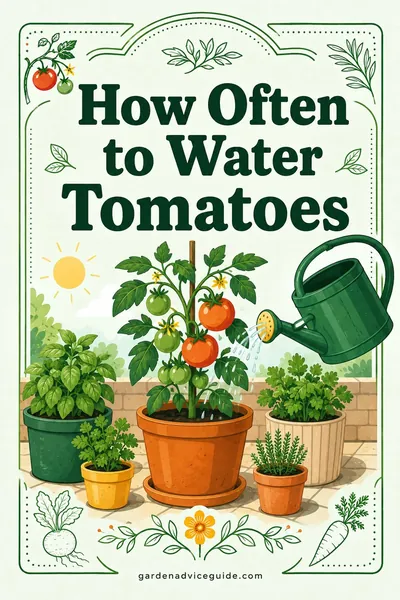
Rough frequency by temperature, for a 5 gallon pot with a mature plant in full sun:
| Daytime high | Frequency | Notes |
|---|---|---|
| Below 70F | Every 2 to 3 days | Check before watering, overwatering risk is real here |
| 70 to 80F | Daily | |
| 80 to 90F | Daily, sometimes twice | Morning is the important one |
| Above 90F | Twice daily | Morning and late afternoon |
| Above 95F with wind | Twice daily, plus shade | Wind dries pots faster than heat does |
Small pots under 3 gallons in high heat can need water twice a day regardless of what's in them.
The technique matters as much as the timing:
- Water until it runs out the bottom. A splash on the surface wets the top inch and leaves the root ball dry. Keep going until you see runoff, then stop.
- Check with a finger, not a schedule. Push a finger 2 inches into the mix. Damp means wait, dry means water. Lifting a small pot works too, since dry pots are startlingly light. Succulents muddle this test because thirst and drowning produce similar looking leaves, so compare yours against our overwatered versus underwatered succulent guide.
- Water in the morning. Plants use it during the day, and foliage dries before night.
- Rewet a dried-out pot slowly. Peat that has dried hard repels water and the first pour runs straight down the gap at the pot wall. Water a little, wait 10 minutes, water again, three times. Or stand the pot in a tub of water for 20 minutes.
- Mulch the surface. An inch of bark, straw, or even shredded leaves cuts evaporation noticeably.
Self-watering and reservoir containers are worth considering if you travel, work long hours, or garden on a hot balcony. They hold a water reserve below a perforated platform, and the mix wicks moisture up from below as the plant uses it. A well-sized reservoir stretches a daily-watering plant to 3 or 4 days. They suit thirsty crops like tomatoes, peppers, and cucumbers. They suit Mediterranean herbs poorly, since rosemary and thyme resent constant moisture. Keep the overflow hole clear so heavy rain cannot flood the reservoir, and top the reservoir up rather than watering from above once plants are established.
Our watering guide has the depth math and the finger test in more detail.
Feeding: The Real Difference from In-Ground Growing
This is the part most people skip, and it's the difference between a container garden that runs out of steam in July and one that produces into fall, the season when cool weather bloomers take over the pots.
In the ground, a plant's roots range through many cubic feet of soil, mining nutrients released slowly by organic matter and mineral weathering. In a pot, the root zone is a few gallons of soilless mix, and every time you water until it runs out the bottom, dissolved nutrients run out with it. Frequent watering in heat means frequent leaching. A pot watered twice a day in August is being rinsed twice a day.
Most bagged potting mixes include a starter charge that lasts 4 to 8 weeks. After that, the plant is living on what you give it.
A practical feeding routine:
- Mix slow-release granular fertilizer into the mix at planting, following the label rate for container volume. This provides a baseline for 8 to 12 weeks.
- Add a liquid feed every 1 to 2 weeks once plants are actively growing, at the label rate. Half strength weekly works as well as full strength every other week, and is gentler.
- Match the feed to the crop. Leafy greens and herbs want more nitrogen. Fruiting crops like tomatoes and peppers want more potassium once flowers set, since too much nitrogen gives you a large plant with little fruit.
- Increase frequency in peak heat, when you're watering most and therefore leaching most.
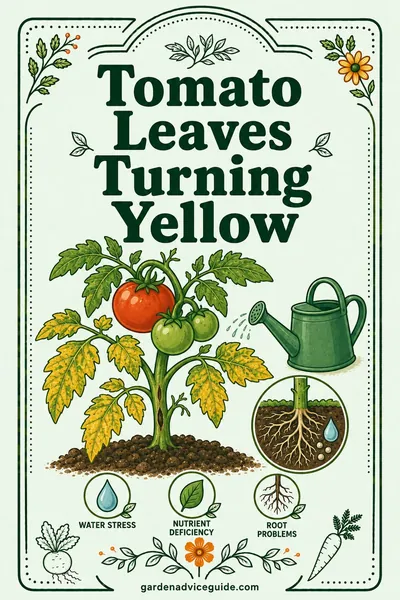
- Read the plant. Uniform pale yellowing on older lower leaves usually means nitrogen is short. Purple leaf undersides can mean phosphorus or simply cold. Yellowing between green veins on new growth points toward iron or magnesium.
- Ease off in fall, as growth slows and days shorten.
Compost is a useful part of the mix but it cannot carry a heavy feeder through a whole season in a pot. Use it as a component, and see our composting guide for making your own.
Spacing in Containers
Container plants get crowded more often than ground plants, because a pot looks empty when it's planted correctly and people fill the gaps.
The rule is simpler than in-ground spacing: give each plant the volume from the table above, and let the leaves touch but not overlap heavily. Crowded pots produce small plants, block airflow, and dry out even faster because more leaf area is pulling water from the same reservoir.
Mixed pots work well if you group by water needs. Basil, parsley, and chives all want steady moisture and share a pot happily. Rosemary and thyme want to dry between waterings and will rot in that same pot. Grouping thirsty with drought-tolerant is the classic mixed-container mistake.
Our plant spacing guide covers the in-ground numbers if you're growing both ways, and our comparison of raised beds versus in-ground growing is worth reading if you're deciding whether containers are the right choice at all.
A Worked Example: A 6 Pot Patio Garden
Say you have a sunny patio, 8 hours of direct sun, and room for six containers.
The setup.
| Pot | Size | Crop | Mix needed |
|---|---|---|---|
| 1 | 20 gallon fabric bag | 1 indeterminate tomato | 2.7 cubic feet |
| 2 | 7 gallon plastic | 1 pepper, 1 basil | 0.9 cubic feet |
| 3 | 7 gallon plastic | 1 bush cucumber | 0.9 cubic feet |
| 4 | 5 gallon plastic | 4 bush bean plants | 0.7 cubic feet |
| 5 | 3 gallon plastic | Cut-and-come-again lettuce | 0.4 cubic feet |
| 6 | 3 gallon terracotta | Rosemary and thyme | 0.4 cubic feet |
Mix. Total about 6 cubic feet, which is roughly three 2 cubic foot bags of vegetable potting mix. That first fill is the single largest line in the whole setup after the pots themselves. Refreshing the top third each spring afterward costs about a third as much, because you are buying one bag rather than three.
Slow release at planting. Granular fertilizer mixed in at the label rate for each pot volume.
Water in July. The tomato in 20 gallons needs roughly 1 to 1.5 gallons a day at peak. The two 7 gallon pots need about half a gallon each daily. The beans and lettuce need a quart or so each. That's about 3 gallons a day total, or two watering cans, taking maybe 6 minutes. The rosemary pot gets water only when the top 2 inches are dry, perhaps every 4 days.
Liquid feed. Half strength weekly from the third week after planting, on every pot except the rosemary and thyme, which want lean conditions.
Rough yields for one season. Tomato 15 to 25 pounds. Pepper 2 to 4 pounds. Cucumber 10 to 15 fruit. Beans 2 to 3 pounds over several pickings. Lettuce 4 to 6 cuttings. Herbs, continuous.
The failure to avoid. Putting that tomato in a 5 gallon bucket to save space and money. Same plant, same care, roughly a third of the yield, and double the watering.
FAQ
Can I use garden soil in containers?
No, and this is the mistake that ruins the most container gardens. Garden soil compacts into a dense airless block once it's dug up and repeatedly watered in a pot, which suffocates roots and holds water in the wrong places. It also brings weed seed, pests, and disease. Use a soilless potting mix built from peat or coir plus perlite instead.
Should I put gravel in the bottom of a pot for drainage?
No. Water will not cross from fine potting mix into coarse gravel until the mix directly above is fully saturated, so a gravel layer simply lifts that saturated zone up into the root zone while removing usable rooting depth. Use a mix with plenty of perlite instead, keep the drainage holes clear with a screen square, and never leave the pot standing in a full saucer.
How big should a container be for vegetables?
Greens and radishes manage in 1 to 3 gallons, peppers and determinate tomatoes want 5 to 10, and an indeterminate tomato really needs 15 to 20 gallons with 18 inches of depth. Undersized pots restrict roots, produce a fraction of the yield, and dry out so fast they need watering twice a day in summer. When in doubt, go one size larger.
How often do I need to water containers?
In cool weather below 70F, every 2 to 3 days. At 70 to 80F, daily. Above 90F, twice a day for most pots, and small pots under 3 gallons can need it twice a day even in mild heat. Check by pushing a finger 2 inches into the mix rather than following a fixed schedule, and always water until it runs out the drainage holes.
Why do container plants need more fertilizer than ground plants?
Because every watering that drains out the bottom carries dissolved nutrients with it, and a pot has only a few gallons of mix to hold reserves. In the ground, roots range through cubic yards of soil that release nutrients slowly. Most bagged mixes carry a starter charge for 4 to 8 weeks, after which you need slow-release granules plus a liquid feed every 1 to 2 weeks.
What are the best containers for vegetables?
Light-colored plastic and fabric grow bags are the practical choices for most vegetables, since both hold moisture well and are light enough to move. Fabric bags air-prune roots and build a denser root system, at the cost of drying faster. Save unglazed terracotta for rosemary, thyme, and lavender, which benefit from the evaporation through the walls.
Do self-watering containers actually work?
Yes, for thirsty crops. A reservoir under a perforated platform lets the mix wick moisture up as the plant uses it, stretching a daily-watering plant to 3 or 4 days. They suit tomatoes, peppers, and cucumbers well and Mediterranean herbs poorly, since rosemary and thyme rot in constant moisture. Keep the overflow hole clear so heavy rain cannot flood the reservoir.
Can I reuse potting mix from last year?
Yes, with a refresh. Peat and coir break down over a season and the mix collapses, losing the air pockets that made it work. For large containers, remove the top third, mix in fresh compost and a scoop of perlite, and top up. Replace the mix outright in small pots, and always replace it if the previous plant had a soil-borne disease.
Updated August 2026
A note on numbers. This page gives you pot volumes, mix quantities, watering intervals and feeding rates, not dollar figures. Pots, potting mix and fertilizer are priced by your region, your supplier and the season, and we do not set any of it. Work out your volumes here, then price the bags locally.