How to Grow Cucumbers

Direct sow cucumber seeds outdoors once the soil holds 65 to 70F, which is usually 2 weeks after your last frost. Give them full sun, 1 to 2 inches of water a week without interruption, and a trellis if you're growing a vining type. Skip transplanting if you can, because cucumbers have a taproot that resents being disturbed and a direct-sown seed routinely catches and passes a transplant within three weeks.
The two problems that ruin most cucumber seasons are bitter fruit from inconsistent water and heat, and flowers that never set fruit because no pollinator showed up. Both are fixable, and neither is a disease.
Not sure when to sow? Get your date with our free When-to-Plant Lookup before the seed packet goes in the ground.
When to Plant Cucumbers by Zone
Cucumbers are a warm-season crop with a short runway. Most varieties go from seed to first fruit in 50 to 65 days, so there's no reason to rush them into cold soil.
| Zone | Typical last frost | Direct sow outdoors | Last succession sowing |
|---|---|---|---|
| 3 | May 15 to Jun 1 | Early to mid June | Early July |
| 4 | May 5 to May 20 | Late May to early June | Mid July |
| 5 | Apr 25 to May 10 | Mid to late May | Mid to late July |
| 6 | Apr 10 to Apr 25 | Early to mid May | Early August |
| 7 | Mar 25 to Apr 10 | Late April to early May | Mid August |
| 8 | Mar 10 to Mar 25 | Mid April | Late August |
| 9 | Feb 5 to Feb 25 | Mid to late March | Early September |
| 10 | Frost rare | February and September | October |
The last-sowing column matters more than gardeners expect. Count back 60 days from your first fall frost, add 10 days of buffer, and that's your cutoff. Our when to plant cucumbers guide works through the fall math in more detail.
Treat those dates as regional averages, not promises. Frost tables and USDA zone maps are built from 30-year averages taken at weather stations that may sit miles from your garden and hundreds of feet lower or higher. Elevation, a nearby lake, a low spot that collects cold air, or a wall of pavement will shift your real dates by 1 to 2 weeks in either direction. Two gardens in the same county at different elevations are not on the same schedule. Your county extension office publishes local frost data and knows those pockets, and it's a free call. You can cross-check your station numbers in our frost dates tool and confirm your zone with the growing zones lookup.
Soil temperature is the real signal
Push a soil thermometer 2 inches down at 9 a.m. and look for 65F before sowing, 70F if you want fast, even germination.
At 60F soil, cucumber seed germinates in 10 to 14 days if it germinates at all, and a good portion of it rots first. At 70F, you get seedlings in 4 to 6 days. At 80F, 3 days. The seed is large and starchy, which makes it very appealing to soil fungi during a long slow germination.
If you're impatient, lay black plastic over the bed for 10 days beforehand. That's worth 5 to 8 degrees.
Why Direct Sowing Beats Transplanting
Cucumbers, like all cucurbits, put down a taproot fast. Within 10 days of germination that root is well ahead of the top growth, and it does not tolerate being broken or bent.
Break it during transplanting and the plant spends 2 to 3 weeks rebuilding instead of growing. In side-by-side plantings, a direct-sown seed and a 3-week-old transplant set out the same day will usually be indistinguishable by mid-July, and the direct-sown plant is often ahead.
If your season is genuinely too short to direct sow, transplant carefully:
- Start seeds no more than 3 weeks before setting out. Older than that and you've lost the advantage.
- Use peat, coir, or soil-block pots that go into the ground intact. Never bare-root a cucumber.
- Sow 2 seeds per pot, then snip the weaker one at soil level rather than pulling it, which would disturb the neighbor's roots.
- Harden off over 5 to 7 days, and transplant on an overcast evening.
- Water in with a half gallon per plant and shade them for the first 2 days.
Our seed starting guide covers pot types and hardening off in detail.
Direct sowing method: plant 1 inch deep, 2 to 3 seeds per spot, then thin to the strongest one when the first true leaf opens. Snip the extras, don't pull them.
Bush vs Vining Cucumbers
This decision sets your spacing, your support, and your total yield.
| Bush (compact) | Vining (standard) | |
|---|---|---|
| Vine length | 2 to 3 ft | 6 to 8 ft |
| Spacing in row | 12 to 18 in | 12 in on a trellis, 36 in on the ground |
| Support | Optional, a short cage helps | Trellis strongly recommended |
| Yield per plant | 8 to 12 fruits | 20 to 30 fruits |
| Harvest window | 3 to 4 weeks, concentrated | 6 to 10 weeks, continuous |
| Disease pressure | Higher, foliage sits close to soil | Lower on a trellis, better airflow |
| Best for | Containers, small beds, short seasons | Trellises, main crop, pickling volume |
| Examples | Spacemaster, Bush Champion, Salad Bush | Marketmore 76, Straight Eight, Suyo Long |
There's also a variety split worth knowing. Slicing cucumbers are the long smooth ones for fresh eating. Pickling cucumbers are shorter, bumpier, and have thinner skin and denser flesh, which is why they stay crisp in brine. Burpless or Asian types are long, thin-skinned, mostly seedless, and much less prone to bitterness, and they benefit most from a trellis because they grow so long they curl on the ground.
Trellising: Straighter Fruit and Better Airflow
A trellis is the highest-return thing you can do for a vining cucumber, and it costs almost nothing.
What you gain:
- Straight fruit. A cucumber lying on soil curls around whatever it touches and develops a flat pale patch where it rests. Hanging fruit grows straight under its own weight.
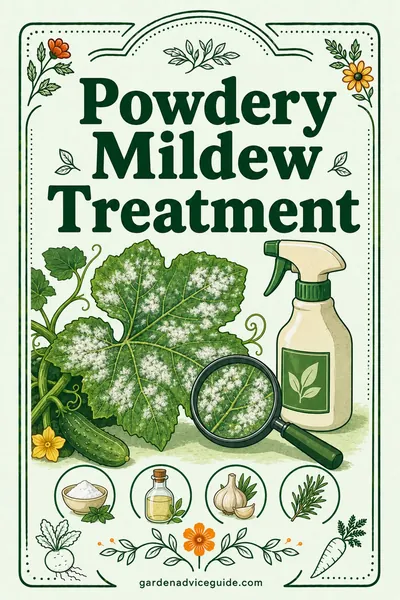
- Less disease. Powdery mildew and downy mildew both need leaves that stay damp. Vertical foliage dries hours faster after rain or dew. This is the single biggest reason to trellis in a humid climate. Our powdery mildew treatment guide covers what to do once it shows up, but airflow is how you avoid the conversation.
- Space. Trellised plants go 12 inches apart instead of 36, so a 4x8 bed holds three times as many.
- Easier picking. You see the fruit, so you pick it on time, which keeps the plant producing.
Trellis options that actually hold a loaded cucumber vine:
- Cattle panel arch. A 16-foot livestock panel bent between two beds, staked at each end. Strongest option, lasts decades, fruit hangs down inside where it's easy to pick.
- A-frame. Two panels or two wooden frames leaned together. Stable, and the shaded ground underneath will grow lettuce into July.
- Netting on T-posts. Cheapest. Drive posts every 6 feet, stretch 5-foot trellis netting between them. Replace the netting every year or two.
- String trellis. A top wire at 6 feet with vertical strings dropped to each plant. Clip the vine every foot as it climbs.
Put the trellis in before or at sowing. Cucumbers climb with tendrils and will find it on their own, though giving the first few feet of vine a hand for the first week saves it from sprawling.
Soil, Sun, and Feeding
Cucumbers want 8 hours of sun, though they'll take light afternoon shade in zones 8 through 10 without complaint.
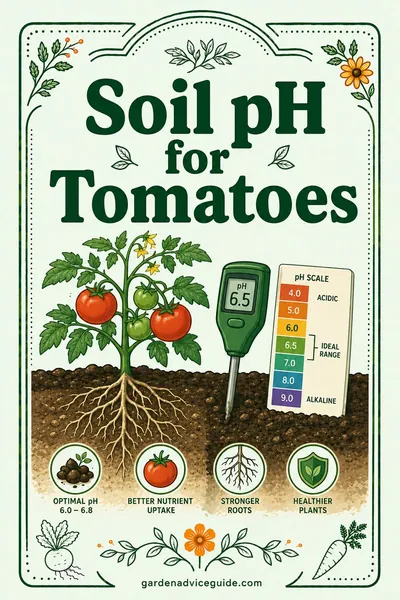
Target pH is 6.0 to 6.8. They're less fussy than tomatoes about this.
They're heavy feeders and heavy drinkers, and the two are connected:
- Work 2 to 3 inches of compost into the top 8 inches before sowing. Cucumbers respond to organic matter more visibly than almost any other garden crop, mostly because it holds water.
- At sowing: a balanced feed such as 10-10-10, worked in lightly.
- At first true leaves: nothing extra.
- Once vines start running: a balanced liquid feed every 2 to 3 weeks.
- Once fruit sets: shift toward higher potassium, like 5-10-10.
- Skip heavy nitrogen for the same reason as peppers. You get an enormous vine with few female flowers.
- Mulch 2 to 3 inches deep with straw once soil is warm. This is what makes consistent moisture possible.
If you're filling a new bed, our raised bed soil calculator sizes the compost and topsoil mix.
Worked example. A 4x8 raised bed, 32 square feet, with a trellis down the center of the 8-foot length. Vining cucumbers at 12 inches gives 8 plants along the trellis, plus you can tuck bush lettuce on the shaded north side. At 20 to 30 fruits per plant, that's 160 to 240 cucumbers across the season, which is well past fresh-eating volume and into pickling territory. Water need is roughly 1.5 gallons per plant per week early and 2.5 gallons in peak heat, so 12 to 20 gallons for the bed weekly, split into two soakings. At 2 inches of straw mulch over 32 square feet you'll need about 5.3 cubic feet, or two bags.
Cucumber Pollination: Male Flowers, Female Flowers, and No Fruit
This is the section that answers the most common cucumber question, and the answer is almost never a disease.
Male flowers come first
A cucumber plant produces separate male and female flowers on the same vine. The male flowers open first, typically 7 to 14 days before the first female flowers, and they appear in clusters of 3 to 5 on thin straight stems.
New gardeners see a vine covered in flowers, wait, watch them all fall off, and conclude the plant is sick. It isn't. Those are males, and males always drop after a day. That's their entire job: open, shed pollen, fall off.
Standard vining varieties produce roughly 10 to 20 male flowers for every female. Bush and hybrid types are often closer to 3 to 1.
How to tell them apart
Female flowers have a tiny cucumber behind them. That's the whole test, and it takes two seconds.
Look at the base of the flower, between the petals and the vine. A female flower sits on top of a miniature fruit about the size of a grain of rice up to a fingernail, already cucumber-shaped, complete with bumps or spines. A male flower sits on a plain thin stem with nothing behind it.
| Male flower | Female flower | |
|---|---|---|
| Behind the petals | Plain thin stem | Miniature cucumber |
| Appears | First, 7 to 14 days earlier | After the males |
| Grows in | Clusters of 3 to 5 | Usually singly |
| Center of flower | Single stamen with pollen | Divided stigma, 3 lobes |
| If unpollinated | Drops in 1 day, normal | Yellows, shrivels, drops in 2 to 4 days |
No fruit set usually means no pollinators
If female flowers are opening and then yellowing and shriveling at the tip while still small, the flower didn't get pollinated. That's a bee problem, not a plant problem.
A female cucumber flower is open for one day, and it needs 8 to 12 separate bee visits to get enough pollen grains distributed across all three stigma lobes. Partial pollination is why you get those cucumbers that are fat at the stem end and pinched and curled at the tip. That fruit isn't diseased or short of water; only part of it got fertilized.
Common reasons the bees don't come:
- No flowers nearby. A vegetable garden with nothing blooming but cucumbers is not attractive to pollinators. Plant borage, alyssum, cosmos, or dill along the bed. Our companion planting chart lists the ones that pull in the most bees.
- Insecticide timing. Anything sprayed on open flowers, including organic products like spinosad and pyrethrin, kills bees. Spray at dusk only, and never on blooms.
- Weather. Bees don't fly much below 55F, in rain, or in strong wind. A cool wet week means a poor set.
- Heat. Above 90F, cucumber pollen viability drops sharply, and the plant also skews toward producing more male flowers.
- Row cover left on. This is the sneaky one. Row cover keeps cucumber beetles off, but it also keeps bees off. Remove it the day the first female flower opens.
Note the exception: parthenocarpic varieties, common in greenhouse and some Asian types, set fruit with no pollination at all. If you've bought one of these, ignore this entire section. The seed packet will say parthenocarpic or seedless.
How to hand pollinate cucumbers
Takes about 20 seconds per flower and works reliably. Do it in the morning, ideally before 10 a.m., since flowers are freshest and pollen is most viable then.
- Find an open male flower. Plain stem behind it, clustered with others.
- Pick it and peel the petals off, leaving the pollen-covered stamen exposed on its little stalk. It looks like a tiny yellow paintbrush.
- Find an open female flower. Miniature cucumber behind it, petals open.
- Dab the stamen against the stigma in the center of the female flower, rotating so you touch all three lobes. You want visible yellow pollen transferred.
- Use one male per female, or a fresh male every second female if you're short.
- Mark it with a loose loop of yarn if you want to track results.
You'll know within 3 days. A pollinated fruit starts swelling visibly. An unpollinated one yellows at the tip and drops.
A soft artist's brush works too, but the peeled male flower gives you more pollen and better contact.
Watering and Bitter Cucumbers
Cucumbers are about 95 percent water and they behave like it. They need 1 to 2 inches per week, and they need it without gaps.
Bitterness is the main consequence of getting this wrong. Cucumbers naturally contain compounds called cucurbitacins, concentrated in the skin and the stem end. Under stress, the plant produces far more of them, and the fruit turns genuinely bitter, sometimes inedible.
The two stressors that trigger it:
- Heat. Sustained days above 90F.
- Water swings. Soil going dry and then getting flooded, over and over.
Neither is fixed after the fact. A bitter cucumber stays bitter, though peeling it and cutting off the stem inch removes most of it.
Prevention:
- Water deeply twice a week rather than lightly every day. Aim for water reaching 8 inches down.
- Mulch 2 to 3 inches. This does more against bitterness than anything else on the list.
- Drip or soaker at the base. Wet leaves invite mildew.
- Afternoon shade in zones 8 to 10 during July and August, even a shade cloth over the trellis.
- Pick bitter-resistant varieties if this keeps happening. Burpless, Marketmore 76, Suyo Long, and most Asian types carry low-cucurbitacin genetics.
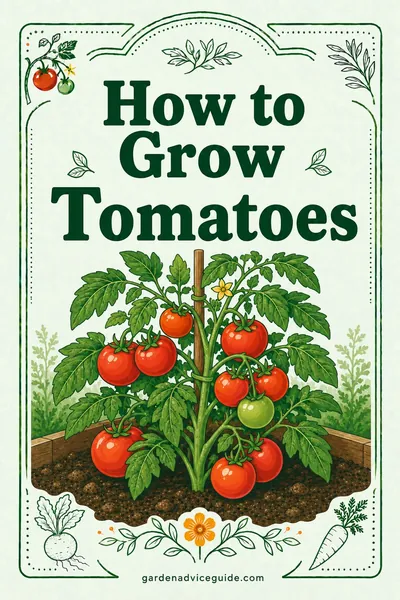
Our watering guide tool turns inches per week into minutes on your hose, and the approach mirrors what we cover in how to grow tomatoes, since consistency is the shared lesson.
Succession Sowing for a Longer Harvest
A single cucumber planting produces heavily for about 4 to 6 weeks and then declines as disease and age catch up. Powdery mildew usually arrives around week 6 or 7 and finishes the plant off.
The answer is to plant again before that happens.
Sow a new short row every 2 to 3 weeks until your cutoff date, which is 70 days before first frost. Three sowings across a season means that as planting one fades in August, planting two is at peak and planting three is just starting to run.
A sample zone 6 schedule:
| Sowing | Date | Peak harvest |
|---|---|---|
| 1 | May 10 | Late June to late July |
| 2 | June 1 | Mid July to mid August |
| 3 | June 25 | Early August to mid September |
Each sowing needs only 2 or 3 plants for fresh eating. This also spreads your risk: if cucumber beetles wipe out one planting, you haven't lost the season.
How to Grow Cucumbers in Containers
Cucumbers work in pots as long as you accept that you're going to water them constantly.
- 5 gallons minimum for a bush variety, 7 to 10 gallons for anything vining.
- One plant per pot. Two in a 10 gallon both underperform.
- Potting mix, not garden soil, with plenty of drainage holes.
- A trellis even in a pot. An obelisk or a piece of netting against a railing.
- Bush varieties first: Spacemaster, Bush Champion, Patio Snacker, Salad Bush.
- Feed every 10 to 14 days with a liquid feed once fruiting starts, since watering flushes nutrients out the bottom.
- Expect daily watering in July, sometimes twice on a hot windy day.
Common Cucumber Problems
| What you see | Likely cause | What to do |
|---|---|---|
| All flowers drop, no fruit | Male flowers only, normal early | Wait 7 to 14 days for females |
| Female flowers yellow and shrivel small | Poor pollination | Add flowers nearby, hand pollinate |
| Fruit fat at stem, pinched at tip | Partial pollination | Hand pollinate, improve bee habitat |
| Bitter fruit | Heat and water stress | Mulch, consistent water, resistant varieties |
| White powdery coating on leaves | Powdery mildew | See powdery mildew treatment |
| Angular yellow patches bounded by leaf veins | Downy mildew | Improve airflow, remove worst leaves |
| Sudden whole-vine wilt, no recovery | Bacterial wilt from cucumber beetles | Pull the plant, control beetles next year |
| Striped or spotted beetles on flowers | Cucumber beetles | Row cover until flowering, hand pick at dawn |
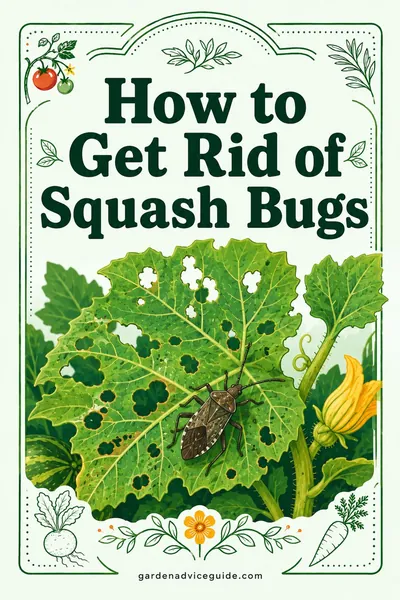
| Gray-brown shield bugs, wilting runners | Squash bugs | See how to get rid of squash bugs |
| Yellow leaves, stunted vines | Overwatering or nitrogen shortage | Check drainage first, then feed |
Bacterial wilt is the one that ends plants outright. It's carried by cucumber beetles, there's no treatment once a plant has it, and the test is simple: cut a wilted stem, press the cut halves together, and pull them apart slowly. Sticky strings mean bacterial wilt, and the plant needs to come out today.
When to Pick Cucumbers
Pick early and pick often. This is the rule that separates a plant producing into September from one that quits in July.
Once a cucumber matures its seeds, the plant receives the signal that its job is done and shuts down flower production. One oversized cucumber left on the vine can cut the whole plant's output.
Size targets:
- Pickling types: 2 to 4 inches for gherkins, 4 to 6 inches for standard dills.
- Slicing types: 6 to 8 inches, firm, dark green, still narrow.
- Burpless and Asian types: 8 to 12 inches, thin and straight.
- Lemon cucumbers: golf ball to tennis ball, still pale yellow, before they go gold.
Signals it's too late: yellowing skin, a fat rounded belly, dull rather than glossy, and hard seeds inside when you cut it.
Check the vine every single day at peak. Cucumbers can go from perfect to oversized in 48 hours in July heat. Cut the stem with snips, leaving a quarter inch attached, rather than pulling, which damages the vine. Our when to harvest tool has the maturity windows for every crop in the garden.
Storing Cucumbers
- Fridge, whole and unwashed, in a loose bag or wrapped in a paper towel inside a bag. 7 to 10 days.
- Watch for chilling injury. Cucumbers store best at 50 to 55F, warmer than a standard fridge. Below 40F for more than a few days gives you water-soaked pitted spots. The crisper drawer is the warmest part of the fridge, so use it.
- Keep them away from tomatoes, bananas, and apples. Those release ethylene, which turns cucumbers yellow and soft fast.
- Counter storage is fine for 1 to 2 days if you'll use them quickly.
- Cut cucumber: wrap the cut face tightly, fridge, 2 to 3 days.
- Pickling: the classic use for the flood. Refrigerator pickles need no canning at all and keep 4 to 6 weeks. For shelf-stable pickles, use a tested water bath recipe with the specified vinegar ratio, since cucumbers are low-acid on their own. The USDA Complete Guide to Home Canning is the source to follow.
- Freezing: doesn't work for slices, the texture collapses completely. Frozen cucumber puree for drinks or soup is the only worthwhile route.
FAQ
Why do my cucumber plants flower but produce no fruit?
Early in the season it's because the first flowers are all male, and males always drop after a day. Female flowers, the ones with a tiny cucumber behind the petals, arrive 7 to 14 days later. If female flowers are opening and then yellowing while still small, that's a pollination failure, so add flowering plants nearby to draw bees, remove any row cover, and hand pollinate in the morning until the bees find you.
How do I tell male and female cucumber flowers apart?
Look at the base of the flower where it meets the stem. A female flower sits on a miniature cucumber, already fruit-shaped and complete with bumps. A male flower sits on a plain thin stem with nothing behind it and usually grows in clusters of 3 to 5. That one check is all you need.
Why are my cucumbers bitter?
Stress raises the plant's production of cucurbitacins, the compounds that cause bitterness, and the two stressors that matter are sustained heat over 90F and soil that swings between dry and soaked. Mulch heavily, water deeply twice a week instead of lightly every day, and give afternoon shade in hot zones. A bitter cucumber can't be fixed, but peeling it and cutting off the stem inch removes most of the bitterness.
Should I trellis cucumbers or let them run on the ground?
Trellis them if they're a vining variety. You get straighter fruit with no flat pale patch, far less powdery and downy mildew because the foliage dries faster, three times the plants in the same bed, and you actually see the fruit in time to pick it. Bush varieties are short enough that a trellis is optional, though a small cage still helps keep leaves off the soil.
How far apart should cucumbers be planted?
On a trellis, vining cucumbers go 12 inches apart in the row. Left to sprawl on the ground, the same plants need 36 inches every direction. Bush types go 12 to 18 inches apart. In hills, plant 4 to 5 seeds per hill with hills 4 to 6 feet apart, then thin to the 2 or 3 strongest seedlings.
Can you transplant cucumbers, or do they have to be direct sown?
Direct sowing is better, because cucumbers put down a taproot early and any damage to it costs 2 to 3 weeks of growth. If your season is too short, start them no more than 3 weeks ahead in peat or coir pots that go into the ground intact, and never bare-root them. In most of zones 5 and warmer, a direct-sown seed catches a transplant well before midsummer anyway.
How often should I water cucumbers?
Aim for 1 to 2 inches per week delivered in two deep soakings rather than daily sips, and increase it during any stretch above 90F. Consistency is what prevents bitterness and misshapen fruit. Check by digging 2 inches down: if it's dry there, water today. Container cucumbers are a different story and often need water every day in July.
How long do cucumber plants keep producing?
A single planting produces heavily for 4 to 6 weeks, then declines as powdery mildew and age catch up, usually finishing around week 8 to 10. Picking every day extends that, because an oversized fruit left on the vine signals the plant to stop setting new ones. The reliable fix is succession sowing a new short row every 2 to 3 weeks until 70 days before your first frost.
Updated August 2026