How to Grow Spinach

Sow spinach into cool soil, 45 to 68F, in early spring and again in late summer, and harvest it before the days get long. Spinach bolts the moment warmth and long days arrive together, so success is almost entirely about timing rather than technique. Spring and fall are the two windows. Summer is not a window at all, no matter how carefully you water.
That's the whole crop in three sentences. Everything below is how to hit those windows precisely, and how to stretch the fall one into a winter and early-spring harvest that most gardeners never get.
Need your exact sowing dates? Look them up with our free When-to-Plant tool before you open the seed packet.
Why Spinach Bolts, and Why Cool Weather Doesn't Save You
Most guides blame heat. Heat matters, but day length is the stronger trigger, and that distinction changes how you plan.
Spinach is a long-day plant. Once daylight passes roughly 13 to 14 hours, the plant reads that as a signal to flower, and it starts building a seed stalk whether or not the weather is pleasant. In the mid-latitudes of the US, that threshold arrives in late April to mid-May depending on how far north you are, and it holds until early August.
This is why a cool, cloudy June still bolts spinach. Gardeners who nursed a bed through a mild spring and watched it shoot up anyway usually assume they did something wrong. They didn't. The calendar did it.
Heat is the accelerator, not the ignition. Sustained temperatures above about 75F, drought stress, root disturbance, and crowding all speed the process once long days have set it in motion. On its own, a hot spell in early April rarely bolts spinach because the days are still short.
Two practical consequences:
- Spring spinach has a hard cutoff. Count backward from the date your daylight crosses 14 hours, subtract the variety's days to maturity, and that's your last useful sowing. Not the last frost date.
- Fall spinach has no such ceiling. Days are shortening the whole time, so the flowering signal is moving away from you instead of toward you. This is why fall is the better crop, and why it deserves its own section below.
Once a stalk starts to rise, the leaves turn thin, pointed, and bitter within about a week. Bolting doesn't reverse. Cut and use the plant the day you notice it.
When to Plant Spinach by Zone
Spinach germinates in soil as cool as 40F and grows in air temperatures that would flatten most vegetables. The limiting factor at the front of spring is workable soil, not frost.
| Zone | First spring sowing | Last spring sowing | Fall sowing window | Overwinter under cover |
|---|---|---|---|---|
| 3 | Late April | Mid May | Late July to mid August | Yes, with a low tunnel |
| 4 | Mid April | Late May | Early to late August | Yes, with a low tunnel |
| 5 | Late March | Early June | Mid August to early September | Yes |
| 6 | Mid March | Mid June | Late August to mid September | Yes, often with row cover only |
| 7 | Late February | Late June | Early September to early October | Yes, often unprotected |
| 8 | Early February | Early April | Late September to early November | Main season crop |
| 9 | Late December | Early March | October to December | Main season crop |
| 10 | November | February | November to January | Main season crop |
In zones 8 through 10 the pattern inverts. Spinach is a fall, winter, and very early spring crop, and the summer bed grows something else entirely.
Treat these as regional averages, not promises. Zone maps and frost tables are built from 30-year weather station averages spread across a wide area, so your own yard can run 1 to 2 weeks off in either direction. Elevation shifts it the most. A cold-air pocket at the bottom of a slope, a nearby lake, or a lot of pavement all move the real date. Check your station numbers with our frost dates tool and confirm your zone with the growing zones lookup, then adjust from what your own beds actually do.
Spinach survives hard frost. Established plants shrug off 20F, and many varieties hold at 15F or lower with a light cover. That toughness is what makes the fall crop so valuable.
Soil, Sun, and Getting Spinach Seed to Germinate
Spinach wants richer, sweeter soil than most greens, and it's fussier about pH than lettuce.
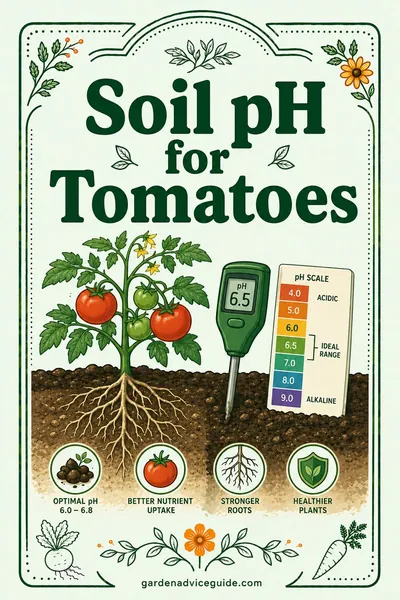
- pH 6.5 to 7.0. Spinach is one of the few vegetables that genuinely dislikes acidic soil. Below about 6.0 it goes pale and stunted, and no amount of fertilizer fixes it. If your beds run acidic, lime in fall for a spring crop. Our guide to how to test garden soil covers doing this properly.
- Nitrogen is the crop. Leaves are what you're growing, so work 2 to 3 inches of finished compost into the top 8 inches, and follow with a liquid feed every 2 to 3 weeks. Fast growth is tender growth.
- Sun. Full sun in spring and fall. Afternoon shade helps at the edges of the season but doesn't stop bolting.
- Drainage matters more than depth. Spinach roots go 8 to 12 inches, deeper than lettuce, but waterlogged soil yellows the plant fast.
- Sowing depth: 1/2 inch. Unlike lettuce, spinach seed does not need light to germinate, and shallow sowing dries out.
The germination problem, and the fridge trick
Spinach seed has a firm temperature ceiling. Germination is excellent from 45 to 68F, drops off above 70F, and effectively stops around 77 to 80F. That's a real wall, not a slow decline.
This is the single reason most fall spinach fails. You sow in late August into soil that's still 85F, nothing comes up, and by the time the soil cools enough to try again, the window is half gone.
Four workarounds, in order of how reliable they are:
- Pre-chill the seed. Put the seed on a damp paper towel, seal it in a bag, and leave it in the refrigerator for 5 to 7 days. Chilled, pre-moistened seed germinates readily in soil that would otherwise stall it. Sow it while still damp and keep the row watered. This is the trick that makes late-summer sowing work.
- Cool the furrow. Water the seed row with cold water right before sowing, then again each morning until sprouts show. Evaporation drops the top inch several degrees.
- Shade the row. Lay a board or a piece of shade cloth over the row and check daily, removing it the moment the first sprouts appear.
- Sow deeper and denser. Soil at 1 inch runs cooler than at 1/2 inch in hot weather, and sowing thicker covers the losses.
Spinach transplants poorly compared with lettuce, because it puts down a taproot early and resents disturbance. Direct sowing is the norm. If you must start in cells, use deep cells and move plants at 3 weeks, before roots circle.
Germination timing runs about 5 days at 65F, 8 to 10 days at 50F, and up to 3 weeks at 40F. Cold soil is slow, not fatal.
Spacing, Thinning, and Cut-and-Come-Again Harvest
Crowded spinach bolts earlier, stays small, and holds moisture on the leaves, which is an open invitation to downy mildew. Thinning is not optional.
| Growing style | Sow at | Thin to | Row spacing | Harvest |
|---|---|---|---|---|
| Baby leaf | 1 in | No thinning | 4 to 6 in | Single cut at 25 to 30 days |
| Cut and come again | 1 in | 3 in | 8 to 12 in | Repeat cuts every 2 to 3 weeks |
| Full-size leaf | 2 in | 4 to 6 in | 12 to 18 in | Outer leaves, then whole plant |
| Overwintered | 2 in | 4 in | 12 in | Light fall picking, heavy spring cutting |
Thin in two passes. Take the row to 2 inches when seedlings show their first true leaf, then to final spacing 2 weeks later. The second round of thinnings is the first salad of the season, so nothing is wasted.
Use the plant spacing calculator to work out plant counts and seed quantity for your actual bed dimensions rather than guessing off a packet.
Cutting so the plant regrows
Spinach regrows from its crown the same way loose leaf lettuce does, and one sowing can feed you for 6 to 8 weeks if you cut it correctly.
- Start when leaves are 3 to 4 inches, roughly 30 days for baby leaf.
- Cut the whole plant 1 to 1.5 inches above the soil, straight across with scissors.
- Leave the crown intact. The growing point sits right at soil level. Cutting below it kills the plant, and this is the step beginners get wrong.
- Water and give a diluted liquid feed the same day. The plant is rebuilding leaves and wants nitrogen.
- Expect 3 cuts, occasionally 4. Each one is smaller than the last.
The alternative is outer leaf picking: take the 4 or 5 largest outer leaves and leave the center growing. Slower per harvest but continuous, and it suits full-size varieties better than a full cut does.
Cut in the morning, when leaves are turgid. Spinach picked at 3 p.m. on a warm day is limp before it reaches the kitchen. Our when to harvest tool lists maturity windows for spinach alongside the rest of the garden.
How to Grow Spinach in Fall and Overwinter It
This is the part worth planning your year around, and it's the crop most home gardeners never attempt.
Fall spinach grows into shortening days and cooling weather, so the bolting signal recedes week by week. There's no clock racing you. Plants size up slowly, and slow growth in cold weather makes spinach noticeably sweeter, because the plant converts starch to sugars as an antifreeze response. Cold-grown spinach is a genuinely different vegetable from the spring crop.
Then it gets better. Spinach is one of the most cold-hardy greens in the garden, and an overwintered planting gives you a harvest 4 to 6 weeks earlier than anything you can sow in spring.
How overwintering works:
- Sow 6 to 8 weeks before your first fall frost. You want plants with 4 to 6 true leaves going into hard weather, roughly the size of your palm. Bigger plants can rot under snow. Smaller ones lack the reserves to push in spring.
- Cover before the first hard freeze, not after. A low tunnel with mid-weight row cover, a cold frame, or even a heavy floating cover pinned at the edges. Two layers of light cover beat one heavy one, because the air gap does the insulating.
- Expect the plants to stop. Below about 10 hours of daylight, growth halts. The plants sit there looking flat and unimpressive for two months. That's normal, and they're alive.
- Pick lightly in fall and winter, taking outer leaves only. The plant needs its crown and reserves.
- Cut hard in late winter. As days pass 10 hours, growth restarts fast. In zone 6, that's usually late February, and you're cutting full leaves in early March while your neighbors are still waiting for the soil to dry out.
- Vent on warm days. A sealed tunnel at 60F in February cooks the crop and invites rot. Lift an edge whenever it's above 45F and sunny.
Varieties bred for this include Giant Winter, Winter Bloomsdale, Space, and Tyee. They hold better under cover than the fast spring types.
Overwintered spinach bolts early in spring, usually by late April, because those plants have already been through a cold period, which primes flowering. Plan to harvest it hard and pull it, then use the bed for something else. Our planting calendar helps line up what follows.
Spinach Variety Types Compared
Three leaf types plus a bolt-resistance axis. Mixing them is how you get both an early crop and a longer one.
| Type | Leaf character | Days to maturity | Bolt resistance | Best use | Examples |
|---|---|---|---|---|---|
| Savoy | Heavily crinkled, thick | 40 to 50 | Good | Fall and overwintering, cooking | Bloomsdale Long Standing, Winter Bloomsdale |
| Semi-savoy | Lightly crinkled | 37 to 45 | Very good | All-purpose, disease resistance | Tyee, Indian Summer, Melody |
| Smooth leaf | Flat, spade shaped | 35 to 45 | Moderate | Baby leaf, salad, easy washing | Space, Corvair, Giant Nobel |
| Slow bolt selections | Varies | 40 to 50 | Best | Late spring sowings | Bloomsdale Long Standing, Correnta, Kolibri |
| Not true spinach | Thick, succulent | 50 to 70 | Not applicable | Summer substitute | Malabar spinach, New Zealand spinach |
Savoy types have deep crinkles that trap grit, so they need real washing, but they hold up to frost and to cooking better than anything else. This is the classic overwintering leaf.
Semi-savoy is the practical middle. Easier to clean than savoy, more upright than smooth leaf so leaves stay off the soil, and most of the modern downy mildew resistance sits in this group. If you grow one type, grow this one.
Smooth leaf washes in seconds and is what baby leaf salad mixes use. Lower growing, so leaves pick up more soil splash, and generally the first to bolt.
Malabar and New Zealand spinach are not spinach at all, botanically. They're heat-loving vines and groundcovers that give you a cooked-spinach substitute in July when real spinach is impossible. Worth a corner of the bed if you eat a lot of greens.
Common Spinach Problems
| What you see | Likely cause | What to do |
|---|---|---|
| Tall center stalk, narrow pointed leaves, bitter taste | Bolting from long days | Cut and use immediately, resow in fall, choose slow-bolt varieties |
| Winding pale tunnels inside the leaf | Leaf miner larvae | Row cover from sowing, pull and trash mined leaves, clear nearby lambsquarters |
| Yellow patches on top, gray or purple fuzz underneath | Downy mildew | Thin for airflow, water at soil level in the morning, grow resistant semi-savoy types |
| Whole plant yellowing from the bottom up, soggy soil | Poor drainage, roots starving of oxygen | Raise the bed, add compost, stop watering until the top 2 inches dry |
| Pale plants, slow growth, good drainage | Nitrogen shortage or pH below 6.0 | Liquid feed every 2 weeks, test and lime if acidic |
| Seed never came up | Soil above 77F | Pre-chill seed 5 to 7 days, shade the row, resow when soil cools |
| Ragged holes, slime trails | Slugs | Iron phosphate bait, boards as overnight traps, water in the morning |
| Curled leaves, sticky residue, distorted tips | Aphids | Blast with water, see how to get rid of aphids |
Leaf miner deserves special attention because it's the most common spinach complaint and it is nearly impossible to treat once the larvae are inside the leaf. The adult is a small fly that lays eggs on the leaf underside. Order of control, cultural first: rotate spinach away from last year's bed, clear the weedy relatives it also breeds in, and pull the crop promptly when it's finished. Then physical: floating row cover from the day you sow, sealed at the edges, is close to complete control and costs very little. Crush the small white egg clusters you find on leaf undersides during weekly checks. Sprays are last and mostly ineffective here, since the larva is protected inside the leaf tissue, and any product you consider must be labeled for spinach and used exactly as the label states. The label is the law.
Downy mildew has many races, which is why resistance codes on seed packets carry numbers. Choose a variety with current resistance for your region, space plants properly, and avoid overhead watering late in the day.
Worked Example: A Full Spinach Year in Zone 6
Take a garden with a last spring frost around April 15 and a first fall frost around October 20, and a 4x8 raised bed, 32 square feet.
Spring crop. Soil is workable around March 10. Sow smooth leaf Space, 35 days, at 1 inch apart in rows 10 inches apart. The 4-foot width gives 4 rows, the 8-foot length gives about 96 seeds per row after thinning to 3 inches, so roughly 128 plants across a quarter of the bed if you sow just 1 row and hold the rest. First baby leaf cut around April 14. Second cut around May 1. Daylight passes 14 hours near May 6, so the plants bolt in the second week of May. Total: two good cuts, about 4 pounds of leaf from a single row.
Sow a second spring row March 24. It matures around April 28 and gives you one cut before the same May bolt. Anything sown after about April 5 will bolt before it's worth cutting, so that's the real spring cutoff, ten days before the last frost date, which surprises most people.
Fall crop. Count back 6 to 8 weeks from October 20 and you land on August 25 to September 8. Soil in late August is around 80F, so pre-chill the seed for a week starting August 18 and sow September 1. Germination in 6 days. First light picking of outer leaves around October 10. Cover with a low tunnel around November 5, before the first hard freeze.
Winter and early spring. Plants stop growing around November 20 and sit dormant. Light picking on mild days. Growth restarts around February 20, and you're cutting full leaves March 5 to April 10, which is a month before a spring sowing would produce anything. Pull the bed around April 20 when it bolts.
Water need: about 1 inch per week, which over 32 square feet is roughly 20 gallons weekly, split into 3 waterings. Our watering guide converts that into minutes on your specific hose or drip line.
Run your own numbers through the frost dates tool and the when to plant lookup and the same arithmetic gives you your dates.
FAQ
Why does my spinach bolt so quickly?
Day length is the main trigger, more than heat. Once daylight passes about 13 to 14 hours, spinach starts building a flower stalk regardless of temperature, which is why a cool June still bolts a spring crop. Heat, drought, crowding, and root disturbance all speed it up once that signal is present. Sow early, harvest young, and put your real effort into the fall crop.
What temperature is too hot for spinach seed?
Germination is strong from 45 to 68F, drops sharply above 70F, and effectively stops around 77 to 80F. That ceiling is why late-summer sowings so often fail. Pre-chill the seed on a damp paper towel in the refrigerator for 5 to 7 days, sow it damp, shade the row, and water with cold water each morning until sprouts appear.
Can spinach survive winter outside?
Yes, and it's one of the most cold-hardy greens you can grow. Established plants with 4 to 6 true leaves handle 20F unprotected, and under a low tunnel or cold frame they hold through winter in zones 5 and warmer. Growth stops below about 10 hours of daylight, then restarts in late winter for a harvest 4 to 6 weeks earlier than any spring sowing.
How far apart should spinach be planted?
Sow 1 to 2 inches apart and thin to 3 inches for cut-and-come-again, or 4 to 6 inches for full-size leaves, with rows 8 to 18 inches apart depending on style. Baby leaf can stay unthinned at 1 inch for a single cut. Crowded plants bolt earlier, stay small, and hold leaf moisture that encourages downy mildew.
Does spinach grow back after cutting?
It does, if you cut about 1 to 1.5 inches above the soil and leave the crown untouched. Water and give a diluted liquid feed the same day, and you'll get a second cut in 2 to 3 weeks. Expect 3 cuts, sometimes 4, with each one a little smaller than the last.
What is the difference between savoy and smooth leaf spinach?
Savoy leaves are heavily crinkled, thick, and the most cold-tolerant, which makes them the choice for fall and overwintering, but the crinkles trap grit and need real washing. Smooth leaf is flat, washes in seconds, and is what baby leaf salad uses, though it usually bolts first. Semi-savoy sits between them and carries most of the modern downy mildew resistance.
Why are there pale winding tunnels in my spinach leaves?
That's leaf miner, the larva of a small fly feeding between the upper and lower leaf surfaces. Sprays rarely reach it, so control is cultural and physical: floating row cover from the day you sow, rotating spinach away from last year's bed, crushing the white egg clusters on leaf undersides, and clearing weedy relatives nearby. Pull affected leaves and put them in the trash rather than the compost pile.
Can I plant spinach in the same bed every year?
Better not to. Leaf miner pupae overwinter in the soil, and downy mildew spores carry over on debris, so repeating spinach in one spot builds both problems. Move it through a rotation of at least 3 years, keeping it away from beets and Swiss chard as well, since those share the same family and the same leaf miner.
Updated August 2026