When Is It Too Late to Plant Grass Seed?

For cool-season grass (fescue, bluegrass, ryegrass), it's too late once you're inside 45 days of your average first hard freeze. For most of the country that cutoff lands between October 1 in the far north and November 15 along the Gulf. For warm-season grass (bermuda, zoysia, centipede), the cutoff comes much earlier: stop seeding 90 days before your first frost, which is usually late July or August.
Past those dates the seed still sprouts. It just doesn't live through winter, and that's the part nobody tells you at the store.
Get your own cutoff, plus the rest of the year's dates, from our free lawn care schedule tool, then check your first frost date with the frost date lookup so the countdown is built on your yard instead of a national average.
Updated September 2026
A note on numbers. This page gives you soil temperatures, seeding dates, germination windows and rates per thousand square feet, not dollar figures. Seed, starter fertilizer and straw are priced by your region, your supplier and the season, and we do not set any of it. Work out your cutoff date here, then buy locally.
When is it too late to plant grass seed? The 45-day rule, explained
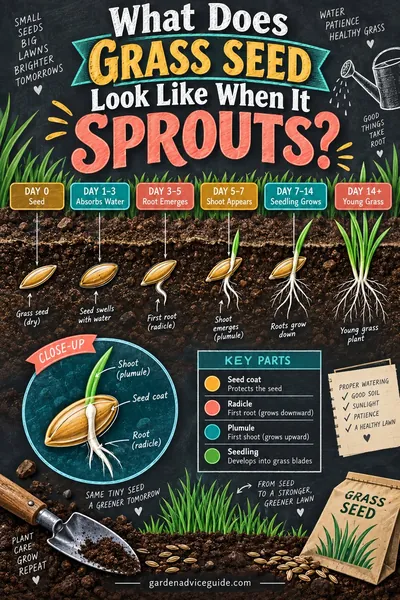
A grass seedling needs three things before winter: it has to germinate, put down roots deeper than an inch, and produce enough tillers (side shoots) to anchor itself. That whole sequence takes about six weeks of decent growing weather for cool-season grass.
So the math is simple. Count back 45 days from your average first hard freeze, meaning a night at 28°F rather than a light 32°F touch. Seed has to be on the ground by that date, not on your calendar for that weekend.
Miss it and here's what happens. The seedling comes up in cold soil, slowly, with a root system maybe half an inch deep. Then the ground starts freezing at night and thawing by afternoon. That freeze-thaw cycling physically pushes shallow-rooted plants up out of the soil, a process called frost heave. In March you find a lawn of dead, sideways seedlings sitting on top of the dirt with their roots in the air.
The seed didn't fail. The calendar did.
Your cutoff date by region
Find your row. These are the last dates seed should be down and watered, not the last date you shop.
| Region (zones) | Typical first hard freeze | Cool-season cutoff | Warm-season cutoff | Dormant seeding opens |
|---|---|---|---|---|
| Upper Midwest, N. New England (3-4) | Sept 25 - Oct 10 | Sept 5 | Not viable | Early Nov |
| Great Lakes, N. Plains (5) | Oct 10-20 | Sept 15 | Not viable | Mid Nov |
| Midwest, Mid-Atlantic, Ohio Valley (6) | Oct 25 - Nov 5 | Oct 1 | Aug 1 (bermuda) | Late Nov |
| Transition zone: TN, KY, VA, OK, KS (7) | Nov 5-15 | Oct 10 | Aug 10 | Early Dec |
| Southeast, N. Texas (8) | Nov 20 - Dec 5 | Oct 25 | Aug 25 | Rarely useful |
| Gulf Coast, FL, S. Texas (9-10) | Rare or none | Ryegrass overseed only, Nov - Dec | Aug 31 | Not applicable |
| Pacific Northwest, west of Cascades (7-8) | Nov 10-25 | Oct 15 | Not viable | Not needed, seed in spring |
| Mountain West, high elevation (3-6) | Sept 15-30 | Aug 25 | Not viable | Late Oct |
| Desert Southwest (9-10) | Dec or none | Ryegrass overseed, Oct | Aug 15 | Not applicable |
Two things to notice.
The high country is brutal. A Colorado yard at 7,000 feet has an August cutoff, even though the neighbors in Denver have until late September. Elevation moves frost dates more than latitude does inside the Mountain West.
Zone 8 buys you almost two extra months over zone 4. Same seed, same species, same bag. The only variable is how much growing weather sits between the spreader and the freeze.
What "too late" actually looks like, week by week
Late seeding isn't one cliff. It's a slope, and knowing where you are on it tells you whether to go ahead or wait.
| Days before first hard freeze | Realistic outcome | Verdict |
|---|---|---|
| 60+ | Full establishment, mowed twice, roots 3-4 in | Ideal |
| 45-60 | Good stand, roots 2-3 in, mowed once | Go |
| 30-44 | Germination fine, thin stand, 30-50% winter loss | Risky, seed heavier |
| 15-29 | Sprouts, then heaves out over winter, most is lost | Skip it |
| Under 15 | Little or no germination in cold soil | Skip it |
| Soil below 40°F, staying there | Nothing germinates until spring | Dormant seed instead |
That 30 to 44 day band is where most people actually stand when they ask the question. It's a real gamble, not a no. A mild fall, a species that sprouts fast, and consistent water can get you a usable lawn. A cold snap in week two costs you the bag.
Soil temperature is the real deadline, not the date
Air temperature makes headlines. Soil temperature decides whether seed moves.
Cool-season seed germinates when soil at 2 inches sits between 50 and 65°F. Below 50°F germination slows to a crawl, and below about 45°F it essentially stops. That's the deadline your seed reads.
Here's how germination speed collapses as soil cools, using turf-type tall fescue as the example.
| Soil temp at 2 in | Days to germinate | Days to a mowable stand |
|---|---|---|
| 68°F | 7-9 | 25-30 |
| 62°F | 10-12 | 32-38 |
| 56°F | 14-18 | 42-50 |
| 50°F | 21-28 | 55-70 |
| 45°F | 30+ or never | Not before spring |
Look at the jump between 62°F and 50°F. Twelve degrees of soil temperature nearly triples the wait, and the seedling that finally shows up is going into shorter days and colder nights instead of better weather.
An inexpensive dial soil thermometer settles the argument in two minutes. Push it 2 inches into bare soil, read it mid-morning, and take the reading three days in a row. Most state universities also run a mesonet weather network that publishes 2-inch soil temperatures by county, updated daily.
Worked example: a zone 5 lawn in Milwaukee on October 8
Real numbers, because "it depends" doesn't help anyone standing in a garage holding a bag.
The setup: 3,000 square feet of thin tall fescue lawn, zone 5b, average first hard freeze October 25. Today is October 8. Soil at 2 inches reads 54°F and dropping about 1.5 degrees a week.
The countdown: October 8 to October 25 is 17 days. The 45-day rule wanted seed down by September 10. This lawn is 28 days past its cutoff.
What happens if she seeds anyway: at 54°F soil, tall fescue takes 16 to 18 days to germinate. First blades show around October 25, the same day the first hard freeze arrives. Those seedlings are 0 days old with roots under half an inch. Milwaukee cycles through freeze and thaw roughly 40 times between November and March. Expect to keep 10 to 20 percent of the stand, at best.
What it costs to try: 25 pounds of decent tall fescue, a bag of starter fertilizer, and three weeks of daily watering, for a lawn that will mostly be gone by April. The seed is the expensive part, and she would be buying it twice, because she will be reseeding the same 3,000 square feet next spring.
The better plan for exactly the same outlay: wait until soil drops below 40°F and stays there, usually the third week of November in Milwaukee, then dormant seed the exact same bag. The seed sits all winter, freeze-thaw works it into soil cracks, and it germinates on its own in early April when soil hits 50°F. That's roughly three weeks earlier than she could physically get a spreader onto the wet spring ground.
Same money, same seed, one different date, and a lawn instead of a lesson.
Missed the window? Your four real options
Nobody wants "wait until next year." Here are the actual choices, ranked by how well they work.
1. Dormant seeding (best plan B in zones 3 to 6). Sow after soil drops below 40°F and stays there, typically late November through February. The seed does not germinate. It overwinters in the soil and sprouts the moment spring soil hits 50°F. Expect roughly 60 to 70 percent of the results of a proper fall seeding, which beats every other late option. Skip it on slopes, where winter runoff carries seed downhill, and skip it if you seeded too early and got a warm December that sprouts the seed before a hard freeze kills it.
2. Sod. Sod has no seasonal window at all. It can go down any time the ground isn't frozen, because it arrives with roots and soil already attached. It costs roughly 8 to 15 times more per square foot than seed, but for a small area or a highly visible front yard, that math often works out. This is the honest answer if you need a lawn now and can't wait.
3. Early spring seeding. Wait for soil to hold at 50 to 55°F, usually mid-March in the transition zone and late April up north, and seed as early inside that window as you can. The tradeoff: you cannot use crabgrass preventer that season (it blocks your grass seed exactly the way it blocks crabgrass), and your seedlings meet summer heat with a couple of months of root growth instead of a full season.
4. Winter ryegrass overseeding (zones 8 to 10 only). In the Deep South and desert Southwest, perennial or annual ryegrass sown over dormant bermuda in October and November gives you a green lawn all winter. It's temporary color by design and dies out in May as the bermuda wakes up. Do not confuse it with establishing a permanent cool-season lawn, which those regions can't support.
Full seasonal windows for all of this live in our guide to when to plant grass seed, and the fall-specific math is in when to overseed lawn in fall.
How to stretch the deadline by two or three weeks
If you're inside that risky 30 to 44 day band and want to go for it, four moves genuinely move the odds.
Pick perennial ryegrass, not bluegrass. Ryegrass germinates in 5 to 10 days. Kentucky bluegrass takes 14 to 30. In a late seeding those two weeks are the whole ballgame. A ryegrass-heavy blend buys you real time, and the mature plants look close enough to fescue that most people can't tell.
Seed 20 to 30 percent heavier. You're planning for winter losses, so start with more plants. Tall fescue at 8 pounds per 1,000 square feet becomes 10, and ryegrass at 7 becomes 9. Do not double it, though. Dense seedling stands invite damping-off disease and thin themselves out anyway.
Cover the seed. A thin scatter of clean straw or a seed blanket holds moisture and adds several degrees of soil warmth overnight. On a late seeding, that alone can shave three or four days off germination.
Water warm, water often. Cold, dry soil is the enemy. Keep the top quarter inch damp with two or three short waterings a day, and water mid-morning rather than at dusk so the surface isn't sitting cold and wet all night.
And one thing that will sink you: applying pre-emergent. Most fall crabgrass and poa preventers block grass seed for 8 to 12 weeks. Spreading it in September means no fall seeding at all. Pick one job per season, and if seed is the job, the herbicide waits.
Is it too late in spring, too?
Yes, and this deadline gets ignored far more often than the fall one, because a bare lawn in May makes people want to do something.
For cool-season grass, spring seeding gets risky once you're inside about eight weeks of your first sustained 85°F stretch. A seedling from an April 15 seeding is roughly eight weeks old when July heat arrives, with roots maybe 2 inches down. It usually survives. A seedling from a May 25 seeding is three weeks old, with roots barely started, and it usually doesn't.
Practical spring cutoffs for cool-season seed:
| Region | Spring seeding opens | Spring cutoff | Why |
|---|---|---|---|
| Zones 3-4 | Late April | June 10 | Short season, but summers are mild |
| Zones 5-6 | Early April | May 15 | July heat arrives fast |
| Transition zone (7) | Mid March | April 20 | Brutal summers, narrow window |
| Zone 8 | Not recommended | n/a | Heat kills cool-season seedlings outright |
| Pacific Northwest | Late March | June 1 | Mild, wet spring, the exception |
Warm-season grass runs the opposite calendar, and spring is its main event rather than a backup. Bermuda seeding opens once soil holds above 65 to 70°F and stays open through midsummer. The specifics are in when to plant bermuda grass.
What to do with the lawn you already have
If you've decided to wait, the fall isn't wasted. Three jobs pay off more than a doomed seeding.
Fertilize. Early-to-mid September is the single best feeding of the year for a cool-season lawn, and a late-October or November application at the last mow builds roots straight through winter. Timing and rates are covered in when to fertilize your lawn.
Kill broadleaf weeds. Late September through October is when perennial weeds pull nutrients down into their roots and carry herbicide along with them. Fall control on dandelion, clover, and ground ivy works noticeably better than spring control, and it clears space for next year's seed.
Keep leaves off the grass. A wet leaf mat smothers turf in about a week. Mulch-mow thin layers, rake the heavy ones. The rest of the year's job list sits in our lawn care schedule.
Frequently asked questions
How late can you plant grass seed in the fall?
Practically, 45 days before your average first hard freeze. Between 30 and 45 days out it's a gamble that a mild fall can still win, especially with fast-germinating ryegrass. Inside 30 days, save the bag for dormant seeding in late November.
Can I plant grass seed in November?
In zones 3 to 6, November is usually the right month for dormant seeding rather than normal seeding. Wait until soil is reliably below 40°F so the seed can't germinate, then sow. In zones 7 to 9, early November can still be a legitimate live seeding, and in the Deep South it's ryegrass overseeding season.
Will grass seed just sit in the ground until spring?
Good quality seed stays viable through winter in the soil, which is exactly what dormant seeding relies on. The risk is a warm spell that triggers germination in December or January, followed by a hard freeze that kills the seedlings. That's why timing dormant seeding for genuinely cold ground matters more than getting it done early.
Is it too late to seed my lawn if it already frosted once?
Not necessarily. A single light frost at 32°F does not stop germination or kill young grass. What matters is your first hard freeze at around 28°F, and how many growing days sit between today and that date. Check soil temperature, not the frost report.
Does grass seed go bad if I keep it until spring?
Stored cool, dry, and off a concrete floor, grass seed loses roughly 10 to 20 percent of its germination rate per year. A bag saved from October to March is essentially fine. Bump your seeding rate slightly and it performs like new seed.
What is the last date to plant grass seed in the transition zone?
Around October 10 for a normal seeding in zone 7, working back 45 days from a first hard freeze in early to mid November. Tall fescue is the workhorse there, and a ryegrass component helps a late seeding beat the clock.
Can I lay sod instead if I missed the seeding window?
Yes, and it's the one option with no seasonal window. Sod can be installed any time the ground isn't frozen, since it arrives fully rooted. Water it daily for the first two weeks even in cool weather, because the roots have to knit into your soil before dormancy.
Should I seed heavier because it's late in the season?
Increase by about 20 to 30 percent, not more. You're buying insurance against winter losses. Doubling the rate creates crowded seedlings that compete with each other, thin themselves out, and become a target for damping-off disease.
The short version
Cool-season grass seed goes down at least 45 days before your first hard freeze. Warm-season seed needs 90 days. Past those dates the seed still germinates, but the seedlings won't have the roots to survive frost heave, and you'll be buying seed again in April.
If you're past your cutoff, dormant seeding in late November is the strongest plan B, and sod is the answer if you need grass now. Pull your exact dates from the free lawn care schedule tool and your first frost date from the frost date lookup, then decide with numbers instead of hope.