When to Fertilize Your Lawn

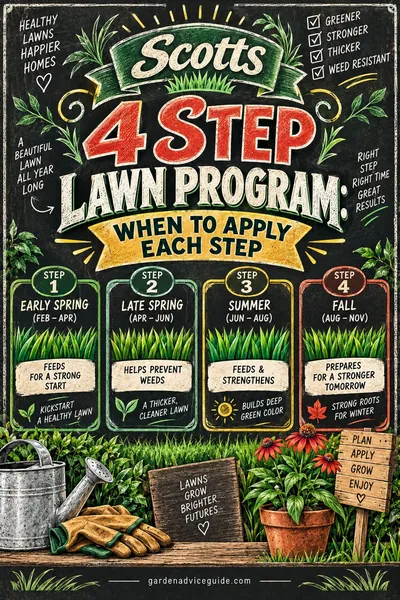
Feed cool-season grass in fall, with an early-September application and a second one at your last mow of the year. Feed warm-season grass from late spring through summer, starting only after the lawn has fully greened up and been mowed once. The rule underneath both calendars is the same: fertilize grass while it's actively growing, never while it's dormant, because a plant that isn't growing can't use nitrogen and it washes away or feeds weeds instead.
That single distinction explains most of the fertilizer people waste every year. A March feeding on a bermuda lawn does nothing but grow the winter weeds in it. A July feeding on a fescue lawn invites brown patch disease.
Get your own feeding dates by grass type and zone with our free lawn care schedule tool, then use the season-by-season breakdown below to hit the right week.
Updated September 2026
A note on numbers. This page gives you timings, soil temperatures and application rates, not dollar figures. Fertilizer, lime and soil tests are priced by your region and your supplier, and we do not set any of it. Work out what your lawn needs and when here, then price it locally.
First, which camp is your grass in?
You don't need to name the species. You need the camp, because the two calendars are close to mirror images.
Cool-season grasses: tall fescue, Kentucky bluegrass, perennial ryegrass, fine fescue. Common from the transition zone north. They grow hardest in spring and fall, struggle in July and August, and stay greenish through mild winters.
Warm-season grasses: bermuda, zoysia, St. Augustine, centipede, bahiagrass, buffalograss. Common from the transition zone south. They go brown and dormant after the first hard frost, sit still all winter, green up in late spring, and put on most of their growth in the hottest weeks of the year.
The free test: look at your lawn in January. Brown means warm-season. Green or greenish means cool-season. If you're in the transition zone (Tennessee, Kentucky, Virginia, Oklahoma, Kansas, southern Missouri) you may genuinely have both, and you should follow the schedule for whichever grass covers more ground.
When to fertilize your lawn: three triggers that beat any date
Dates on a bag are averages for a country that spans nine hardiness zones. These three signals are what actually tell you the lawn is ready to use nitrogen.
1. Soil temperature at 2 inches. Cool-season grass starts real growth around 55°F. Warm-season grass needs soil above 65°F and nights above 60°F before it does anything with fertilizer. An inexpensive soil thermometer or your state's mesonet soil-temperature map settles the question in a minute.
2. The lawn is 100% green, not 80%. This one is for warm-season lawns. A bermuda lawn that's 70 percent green in April is still pulling energy out of storage. Nitrogen at that moment goes to the henbit and annual bluegrass growing in the gaps.
3. You've already mowed it. The simplest signal there is. If the grass has grown enough to need cutting, it's growing enough to feed. For warm-season lawns, wait for one to two real mows. For a newly seeded lawn, wait for two.
Those triggers move your dates around by two to three weeks year to year, and that's correct. A late spring should push your first feeding later.
Spring: light and late for cool-season, patient for warm-season
Cool-season lawns: less than you want to do.
Spring is when the lawn looks worst and you most want to fix it, which is exactly why so much fertilizer gets dumped in March. Heavy spring nitrogen forces fast top growth at the moment the plant should be building roots. You pay three times: more mowing, more disease pressure in summer, and a shallow root system heading into the first drought.
If you feed cool-season grass in spring at all, keep it light and keep it late. Wait until the lawn has greened up on its own and been mowed twice, usually late April to late May depending on your zone, then apply about half a normal rate.
Skipping spring entirely is a legitimate strategy on a healthy lawn. A well-fed lawn from the previous fall greens up early on stored carbohydrate without any help.
Warm-season lawns: wait for full green-up.
Bermuda, zoysia, and St. Augustine sit half-dormant through most of spring while their roots reactivate. Feeding them early doesn't speed green-up, it just puts nitrogen where weeds can reach it before the grass can.
The first feeding of the year goes down after the lawn is completely green and has been mowed at least once. That's typically:
- Mid-April to early May on the Gulf Coast and central Florida
- Early to mid-May across the Deep South
- Mid-May to early June in the upper South and transition zone
If a late freeze is still possible, wait. Nitrogen pushes tender new growth, and tender growth is what a surprise April freeze kills.
Summer: the season that splits the two camps completely
Cool-season lawns: nothing.
June, July, and August are survival months for fescue and bluegrass. Every degree above about 85°F is stress, and nitrogen adds to it by forcing growth the plant can't support.
Summer nitrogen on tall fescue is the single most reliable way to get brown patch, the big circular disease that shows up in humid July weather. Skip it. Raise your mowing height instead, water deeply and rarely, and accept some tan color in August. A dormant cool-season lawn is not a dead one.
The one exception is a slow-release or "summer stress" product applied at a very low rate on irrigated turf, and even that's optional rather than useful.
Warm-season lawns: prime time.
Summer is when bermuda and zoysia do all their work, and it's the heart of their feeding schedule. Feed every four to eight weeks through the growing season, at roughly 1 lb of nitrogen per 1,000 square feet each time.
A typical southern bermuda lawn gets a feeding around the third week of May, another in early July, and one more in mid-August, with the exact spacing depending on how much you water and how green you want it.
Fall: the most valuable feeding of the year
Cool-season lawns: this is the whole ballgame.
Early September fertilizer is the highest-return thing you can do to a fescue or bluegrass lawn, and nothing else is close.
Here's why. In September the air is cooling but soil is still warm. Top growth slows, so the plant stops spending energy on blades and starts putting it into roots and stored carbohydrate. Nitrogen applied at that moment gets converted into root mass and winter reserves rather than into grass you have to mow. That stored energy is what produces a thick, early spring green-up in March with no April fertilizer at all.
Turf programs at land-grant universities across the North have made the same recommendation for decades: for cool-season lawns, fall is the primary fertilization season and spring is the secondary one.
Then there's the late fall feeding, sometimes called a dormant feed. It goes down around your last mow of the year, once top growth has stopped but soil is still above roughly 40°F. Roots are still working down there for weeks after the blades quit. This is the feeding that makes some lawns green up two weeks ahead of the block.
Timing it: watch for the week you mow and there's barely anything in the bag. In zone 5 that's late October, zone 6 early November, zone 7 mid to late November.
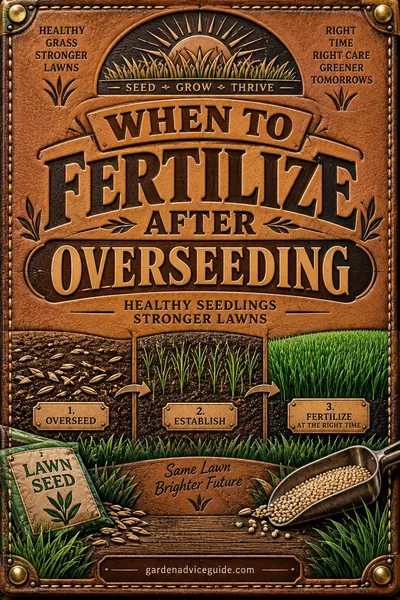
If you're overseeding this fall, coordinate the two jobs. Our guide to when to overseed lawn in fall has the seeding windows, and starter fertilizer at seeding replaces your September application rather than adding to it.
Warm-season lawns: stop.
Cut off nitrogen about six weeks before your average first fall frost. Late nitrogen pushes soft, tender growth that has no time to harden off before cold weather, and that's exactly what turns into winterkill and spring dead spot.
A potassium-only application in early fall is a different story and a genuinely good idea. Potassium improves cold hardiness without pushing growth. If your soil test shows low potassium, that early-September application is the right place to correct it.
Winter: almost always nothing
Both camps get the same answer for December through February: don't.
Cool-season grass is barely growing and warm-season grass is fully dormant. Fertilizer on frozen or snow-covered ground doesn't reach roots at all. It sits on the surface until the first thaw carries it into the storm drain.
This isn't only a waste-of-money issue. Several states restrict lawn fertilizer application in winter for water-quality reasons. Maryland and New Jersey both run a blackout from mid-November to March 1, and states around the Great Lakes and Chesapeake restrict phosphorus on established lawns unless a soil test shows a deficiency. Check your own state's rules before any late-season application.
Winter's actual job is the soil test. Labs are slow in April and fast in February, and a county extension test is cheap and tells you whether you need lime or potassium, which changes what you buy in spring. Our guide to testing garden soil walks through pulling a proper sample.
The season-by-season table
| Season | Cool-season lawn | Warm-season lawn |
|---|---|---|
| Early spring (Mar) | Nothing. Let it green up on stored energy. | Nothing. Still partly dormant. |
| Late spring (Apr-May) | Optional light feed, half rate, after two mows | First feeding after full green-up and one mow |
| Early summer (Jun) | Nothing | Feed. Peak growth season. |
| Midsummer (Jul) | Nothing. Disease risk. | Second feeding mid-month |
| Late summer (Aug) | Nothing until the last week | Last nitrogen window opens and closes |
| Early fall (Sept) | Biggest feeding of the year | Stop nitrogen. Potassium only if soil test says so. |
| Mid fall (Oct) | Second feeding late in the month in warm zones | Nothing |
| Late fall (Nov) | Dormant feed at last mow, soil above 40°F | Nothing. Lawn is going dormant. |
| Winter (Dec-Feb) | Nothing. Pull a soil test. | Nothing. Pull a soil test. |
When to fertilize grass by region
Adjust by two to three weeks for your latitude and elevation, and let a cold spring push everything later.
| Region / zone | Cool-season feeding dates | Warm-season feeding dates |
|---|---|---|
| Upper Midwest, N. New England (3-4) | May 25 (light), Sept 1, Oct 20 | Not applicable |
| Great Lakes, N. Plains (5) | May 20 (light), Sept 5, Oct 25 | Not applicable |
| Midwest, Mid-Atlantic (6) | May 15 (light), Sept 10, Nov 5 | Bermuda: Jun 1, Jul 15, stop Sept 1 |
| Transition zone (7) | May 10 (light), Sept 15, Nov 15 | May 20, Jul 1, Aug 15, stop Sept 20 |
| Southeast, N. Texas (8) | Oct 1, Nov 20 (fescue only) | May 5, Jun 20, Aug 1, stop Oct 1 |
| Gulf Coast, FL, S. Texas (9-10) | Winter ryegrass only, Nov-Feb | Apr 1, Jun 1, Aug 1, stop Oct 15 |
| Pacific NW, west of Cascades (7-8) | Apr (light), Sept 15, Nov 1 | Not applicable |
| Desert Southwest (9-10) | Ryegrass overseed, Nov-Feb | Apr 15, Jun, Aug, stop Sept 30 |
How long to wait between feedings
Spacing matters as much as the dates. Two applications three weeks apart can burn a lawn that would have been fine with six weeks between them.
- Quick-release nitrogen (urea, ammonium sulfate) feeds for two to four weeks. Space applications at least four to six weeks apart, and keep each one to about 1 lb of nitrogen per 1,000 square feet or less.
- Slow-release nitrogen (coated urea, methylene urea, most bagged lawn food) feeds for six to twelve weeks. Space applications eight to ten weeks apart. You can safely apply a slightly higher rate because it releases gradually.
- Organic sources (composted manure, feather meal, milorganite-style products) release on soil-microbe schedules, which means they're slow in cool soil and fast in warm soil. Their effect shows up two to four weeks after application. Plan for that lag rather than reapplying because "nothing happened."
The practical takeaway: a bag that says "feeds up to 3 months" is telling you when your next application belongs, not marketing at you.
Timing around the weather
The right week can still be the wrong day.
Rain. Water fertilizer in with about a quarter inch of irrigation, or apply just before a light rain of a quarter to a half inch. Do not apply before a downpour or on saturated ground. Heavy rain within 24 hours of application washes granules off the surface and into storm drains before they can dissolve into the root zone.
Heat. Skip application when the forecast has highs above 85°F for the following few days, especially on cool-season lawns. Nitrogen plus heat plus foot traffic burns turf.
Drought. Never fertilize a lawn that's already drought-stressed and crunchy. Water it back to health first, then feed. Fertilizer salts on dry soil pull moisture out of roots.
Dew and time of day. Granular fertilizer goes down on dry grass so it falls through to the soil instead of sticking to blades. Weed-and-feed products are the opposite: they need dew or a light dampness on the leaves so the herbicide sticks. Early morning is the right window for those.
Frost. Don't apply to frost-covered grass. Wait for it to melt off. Walking on frosted turf crushes the blades and leaves tan tracks for weeks regardless of what's in the spreader.
When to fertilize new grass, new sod, and repaired patches
Newly established turf runs a different clock, and getting this wrong is a common way to lose a new lawn.
New seed. A starter fertilizer, low in nitrogen and higher in phosphorus, can go down with the seed if your soil test shows a phosphorus need. If it doesn't, or if your state restricts phosphorus, skip it. Either way, the first real nitrogen feeding waits until the new lawn has been mowed twice, usually four to six weeks after germination. Feeding sooner grows weeds faster than grass, since weed seedlings respond to nitrogen quicker than turf seedlings do. Our guide to when to plant grass seed covers the seeding windows those four to six weeks count forward from.
New sod. Wait four to six weeks after installation, once the sod has knitted down and resists a gentle tug. Sod arrives already fertilized from the farm, and adding more before roots have grown into your soil just pushes top growth the shallow roots can't support.
Patches and repairs. Same rule as new seed: two mows, then feed. On a spring bermuda repair, wait for the surrounding lawn to be fully green first.
When not to fertilize, no matter the month
- The lawn is dormant, brown, or frozen.
- The ground is saturated or a heavy storm is in the forecast.
- The lawn is drought-stressed and hasn't been watered.
- Temperatures are running above 85°F on a cool-season lawn.
- You applied a full feeding less than four weeks ago.
- Your soil test came back high in phosphorus and you're about to apply a complete fertilizer anyway.
That last one matters more than it sounds. Most established lawns in the US have plenty of phosphorus, which is why so many states now restrict it. Nitrogen and potassium are the ones that actually run out.
Worked example: a zone 5 bluegrass lawn in Milwaukee
The setup: 5,000 square feet of Kentucky bluegrass, zone 5b, average first fall frost October 10. Soil test came back pH 6.4, phosphorus high, potassium slightly low. Annual nitrogen target: about 2.5 lb per 1,000 square feet.
| Date | Application | Rate | Why then |
|---|---|---|---|
| Feb 15 | Soil test pulled | n/a | Lab turnaround is fast now, slow in April |
| May 22 | Light spring feed | 0.5 lb N / 1,000 sq ft | Lawn has greened up and been mowed twice |
| Jun - Aug | Nothing | 0 | Heat and disease risk. Water, mow high, wait. |
| Sept 5 | Main feeding | 1.0 lb N / 1,000 sq ft | Air cooling, soil still warm, roots building |
| Sept 20 | Potassium correction | Per soil test | Fixes the low-K reading before winter |
| Oct 28 | Dormant feed | 1.0 lb N / 1,000 sq ft | Last mow done, soil still 45°F |
| Nov - Feb | Nothing | 0 | Ground freezing. Also outside legal windows in some states. |
Total for the year: 2.5 lb of nitrogen per 1,000 square feet, with 80 percent of it applied after Labor Day. That ratio is the point of the whole schedule.
The rate math, briefly. A 32-0-4 bag is 32 percent nitrogen. To put down 1 lb of nitrogen per 1,000 square feet, you spread about 3.1 lb of product per 1,000 square feet (1 ÷ 0.32), so roughly 15.5 lb across this 5,000 square foot lawn. Your spreader setting comes off the bag, not off the internet.
Worked example: a zone 8 bermuda lawn in Atlanta
The setup: 4,000 square feet of common bermuda, zone 8a, average last spring frost March 25, average first fall frost November 15.
- April 12: lawn is about 60 percent green. Tempting, but too early. Nothing goes down.
- May 3: lawn is fully green and has been mowed once. First feeding, 1 lb N per 1,000 sq ft.
- June 20: second feeding, seven weeks later, same rate.
- August 1: third and final nitrogen feeding.
- The cutoff check: six weeks before November 15 is October 4. August 1 clears it easily, and even a September 15 application would have been cutting it close.
- September 10: potassium-only application for winter hardiness. No nitrogen.
- November 20 onward: lawn browns out and gets nothing until next May.
Three nitrogen feedings, all inside the hot months, all stopped well before the lawn starts thinking about dormancy.
Frequently asked questions
What is the best time of year to fertilize grass?
For cool-season grass, early September, followed by a late fall feeding at your last mow. For warm-season grass, late May through early August while the lawn is growing hard. There's no universal best month because the two grass families grow at opposite times of year.
How often should I fertilize my lawn?
Two to four times a year is right for most home lawns. Cool-season lawns do best with two fall applications plus an optional light spring feed. Warm-season lawns typically get two to four feedings spaced four to eight weeks apart through summer.
Can I fertilize my lawn in the spring?
Yes, but keep it light and late for cool-season grass, after the lawn has greened up and been mowed twice. For warm-season grass, late spring is the correct start of the season, once the lawn is completely green. Heavy March nitrogen on either type mostly feeds weeds.
When should I stop fertilizing my lawn in the fall?
Warm-season lawns stop about six weeks before the first average frost. Cool-season lawns can take a final application right up to the last mow, as long as soil is still above about 40°F and the ground isn't frozen. Check your state's rules, since several set a mid-November cutoff.
Should I fertilize before or after mowing?
After, and ideally a day or two after, so the grass isn't stressed and the granules can fall through the canopy to the soil. Mowing first also means you won't bag away granules that landed on the blades. Water it in afterward with about a quarter inch.
Do I fertilize before or after it rains?
A light rain of a quarter to a half inch right after application is ideal, since it moves the fertilizer into the root zone for you. A heavy storm within a day is the worst case, since it carries granules off the surface. If the forecast looks heavy, wait.
When should I fertilize new grass seed?
Starter fertilizer can go down at seeding if a soil test shows you need phosphorus. The first regular nitrogen feeding waits until the new lawn has been mowed twice, usually four to six weeks after the seedlings come up. Earlier nitrogen mostly benefits weeds.
Does fertilizer timing help with weeds?
It does, indirectly and significantly. A thick, correctly fed lawn crowds out most annual weeds without any herbicide, and fall feeding is what builds that density. For the weeds that get in anyway, our guide to getting rid of weeds covers the treatment timing.
The short version
Cool-season lawns get their main feeding in early September and a second one at the last mow of the year, with an optional light feed in late spring. Warm-season lawns get two to four feedings between full green-up in late spring and roughly six weeks before the first fall frost. Neither gets anything while it's dormant.
Watch the lawn, not the calendar. Full green color plus a mow behind you means it's ready. Brown, frozen, drought-stressed, or heading into a heat wave means it isn't.
Build your own dates with our free lawn care schedule tool, and for everything else in the year, pre-emergent, aeration, watering, and mowing heights, the full month-by-month lawn care schedule lays it all out by grass type.