When to Plant Grass Seed

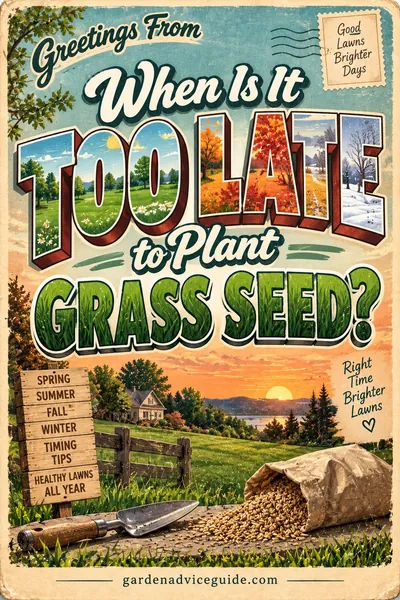
Sow cool-season grass seed in late summer through early fall, when soil temperature at 2 inches sits in the 50-65°F range and daytime air is 60-75°F. Sow warm-season grass seed in late spring through midsummer, once soil holds above 65-70°F and frost is finished. For most of the country that means late August to mid-October if you have fescue, bluegrass, or ryegrass, and May through July if you have bermuda, zoysia, or centipede.
Those two calendars are close to opposite, and picking the wrong one is the single most expensive lawn mistake there is. A bag of seed sown at the wrong time doesn't grow slower. It mostly doesn't grow at all.
Get your own dates by grass type and zone with our free lawn care schedule tool, then use the soil-temperature tables below to fine-tune the exact week.
Updated September 2026
A note on numbers. This page gives you soil temperatures, calendar windows, seeding rates and germination times, not dollar figures. Seed, starter fertilizer and soil thermometers are priced by your region, your supplier and the season, and we do not set any of it. Work out your sowing date here, then buy locally.
Soil temperature beats the calendar every time
Grass seed can't read a calendar, and it doesn't care what the label on the bag says about "early spring." It responds to one thing: the temperature of the soil wrapped around it.
Air temperature swings 30 degrees in a day. Soil at 2 inches deep moves slowly, holds steady, and lags air temperature by roughly a week or two. That lag is why an 80°F afternoon in early April doesn't mean your soil is ready, and why warm September soil keeps working for weeks after the air turns cool.
Here's the germination range for every common lawn grass in the US.
| Grass | Type | Soil temp to germinate | Days to sprout | Best seeding window |
|---|---|---|---|---|
| Perennial ryegrass | Cool-season | 50-65°F | 5-10 | Late Aug - mid Oct |
| Tall fescue (turf-type) | Cool-season | 50-65°F | 7-14 | Late Aug - early Oct |
| Fine fescue (creeping red, chewings) | Cool-season | 50-65°F | 7-14 | Late Aug - early Oct |
| Kentucky bluegrass | Cool-season | 55-65°F | 14-30 | Mid Aug - mid Sept |
| Bermuda (hulled seed) | Warm-season | 65-70°F | 7-14 | Late Apr - late Jul |
| Zoysia | Warm-season | 70°F+ | 14-21 | May - Jul |
| Centipede | Warm-season | 70°F+ | 14-28 | May - Jun |
| Bahiagrass | Warm-season | 65-75°F | 21-28 | Apr - Jul |
| Buffalograss | Warm-season | 65-75°F | 14-30 | May - Jun |
| St. Augustine | Warm-season | Not sold as seed | n/a | Sod or plugs, late spring |
Two things jump out of that table.
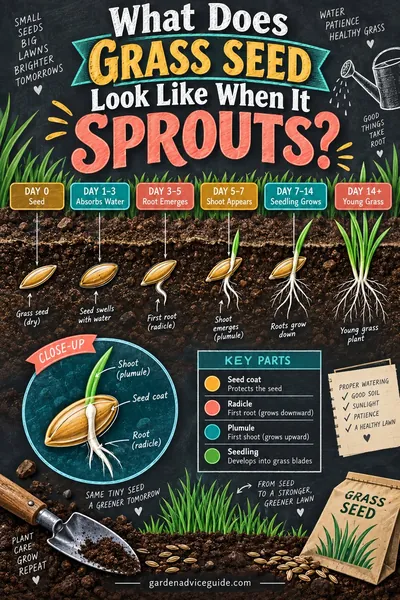
Kentucky bluegrass is the slow one. Two to four weeks in the ground before a single blade shows, which means it needs the earliest start of any cool-season grass and the most patience while you water bare dirt. Plenty of people re-seed a "failed" bluegrass lawn at day 16, right before it would have come up.
Warm-season grasses want soil that would cook cool-season seedlings. Zoysia doesn't get moving until soil is genuinely hot. That's not a small preference. It's the whole reason the two families are seeded six months apart.
When is the best time to sow grass seed? Fall, if you have cool-season grass
If you live from the transition zone north and have fescue, bluegrass, or ryegrass, late summer into early fall is the best seeding window of the year, and nothing else is close. Four things line up at once:
- Warm soil, cooling air. Late-August soil is still in the 70s, which sprouts seed fast. The air above it is dropping into the 70s and 60s, which is exactly what a two-week-old seedling wants.
- Weed pressure collapses. Crabgrass is done germinating for the year by late summer. In spring your new seedlings fight it for every inch of ground, and you can't use crabgrass preventer without killing your own seed.
- Roots keep growing after the show ends. Grass roots keep working in soil down to about 40°F, long after the blades stop growing and the mower goes away. A seedling that sprouts September 5 is still building roots in November.
- You get two mild seasons instead of one. Fall, then winter dormancy, then a full cool spring before summer heat ever arrives. A spring-seeded lawn gets maybe eight good weeks before July.
The practical rule: seed about 45 days before your average first fall frost. That's the minimum a seedling needs to germinate, root, and toughen up before freeze-thaw cycling starts lifting shallow-rooted plants out of the ground.
Our guide to when to overseed lawn in fall walks through that 45-day math region by region if you're thickening an existing lawn rather than starting a new one.
When to plant warm-season grass seed
Warm-season grass runs the opposite calendar. It greens up late, grows hardest in the hottest weeks of the year, and goes brown and dormant after the first hard frost.
Seed it in late spring through midsummer, after your last frost, once soil holds above 65-70°F for several days running. In practice that's mid-April to July across most of the South, with May and June being the safest bet almost everywhere.
There's a hard stop on the back end: stop seeding warm-season grass about 90 days before your average first fall frost. Bermuda and zoysia need that long stretch of heat to build the rhizomes and stolons that carry them through winter. A seedling that's six weeks old when the first freeze hits usually doesn't come back in spring.
For the full bermuda-specific breakdown, including Texas and Deep South dates, see when to plant bermuda grass.
When to plant grass seed by region
Find your row. Then check the window against your own local frost date, because frost dates vary by two to three weeks inside a single USDA zone depending on elevation and how close you are to water. You can confirm your zone by zip code on the USDA Plant Hardiness Zone Map.
| Region (zones) | Cool-season window | Spring backup window | Warm-season window | Typical first frost |
|---|---|---|---|---|
| Upper Midwest, N. New England (3-4) | Aug 1 - Sept 5 | Apr 15 - May 15 | Not viable | Sept 15-30 |
| Great Lakes, N. Plains (5) | Aug 15 - Sept 15 | Apr 20 - May 20 | Not viable | Oct 1-10 |
| Midwest, Mid-Atlantic, Ohio Valley (6) | Aug 25 - Sept 25 | Mar 25 - Apr 30 | Bermuda only, late May - Jun | Oct 15-25 |
| Transition zone: TN, KY, VA, OK, KS (7) | Sept 1 - Oct 10 | Mar 15 - Apr 20 | May 1 - Jul 15 | Nov 1-10 |
| Southeast, N. Texas (8) | Sept 15 - Oct 31 | Rarely worth it | Apr 15 - Jul 31 | Nov 15 - Dec 1 |
| Gulf Coast, FL, S. Texas (9-10) | Winter ryegrass only, Nov - Dec | No | Mar 15 - Aug 31 | Rare or none |
| Pacific Northwest, west of Cascades (7-8) | Sept 1 - Oct 15 | Apr 1 - May 15 | Not viable | Nov |
| Mountain West, high elevation (3-6) | Aug 1 - Sept 10 | May 15 - Jun 15 | Not viable | Sept |
| Desert Southwest (9-10) | Ryegrass overseed, Oct | No | Apr - Aug | Dec or none |
Two regional notes worth having:
The Pacific Northwest gets a real spring option. Mild, wet springs west of the Cascades mean April seeding actually works there, which isn't true in Ohio or Kansas. Fall is still better, but spring isn't the gamble it is elsewhere.
Zones 9-10 don't grow permanent cool-season lawns. Fescue and ryegrass seeded in the Gulf Coast or Phoenix are winter color, not a lawn. They're sown in October or November over dormant bermuda and they die out in May. That's by design.
How to actually check your soil temperature
You don't have to guess, and this is the step that separates a lawn that comes in thick from one that comes in patchy.
Buy a soil thermometer. A dial-stem compost or soil thermometer is one of the cheapest tools in the garden center and it lasts forever. Push it 2 inches into bare soil, not into a thatch layer or mulch. Leave it two minutes.
Take the reading at the right time. Mid-morning gives you something close to the daily average. Late afternoon gives you the daily high. Pick one time and stick with it so your readings compare to each other.
Read for three to five days in a row. One warm afternoon isn't a trend. You're waiting for the number to hold in range, not touch it once.
Or use a free soil temperature map. Most state universities run a mesonet weather network that publishes 2-inch and 4-inch soil temperatures by county, updated daily. Search your state's name plus "mesonet soil temperature" and you'll usually land on a live map. Your county extension office can point you to it if not.
One shortcut that works surprisingly well when you have no thermometer: soil temperature at 2 inches usually lands within a few degrees of the average of the last five days of highs and lows. Five days of 78°F highs and 58°F lows averages 68°F, and that's about what your probe will read.
Spring seeding: when it works and when it wastes a bag
Spring is when most people want to seed, because that's when the lawn looks worst. It can work. It's just a downgrade, and you should know what you're accepting.
Seed cool-season grass in spring when: you have bare dirt from construction or a dead patch that will fill with weeds if you leave it, you can water through July, or you live somewhere with a long cool spring like the Pacific Northwest or the Mountain West.
The window is narrow. Wait until soil holds at 50-55°F, which is usually mid-March in the transition zone, early April in the Midwest, and late April to mid-May up north. Seed as early inside that window as you can, because every week you wait is a week less root growth before summer.
Here's what you're up against with spring seeding:
- No crabgrass preventer. Pre-emergent herbicide blocks grass seed exactly the way it blocks crabgrass seed. Seed in spring and you go the whole season without it, in the season crabgrass germinates. (The one exception is mesotrione-based products, which are labeled for use at seeding.)
- A June deadline that doesn't move. A seedling from an April 15 seeding is eight weeks old when the first 90°F week arrives, with roots maybe 2 inches deep. A fall-seeded plant meets that same week with a full season of root growth behind it.
- Water you can't skip. Spring-seeded lawns need supplemental water through their first summer, every summer week, no exceptions.
Warm-season grass is different: spring is its season. There's no downgrade, you're just waiting for soil to hit 65-70°F rather than 50°F.
Dormant seeding: the winter option nobody mentions
If you missed fall entirely and don't want to wait until spring, dormant seeding is a real technique, not a folk remedy.
You sow cool-season seed after soil has dropped below 40°F and stays there, typically late November through February in zones 3 to 6. The seed doesn't germinate. It sits in the soil all winter, works its way into cracks as the ground freezes and thaws, and sprouts on its own the moment soil hits 50°F in spring, usually weeks before you could have gotten a spreader on the wet ground.
What makes it work:
- Freeze-thaw cycling does your seed-to-soil contact for you.
- Spring moisture is free, so germination watering is mostly handled.
- The seed germinates earlier than any spring seeding you could do by hand.
What makes it fail: seeding too early, in soil that's still 45-50°F. The seed germinates in a warm December week, then a hard freeze kills the seedlings. Wait for genuinely cold ground. Also skip it on slopes, where winter runoff carries seed to the bottom of the hill.
Expect maybe 60 to 70 percent of the results of a proper fall seeding. It's a solid plan B, not a plan A.
Worked example: a zone 6 tall fescue lawn in Kansas City
Real numbers for a real yard, so you can see how the pieces line up.
The setup: 5,000 square feet of bare, graded soil after a patio project. Turf-type tall fescue. Kansas City, zone 6a. Average first fall frost: October 20.
| Date | Reading or job | What happened |
|---|---|---|
| Aug 5 | Count back 45 days from Oct 20 | Deadline to have seed down: Sept 5 |
| Aug 18 | Soil probe, 2 in, 10 a.m. | 76°F. Too warm, seedlings would fry. Wait. |
| Aug 25 | Soil probe | 73°F and falling. 10-day forecast highs in the low 80s. |
| Aug 28 | Seed down | 8 lb per 1,000 sq ft × 5 = 40 lb of seed |
| Aug 28 - Sept 8 | Germination watering | Light watering 2-3x daily, surface never dries |
| Sept 5 | First blades up | Day 8. Right on the tall fescue schedule. |
| Sept 22 | First mow | 3 inches, sharp blade, no turns on soft ground |
| Oct 20 | First frost arrives | Seedlings are 53 days old, roots 3-4 in deep. Safe. |
Now the version that fails. Same yard, seeded September 25 because that's when the weekend was free. Soil is 62°F, so germination takes 11 days and blades show October 6. On October 20 those seedlings are 14 days old with roots barely an inch down. The freeze-thaw cycling through November lifts a large share of them out of the ground, and by April the owner is buying seed again.
Four weeks of delay, most of a lawn lost. That's the whole argument for timing.
Warm-season worked example: bermuda outside Dallas
The setup: 4,000 square feet, zone 8a, average last spring frost March 20, average first fall frost November 20.
- April 10: soil at 2 inches reads 62°F. Close, but bermuda sulks below 65°F. Wait.
- April 24: soil reads 68°F for the fourth day running. Green light.
- May 1: seed goes down at 2 lb hulled seed per 1,000 sq ft, so 8 lb total.
- May 8-14: germination, right in the 7-14 day window for hulled seed.
- Hard stop check: 90 days before November 20 is August 22. Anything seeded after that date doesn't get enough heat to establish.
That gives a comfortable four-month seeding window, April 24 through August 22, with the sweet spot in May and June.
Seeding rates, as a sanity check
Timing is the point of this page, but the rate matters enough to sanity-check before you buy. These are standard extension figures for reference only; your bag's label wins.
| Grass | New lawn (lb / 1,000 sq ft) | Overseeding (lb / 1,000 sq ft) |
|---|---|---|
| Turf-type tall fescue | 6-8 | 4-6 |
| Kentucky bluegrass | 2-3 | 1-2 |
| Perennial ryegrass | 6-8 | 4-5 |
| Fine fescue | 4-5 | 3-4 |
| Bermuda (hulled) | 1-2 | 1 |
| Zoysia | 1-2 | 1 |
| Centipede | 0.25-0.5 | 0.25 |
Doubling the rate does not double the lawn. Overseeded plots come in thick and then thin themselves out as seedlings compete, and dense stands of seedlings are the ones that get damping-off disease.
What actually goes wrong at the wrong time
Seeding at the wrong time doesn't produce a slightly worse lawn. It produces specific, predictable failures.
Too early in fall (soil above 75°F). Seed germinates fine, then seedlings sit in August heat with no root system. Add a dry week and you lose the stand overnight.
Too late in fall. Germination is slow in cold soil, and whatever comes up gets frost-heaved out of the ground over winter. Anything that survives is thin.
Cool-season seed in late spring. It comes up, looks great in May, and dies in the first hot dry stretch of July with roots that never got deep.
Warm-season seed in fall. Almost total loss. The plant needs 90 days of heat to build the underground structures that survive winter, and September doesn't have them.
Seeding right after pre-emergent. The most common self-inflicted wound. Most crabgrass preventers block grass seed for 8 to 12 weeks. Spring pre-emergent in April means no seeding until July. Fall pre-emergent in September means no fall seeding at all. Pick one job per season.
After the seed is down: the watering window
Timing doesn't end when the spreader is empty. The first two weeks decide everything.
- Days 1 to 14: keep the top quarter inch of soil damp at all times. That usually means two or three short waterings a day, not one long one. A seed that swells and then dries out is dead, not dormant.
- Weeks 3 to 4: back off to once a day, longer each time, to pull roots downward.
- Week 5 onward: shift toward normal deep, infrequent watering.
- First mow: when the new grass is about one-third taller than your target height. For tall fescue at 3 inches, that's a first cut at 4 inches. Sharp blade, dry surface, no sharp turns.
Hold off on fertilizer until the new lawn has been mowed twice, usually four to six weeks in. Our guide to when to fertilize your lawn covers the feeding calendar in detail, and the full lawn care schedule lays out pre-emergent, aeration, and mowing timing for the rest of the year. Pre-emergent is also the first thing to check when a seeding fails, which our guide to grass seed not growing walks through along with the other common causes.
Frequently asked questions
When is the best time to sow grass seed in the US?
For cool-season grass, late August through early October, timed so seed is down about 45 days before your first fall frost. For warm-season grass, late spring through midsummer, once soil holds above 65-70°F. There's no single national date because the two grass families run opposite calendars.
What is the lowest soil temperature grass seed will germinate at?
Cool-season seed starts moving around 50°F at 2 inches, and germination gets very slow below that. Warm-season seed needs 65-70°F minimum and essentially stalls below it. Seed sown into colder soil isn't wasted, it just sits until conditions improve.
Can I plant grass seed in the summer?
For warm-season grass, yes, and June and July are often the best months of all as long as you can water. For cool-season grass, summer seeding is a losing bet: even if it germinates, the seedlings can't survive the heat and drought that follow within weeks.
How late in the fall can I plant grass seed?
Roughly 45 days before your first hard freeze is the practical cutoff. Past that, switch to dormant seeding in late November or December instead, once soil is reliably below 40°F, and let the seed wait for spring.
Do I need to cover grass seed with soil or straw?
Cover lightly, no more than a quarter inch, or use a thin scatter of clean straw or a seed blanket. Buried seed doesn't come up. The goal is seed-to-soil contact plus a little shade to slow evaporation, not a layer of topsoil.
Will grass seed grow if I just throw it on the ground?
Some of it, on bare soil that's rained on. Most of it, on an existing lawn with thatch, never reaches soil at all and gets eaten by birds instead. Raking, core aerating, or slit-seeding beforehand is what turns a bag of seed into grass.
How long before new grass looks like a lawn?
Perennial ryegrass looks like turf in about six weeks, tall fescue in eight to ten, Kentucky bluegrass in a full season since it spreads by rhizomes and fills in slowly. Warm-season grass seeded in May typically closes in by late summer if it's watered.
Is it better to seed or to lay sod?
Sod is instant and can go down any time the ground isn't frozen, which is its real advantage: no timing window. Seed costs roughly a tenth as much per square foot and gives you more grass variety choices, but only inside the seasonal window. If you've missed your window and can't wait, sod is the honest answer.
The short version
Cool-season grass goes in the ground in late summer to early fall, at soil temperatures of 50-65°F and about 45 days before your first frost. Warm-season grass goes in from late spring through midsummer, once soil holds above 65-70°F, with a hard stop 90 days before frost. Spring is a workable backup for cool-season lawns and the main event for warm-season ones.
Buy the soil thermometer. Read it three days running before you open the bag. Then get your full year of dates from our free lawn care schedule tool, and check your local frost dates with the frost date lookup so the 45-day math is built on your yard's numbers instead of a national average.