When to Harvest Cucumbers

Pick cucumbers while they are firm, evenly dark green, and still on the small side: slicing types at 6 to 8 inches, pickling types at 3 to 4 inches, and burpless or Asian types at whatever length the packet gives, which is usually longer. Most varieties hit their first pick 50 to 65 days after sowing, and once they start you need to check the vine every day or two.
Cucumbers are the crop gardeners most reliably let get away from them. A fruit that was perfect on Tuesday is a fat, seedy, yellow-bellied disappointment by Friday, and every one you leave on the vine tells the plant to stop making more.
Not sure where your pick dates fall this year? Our free when to harvest tool gives you the maturity window for cucumbers and everything else in the bed based on your zone.
Updated September 2026
The Five Signs a Cucumber Is Ready
You do not need all five. Get three of them and pick it.
| Sign | Ready | Past it |
|---|---|---|
| Color | Even, deep green over the whole fruit | Pale or yellow patch at the blossom end |
| Firmness | Hard and solid when you squeeze | Soft spots, or a slightly spongy feel |
| Shape | Straight-sided and uniform | A fat belly, tapered ends, a bulged middle |
| Size | 6 to 8 in for slicers, 3 to 4 in for picklers | Anything noticeably longer or thicker |
| Skin | Bumps and spines still sharp and defined | Bumps flattening out, skin going dull and waxy |
Color is the first thing to check and the most reliable. A ripe-for-eating cucumber is dark green all the way around. Any yellowing, especially at the blossom end (the end opposite the stem), means the fruit has started converting to a seed factory. That yellow is not the sun. It is the plant maturing seed.
Firmness catches the ones color misses. Wrap your hand around the fruit and squeeze gently. Prime cucumbers feel like a hard rubber grip. If there is any give, it is either overripe or it has been sitting in heat.
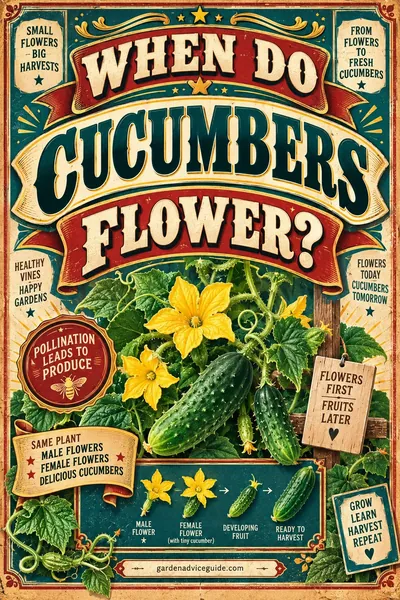
Shape tells you about pollination. A cucumber with a skinny, curled tail and a fat shoulder was not fully pollinated. Pick it and eat it, it tastes fine, but it is a signal that your bees were not working the flowers. Our guide on when cucumbers flower explains the male and female flower cycle and how to hand pollinate.
When to Harvest Cucumbers by Type and Size
Cucumber "ripe" is a moving target because you are picking an immature fruit on purpose. The right size depends entirely on what type you planted.
| Type | Pick at | What it is for | Notes |
|---|---|---|---|
| Slicing | 6 to 8 in | Fresh eating, salads | Thicker skin, seeds get tough fast past 8 in |
| Pickling | 3 to 4 in | Whole pickles, spears | Denser flesh, thin skin, stays crisp in brine |
| Gherkin (tiny pickles) | 1.5 to 2 in | Cornichons | Needs daily picking, they double in size overnight |
| Burpless / Asian | 10 to 14 in, per packet | Fresh eating, stir fry | Thin skin, few seeds, best trellised so they stay straight |
| Lemon cucumber | Golf ball to tennis ball | Fresh eating | Pick while pale yellow, not deep gold |
| Armenian (actually a melon) | 12 to 18 in | Fresh eating | Ridged, thin skinned, no peeling needed |
The packet beats this table. Breeders select for specific sizes, and a variety bred for 12 inch fruit is not overripe at 10. Read the days to maturity and the mature size on the packet, then use the color and firmness checks to fine tune.
Pickling cucumbers have the narrowest window of all. Three inches is a spear. Five inches is a slicer with the wrong skin. If you are growing for jars, pick every single day during peak.
How Many Days From Planting to First Pick
Most cucumber varieties run 50 to 65 days from seed to first harvest. That number assumes warm soil and steady moisture, and it stretches in a cool, cloudy summer.
Here is how the season lays out for a typical variety at 55 days.
| Stage | Days from sowing | What you see |
|---|---|---|
| Germination | 3 to 10 | Two seed leaves push through |
| True leaves and runners | 14 to 21 | Vine starts running or bush fills out |
| First male flowers | 30 to 40 | Flowers on thin stems, no baby fruit behind them |
| First female flowers | 35 to 45 | Tiny cucumber behind the flower |
| First pick | 50 to 65 | Fruit hits size 7 to 10 days after the female flower opens |
| Peak production | roughly 6 weeks long | Every day or two picking |
The gap between flower and fruit is short. Once a female flower is pollinated, a cucumber goes from pinky-sized to picking size in about a week in warm weather. That is why the vine gets away from you: you looked on Sunday, saw nothing, and by Thursday there are three oversized ones hiding under a leaf.
Worked example. You direct sowed on June 1 with a 55 day variety. Germination on June 6. First female flowers open around July 8. The first fruit reaches 7 inches around July 16, which is day 45, a bit ahead of the packet because June was hot. From there you should be picking every one to two days through late August, roughly a six week run, until either powdery mildew or the first cool nights slow the vine.
If you started indoors instead, the clock is different. See when to transplant cucumber seedlings for the transplant timing, since cucumbers hate root disturbance and a stalled transplant loses more time than direct sowing would have.
How Often to Pick During Peak Season
Every one to two days. Daily during a heat wave. This is not fussiness, it is how you keep the plant producing.
A cucumber plant is running a simple program: make seed, then stop. Every fruit you leave on the vine to full maturity is a signal that the job is done, and the plant slows down new flower production. Pick early and often and the vine keeps trying.
The rules that keep production going:
- Cut, do not pull. Use snips or a knife and leave about a quarter inch of stem on the fruit. Yanking damages the vine and opens a wound for disease.
- Pick in the morning. Fruit picked before the heat is crisper and stores longer. Skip picking while the leaves are soaking wet, though, since moving through wet foliage spreads bacterial and fungal disease.
- Remove every oversized fruit you find. Even if you throw it in the compost, get it off the vine. One over-mature cucumber left on the plant slows the whole plant down.
- Look underneath. Lift the leaves and check the base of the plant. That is where the monsters hide.
- Keep water steady. Uneven watering is the main cause of bitter, misshapen, hollow fruit.
Trellising makes picking accurate. Fruit hanging in the open is visible, straight and clean, and you see it at the right size instead of finding it two days late. Our full guide to growing cucumbers covers trellis options and spacing.
Why Your Cucumbers Are Bitter, Yellow, or Hollow
Most harvest complaints trace back to timing or water, not to the variety.
Bitter cucumbers. Bitterness comes from cucurbitacin, a compound the plant makes more of under stress: heat, drought, or irregular watering. It concentrates in the skin and in the stem end. Fixes: water deeply and consistently, mulch to hold soil moisture, pick young, and if it keeps happening plant a low-cucurbitacin type like a burpless or Asian variety. You can also peel the fruit and cut an inch off the stem end.
Yellow cucumbers. Almost always overripe. The fruit is maturing seed and the flesh turns pithy. A few varieties are naturally yellow (lemon cucumber, some heirlooms), so know what you planted. Yellow with soft, sunken spots is a rot problem, not ripeness.
Hollow centers. Usually irregular watering during rapid fruit growth, sometimes a boron shortage in the soil. Consistent moisture solves most cases. If your beds have other odd deficiency symptoms, a soil test is worth it, and our guide on how to test garden soil explains what the numbers mean.
Misshapen, tapered fruit. Poor pollination or the plant running out of steam mid-season. A midseason feeding helps the vine keep pushing full-sized fruit, and when to fertilize cucumbers has the timing.
Sunscald. Pale, leathery patches on fruit exposed after leaves die back from mildew. Keep the canopy healthy and the fruit shaded.
Do Cucumbers Keep Ripening After You Pick Them?
No. Cucumbers are in the group that does not continue to develop after harvest. Watermelon, peppers, sweet corn, peas and every leafy green behave the same way. What you pick is what you get, so an underripe cucumber stays underripe and a bitter one stays bitter.
That has one useful practical effect: there is no reason at all to leave fruit on the vine "to finish." Pick on the small side and you lose nothing.
Storage after picking. Cucumbers hold about a week in the refrigerator, best in the warmest part of the fridge or the crisper drawer, loosely wrapped so they do not dry out. They suffer chilling injury below about 50°F over long periods, which shows up as water-soaked pitting. Keep them away from apples, bananas and tomatoes, since the ethylene those give off yellows cucumbers fast.
For pickling, timing is tight. Cucumbers for jars should go from vine to brine within 24 hours, ideally the same day. The crispness you want in a pickle is already gone by day three on the counter.
When the Cucumber Season Ends
Cucumbers are frost tender, full stop. A light frost that improves your kale and carrots ends cucumbers, squash, beans, corn and basil on the same night. There is no waiting it out.
Two weeks before your first frost date, stop expecting new fruit to size up and start picking everything that is close. Baby cucumbers left on the vine on frost night are a total loss.
The vine usually quits before frost anyway. Powdery mildew, downy mildew, cucumber beetles and simple exhaustion take most plants out in late summer. A second sowing in midsummer, about 8 to 10 weeks before your first frost, gives you a fresh vine for a late run. Our when to plant cucumbers guide has the succession sowing dates by zone.
End of season cleanup matters for next year. Pull the vines rather than tilling them in if they had mildew, since the spores overwinter on debris.
Frequently Asked Questions
How do I know when cucumbers are ready to pick?
Look for even dark green color, a firm squeeze, straight sides, and the right size for the type: 6 to 8 inches for slicers, 3 to 4 for picklers. Sharp, well-defined spines and bumps are another good sign. Any yellowing at the blossom end means you waited too long.
What happens if I leave cucumbers on the vine too long?
They turn yellow, the skin goes tough and waxy, the seeds harden, and the flesh gets bitter and pithy. Worse, the plant reads a mature fruit as a finished job and slows down new flower and fruit production. Pull oversized fruit off even if you are only going to compost it.
Can you eat a yellow cucumber?
You can, but it will not be good. Yellow means the fruit matured past the eating stage, so expect tough skin, hard seeds and a bitter or bland flesh. Peel it, scoop the seeds, and it is usable in a cooked dish, though most people compost them and pick earlier next time.
How many cucumbers does one plant produce?
A healthy vining plant typically gives 20 to 30 fruits over its run if you keep picking, while bush types produce fewer over a shorter, more concentrated window of about 3 to 4 weeks. Consistent picking is the biggest single factor. Neglected plants can cut their total in half.
Should I pick cucumbers in the morning or evening?
Morning, before the heat builds. Fruit picked cool is crisper and holds longer in the refrigerator. Wait until the dew has dried, though, because pushing through wet cucumber foliage spreads bacterial wilt and fungal disease through the patch.
Why are my cucumbers bitter at the stem end?
Cucurbitacin, the bitter compound, concentrates in the skin and in the stem end, and the plant makes more of it under heat and drought stress. Water deeply and evenly, mulch the bed, and pick young. Peeling the fruit and cutting an inch off the stem end removes most of the bitterness in the ones you already picked.
Do cucumbers ripen after picking like tomatoes?
No. Cucumbers do not continue developing off the vine, so an underripe one never improves. That means there is no benefit to leaving fruit on the plant hoping it finishes, and picking on the small side costs you nothing in flavor.
When should I stop harvesting cucumbers for the season?
Stop when the plant quits or when frost arrives, whichever comes first. Cucumbers are killed outright by the first light frost, so pick everything usable in the two weeks before your first frost date. Check your dates with our when to harvest tool and clear the vines afterward.