When to Transplant Cucumbers

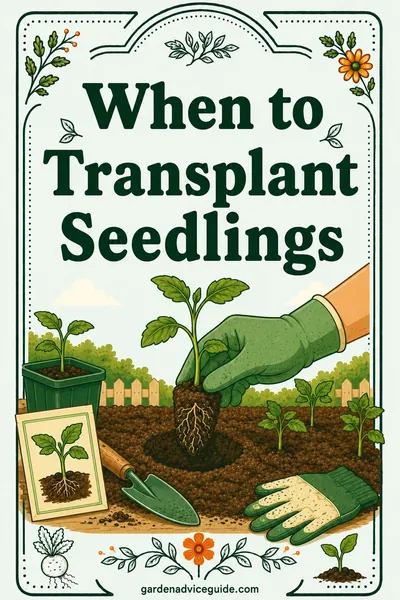
Transplant cucumbers when the seedlings are 3 to 4 weeks old with 2 to 3 true leaves, and only after your last frost date has passed, soil temperature has reached 65°F, and nighttime lows are staying above 55°F. Both conditions have to be true at once. The most useful thing to know about when to transplant cucumbers is that plant age is the tighter constraint: a cucumber seedling held past four weeks in a small cell gets root-bound and never fully recovers.
Working backward from your frost date is the easy way to line all of that up. Our free seed starting calculator takes your zone and gives you the indoor sowing date and the transplant week, so the seedlings are ready exactly when the soil is.
Updated September 2026
Cucumbers are in the squash family, and like all cucurbits they dislike having their roots handled. That makes transplant timing less forgiving than it is for tomatoes or peppers. Miss the window early and cold soil stalls them; miss it late and a coiled root ball stunts them for the whole season.
The two conditions that have to line up
Condition 1: the weather is ready. Cucumbers are frost tender and cold sensitive well above freezing. Set the bar here:
| Measurement | Minimum | Target | What happens below the minimum |
|---|---|---|---|
| Soil temp at 2 to 4 inches | 65°F | 70 to 75°F | Roots barely function, growth stalls for weeks |
| Nighttime low | 55°F | 60°F+ | Leaves yellow, plants sulk, growth stops |
| Daytime high | 70°F | 75 to 85°F | Slow growth, poor establishment |
| Frost risk | Zero | Zero | Total loss at 32°F, damage near 40°F |
In practice that means transplanting 1 to 2 weeks after your average last frost date in most regions, not on the frost date itself. Cucumbers set out on the frost date and cucumbers set out two weeks later usually end up the same size by early July, because the later ones grow without a check.
Condition 2: the plant is ready. Look for a stocky seedling with 2 to 3 true leaves, roughly 3 to 6 inches tall, with white roots just reaching the edge of the container. It should be 3 to 4 weeks past sowing, and it should have been hardened off.
If the plant hits stage before the weather does, you have a repotting decision, which is covered below. If the weather is ready before the plant is, wait a week. A slightly late cucumber catches up fast in warm soil.
When to transplant cucumbers by zone
Frost dates vary a lot even within a single zone, so treat this as a starting point and check your own. Our frost date lookup gives the date for your ZIP code.
| Zone | Average last frost | Sow indoors | Transplant outside |
|---|---|---|---|
| 3 | Late May to early June | Early to mid May | Early to mid June |
| 4 | Mid to late May | Late April | Late May to early June |
| 5 | Early to mid May | Mid April | Mid to late May |
| 6 | Mid April to early May | Early to mid April | Mid to late May |
| 7 | Late March to mid April | Late March | Late April to mid May |
| 8 | Early to late March | Early March | Early to late April |
| 9 | February or none | February | Late Feb to March, plus a fall round |
Zones 8 and 9 get a second planting. Cucumbers stop setting well once daytime highs sit above 95°F, so warm-climate gardeners often plant a spring round early, let it finish, and transplant a fall round in late summer for an October harvest.
The counting rule underneath the table: find your last frost date, add 10 to 14 days, and that is your transplant week. Then subtract 3 to 4 weeks from that to get your indoor sowing date. That is the whole schedule. Broader timing for direct sowing versus starting inside is covered in when to plant cucumbers.
Why 3 to 4 weeks old and not 6
This is the number that separates good cucumber transplants from disappointing ones, and it runs opposite to the instinct that a bigger seedling is a better seedling.
| Seedling age at transplant | Root condition | Typical outcome |
|---|---|---|
| 2 weeks, 1 true leaf | Roots barely filling the cell | Fine, but fragile to handle and slow to start |
| 3 to 4 weeks, 2-3 true leaves | Roots reaching the edges, still white | Best case. Fast establishment, minimal shock |
| 5 to 6 weeks | Roots circling, some browning | Visible stall of 1 to 2 weeks after planting |
| 7+ weeks or flowering in the pot | Dense, matted root ball | Stunted plants, early low-quality fruit, poor season |
A cucumber seedling grows fast. In a 2-inch cell, roots fill the available soil in about three weeks, and once they start circling, the plant reads the situation as maturity and shifts toward flowering while still tiny. A cucumber that flowers at 4 inches tall in a cell rarely becomes a productive vine.
That is why the sowing date has to be scheduled backward from the transplant date rather than started as early as possible. Cucumbers are not tomatoes. Tomatoes tolerate 8 weeks indoors and even benefit from being buried deeper at planting. Cucumbers do not, and they cannot be planted deeper to fix a stretched stem.
When to repot cucumber seedlings instead of transplanting
Weather does not always cooperate. A cold, wet May can leave you with ready seedlings and unready soil. That is exactly when to repot cucumber seedlings rather than force the transplant.
Move up a pot size when any of these show up:
- Roots are visible through the drainage holes.
- The soil dries out within a day of watering.
- Leaves are pale despite feeding, which means the plant has run out of root room.
- You are more than a week away from a safe transplant window.
How to repot without setting the plant back:
- Go one size up, not three. A 2-inch cell moves into a 3.5 or 4-inch pot. An oversized pot holds too much wet soil around a small root ball and invites rot.
- Water first, an hour before. A moist root ball holds together; a dry one crumbles and tears roots.
- Handle the root ball, never the stem. Support from underneath. A pinched cucumber stem does not heal.
- Plant at the same depth. Cucumbers do not root along the stem the way tomatoes do, so burying the stem risks rot rather than adding roots.
- Keep them warm afterward. Roughly 70 to 75°F, bright light, and no fertilizer for a few days.
Repotting buys you 2 to 3 more weeks of safe holding time. Do it once if you need to. If you find yourself repotting twice, the original sowing date was too early, and next year you can shift it later and skip the work entirely.
If the delay is short, another option is to hold them cooler, around 60 to 65°F with strong light, which slows growth without damaging the plants. Do not try to slow them by withholding water; drought-stressed cucumber seedlings often set flowers early, which is the same problem you were trying to avoid.
Hardening off cucumbers before they go out
Never move cucumbers straight from a windowsill or a grow shelf into full sun. Indoor light is a fraction of outdoor intensity, and the leaves that formed inside can bleach or scorch in a single afternoon.
A 7-day plan that works:
| Day | Time outside | Location |
|---|---|---|
| 1 | 1 to 2 hours | Full shade, sheltered from wind |
| 2 | 2 to 3 hours | Full shade |
| 3 | 3 to 4 hours | Morning sun, afternoon shade |
| 4 | 4 to 5 hours | Morning sun |
| 5 | Most of the day | Half day of direct sun |
| 6 | Full day | Full sun |
| 7 | Full day, plus overnight if lows stay above 55°F | Final planting spot |
Bring them in any night the forecast drops below 50°F, and skip a day if wind is strong. Water more often during the week, since outdoor air dries small pots fast. The general process, and how it differs by crop, is covered in hardening off seedlings.
Rushing this is the most common cause of what looks like transplant shock. A properly hardened cucumber barely notices planting day.
Transplant day, step by step
- Plant in the evening or on a cloudy day. Cucumbers set out at noon in full sun face their hardest hours with a disturbed root system. Evening gives them a cool night to settle.
- Water the seedlings an hour beforehand. Moist root balls slide out cleanly and hold their shape.
- Dig a hole the same depth as the pot. Same depth, not deeper.
- Slide, do not pull. Squeeze a plastic cell to release the root ball. If you used peat or paper pots, tear off the rim above soil level so it cannot wick water away, and plant the rest intact.
- Do not tease the roots apart. This is standard advice for tomatoes and wrong for cucumbers. Leave the root ball whole.
- Space properly. 12 inches apart on a trellis, or 18 to 36 inches apart on the ground depending on variety. Full spacing and support details are in how to grow cucumbers.
- Water deeply right away. A gallon per plant, slowly, to settle soil against the roots.
- Set the trellis now. Driving stakes later cuts roots you cannot see.
Optional but useful: a floating row cover for the first 1 to 2 weeks holds warmth, blocks cucumber beetles during the vulnerable stage, and cuts wind. Remove it as soon as flowers appear so bees can get in.
Worked example: zone 6 with a May 5 last frost
Say you are in zone 6 southern Ohio with an average last frost of May 5, and you want cucumbers as early as safely possible.
Step 1: set the transplant date. May 5 plus 12 days is May 17. Cucumbers want soil at 65°F, which in a typical Ohio spring arrives in the third week of May, so call it May 18 to May 22.
Step 2: back up for the seedling age. Four weeks before May 20 is April 22. That is your indoor sowing date. Sowing on April 1 would give you 7-week-old plants that are already flowering in the cell.
Step 3: schedule hardening off. Seven days ending on transplant day means starting May 13.
Step 4: what to expect. Sown April 22, seeds germinate in 3 to 7 days at 75 to 80°F, so seedlings emerge around April 27. First true leaf around May 4. Second and third true leaves by May 15. On May 20 you are planting a stocky 4-inch plant with three true leaves and clean white roots.
Step 5: the payoff. Those transplants typically begin producing 50 to 60 days from sowing for common slicing varieties, which lands in mid to late June. A direct-sown row planted the same May 20 emerges around May 27 and starts producing in early to mid July. The transplants bought you roughly two to three weeks of harvest at the front of the season.
Step 6: the insurance. Direct sow a second short row on June 1. If a late cold snap or a cucumber beetle wave takes out the transplants, you have backup plants coming, and if nothing goes wrong you get a second wave of fruit in August when the first planting is winding down.
Transplant shock: what it looks like and how to shorten it
Some wilting on day one is normal, especially if you planted in the sun. Real trouble looks different.
Normal: slight droop the first afternoon, recovered by the next morning. New growth visible within 5 to 7 days.
Shock: wilting that persists past two mornings, leaf edges turning crisp and brown, no new growth after 10 days.
Cold damage: whole plant turning pale yellow-green, growth completely stalled, leaves sometimes taking on a dull cast. This is what happens when soil is under 65°F, and there is no fix except warmth and time. It is also why waiting an extra week beats planting early.
Ways to cut shock short:
- Shade the plants for two days with an upturned basket, a shade cloth, or a board propped on the sunny side.
- Water consistently. Cucumbers are 95 percent water and have shallow roots, so the first two weeks are not the time to practice deep, infrequent watering.
- Skip strong fertilizer at planting. A half-strength starter solution is plenty; heavy nitrogen on a stressed root system makes the wilting worse.
- Mulch after the soil has warmed, not before. Mulch laid on cool soil keeps it cool.
For the general version of this timing question across all your crops, when to transplant seedlings covers the night-temperature thresholds crop by crop.
FAQ
How big should cucumber seedlings be before transplanting?
About 3 to 6 inches tall with 2 to 3 true leaves, typically 3 to 4 weeks after sowing. Stocky beats tall. A seedling with a thick stem and short spacing between leaves establishes far better than a stretched one.
Can I transplant cucumbers after the last frost date right away?
It is usually better to wait 10 to 14 days. Frost is not the only threat, since cucumbers stall in soil below 65°F and in nights below 55°F. Plants set out into cold ground often end up smaller by July than plants set out two weeks later.
Do cucumbers transplant well?
They transplant acceptably if you do not disturb the roots. Start them in 3 to 4 inch pots or biodegradable pots, keep the root ball intact, and move them at 3 to 4 weeks. Teasing the roots apart or planting a root-bound seedling is what causes most failures.
When should I repot cucumber seedlings?
Only when the transplant date is more than a week away and roots are already showing at the drainage holes. Move up one pot size, keep the root ball whole, plant at the same depth, and keep them warm. Repotting once buys 2 to 3 extra weeks.
Should I start cucumbers indoors or direct sow?
Direct sowing is simpler and works well in zones 6 and warmer. Starting indoors is worth it in short-season areas or when you want fruit 2 to 3 weeks earlier. Many gardeners do both, transplanting an early batch and direct sowing a succession two weeks later.
Why did my cucumber seedlings stop growing after transplanting?
Almost always cold soil or root disturbance. Check the soil temperature at 3 inches deep; under 65°F the plant simply waits. If the roots were teased apart or the seedling was root-bound, expect a 1 to 2 week stall before new growth resumes.
How long can cucumber seedlings stay in pots?
About 4 weeks in a small cell, or 6 weeks total if you repot once into a 4-inch pot. Past that they become root-bound and start flowering prematurely, which permanently limits the plant's size and yield.
Do I need to harden off cucumbers if it is already warm out?
Yes. Hardening off is mostly about light intensity and wind, not temperature. Indoor-grown leaves scorch in direct sun even on a mild day, so give them the full 5 to 7 day transition.
Sources: university extension vegetable guides on cucurbit transplanting and soil temperature requirements, including Cornell and University of Minnesota extension cucumber pages, plus NOAA freeze and frost date normals.