When to Prune Roses: Pruning Windows by Zone, Cuts by Type and the Forsythia Rule

Prune most roses in late winter or early spring, when the forsythia blooms or about 4 weeks before your last frost date. That is when the little buds on the canes start to swell, but before new leaves open. By USDA zone, that usually means January in zone 9, February to early March in zone 8, March in zone 7, late March to mid April in zone 6, and April to early May in zones 3 to 5.
The big exception is roses that bloom only once a year, such as many old garden roses and ramblers. They flower on wood from last year, so you prune them right after they bloom in late spring or early summer. Everything else on this page builds on those two rules: when your spring window opens, how hard to cut each kind of rose, and what is safe to do in summer and fall.
Key facts
- Main pruning: when forsythia blooms, about 4 weeks before last frost
- Once-bloomers and ramblers: right after they flower
- Cut about 1/4 inch above an outward-facing bud
- Stop deadheading 4 to 6 weeks before first fall frost
- Hard freeze in the forecast? Wait a week
The rose pruning date finder below works from your location. Type your ZIP code, or pick your USDA zone. It counts back from your own last frost date to show your spring rose pruning window, along with a note on what to do in your zone. Use the date as your starting point, then watch the buds on your canes to fine-tune it.
Garden Advice Guide · free calculator
Rose Pruning Date by Zone: When to Prune Where You Live
Type your ZIP code or pick your zone. You get your spring rose pruning window, counted from your own last frost date, plus what to do in your zone.
Need more? Open the free Frost Dates.
 Planting Calendar
 Frost Dates
 Seed Starting Calculator
Quick reference: rose pruning windows by zone
| USDA zone | Typical last frost | Spring pruning window |
|---|---|---|
| Zone 3 | Late May | Late April to early May, after winter cover comes off |
| Zone 4 | Mid to late May | Mid April to early May |
| Zone 5 | Early to mid May | Early to late April |
| Zone 6 | Late April to early May | Late March to mid April |
| Zone 7 | Early to mid April | March |
| Zone 8 | March | Early February to early March |
| Zone 9 | Late January to February | January to early February |
| Zones 10 to 11 | Little or no frost | December to January |
Frost dates are averages. In about half of all years the last frost comes later. If a hard freeze is forecast right when you planned to prune, wait a week. Pruning wakes the plant up, and tender new shoots can get nipped by a late cold snap. Look up your own dates with the frost date finder, or check your zone with the planting zone finder.
The forsythia rule, and other signals
Forsythia flowers when the soil and air have warmed enough for roses to wake up too. That makes it a natural reminder that adjusts to each year's weather better than any calendar date. In a warm spring it blooms early and so do your roses; in a cold one, both wait. No forsythia nearby? Watch the rose canes themselves. When the small red or pink buds along the stems, called bud eyes, start to swell and look plump, it is time. In the South, flowering quince often fills the same role.
Pruning too early, during a warm spell in midwinter, can push new growth that freezes in the next cold snap. Pruning too late, after leaves are out, wastes energy the plant already spent on growth you are now cutting off. Neither one is a disaster, just less than ideal. If you miss the window by a couple of weeks, go ahead and prune; the rose will catch up.
A month-by-month rose pruning year
Here is how the pruning jobs fall through the year for a garden in zone 6, with a last frost around late April. Shift everything about a month earlier in zone 7 and a month later in zone 5. In January and February, do nothing but look. Note which canes look black or shriveled, and resist a sunny warm day. In late March to mid April, when forsythia blooms, do the main pruning on repeat bloomers, shrub roses, Knock Outs and repeat-blooming climbers.
In May, as leaves open, feed and mulch, and pinch off any shoots growing toward the center. In June, once-blooming roses and ramblers finish flowering; prune them now. From June through August, deadhead repeat bloomers and trim lightly for shape. In mid September, about 4 to 6 weeks before your first fall frost, stop deadheading so hips can form and the plant can slow down. In October and November, only shorten long whippy canes and remove dead or diseased wood. In cold zones, this is also when you add winter protection.
How hard to cut each type of rose
The short version: repeat bloomers are pruned in early spring, once-bloomers right after flowering. How hard you cut depends on the kind of rose and how it makes its flowers.
Hybrid teas and grandifloras
These get the hardest cut, because they make their best long-stemmed flowers on strong new canes. Keep 3 to 5 healthy, well-spaced canes, roughly as thick as your thumb, and cut them to 12 to 24 inches tall. Remove the rest at the base. The result looks drastic, like a small vase of sticks, but it is exactly what these roses want.
Floribundas
Floribundas bloom in clusters and look best as a full, bushy plant. Cut the whole plant back by about a third to a half, keeping more canes than you would on a hybrid tea, and thin out the oldest and weakest.
Knock Out and other shrub roses
Knock Outs are very forgiving. Prune them once a year in early spring, at the same time as other roses. Cut the whole shrub back by about a third, or down to 12 to 18 inches if it has gotten too big. Hedge shears are fine for a quick job. They bloom on new growth, so a spring haircut means more flowers, not fewer. You can trim lightly in summer to shape them.
Climbers and ramblers
Most climber flowers come on short side shoots growing off long main canes. On repeat-blooming climbers, leave the main canes and in early spring shorten each side shoot to 2 or 3 buds. Every few years, remove one of the oldest, least productive main canes at the base and tie in a young one to replace it. Once-blooming climbers and ramblers get the same treatment, but right after they flower in early summer. If you are planning a new climber on a fence, our fence line landscaping ideas show where they fit.
Miniatures and once-blooming old roses
Miniature roses are pruned in early spring by about a third, with weak twiggy growth removed. Once-blooming old garden roses, such as many gallicas, damasks and albas, need only light shaping and thinning right after they flower. Cutting them hard in spring removes the year's only show.
Spring pruning, step by step
Start with clean, sharp bypass pruners, and wipe the blades between plants with a disinfectant wipe. Wear thick gloves. First take out the 3 Ds: anything dead, damaged or diseased. Next, remove canes that cross or rub, and open up the middle so air moves through. Then cut out canes thinner than a pencil on most roses. Finally, shorten what is left, cutting about 1/4 inch above an outward-facing bud at a slight angle that sheds water away from the bud, and rake out old leaves and clippings, which can carry disease.
A few details make these steps work. Dead wood is brown or black inside; healthy wood shows a creamy white or pale green center when cut. Keep cutting down a cane in small steps until you reach clean wood. Choosing an outward-facing bud sends the new shoot out, away from the center, which keeps the bush open so leaves dry quickly. Open, airy roses get far less black spot and powdery mildew. Once new leaves open, feed with a rose or balanced fertilizer (see fertilizer numbers explained) and add 2 to 3 inches of mulch, kept a few inches off the canes. Our mulch guide covers good choices.
Pruning roses in cold zones (3 to 5)
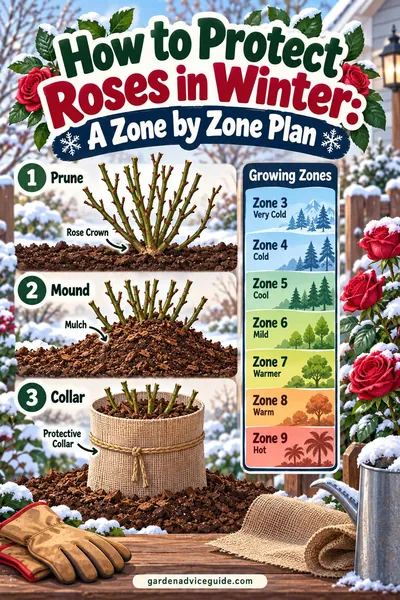
If you mounded soil or leaves over your roses in fall, remove the cover gradually once hard freezes are mostly over, usually in April. Then wait until you can see which canes survived. Winter often kills canes back to the mound line, so you may end up pruning lower than you expected. That is normal. Roses grown on their own roots will regrow from the base. On grafted roses, watch for shoots coming from below the knobby graft union; those are rootstock, and you should remove them. Our guide on how to winterize roses covers the fall half of this job, and frost cloth is handy if a cold night follows pruning.
Pruning roses in warm zones (8 to 11)
In mild winters, roses may never fully go dormant. Many gardeners in zones 9 to 11 strip the remaining leaves and prune in the coolest weeks, often December or January, to give the plant a short rest and clear away disease on old leaves. In zone 8, aim for February to early March, around when forsythia or flowering quince blooms. Warm-climate roses grow fast, so many gardeners also give repeat bloomers a light trim of about a third in late summer to set up a strong fall flush.
Summer deadheading and light trims
In summer, deadhead repeat bloomers by cutting spent flowers back to the first leaf with five leaflets, or simply snapping off the old bloom on shrub roses. That pushes the plant to flower again. Remove any cane that dies back during the season, and cut off suckers from below the graft as soon as you see them. Keep pruning cuts in summer small; heavy cuts in hot weather stress the plant and expose canes to sunscald.
Fall: what is safe and what is not
In fall, it is fine to cut extra-long canes that could whip around in winter wind and loosen the roots, and to remove dead or diseased wood. Save the real pruning for spring, and if an early freeze threatens late blooms, our guide on protecting plants from frost shows how to cover them. Stop deadheading about 4 to 6 weeks before your first frost so the plant can harden off.
Common rose pruning mistakes
Pruning during a January warm spell in a cold zone is the classic one, because the new growth can freeze. Pruning once-bloomers in spring cuts off this year's flowers. Cutting climbers back hard removes the long canes that carry most of the blooms. Dull or dirty pruners crush canes and spread disease. Leaving long stubs is another, since stubs die back and invite cane borers; cut close to a bud or the base instead. If a rose shows strange red, bristly witches'-broom growth, that may be rose rosette disease, and your local cooperative extension office can help confirm it. Want to plan the rest of the yard while you are out there? The frost date and zone lookup and our guide to types of roses help with choosing what to plant next.
Quick answers about pruning roses
When should roses be pruned?
Prune most roses in late winter or early spring, when forsythia blooms or about 4 weeks before your last frost. Once-blooming roses, including many old garden roses and ramblers, are pruned right after they flower in late spring or early summer, because they bloom on last year's wood.
When should I prune roses in my zone?
Roughly January in zone 9, February to early March in zone 8, March in zone 7, late March to mid April in zone 6, and April to early May in zones 3 to 5. In zones 10 and 11, prune in the coolest weeks, often December or January. Type your ZIP in the finder above for your own date.
When should I cut back Knock Out roses?
Once a year in early spring, at the same time as other roses. Cut the whole shrub back by about a third, or to 12 to 18 inches if it has gotten too big. They bloom on new growth, so the spring cut gives more flowers. Light shaping in summer is fine.
Is it OK to prune roses in the fall?
Only lightly. Remove dead or diseased wood and shorten long canes that could whip in winter wind. Save the main pruning for spring. A hard fall cut can push tender new growth before winter and leaves more cane exposed to cold damage.
What happens if I prune roses too early?
Pruning during a midwinter warm spell can push tender new shoots that freeze in the next cold snap. The rose usually recovers, but you lose time and some growth. If a hard freeze is forecast in your planned window, wait a week and then prune.
How far back should I cut my roses?
It depends on the type. Hybrid teas are cut hard to 3 to 5 canes about 12 to 24 inches tall. Floribundas lose about a third to a half. Shrub roses lose about a third. Climbers keep their main canes and only get side shoots shortened.
Where exactly should I make the cut?
About 1/4 inch above an outward-facing bud, angled slightly so water runs away from the bud. Cut into healthy wood with a white or pale green center. Too close can damage the bud; too far leaves a stub that dies back.