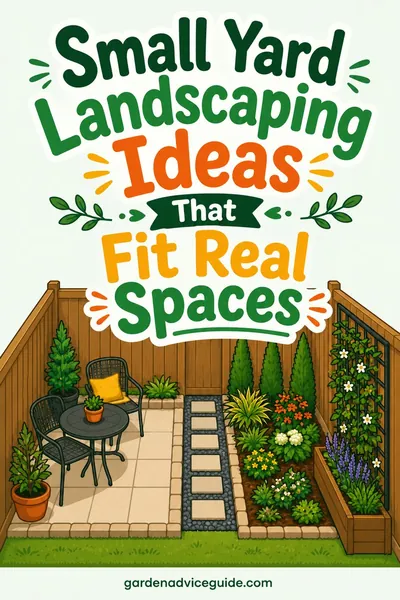
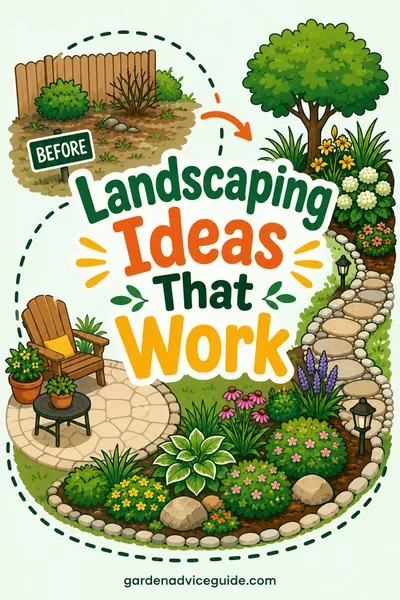
Fence Line Landscaping Ideas: From a Simple Border to Full Privacy

The fence line idea that almost always looks good is a layered bed: taller shrubs or grasses at the back, mid-height flowers in the middle and a low edge in front, with the back row set a couple of feet off the boards. A bed 3 to 4 feet deep is enough for most yards, and you can start with one row and add layers later. If you want privacy, use evergreens or tall grasses that are hardy in your USDA zone.
The trick is deciding what your fence actually needs before you buy a single plant. Some fences just need softening, some need color, and some need to disappear behind a living screen. Below, each approach is explained with plant picks by sun and zone, rough cost, upkeep and the mistakes that cost people the most.
Key facts
- Plant each shrub's center at least half its mature width from the fence.
- A 3 to 4 foot deep bed suits most fence lines.
- 60 feet of 'Emerald Green' arborvitae at 3 feet apart takes 20 plants.
- Screw trellis panels to the posts, not the boards.
- Mix two or three screening plants so one pest cannot wipe out the row.
To narrow things down, use the fence line plant finder below. Type your ZIP code or pick your zone, then choose how much sun the fence gets and how tall you want the planting to be: a low border, a screen, or full privacy. It lists the plants from this page that fit, with spacing for each.
Garden Advice Guide · free calculator
Fence Line Plant Finder: Border, Screen or Full Privacy for Your Zone
Type your ZIP code or pick your zone, then how much sun the fence gets and how tall you want the planting. You get the fence line plants from this page that fit, with spacing.
Need more? Open the free Frost Dates.
 Planting Zones
 Plant Spacing Calculator
 Frost Dates
Quick reference: how far from the fence to plant
| Plant type | Mature width | Center from fence |
|---|---|---|
| Low perennials, edging | 1 to 2 ft | 1 to 1.5 ft |
| Ornamental grasses | 2 to 4 ft | 2 to 2.5 ft |
| Mid-size shrubs | 3 to 6 ft | 2.5 to 3.5 ft |
| 'Emerald Green' arborvitae | 3 to 4 ft | 2 to 3 ft |
| 'Green Giant' arborvitae | 8 to 12 ft | 5 to 6 ft |
Decide what your fence needs first
Stand where you sit most, on the patio or at the kitchen window, and look at the fence. If it is a perfectly nice fence that just looks bare, you only need to soften it, and a low border or a row of grass will do. If it is plain and you want the yard to feel like a garden, add flowers and vines. If you look straight into a neighbor's deck or second-story windows, a 6 foot fence is not enough and you need height from plants.
Next, check the light. The south side of a fence, which faces north, can be in shade most of the day, while the other side bakes. Watch it for a day; our guide to full sun vs partial shade explains how to read what you see. Then measure how deep a bed you can spare. If you only have 2 feet, choose slim plants or vines, because a wide shrub jammed against the boards gets poor airflow, more disease, and pushes on the fence as it grows.
Soft and simple borders
These suit a simple backyard where you want the fence to look finished without much digging or upkeep.
One row of ornamental grass
Feather reed grass or switchgrass planted in a single line hides plain boards and moves in the breeze. Both are hardy from about zone 4 and need full sun. This is a low budget idea, since grasses fill out quickly, and the only real job is cutting them back in late winter. Our guide on when to cut back ornamental grasses gives the timing. The mistake is planting them in shade, where they flop.
A mulched strip with three repeat plants
Pick one shrub, one perennial and one edging plant, and repeat them all the way down. Repetition looks planned even when the plants are ordinary. In sun, try a spirea, a coneflower and catmint. In shade, try oakleaf hydrangea, hosta and liriope. The cost is moderate because you buy in quantity, but upkeep is light once the mulch is down. Our mulch guide explains depth and type.
Daylilies, catmint or a native pollinator strip
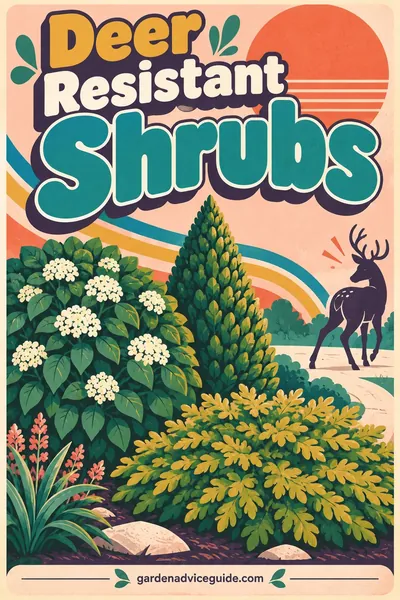
Daylilies are tough and cheerful in zones 3 to 9. Catmint and lavender give long blooms that bees love and deer usually leave alone. A pollinator strip of coneflower, black-eyed Susan and little bluestem needs little water once settled. These are all low cost and easy. The catch with daylilies is deer: they eat the buds, so pick catmint or lavender if deer pass through.
Stone edging and a gravel strip
A gravel strip along the base of the fence ends trimmer work forever and keeps soil off the boards. Add a few big pots for color. It suits a shady fence where nothing grows well, and it is a moderate one-time cost with almost no upkeep.
Flowering vines and using the fence itself
Vines are the best answer when you have little bed depth, because they take a foot of ground and use the fence as their frame. Always screw a trellis panel or wires to the posts, not the boards. A mature vine is heavy and wet, and it can pull thin boards loose. It also helps to leave a few inches between the trellis and the fence so air moves and you can stain behind it.
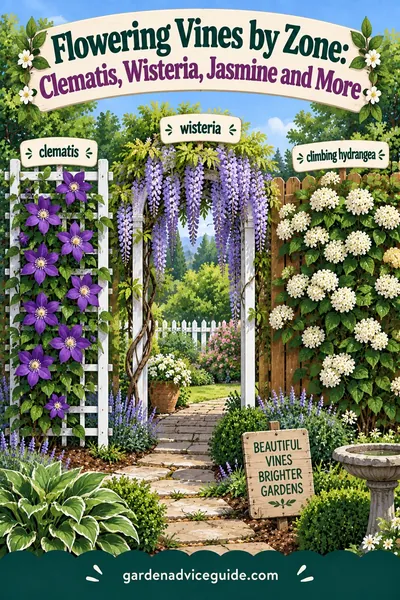
Clematis is the classic choice in sun, with its roots shaded by a low plant at its base. Climbing roses give the most flowers when you tie the canes sideways along wires. On a shady fence, climbing hydrangea is slow for two or three years, then beautiful for decades, in about zones 4 to 8. Star jasmine is evergreen and sweetly scented in zones 8 to 10; see our page on star jasmine hardiness before planting at the cold edge. Budget is low to moderate, but upkeep is higher than a border, with yearly pruning and tying. Our flowering vines by zone list has many more options.
No room to dig at all? Hang window boxes or planters on the fence for annuals and herbs. On a sunny fence, raised beds at the base can use the fence to hold up trellises for beans, peas and cucumbers.
Building a living privacy screen
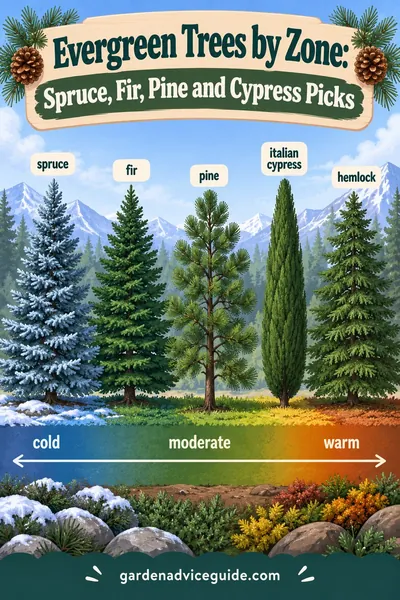
For real privacy, you need plants that reach 6 to 15 feet and hold their leaves in winter. 'Emerald Green' arborvitae suits narrow spots, staying about 3 to 4 feet wide, in zones 3 to 8. 'Green Giant' arborvitae grows tall fast in zones 5 to 8 but needs 8 to 12 feet of width. 'Nellie R. Stevens' holly is dense and evergreen in zones 6 to 9. In the South, wax myrtle and podocarpus handle heat, and wax myrtle tolerates wet or salty soil.
Clumping bamboo such as Fargesia stays where you put it and suits about zones 5 to 9. Never plant running bamboo along a property line; our page on cold hardy bamboo explains the difference. Tall grasses like switchgrass and miscanthus give a summer screen in one season but die back in winter, so pair them with evergreens if you need year-round cover. Arrowwood viburnum is tough, native to the eastern US and feeds birds, though it drops its leaves.
The smartest screen is a mixed one. Alternate two or three kinds of evergreens and flowering shrubs so a single pest or disease cannot strip the whole row. Privacy screens are the most expensive fence line idea, especially at large sizes, but once established they need only a yearly trim and water in drought. If you want more height fast, a lattice topper with vines works too, but check local rules on total fence height first.
Worked example: a 60 foot fence
To work out how many plants you need, divide the length of the fence by the spacing on the plant tag. Say you have a 60 foot back fence and want 'Emerald Green' arborvitae at 3 feet apart. Sixty divided by three is 20 plants. Set the first one about 1.5 feet from the corner so the end plant does not crowd the post. Planting their centers about 2.5 feet off the fence means a bed about 4 feet deep.
If you switched to 'Green Giant' at 6 feet apart, the same fence needs about 10 plants, but they must sit 5 to 6 feet from the fence, so the bed grows to about 8 feet deep. That is the real trade-off: fewer, bigger plants eat more of your yard. Tight spacing fills in faster but crowds plants later, so the middle of the range on the tag is a good balance. Our plant spacing calculator does this math for any plant and bed length.
Sun, shade and zone: picking plants that last
Hardiness comes first, so look up your zone with the ZIP code zone finder before shopping. In zones 3 and 4, good low plants are daylily, catmint, hosta and little bluestem; for screening, use panicle hydrangea and feather reed grass; and for privacy, 'Emerald Green' arborvitae, lilac or arrowwood viburnum. Zones 5 and 6 add lavender, coneflower and dwarf boxwood in front, Knock Out roses, oakleaf hydrangea and inkberry holly in the middle, and 'Green Giant' or clumping bamboo for height.
In zones 7 and 8, liriope, daylily and lavender edge the bed, abelia and oakleaf hydrangea fill the middle, and 'Nellie R. Stevens' holly or wax myrtle give privacy. In zones 9 to 11, use liriope, lantana and African iris low, star jasmine on the fence, and podocarpus or wax myrtle for height. On the shady side of any fence, swap in hostas, ferns and hydrangeas; if deer pass through, our deer resistant ground cover list helps. Your local extension office can tell you which of these are invasive in your state.
Cost and upkeep over five years
It helps to think past planting day. A grass row or daylily border is cheap to plant and costs only an hour or two a year in cutting back. A mixed shrub and perennial bed costs more to start and needs mulch topped up yearly, some deadheading, and a spring trim. Vines are cheap plants but ask for the most regular attention: tying, pruning and checking that the trellis is holding.
A privacy screen is the biggest spend up front, and it needs deep watering for its first two summers, once or twice a week in dry spells. After that it mostly takes care of itself, with a light shearing each year. If budget is tight, plant smaller evergreens now and fill the gaps with fast grasses for the first few summers. By year three or four the evergreens take over.
Being a good neighbor on the property line
Fences are not always on the exact property line, so check your survey or plat map before you plant. Keep plants fully on your side and choose mature widths that will not spill over. Some HOAs and cities limit hedge height, fence height, or what can grow near a sidewalk or corner. Call 811 before you dig, because utility lines often run along property lines and the call is free. Skip aggressive spreaders such as running bamboo, English ivy and some privets.
Fence line mistakes that cost the most
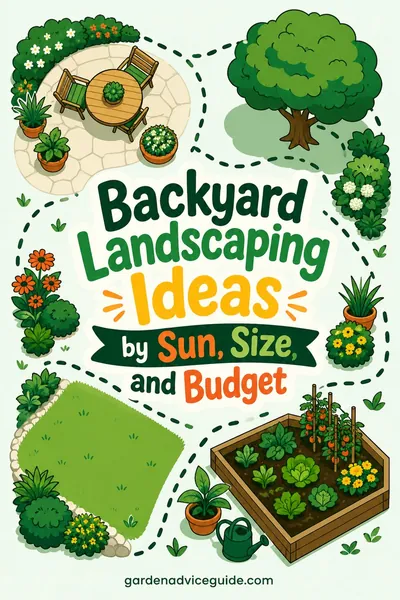
The common planting mistakes are planting right against the fence, using a single kind of plant for a long screen, buying by today's size instead of the mature size on the tag, and putting sun plants on the shady side. Working on the narrow strip beside the house too? See our side yard landscaping ideas, or the broader backyard landscaping ideas. Check your frost dates on the free frost date and zone lookup so new plants go in at a good time.
Quick answers about planting along a fence
What can I plant along a fence line?
Layer it: grasses, shrubs or evergreens at the back, flowers such as coneflower or daylily in the middle, and a low edge like catmint or liriope in front. Choose plants hardy in your USDA zone and suited to the light that side of the fence gets. You can start with one layer and add more later.
How far from a fence should I plant shrubs?
Set the center of each shrub at least half its mature width from the fence, plus a little room so you can reach the boards. For most mid-size shrubs that means about 2.5 to 3.5 feet. Big screening trees like 'Green Giant' arborvitae need 5 to 6 feet.
What is the best fast privacy plant along a fence?
'Green Giant' arborvitae (zones 5 to 8) is a popular fast screen if you have room for its width. In narrow spots, 'Emerald Green' arborvitae (zones 3 to 8) fits better. In the South, wax myrtle and podocarpus work well. Mixing two kinds protects you from losing the whole row.
Can vines damage a fence?
They can if they grow directly on thin boards. Heavy vines trap moisture and can pull boards loose. Attach a trellis or wires to the posts, leave a few inches of air gap, and prune yearly. Avoid English ivy, which clings hard and is difficult to remove.
What can I plant along a shady fence?
Hostas, ferns, oakleaf hydrangea, smooth hydrangea and liriope handle shade along a fence in many zones. Climbing hydrangea is one of the best flowering vines for shade. If deer visit, choose ferns and hellebores over hostas, since deer rarely touch them.
How many plants do I need for a fence?
Divide the fence length by the spacing on the plant tag. A 60 foot fence with plants 3 feet apart needs 20, and with plants 6 feet apart needs about 10. Start the first plant about half its spacing from the corner so it does not crowd the post.
Can I plant on the property line?
It is safest to keep plants fully on your side and choose sizes that will not spill over. Check your survey, your HOA and city rules on hedge height, and call 811 before digging, since utility lines often follow property lines.