Types of Roses: How to Choose Between Hybrid Tea, Floribunda, Shrub, Climbing and More

The main types of roses are hybrid tea, floribunda, grandiflora, shrub (or landscape), climbing, rambler, miniature and groundcover roses, plus old garden roses and English-style roses. They differ in plant size, how the flowers are held, how hardy they are and how much care they ask for. Hybrid teas are the classic long-stemmed cut flower, shrub roses are the easiest to grow, and climbers cover fences, walls and arches.
To choose, start with three questions: how much space you have, what USDA zone you garden in, and how much time you want to spend on care. A busy gardener with a small patio and a rose lover with a big sunny border should not buy the same plant. Winter is when bare-root roses go on sale, so it is a good time to learn the types and plan before the shopping starts.
Key facts
- Easiest: modern shrub roses bred for disease resistance
- Best for cutting: hybrid teas and grandifloras
- Best for small spaces: miniatures and compact floribundas
- All roses want 6 or more hours of sun and good airflow
- The ASPCA lists roses as non-toxic to cats and dogs
The rose type finder below has two fields. First pick your space: a pot, patio or small bed; a medium garden bed; or a fence, wall or big open spot. Then pick how much care time you have: low, some (a little each week) or a lot. You get two or three rose types to look for, which you can then match against the descriptions on this page.
Garden Advice Guide · free calculator
Rose Type Finder: Match a Rose to Your Space and Time
Pick your space and how much care time you have. You get two or three rose types to look for.
Need more? Open the free Frost Dates.
 Planting Zones
 Frost Dates
 Planting Calendar
Quick reference: rose types compared
| Type | Flowers | Typical size | Care level | Best use |
|---|---|---|---|---|
| Hybrid tea | One large flower per long stem | 3 to 5 ft | High | Cutting, formal beds |
| Floribunda | Clusters of medium flowers | 2 to 4 ft | Moderate | Color all season |
| Grandiflora | Clusters of large flowers | 5 to 6 ft | Moderate to high | Back of border, cutting |
| Shrub rose | Varies; repeat bloom | 3 to 6 ft | Low | Mixed borders, hedges |
| Climber | Clusters on side shoots | 8 to 15 ft canes | Moderate | Fences, walls, arches |
| Miniature | Small flowers | 1 to 2 ft | Moderate | Pots, edges |
| Groundcover | Small clusters | 1 to 2 ft tall, wide | Low | Slopes, edges |
| Old garden and English | Full, often fragrant | 3 to 6 ft | Varies | Cottage gardens, scent |
Hybrid teas: the florist's rose
When most people picture a rose, they picture a hybrid tea: one large, high-centered flower opening slowly at the top of a long, straight stem. That shape is why florists love them, and why they are the top choice if you want to cut roses for the table. Well-known varieties include 'Peace', the pale yellow edged in pink; 'Mister Lincoln', a deep red with strong scent; and 'Double Delight', cream with red edges and a lovely fragrance.
The trade-off is care. Many hybrid teas are prone to black spot and powdery mildew, especially in humid summers, and they look gangly unless pruned hard each spring. They tend to be upright and a little bare at the base, so they look best in a bed of their own or with low plants in front. Choose a hybrid tea if you enjoy fussing over a few special plants and want flowers for cutting. Newer varieties are bred with better disease resistance, so read the tag closely.
Floribundas and grandifloras
Floribunda means many-flowering, and it fits. Instead of one bloom per stem, floribundas carry clusters of medium-sized flowers, so the plant looks covered in color from early summer to frost. They are bushier and usually tougher than hybrid teas, with less pruning and spraying needed. For a garden bed or a low hedge, many people are happier with a floribunda. 'Iceberg', a clean white, is one of the most widely planted roses anywhere, and newer choices like 'Julia Child' (buttery yellow) are known for good health.
Grandifloras are a cross between the two: tall plants, often 5 to 6 feet, with clusters of large, hybrid-tea-style flowers on long stems. 'Queen Elizabeth', a clear pink, is the classic example. Use them at the back of a border, where their height is welcome, and cut them for big arrangements.
Shrub and landscape roses: the easy group
Modern shrub roses were bred to be tough. Most have good disease resistance, bloom again and again from late spring to frost, and grow on their own roots. If you want roses without a spray schedule, this is the group to start with. Knock Out roses are the best-known example and come in red, pink, coral, yellow and white. Other easy series include Oso Easy and Easy Elegance. Use them in mixed borders, along a driveway, or as an informal flowering hedge.
Rugosa roses belong here too. They have wrinkled, leathery leaves, very fragrant flowers and big red hips in fall, and they handle cold, wind and even salt spray. Many are hardy to about zone 3. For the coldest gardens, the Canadian Explorer and Parkland roses, such as 'John Cabot', 'William Baffin' and 'Morden Blush', were bred to survive prairie winters with little or no protection.
Climbers and ramblers
Climbing roses do not actually climb on their own. They grow long, stiff canes that you tie to a trellis, wall wires, fence or arch. The trick to more flowers is training the canes sideways, close to horizontal, because that pushes up many short flowering side shoots along each cane. Give them a sunny, airy spot. Repeat-blooming climbers like 'New Dawn' (soft pink) and the nearly thornless 'Zephirine Drouhin' flower through the season.
Ramblers are their more vigorous cousins, with long, flexible canes and big sprays of small flowers. Most bloom once, in early summer, and can easily reach 15 feet or more, so they suit a large fence, an old tree or a big pergola rather than a small trellis. Our fence line landscaping ideas show how climbers fit along a boundary, and flowering vines by zone lists other plants that pair well with them.
Miniature, patio and groundcover roses
Miniature roses have small flowers and small leaves on plants usually 1 to 2 feet tall. Patio roses are a touch larger. Both are ideal for pots, window boxes and the front edge of a bed. They are true garden roses, not houseplants, and do best outdoors in full sun. A pot at least 12 to 14 inches wide gives roots enough room. Our page on container gardening covers potting mix and watering.
Groundcover roses stay low, often 1 to 2 feet tall, and spread 3 feet or more. The Drift series is a popular example. They are tough, need little pruning and work well on slopes, along walls and at the edge of beds, where a tall rose would look out of place.
Old garden and English-style roses
Old garden roses are the types that existed before 1867, when the first hybrid tea appeared. They include gallicas, damasks, albas, centifolias, bourbons, China and tea roses. Many bloom only once, in late spring or early summer, but the flowers are full, soft and often very fragrant, and many are very hardy. They suit a cottage garden and a gardener who values scent over a long season.
English-style roses, made popular by the David Austin nursery, combine old-rose flower shapes and fragrance with repeat bloom. 'Graham Thomas' is a rich yellow; 'Gertrude Jekyll' is a deep pink with a strong old-rose scent. They are softer, rounder shrubs than hybrid teas and fit easily into mixed borders.
Choosing a rose for your zone and yard
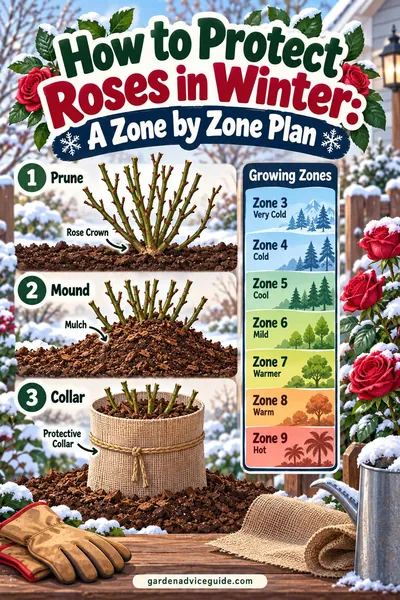
Hardiness comes first. Check the tag for the zone range and make sure your zone falls inside it. If you do not know your zone, the planting zone finder gives it from your ZIP code. In zones 3 and 4, look for rugosas, Canadian Explorer and Parkland roses, and other shrub roses rated for your zone. In zones 5 and 6, almost any type will grow, though hybrid teas need winter protection; see how to winterize roses. In the hot, humid South, disease resistance matters more than hardiness, and many old China and tea roses thrive.
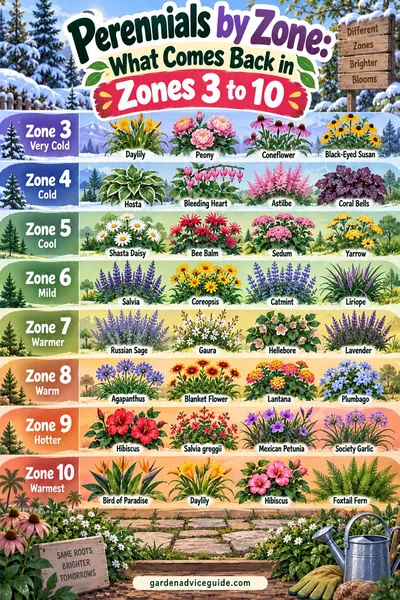
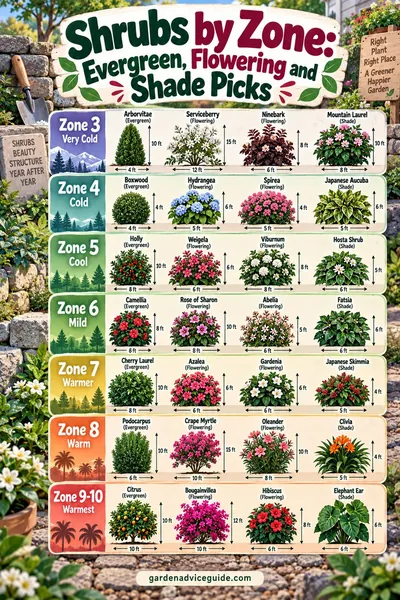
Next, look at sun and space. Every rose wants at least 6 hours of direct sun and good airflow, which keeps leaves dry and diseases down. Morning sun is especially helpful because it dries the dew quickly. Check the mature size on the tag so the plant will not outgrow its spot. Finally, be honest about your time. If you want flowers without much work, a shrub rose is the answer. If you love the ritual of pruning, feeding and cutting, a few hybrid teas will reward you. Our shrubs by zone and perennials by zone pages suggest good companions.
Bare-root, potted or own-root?
Bare-root roses are dormant plants sold with no soil around the roots, usually from winter into early spring. They cost less and offer the widest choice. Soak the roots in a bucket of water for a few hours or overnight, then plant as soon as the soil can be worked, spreading the roots over a cone of soil in a wide hole. Potted roses can be planted any time the ground is workable, ideally in spring or early fall. Check your local frost dates before planting either kind.
The tag will also tell you whether a rose is grafted or own-root. Grafted roses have a knobby bud union just above the roots. In cold zones, plant that union 1 to 2 inches below the soil to protect it; in warm zones, set it at or just above soil level. Own-root roses grow on their own roots, so if winter kills the top, what regrows is still the rose you bought. That makes own-root roses a smart pick for colder gardens.
Looking after roses through the year
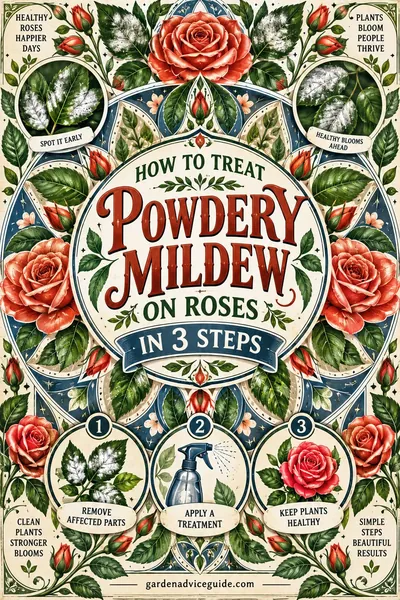
Whatever type you choose, the basics are the same. Water deeply at the base, about an inch a week, so the leaves stay dry. Feed in spring when new leaves open and again after the first flush of flowers, stopping about six weeks before your first fall frost. Keep 2 to 3 inches of mulch over the roots. Prune at the right time for the type; our guide on when to prune roses gives windows by zone and how hard to cut each kind. Watch for white powder on the leaves in summer, which is covered in treating powdery mildew on roses.
The ASPCA lists roses as non-toxic to cats and dogs, but thorns can scratch, and rose fertilizers and sprays can be harmful if pets get into them. Store products out of reach and keep pets away from freshly treated plants. If you are worried, call your vet or the ASPCA Animal Poison Control Center. Roses are also the June birth flower; see birth flowers by month for the full list.
Quick answers about types of roses
What are the main types of roses?
The types gardeners choose between most are hybrid tea, floribunda, grandiflora, shrub, climbing, rambler, miniature and groundcover roses, plus old garden roses and English-style roses. They differ in size, the way flowers are held, hardiness and how much care they need.
What is the difference between a hybrid tea and a floribunda?
A hybrid tea usually carries one large, high-centered flower on a long stem, which makes it ideal for cutting. A floribunda carries clusters of smaller flowers on a bushier plant. Floribundas tend to bloom more freely, need less pruning and are often tougher in the garden.
Which type of rose is easiest to grow?
Modern shrub roses bred for disease resistance, such as Knock Out, Oso Easy and Easy Elegance, are the easiest for most gardeners. Rugosa roses are also very tough. Hybrid teas usually need the most pruning, feeding and disease watching to look their best.
Which roses are best for small spaces?
Miniature and patio roses fit pots, window boxes and the front of small beds. Compact floribundas work in a small bed. Groundcover roses stay low but spread wide, so they suit slopes and edges more than tight corners. Every rose still needs 6 or more hours of sun.
Which roses are the most fragrant?
Many old garden roses, rugosas and English-style roses have strong scent. Among hybrid teas, 'Mister Lincoln' and 'Double Delight' are known for fragrance. Scent varies a lot by variety, so if fragrance matters, read the description or smell the flowers at a nursery before you buy.
Which roses are hardiest in cold climates?
Rugosa roses and the Canadian Explorer and Parkland series, such as 'John Cabot', 'William Baffin' and 'Morden Blush', handle zone 3 winters with little protection. Choose own-root roses in cold zones so any regrowth after a hard winter is still the variety you bought.
When is the best time to buy roses?
Winter and early spring for bare-root roses, which you plant as soon as the soil can be worked. Potted roses appear in garden centers from spring on, and many shops stock potted roses around Valentine's Day, Sunday, February 14, 2027. Plant potted roses outdoors once the ground is workable.