When to Transplant Seedlings

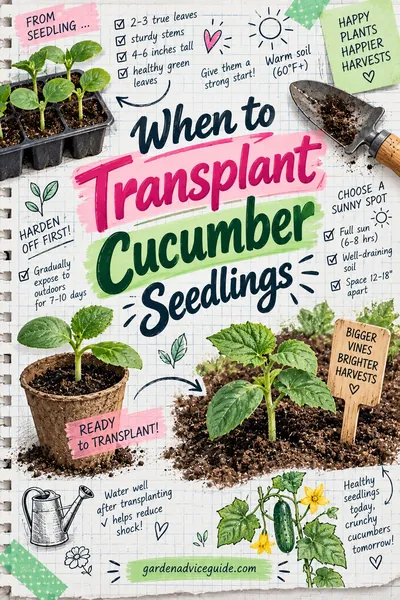
Move seedlings outdoors when they have 2 to 3 sets of true leaves, after hardening them off over 7 to 10 days, and once night temperatures reliably clear the minimum for that particular crop. That last number is different for every crop, and it's the one most gardeners get wrong: lettuce is happy at 42°F while an eggplant sulks for a month at 48°F. Get all three conditions lined up and a transplant barely notices the move.
Want the dates worked out for your zip code? Our free seed starting calculator gives you sowing, potting-up, hardening-off, and transplant windows for each crop you're growing.
True Leaves vs Cotyledons: The Distinction That Decides Everything
This is the single most common beginner confusion, and it causes seedlings to go outside two to three weeks too early.
The first pair of leaves that pops up is not leaves. Those are cotyledons, or seed leaves, and they were packed inside the seed before you ever planted it. They're usually smooth, rounded, matched in shape, and they look nothing like the adult plant. They exist to feed the seedling for its first week or so, and then they yellow and drop off. They do not count.
The next leaves to appear are true leaves. They look like miniature versions of the grown plant: a tomato's true leaf is jagged and fuzzy, a basil's is pointed and glossy, a squash's has that distinctive lobed outline. True leaves come in pairs (or sets) and they mean the plant has switched from eating its seed reserves to actually photosynthesizing for a living.
So "2 to 3 sets of true leaves" means the two seed leaves plus four to six real leaves. On a tomato that's roughly 4 to 5 weeks from sowing. On lettuce it can be 3 weeks. On a pepper it's often 6 weeks, because peppers do everything slowly.
Why the rule exists: a plant with only cotyledons has almost no root system and no way to recover from damage. A plant with two or three sets of true leaves has enough root mass to survive a move and enough leaf area to power the regrowth.
The Three Transplant Moments Most Guides Blur Together
Search "transplanting seedlings" and you'll get three completely different operations mashed into one set of instructions. They happen at different times and they have different signals. Here they are separated out.
| Move | What it is | Signal to do it | Typical timing |
|---|---|---|---|
| 1. Pricking out | Lifting tiny seedlings from a crowded tray into individual cells | First set of true leaves, plants touching | 10 to 21 days after sowing |
| 2. Potting up | Shifting from a cell into a bigger pot | Roots circling the bottom, growth slowing | 3 to 5 weeks after sowing |
| 3. Moving outdoors | Final transplant into the garden or a big container | 2 to 3 sets of true leaves + hardened off + night temps clear | Varies by crop and zone |
1. Pricking out from a seed tray
If you broadcast seed into an open tray or a shallow container, you'll end up with a dense mat of seedlings that will strangle each other within days. Pricking out separates them.
Do it when the first set of true leaves has opened, not before. Earlier than that and there isn't enough stem or root to grab.
The method: water the tray an hour ahead so the mix holds together. Loosen a clump from underneath with a plant label, a chopstick, or a butter knife. Tease individual seedlings apart by holding a leaf, never the stem. Poke a hole in the new cell, lower the roots in without curling them, and firm the mix in with your fingertips.
Bury seedlings a little deeper than they were, up to just below the cotyledons. This buys you back some height if they've stretched, and for most crops it's harmless.
2. When to pot up seedlings into a larger container
Potting up is what you do when a seedling has outgrown its cell but the weather outside isn't ready yet. Skipping it is why people end up with stunted, yellow, root-bound transplants in mid-May.
Three signals, any one of which is enough:
- Roots at the drainage holes. Slide the root ball out. If you see a white web wrapping the outside of the plug, it's time.
- Growth has stalled even though light and water are fine.
- The plant is more than about three times the height of its pot. A 4-inch seedling in a 1.5-inch cell is top-heavy and drying out twice a day.
Go up one size, not five. A 1.5-inch cell moves to a 3 or 4-inch pot. Dropping a small seedling into a gallon pot leaves a large volume of wet mix that the roots can't reach, and it stays soggy long enough to cause damping off.
Tomatoes are the exception that everyone should exploit here: bury the stem right up to the lowest leaves when you pot up. They grow roots along the buried section, so a leggy tomato gets fixed rather than staked. Our guide to when to start tomato seeds covers the full indoor schedule.
3. When to move seedlings outdoors
This is the move people mean when they ask about transplanting, and it has the most conditions attached. All three must be true:
- Two to three sets of true leaves.
- A completed 7 to 10 day hardening-off ramp.
- Night temperatures at or above the crop's minimum, in the forecast, not just once.
Note what isn't on that list: your last frost date. Frost date tells you when to start watching. It doesn't tell you when a pepper will actually grow.
When to Transplant Seedlings Outside: Night Temperatures by Crop
Daytime highs lie. A 72°F afternoon in early May feels like planting weather and hides the 41°F night that stalls a tomato for two weeks. Nighttime lows are the number that matters, because cold soil and cold air shut down root function and nutrient uptake even when nothing freezes.
| Crop group | Minimum night temp | Comfortable night temp | Notes |
|---|---|---|---|
| Brassicas (broccoli, cabbage, kale), lettuce, chard | 40 to 45°F | 50°F+ | Tolerate light frost once hardened; bolt in heat |
| Onions, leeks | 40 to 45°F | 50°F+ | Very cold tolerant, go out early |
| Tomatoes | 50°F | 55°F+ | Below 50°F, growth stalls and fruit set suffers later |
| Peppers, eggplant | 55°F | 60°F+ | Chilled peppers stay stunted all season |
| Cucumbers, squash, melons, basil | 55 to 60°F | 60°F+ | Basil blackens at 40°F; cucurbits hate root disturbance |
The rule that saves crops: a tomato set out at 45°F nights does not die. It just does nothing for three weeks, while an identical plant set out two weeks later at 55°F nights catches up and passes it. You gain nothing by being early with warm-season crops. Peppers punish it hardest, which is why when to plant peppers is its own separate question from tomatoes.
Cool-season crops run the opposite risk. Broccoli and lettuce transplanted too late run straight into heat and bolt.
How to Harden Off Seedlings, Day by Day
An indoor seedling has never felt wind, real ultraviolet light, or a temperature swing. Windowsill glass filters most UV, and a grow light at 18 inches is a fraction of noon sun. Hardening off is the ramp that builds a thicker cuticle on the leaves, stiffer cell walls in the stem, and a plant that can hold its own water.
University of Minnesota Extension recommends hardening transplants over roughly 7 to 10 days before setting them in the garden, and that timeline holds up well in practice.
| Day | Time outside | Where | Nights |
|---|---|---|---|
| 1 | About 1 hour | Full shade, out of wind | Indoors |
| 2 | 2 hours | Full shade | Indoors |
| 3 | 3 to 4 hours | Shade with 1 hour of morning sun | Indoors |
| 4 | 4 to 5 hours | Morning sun, afternoon shade | Indoors |
| 5 | 5 to 6 hours | Half day of direct sun | Indoors |
| 6 | 6 to 8 hours | Most of the day in sun | Indoors |
| 7 | Full day | Final planting spot | Indoors if below 50°F |
| 8 to 10 | Full day and overnight | Final planting spot | Outside, if above the crop minimum |
| 11 | Transplant | Garden | Done |
Three habits that make the ramp work:
- Ease off the water. A slightly dry seedling hardens faster than a pampered one. Don't wilt them, just stop keeping them constantly damp.
- Stop fertilizing during the ramp. Soft, fast growth is exactly what you're trying to end.
- Watch the wind, not just the sun. Wind does more transplant damage than sun in most gardens. Start behind a fence, a wall, or a shrub.
Skip days without guilt. If a day brings gusts over 15 mph, a cold snap under 45°F, or driving rain, bring everything back in and repeat that step tomorrow. The ramp can stretch to 14 days with no harm at all.
Adapting to a cloudy week. Overcast weather removes the sun-exposure part of the ramp but not the wind and temperature part, so don't assume you're done. Give them the full outdoor hours anyway, then add two extra days once the sun returns, starting back at half-day exposure. Seedlings hardened entirely under clouds will scorch on the first bright afternoon.
What happens if you skip hardening off:
- Sunscald. White, papery, bleached patches on the upper leaves within 24 to 48 hours. The leaf tissue is dead and won't recover, though the plant usually pushes new growth.
- Wind damage. Snapped stems, shredded leaf edges, and root balls rocked loose in their planting holes.
- Stalled growth. The quietest failure. The plant survives, sits still for two or three weeks while it rebuilds, and never catches up with a properly hardened neighbor.
If you'd rather not run the ramp at all, winter sowing in milk jugs produces seedlings that harden themselves from day one, because they've lived outdoors their whole lives. It suits hardy crops better than warm-season ones.
Transplant Technique: The Six Things That Matter
- Transplant on an overcast day, or in the evening. A seedling planted at 2 p.m. under full sun spends its first afternoon losing water through leaves that have no roots to supply them yet. Evening or a gray day gives it 12 to 18 hours to settle first.
- Water thoroughly before and after. Water the seedlings an hour before you lift them so the root ball holds together and the plant is fully hydrated. Water again immediately after planting, generously, to settle soil against the roots and drive out air pockets.
- Handle seedlings by the leaves, never the stem. This is the rule people forget under pressure. The stem carries every drop of water and every sugar the plant moves, and it cannot be repaired. A crushed stem is fatal. A torn leaf is a minor inconvenience the plant grows out of in a week. Pinch a leaf, or lift from underneath the root ball.
- Plant tomatoes deep, everything else at the same depth. Tomatoes root along buried stem, so bury up to two-thirds of the plant. Most other crops do not, and burying their stems invites rot. Peppers can take an inch or so deeper. Brassicas can go up to the first true leaves. Cucurbits go in at exactly the depth they were.
- Firm gently, don't compact. Press with your fingertips, not your palm or your heel. You want soil contact with the roots, not a compressed slab that water runs off.
- Shelter for the first three days. A shade cloth, an upturned basket, a row cover, or a leafy branch stuck in the soil on the sunny side. This is the cheapest insurance in gardening.
Set out plants in the evening and check them the next morning. Slight droop that recovers overnight is normal. Droop that's worse on day two means the roots aren't in contact with moist soil, so water deeply.
Transplant Shock: What It Is and How to Cut It Short
Transplant shock is the pause between planting and the resumption of real growth. It happens because fine root hairs, the structures that actually absorb water, are microscopic and get torn off by any handling. The plant's leaves keep transpiring at full rate while its water supply has been cut, so it wilts, then it shuts down growth and rebuilds roots before it does anything else.
What it looks like: wilting that doesn't recover overnight, leaf edges browning or curling, lower leaves yellowing and dropping, purple tinges on stems, and above all a plant that just sits there for two or three weeks.
What reduces it:
- Disturb roots as little as possible. Soil blocks, coir pots, and paper pots that go in the ground intact reduce shock to nearly nothing, which is why cucurbits should always be grown that way.
- Plant into pre-moistened soil, never into dry ground.
- Do it in the evening or under clouds.
- Water deeply once, then let the top inch dry slightly. Constant sogginess suffocates roots trying to regrow.
- Skip the fertilizer for the first 10 days. High nitrogen pushes leaf growth the roots can't yet support. A dilute seaweed or kelp drench at planting is fine and may help.
- Pinch off any flowers or fruit already on the plant. A flowering pepper transplant is spending energy on fruit when it needs roots. You'll get more total harvest by pinching.
What is not transplant shock: a plant collapsing overnight with a chewed-through stem is a cutworm. Slip a cardboard collar around the stem at planting to prevent it.
Fall Transplants in Late August Have the Opposite Problem
Everything above assumes spring, when cold is the enemy. Fall transplants face the reverse.
If you're setting out broccoli, cabbage, kale, collards, or lettuce right now for a fall harvest, the danger is not a 45°F night. It's a 90°F afternoon landing on a seedling that has never been outside. Late-summer sun is still near peak intensity, soil surface temperatures can top 100°F, and lettuce in particular will bolt or simply refuse to germinate and establish in that heat.
Adjust the process:
- Harden off in reverse. Start in deep shade and increase exposure mostly during the morning. Skip afternoon sun entirely during the ramp.
- Transplant in the evening, always. Not merely preferred in late August. Required.
- Use shade cloth for 7 to 14 days after planting. A 30 to 40 percent shade cloth on hoops, or even a scrap of row cover propped up, drops the leaf temperature enough to matter. Remove it once nights start cooling.
- Mulch immediately with straw or shredded leaves to keep soil temperature down and moisture up.
- Water daily for the first week, in the morning, at the soil line.
Fall brassicas transplanted this way sail into September, and the light frosts of October actually improve their flavor. For what else goes in the ground now, see the planting calendar by zone.
Worked Example: Zone 6 Tomatoes Sown March 22
Here's one real schedule with the arithmetic shown, for a zone 6 garden with a last frost date of May 10.
March 22, sowing day. Six Cherokee Purple seeds go into a 1.5-inch cell tray on a heat mat at 75°F. Germination in 6 days, so first sprouts appear March 28. Only cotyledons at this point, so nothing to do but light.
April 5, first true leaves. Two weeks after sowing, the first pair of jagged tomato leaves opens. The heat mat comes off. Because these were sown one seed per cell, there's no pricking out to do. Extras get snipped at soil level rather than pulled.
April 14, pot up. Roots are visible at the drainage holes and the plants are about 4 inches tall. That's 23 days from sowing. Each goes into a 4-inch pot, buried up to the lowest leaves, which pulls 1.5 inches of leggy stem underground. Half-strength liquid feed once a week starts now.
May 1, count backward. The gardener checks the 10-day forecast: nights are running 44 to 48°F. Too cold for tomatoes, which want 50°F. The forecast shows nights hitting the low 50s starting around May 12.
Target transplant date: May 12. Hardening off takes 7 to 10 days, so the ramp starts on May 3.
May 3 to May 12, hardening off. Day 1 is one hour in the shade of the north side of the house. Days 2 through 4 build to about 4 hours with a little morning sun. Day 5 brings 20 mph winds, so everything stays in and day 5 repeats on May 8. Days 6 and 7 are full sun days. May 10 and 11 are spent outside overnight at 51°F.
Plants at this point: 9 inches tall, 5 sets of true leaves, stems noticeably thicker and slightly purple from the cold, which is normal and reverses.
May 12, transplant. Overcast, 68°F, planted at 6:30 p.m. Each hole gets dug 8 inches deep so two-thirds of the plant is buried. Lower leaves are pinched off first. Watered before lifting from the pots, watered again after planting, then a cardboard cutworm collar and a straw mulch.
May 13 to 15. Slight morning droop, recovered by evening. No fertilizer. Watered deeply on May 14.
May 20. New growth visible at the tips. Shock over, roughly 8 days. First flowers show around June 8 and the first ripe tomato lands in late July.
Total elapsed: 51 days from sowing to transplant, right in the 6 to 8 week window tomatoes want.
FAQ
When can I transplant seedlings outside?
Once they have 2 to 3 sets of true leaves, have been hardened off over 7 to 10 days, and night temperatures are reliably at or above the crop minimum: 40 to 45°F for brassicas and lettuce, 50°F for tomatoes, 55°F for peppers and eggplant, 55 to 60°F for cucumbers, squash, and basil. All three conditions, not just one.
How many true leaves before transplanting seedlings?
Two to three sets, meaning four to six true leaves, not counting the two smooth seed leaves that came up first. Fewer than that and the root system is too small to survive the move. Many more than that in a small cell and the plant is already root-bound.
When should I pot up seedlings instead of planting them out?
Pot up when roots reach the drainage holes or growth stalls but the weather isn't ready. Move up one pot size at a time, from a 1.5-inch cell to a 3 or 4-inch pot. A root-bound seedling held in a small cell for an extra three weeks yields noticeably less all season.
Can I skip hardening off if the weather is mild?
No. Mild weather removes the temperature stress but not the ultraviolet light or the wind, and those cause sunscald and stem damage on their own. Even a cloudy, calm week still calls for the full ramp, plus two extra days once the sun comes back.
How do I transfer seedlings without killing them?
Water an hour ahead, lift from beneath the root ball, and handle only the leaves. A crushed stem cannot heal and the plant dies. A torn leaf is replaced within a week. Plant in the evening or under clouds, water in well, and shade for the first three days.
How long does transplant shock last?
Usually 5 to 14 days for a well-handled seedling, and up to 3 weeks for one that was root-bound or planted in the afternoon sun. You'll know it's over when new growth appears at the tips. Seedlings grown in soil blocks or coir pots often show no measurable shock at all.
Why are my transplanted seedlings turning purple?
Cold soil is the usual cause. Below about 55°F, roots can't take up phosphorus efficiently, and the deficiency shows as purple undersides on tomato and pepper leaves. It corrects itself as the soil warms, which is one more reason not to plant warm-season crops early.
Should I transplant seedlings on a rainy day?
A gray, drizzly day is close to ideal. Heavy rain is not, because working wet soil compacts it and hard rain can beat a fresh transplant flat. Aim for overcast and calm, or plant in the evening ahead of an overnight shower.
Updated August 2026