When to Start Tomato Seeds Indoors

Start tomato seeds indoors 6 to 8 weeks before your average last spring frost. Transplant them outdoors 1 to 2 weeks after that frost date, once night temperatures stay reliably above 50°F and the soil has warmed to at least 60°F. That's the whole rule, and starting earlier than 6 to 8 weeks makes your harvest later, not sooner.
Want the exact date? Our free seed starting calculator turns your zip code into a sowing date, a potting-up date, a hardening-off window, and a transplant date.
Updated August 2026
A note on numbers. This page gives you frost dates, weeks, temperatures and depths, not dollar figures. Seed, mix, mats and lights are priced by your supplier and your region, and we do not set any of it. Every number here is one you count on a calendar or read on a thermometer.
The rest of this page explains why that window is so narrow, what happens when you ignore it, and the four or five things that actually decide whether your seedlings are stocky and green or pale and floppy by May.
Why 6 to 8 Weeks, Not 12
Here's the correction that saves most gardeners a season: an older indoor tomato seedling is a worse tomato plant.
Gardeners get impatient in February, sow in early January, and end up in April with 18-inch plants that flopped over, wound their roots into a solid mat at the bottom of a 4-inch pot, and set a flower or two indoors under weak light. Those plants go into the garden and stall. They sit there for two or three weeks re-growing roots before they put on any new top growth.
Meanwhile the neighbor who sowed on schedule sets out a compact 7-inch plant with white, actively growing root tips. It never stalls. It passes the older plant within a month and fruits first.
Three things go wrong with an over-aged seedling:
- Root binding. Once roots circle the pot, they keep circling after transplanting. The plant spends weeks recovering instead of growing.
- Legginess. Indoor light is dim compared to sun. The longer a seedling lives indoors, the more it stretches for light and the weaker the stem gets.
- Premature flowering. A stressed, pot-bound seedling can flower indoors. That's not a head start. It's the plant trying to reproduce before it dies, and those first flowers usually drop.
The University of Minnesota Extension's vegetable seed-starting guidance puts tomatoes at 6 weeks before transplant for this exact reason. Give yourself 8 weeks only if you have strong lights and plan to pot up into 4-inch containers along the way. If you're growing on a windowsill, use 6.
There's a related timing mistake worth naming. The days-to-maturity number on a tomato packet (say 75 days for 'Better Boy') counts from transplant day, not from sowing. Starting earlier doesn't shorten that 75 days. It just gives you a bigger plant to babysit indoors.
When to Start Tomato Seeds: Counting Back From Your Last Frost
Every date in the tomato calendar hangs off one number: your average last spring frost. Look yours up once and write it down, because you'll use it for peppers, squash, basil, and everything else too.
Then run this chain:
- Seed-start date = last frost minus 6 to 8 weeks
- Pot up to 3 or 4-inch containers = about 3 weeks after sowing, when the first true leaves are well developed
- Start hardening off = around last frost date, over 7 to 10 days
- Transplant outdoors = 1 to 2 weeks after last frost, once nights hold above 50°F
- First ripe fruit = transplant date plus the packet's days to maturity
Here's how that lands across the country:
| Zone | Typical last frost | Sow indoors | Transplant out |
|---|---|---|---|
| 3 | June 1 | April 13 to April 20 | June 8 to June 15 |
| 4 | May 20 | April 1 to April 8 | May 27 to June 3 |
| 5 | May 10 | March 22 to March 29 | May 17 to May 24 |
| 6 | April 25 | March 7 to March 14 | May 2 to May 9 |
| 7 | April 10 | February 20 to February 27 | April 17 to April 24 |
| 8 | March 25 | February 5 to February 12 | April 1 to April 8 |
| 9 | February 20 | January 1 to January 8 | February 27 to March 6 |
| 10 | Frost-free | December (for spring) | January |
Those last-frost dates are zone averages and your town will differ, sometimes by two weeks. A hardiness zone tells you what survives your winter, not when your spring ends. Use real frost data for your zip code.
The other half of "when should I plant my tomatoes" is temperature, not calendar. Tomatoes are subtropical. Below 50°F at night they sulk, stop taking up phosphorus, and turn purple. Below 43°F they can suffer chilling injury even without frost. If your last frost date arrives during a cold snap, wait. A plant set out a week late in warm soil catches a plant set out on schedule into cold soil within days.
Germination: Heat Does the Work, Not Light
Tomato seeds don't need light to germinate. They need warmth, and this is the single easiest place to buy yourself a better seedling.
- Optimal soil temperature: 75 to 85°F. At that range, tomatoes sprout in 5 to 7 days.
- At 70°F: 8 to 12 days.
- At 60°F: two to three weeks, with poor and uneven emergence.
- Sowing depth: 1/4 inch, barely covered.
- Moisture: evenly damp, never soggy. Cover the tray with a clear dome or plastic wrap until sprouts appear.
Your house is probably 68°F. Your seed tray on the floor or a cold windowsill is cooler than that. An inexpensive seedling heat mat under the tray is the highest-return tool in seed starting, and it's the reason experienced gardeners get a full flat up in five days while a first-timer waits two weeks and assumes the seed was bad.
Pull the dome and the heat mat the moment sprouts appear. Two things go wrong if you don't: the seedlings stretch in the warm, humid air, and damping-off fungus (which collapses stems right at the soil line) thrives in it. Once they're up, tomatoes want cooler air, around 65 to 70°F, and lots of light.
Use a sterile seed-starting mix, not garden soil. Garden soil compacts in a cell tray, drains badly, and carries the fungi that cause damping-off.
Light Is Where Most Seed Starting Fails
If your seedlings came out pale, stringy, and leaning, light was the problem. Not water, not fertilizer, not luck.
A south-facing windowsill in March delivers a fraction of the light a tomato seedling wants, from one direction, for a few hours. The plant responds by stretching toward it. Stem tissue grows long and thin, leaves stay small, and you get a floppy seedling that can't hold itself up.
What actually works:
- 14 to 16 hours a day under lights, on a timer. Not 24. Seedlings use the dark period.
- Lights 2 to 3 inches above the leaf tops. Not 12 inches. Not 6. Raise the fixture as the plants grow so that gap stays constant.
- Ordinary shop lights are fine. A 4-foot LED or fluorescent shop light on chains is all you need. You don't need a purple grow light.
- Add air movement. A small fan on low for a few hours a day makes stems thicker and stronger, and it dries the surface enough to discourage damping-off.
A seedling grown this way is short, dark green, and stocky, with a stem you can't easily bend. That's the target. Height is not the goal.
Potting Up, and Why Buried Stems Matter
Sow into small cells or a shallow tray, then move up. About three weeks in, when the first true leaves (the ones that look like tomato leaves, not the two smooth seed leaves) are the size of a dime, pot up into 3 or 4-inch containers.
Here's the trick that makes tomatoes different from almost every other seedling: bury the stem.
Tomatoes form adventitious roots along any part of the stem that touches moist soil. Those little bumps on a tomato stem are pre-formed root initials waiting for contact. So when you pot up, set the seedling deep enough to bury the stem right up to the lowest set of leaves. Pinch off any leaves that would end up underground.
You get more root, a shorter plant, and a sturdier one. And if your seedling already got leggy, this is the fix. Bury the extra inches.
Do it again at final transplant. Two accepted methods:
- Deep planting: dig a hole deep enough to bury two-thirds of the plant, leaving only the top few sets of leaves above ground.
- Trench planting: dig a shallow horizontal trench, lay the plant on its side, bury the stem, and gently bend the top upright. Better for cold-climate gardens because the roots stay in the warmer top layer of soil.
Feed lightly once true leaves appear. Half-strength liquid fertilizer once a week is plenty. Seed-starting mix has little to no nutrition, but over-fed seedlings get soft and leggy.
Soil chemistry matters more at transplant than at sowing. Tomatoes want a slightly acidic bed, and our guide to soil pH for tomatoes covers the target range and how to move a bed that's off. Getting this right also heads off some of the nutrient problems behind tomato leaves turning yellow later in the season.
Hardening Off Over 7 to 10 Days
An indoor seedling has never felt wind, direct UV, or a 45°F night. Move it straight outside and you get white bleached patches on the leaves (sunscald), snapped stems, or a plant that just quits.
Hardening off is a 7 to 10 day ramp. A workable schedule:
| Day | Outdoor time | Location |
|---|---|---|
| 1 to 2 | 1 to 2 hours | Full shade, sheltered from wind |
| 3 to 4 | 3 to 4 hours | Shade with an hour of morning sun |
| 5 to 6 | 5 to 6 hours | Half day of sun |
| 7 to 8 | All day, back in at night | Most of a day in sun |
| 9 to 10 | Overnight, if above 50°F | Final spot |
Cut back on water during this stretch. A slightly dry seedling hardens faster than a pampered one. Skip the ramp on any day with wind above about 15 mph or temperatures under 45°F, and just start that day over.
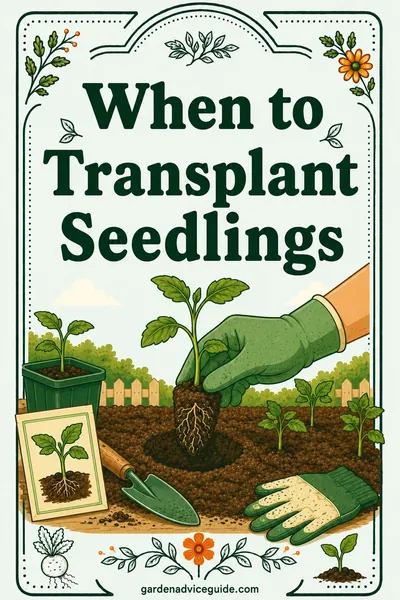
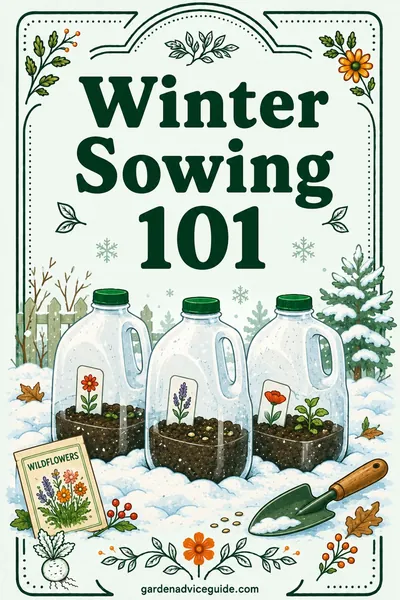
If you'd rather skip indoor seed starting altogether next year, winter sowing in milk jugs produces naturally hardened seedlings that need no ramp at all. It works better for hardy crops than for tomatoes, but plenty of gardeners use it for both.
Determinate vs Indeterminate: Same Timing, Different Everything Else
This distinction changes nothing about when to sow tomato seeds. Both types get the same 6 to 8 weeks. It changes what you do once they're in the ground.
| Determinate | Indeterminate | |
|---|---|---|
| Growth | Stops at a set height, 3 to 4 ft | Keeps growing until frost, 6 to 10 ft |
| Harvest | Most fruit ripens in a 2 to 3 week window | A few fruits a week, all season |
| Best for | Canning, sauce, small spaces, containers | Slicing, fresh eating, long season |
| Spacing | 24 inches apart | 36 inches apart |
| Support | Short cage or stake | Tall stake, string, or heavy cage |
| Pruning | Don't prune. It removes your crop. | Prune suckers to 1 or 2 main stems |
Sowing a determinate paste tomato and an indeterminate slicer on the same March day is exactly right. Caging them the same way is not.
When Should You Start Seeds Indoors? A Crop-by-Crop Table
Tomatoes aren't the only thing on the February bench, and every crop has its own countdown. Same formula, different number of weeks.
| Crop | Weeks before last frost | When it goes out | Notes |
|---|---|---|---|
| Onions (from seed) | 10 to 12 | 4 weeks before last frost | Longest lead time of anything common |
| Peppers | 8 to 10 | 2 weeks after last frost | Slow, warmth-loving germination |
| Eggplant | 8 to 10 | 2 to 3 weeks after last frost | Wants the warmest soil of the three |
| Tomatoes | 6 to 8 | 1 to 2 weeks after last frost | The standard |
| Herbs (basil, parsley, thyme) | 6 to 8 | On or after last frost | Basil hates cold, wait for 50°F nights |
| Broccoli, cabbage, cauliflower | 5 to 7 | 2 to 4 weeks before last frost | Frost tolerant, goes out early |
| Lettuce | 4 to 6 | 2 to 3 weeks before last frost | Or direct sow, it's easy either way |
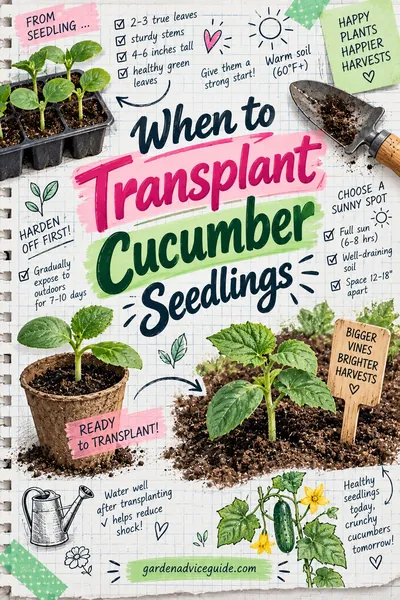
| Cucumbers | 3 | 1 to 2 weeks after last frost | Or direct sow, hates root disturbance |
| Squash and pumpkins | 3 | 1 to 2 weeks after last frost | Direct sowing usually catches up |
| Melons | 3 to 4 | 2 weeks after last frost | Use peat or paper pots to avoid root shock |
Two patterns to notice. The warmth-lovers with slow germination (peppers, eggplant, onions) get the longest indoor time. The vining crops (cucumbers, squash, melons) get the shortest, because they grow fast and resent having their roots disturbed. Anything at 3 weeks or less is usually easier direct sown once the soil is warm.
Peppers are the crop most often started too late, since they need those extra 2 to 4 weeks on the front end and warmer soil on the back end. Our guide on when to plant peppers runs the same math for them.
Worked Example: Zone 6, Last Frost May 10
One garden, one calendar, real dates. Variety: 'Celebrity', 70 days to maturity from transplant.
| Step | Math | Date |
|---|---|---|
| Sow indoors | May 10 minus 7 weeks | March 22 |
| Germination on a heat mat | 5 to 7 days | March 27 to March 29 |
| Under lights, 16 hrs/day | Immediately after sprouting | March 29 onward |
| Pot up to 4-inch pots | 3 weeks after sowing | April 12 |
| Start hardening off | 7 to 10 days before transplant | May 12 |
| Transplant outdoors | Last frost plus 2 weeks | May 24 |
| First ripe tomato | Transplant plus 70 days | August 2 |
Total from seed packet to first BLT: 133 days.
Now watch what happens if that same gardener sows on February 1 instead, "to get a head start." That's 14 weeks indoors. By May the plant is pot-bound, 20 inches tall, and flowering under lights. It goes in the ground on May 24 anyway (frost doesn't care how big the plant is), stalls for two to three weeks re-rooting, drops its indoor flowers, and produces its first ripe fruit in mid-August. Ten weeks of extra indoor babysitting bought a harvest that arrived two weeks later.
That's the whole argument for the 6 to 8 week window in one paragraph.
Two Things to Do in Late August
Most people read this page in January. If you're here in August, two timely notes.
Zone 9 and 10 gardeners: this is fall tomato season. In the Gulf South, Florida, and the low desert, summer heat above 90°F shuts down fruit set entirely, so the real harvest window is fall. Sow in June or July, transplant in August, and pick from October into December. Set out transplants rather than seed at this point in the year, use shade cloth for the first two weeks, and pick heat-set varieties that keep fruiting in high temperatures. Texas A&M AgriLife Extension publishes region-specific fall tomato dates worth checking if you garden there.
Everyone else: save seed from this year's best heirloom. Late August is peak seed-saving time, and it only works with open-pollinated or heirloom varieties. Hybrid seed (anything labeled F1) won't come true.
Pick a fully ripe, unblemished fruit from your healthiest plant. Squeeze the seeds and gel into a jar, add a splash of water, and let it sit at room temperature for 2 to 4 days. It will grow a mold layer, and that's the point: fermentation destroys the germination-inhibiting gel coat and kills several seed-borne diseases. Then pour off the floating pulp and hollow seeds, rinse the good seeds that sank, spread them on a plate or screen (not paper towel, they stick), and dry for about a week. Stored cool and dry, tomato seed stays viable for 4 to 6 years.
FAQ
When should I plant my tomatoes outside?
One to two weeks after your average last spring frost, once night temperatures stay above 50°F and soil is at least 60°F. Frost date alone isn't enough. A cold week after your last frost will stall a tomato just as effectively as a freeze, so check the ten-day forecast before you commit the whole flat.
Is it better to start tomato seeds too early or too late?
Too late, by a wide margin. A seedling sown two weeks late catches up in the garden within a month. A seedling sown eight weeks early is pot-bound, leggy, and often fruits later than a younger plant. If you've missed your window, sow now or buy transplants.
When is the best time to grow tomatoes?
In most of the US, tomatoes go in after the last spring frost and produce from midsummer until the first fall frost. In zones 9 and 10 the calendar splits in two: a spring crop transplanted in January or February, and a fall crop transplanted in August or September, with a dead zone in midsummer when heat stops fruit set.
Can I start tomato seeds without a grow light?
You can, but expect weaker plants. A bright south-facing window in a sunny climate can work if you rotate the tray daily and accept some stretching. Anywhere with cloudy late winters, a single ordinary shop light held 2 to 3 inches above the plants makes a bigger difference than anything else you can buy, and it is one of the cheapest things in the whole setup.
How long do tomato seeds take to germinate?
Five to seven days at 75 to 85°F soil temperature, 8 to 12 days around 70°F, and two to three weeks or more in cold soil, often with poor emergence. Temperature, not seed quality, is the usual reason a tray takes forever to come up.
Should I really bury the stem when I plant tomatoes?
Yes. Tomatoes grow roots along any buried section of stem, so planting deep or trenching sideways builds a much larger root system. Bury up to two-thirds of the plant and strip off any leaves that would sit underground. This is also the standard rescue for a seedling that got too leggy indoors.
What's the difference between when to sow tomato seeds and when to sow pepper seeds?
Peppers need 8 to 10 weeks indoors versus a tomato's 6 to 8, so they get sown roughly two weeks earlier. They also want warmer soil to germinate and warmer soil to transplant into, going out 2 weeks after last frost while tomatoes go out at 1 to 2 weeks.
Do determinate and indeterminate tomatoes get started at different times?
No. Both go in 6 to 8 weeks before last frost on the same schedule. The difference shows up after transplanting: determinates need 24-inch spacing and short cages and shouldn't be pruned, while indeterminates need 36-inch spacing, tall support, and sucker pruning to stay manageable.