Fall Flowers for Pots and Planters That Last to Frost

The fall flowers for pots that actually last are the ones bred for cold: pansies and violas (fine into the low 20s), ornamental kale and cabbage (better after frost, good to the teens), dianthus, heuchera, and dusty miller. Mums, snapdragons, and calibrachoa give you the big early show but check out at the first hard freeze around 28°F. Plant the container 4 to 6 weeks before your average first frost so the roots are settled when the cold arrives, and it'll hold color until the ground freezes in most zones.
Get your date: find your average first fall frost with our free frost date lookup and count back six weeks. That's your planting weekend.
Updated September 2026
Why a fall pot is a different problem from a summer pot
Summer containers are about heat and thirst. Fall containers are about a clock. Every plant you put in has a temperature it stops at, and the whole display is only as long-lasting as its most tender member.
That's why most fall pots at the garden center look great on the porch for two weeks and then collapse the first cold night. They're built on mums and a purple fountain grass, both of which quit at the first freeze, and they were sold in full bloom with no roots left to grow.
The fix is to build the pot in layers of cold tolerance. A hardy backbone that will still look good in December, a mid-layer that carries color through October, and one or two tender showpieces you're happy to lose at the first freeze. Then the pot ages well instead of dying all at once.
For the soil, pot size, drainage, and watering side of things, our container gardening page covers all of it. This page is the plant list.
Fall flowers for pots ranked by frost tolerance
Here's the list, sorted by how far into the cold each one goes. The temperatures are rough thresholds for a plant that's been outside and hardened for a week or two. A plant fresh from a warm greenhouse is less tough for its first few nights, and some cultivars vary by several degrees, so treat these as guides rather than guarantees.
| Plant | Holds to about | Sun | Role in the pot | Notes |
|---|---|---|---|---|
| Ornamental kale and cabbage | Teens, sometimes lower | Full sun | Thriller or filler | Color deepens after frost. Best plant on this list for December. |
| Pansies | Low 20s | Sun to part shade | Filler | Wilts flat in a freeze, stands back up by noon. Blooms again in spring in zones 6 and up. |
| Violas | Low 20s | Sun to part shade | Filler or spiller | Smaller flowers than pansies, more of them, tougher. |
| Heuchera (coral bells) | Perennial, zone 4 | Part shade | Filler | Foliage plant. Caramel, plum, and lime cultivars carry a pot alone. |
| Sedum 'Autumn Joy' and other upright sedums | Perennial, zone 3 | Full sun | Thriller | Pink to rust flower heads dry in place and hold all winter. |
| Dianthus | Low 20s | Full sun | Filler | Blue-gray foliage, clove scent, reblooms in cool weather. |
| Creeping Jenny | Perennial, zone 3 | Sun to shade | Spiller | Chartreuse trailing stems. Bulletproof. |
| Ivy | Perennial, zone 5 | Shade tolerant | Spiller | The classic winter spiller. Goes on forever. |
| Carex and other hardy sedges | Perennial, zone 5 | Sun to part shade | Thriller | The hardy stand-in for purple fountain grass. |
| Dusty miller | Mid 20s | Full sun | Filler | Silver foliage. Looks better with a frost on it. |
| Sweet alyssum | Mid 20s | Full sun | Spiller | Honey scent, reblooms all fall once nights cool. |
| Calendula | About 25°F | Full sun | Filler | Orange and yellow, keeps flowering after light frosts. |
| Stock | About 25°F | Full sun | Filler | Spiced scent, best in the cool of fall. |
| Osteospermum | 25 to 28°F | Full sun | Filler | Sulks in summer heat, comes back into flower for fall. |
| Snapdragons | About 28°F | Full sun | Thriller | Take a light frost fine. Hard freeze ends them. |
| Nemesia and diascia | About 28°F | Sun | Filler | Both rebloom hard in cool weather. |
| Garden mums | Flowers fade at about 28°F | Full sun | Filler or thriller | The centerpiece for 3 to 5 weeks, then done. |
| Asters | Perennial, zone 4, flowers to about 28°F | Full sun | Filler | Purple and blue, blooms right at the mums' peak. |
| Petunias and calibrachoa | 28 to 30°F | Full sun | Spiller | Revive in cool September weather, quit at the first real freeze. |
| Swiss chard 'Bright Lights' | About 28°F | Full sun | Thriller | Neon stems. Edible and ornamental. |
| Ornamental peppers | 32°F, dead at first frost | Full sun | Filler | Great color, zero cold tolerance. |
| Purple fountain grass | 32°F | Full sun | Thriller | The plant every store pot is built on. Dies at first frost. |
| Coleus | Damaged in the 40s, dead at 32°F | Part shade | Filler | The first thing to go. |
| Sweet potato vine | 32°F | Sun | Spiller | Black or lime trailing leaves. One frost and it's mush. |
| Celosia | 32°F | Full sun | Thriller | Plumes look autumnal but the plant is tropical. |
A few notes on the ones people ask about most.
Pansies vs violas. Same family, and both are the workhorses of fall pots. Pansies have the big faces, violas have more flowers per plant and take more cold. In zones 6 through 8, both usually survive winter in a pot against the house and bloom again in March. In zone 5 and colder, count on them as fall-only unless the pot is tucked somewhere sheltered.
Ornamental kale. Buy it small and let it size up in your pot. Its color doesn't develop until nights drop into the 40s, so a green one in September is normal. By November it's the best plant on the porch, and it's often still upright in January.
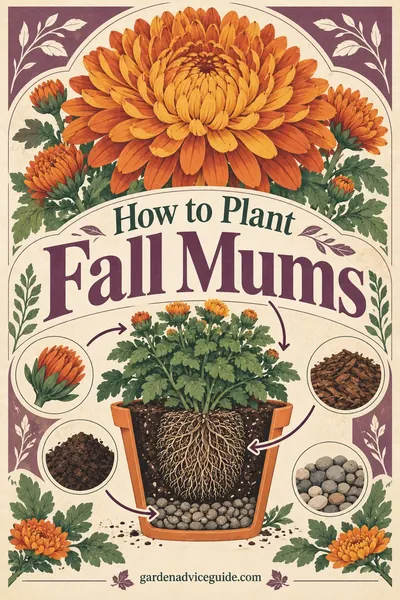
Mums. Treat them as a 3 to 5 week bloom, which is what they are. Buy them in tight bud, not open flower, and you'll get the whole run. Their care, watering, and the honest odds on overwintering are on our fall mums care page.
Thriller, filler, spiller combos that last
The thriller-filler-spiller formula works for fall the same as summer: one tall plant for height, a couple of mid-height plants for mass, and something trailing over the rim. The trick is to give the hardy roles to the hardy plants.
The December pot (sun): ornamental kale as the thriller, pansies as the filler, ivy or creeping Jenny as the spiller. Every plant in it holds to the low 20s or lower. In a 14-inch pot, that's one kale, three pansies, and two ivy.
The shade pot: heuchera in a caramel or plum shade as the thriller, violas as the filler, ivy spilling. Lives happily on a north-facing porch and looks good into winter.
The big-show October pot (sun): a garden mum in bud as the thriller, dianthus and dusty miller as fillers, calibrachoa spilling. When the mum and calibrachoa fade at the first hard freeze, pull them and drop pansies in their place. The dianthus and dusty miller carry on.
The all-foliage pot: carex as the thriller, ornamental cabbage and heuchera as fillers, creeping Jenny spilling. No flowers to deadhead, no bloom to fade. It looks the same in December as it did in October.
The edible one: Swiss chard 'Bright Lights' as the thriller, curly kale and parsley as fillers, thyme trailing. Every plant is harvestable, and the kale gets sweeter after frost.
The porch pair for a front door: two matching pots, each with a dwarf conifer or a hardy sedge in the center, violas around it, and trailing ivy. The conifer stays for years; you swap the violas for pansies in spring and petunias in summer.
How many plants per pot
Fall plants won't grow much once nights are cold, so plant the pot full on day one rather than leaving room to fill in. A rough guide for 4-inch nursery pots:
| Container width | Thriller | Fillers | Spillers |
|---|---|---|---|
| 10 inches | 1 | 2 | 1 |
| 12 inches | 1 | 3 | 2 |
| 14 inches | 1 | 4 | 3 |
| 16 to 18 inches | 1 | 5 to 6 | 3 to 4 |
| 24-inch trough | 2 | 6 to 8 | 4 |
Space plants closer than the tag says. Our plant spacing calculator is built for garden beds, so for a fall pot take its number and cut it roughly in half.
When to plant fall containers so they peak at the right time
The timing mistake is planting too late. Roots need about four to six weeks of soil above 50°F to settle before cold slows them down. Plant a pot two weeks before frost and the plants sit there, never quite knitting together, and dry out faster because their roots never reached the mix.
Work back from your average first frost. Here's the schedule by zone, using the typical first frost our lookup returns for most ZIP codes in each zone.
| Zone | Typical first frost | Plant fall pots by | Realistic display until |
|---|---|---|---|
| 3 | Sept 1 to 15 | Early August | Late September, hardy plants into October |
| 4 | Sept 21 to 30 | Mid August | October, kale and pansies into November |
| 5 | Oct 1 to 15 | Late August | Early November, kale into December |
| 6 | Oct 15 to 30 | Early to mid September | Thanksgiving, kale and ivy into January |
| 7 | Oct 30 to Nov 15 | Late September | December, pansies through winter |
| 8 | Nov 15 to 30 | Early to mid October | Pansies and kale bloom all winter |
| 9 | Dec 1 to 15 | Late October | The fall pot is the winter pot |
Two adjustments.
If you're planting mums, aim for the later end of the window and buy them in bud. A mum planted in early August in zone 6 is finished by the time the pot should be peaking in October.
If you're planting pansies in zone 7 or warmer, you can also plant a second round in late October for a winter and spring show. Pansies planted then bloom through mild winter spells and explode in March. Once the fall display is finished, our guide to front door winter planter ideas covers what goes in the same pot for December through March, including which pots survive a hard freeze.
Your own yard runs its own clock, so if your ZIP code's date is a week or two off the zone typical, trust the ZIP. Our zone schedules page shows how the first frost shifts the whole fall calendar.
Keeping the pot going: the fall-specific care
Water and feeding in general are on the container gardening page. The fall differences are short.
- Water less often, but don't stop. Cool air and short days mean a 12-inch pot that needed water daily in August needs it every 3 to 5 days in October. Push a finger in to the second knuckle; water when it's dry there. A dry pot going into a freeze is the most common way to lose pansies.
- Skip the fertilizer after planting. A slow-release feed mixed in at planting is plenty. Pushing soft growth in October gives frost something to kill.
- Deadhead the pansies and violas. They keep flowering for weeks longer if you pinch off the spent blooms.
- Pull the tender plants when they go. The morning after the first freeze, pull the dead coleus or sweet potato vine and drop in a pansy or a viola. It's a five-minute repair and the pot looks planned again.
- Move pots against the house for a hard freeze. Roots in pots freeze faster than roots in the ground. On nights below the mid 20s, shove the pots against a wall or into the garage. The full ranked method set, including what to cover and when, is on our page on how to protect plants from frost, and if you want to keep a mum or snapdragon pot going through a cold snap, frost cloth for plants explains which weight buys how many degrees.
- Pick a pot that won't crack. Terra cotta and ceramic can split when wet soil freezes inside them. Plastic, resin, fiberglass, and wood are safe to leave out. If you love the terra cotta, plant a plastic liner pot and drop it in.
Worked example: a zone 6b front porch, planted September 12
You're in zone 6b, where our lookup puts the average first frost around October 20 to 25 for most ZIP codes. Six weeks back is September 8 to 13, so you plant on Saturday the 12th. You've got one 16-inch pot in full sun by the door and one 12-inch pot on the shady side.
The sun pot (16 inches): one ornamental kale in the center, still green now. Around it, one garden mum in tight bud, two dianthus, and two dusty miller. Over the rim, two calibrachoa and one creeping Jenny. Seven plants. It's full on day one.
The shade pot (12 inches): one caramel heuchera in the center, three violas around it, two ivy trailing. Six plants.
Here's how it plays out.
- Mid September to early October. The mum opens and runs the show. The calibrachoa reflower in the cool nights. You water every four days or so.
- October 10. Nights in the 40s. The kale starts to blush pink in the center. The mum is at peak.
- October 22. First frost, 31°F. Nothing in either pot cares. The mum is fading on schedule, the calibrachoa looks tired.
- October 30. First hard freeze, 26°F. You pushed both pots against the house the night before. In the morning the mum is done and the calibrachoa has collapsed. You pull all three and drop three pansies in their place. The dianthus, dusty miller, kale, and creeping Jenny are untouched. The shade pot didn't notice the freeze at all.
- Thanksgiving. The kale is fully pink and the best thing on the street. The pansies flower on every mild afternoon. The heuchera and ivy pot looks exactly as it did in September.
- December 15. The ground freezes. The pansies stop but stay green. The kale and dianthus foliage hold. You leave both pots as they are through winter, and in March the pansies and violas come back into bloom before you've bought a single spring plant.
That's one planting day, one five-minute repair at the end of October, and color at the door for six months.
Frequently asked questions
What flowers can stay in pots through frost?
Pansies, violas, dianthus, ornamental kale and cabbage, dusty miller, sweet alyssum, and calendula all take repeated frosts and hold into the low to mid 20s. Perennials like heuchera, sedum, creeping Jenny, ivy, and hardy sedges go further still. Mums, snapdragons, and calibrachoa survive a light frost but fade at the first hard freeze around 28°F.
When should I plant fall flowers in pots?
Four to six weeks before your average first frost, so the roots settle while the soil is still warm. That's mid August in zone 4, late August in zone 5, early to mid September in zone 6, late September in zone 7, and October in zones 8 and 9. Plant mums at the later end of that window and buy them in bud rather than full bloom.
Do pansies come back after a freeze?
Yes, in most cases. Pansies wilt flat during a freeze and look dead at dawn, then stand back up as they thaw by late morning. Hardened plants take the low 20s without lasting damage. Below that, the flowers may brown but the plant usually survives and reblooms in the next mild spell. A pot that's bone dry going into the freeze is the exception.
Can I leave pots outside all winter?
The plants, often yes, if they're hardy and the pot is against the house. The pot itself is the question. Terra cotta and glazed ceramic crack when the wet mix inside freezes and expands. Plastic, resin, fiberglass, and wood survive. Move ceramic pots into the garage or empty them, and leave the rest.
What can I use instead of mums in fall pots?
Ornamental kale for a centerpiece that improves after frost, asters for a hardy perennial that blooms at the same time as mums, snapdragons for height, and pansies or violas for color that outlasts all of them. Anything perennial you put in the pot has to survive the winter there, which our guide to keeping potted perennials over winter covers. Sedum 'Autumn Joy' gives you a rust-colored flower head that dries in place and holds through winter.
Can I put fall flowers in the same pot as my summer plants?
You can, but pull the summer plants that are finished first. Petunias and calibrachoa often revive in cool September weather and are worth keeping for a few weeks. Coleus, sweet potato vine, and anything that's already leggy should come out to make room. Refresh the top few inches of potting mix and add slow-release fertilizer before planting the fall plants.
How often should I water fall container flowers?
Every 3 to 5 days in October for a 12-inch pot in sun, less as it gets colder, and less still in shade. Check with a finger rather than a calendar and water when the mix is dry at the second knuckle. Keep watering until the mix freezes solid, because a dry root ball in a freeze is what kills pansies and mums in pots.