When to Harvest Garlic

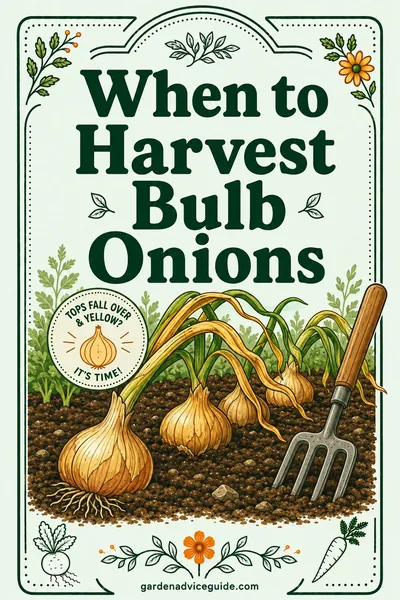
Harvest garlic when the lower 2 to 3 leaves have turned brown but the plant still has 5 to 6 green leaves at the top. For most of the northern US that lands between June and August; in the South it's usually May or June. Don't wait for the whole plant to die back like you would with onions, because by then the protective wrappers around the bulb have already started to rot away.
Your exact window depends on when you planted and how fast your spring warmed up. Check your local frost and growing dates with our free frost date lookup to see where your season sits, then use the leaf test below to nail the day.
Why the browning-leaves rule works
Each green leaf on a garlic plant connects to one papery wrapper layer around the bulb underground. When a leaf browns and dies, the wrapper it feeds stops maturing and begins to break down in the soil.
That's the whole trick. You want to pull the bulb while it still has 4 to 5 intact wrappers, because those layers are what let garlic store for 6 to 10 months instead of 6 weeks. A plant with 5 to 6 green leaves left has enough living wrappers to cure into a tight, well-sealed bulb.
So the rule is simple: count leaves, not calendar days.
- Bottom 2-3 leaves brown, 5-6 still green: harvest now. This is the sweet spot.
- Only browning at the leaf tips: too early. The bulb is still sizing up, and garlic gains a surprising amount of weight in its final two weeks.
- Half the plant or more is brown: you're late. Get them out of the ground today, and plan to eat those bulbs first since they won't store as long.
One thing that trips up new growers: garlic leaves brown from the bottom of the plant upward. A little tip burn on upper leaves from heat or dry soil doesn't count. You're watching for whole lower leaves that have gone fully brown and papery.
When to harvest garlic by region and month
So when do you dig garlic where you live? Fall-planted garlic matures on a fairly predictable schedule once your area hits late spring. Here's how the harvest windows break down across the US. Treat these as starting points and let the leaf count make the final call.
| Region | Typical USDA zones | Usual harvest window |
|---|---|---|
| Upper Midwest, northern New England, mountain West | 3-4 | Late July to mid August |
| Lower Midwest, southern New England, mid-Atlantic north | 5-6 | Early to late July |
| Mid-Atlantic south, upper South, parts of the Southwest | 7 | Mid June to early July |
| Deep South, Gulf Coast, coastal Southeast | 8-9 | May to early June |
| Pacific Northwest (west of the Cascades) | 8 (cool summers) | Late June to late July |
| California Central Valley | 9 | May to June |
| South Florida, southern Texas coast | 10 | April to May (pre-chilled seed only) |
Notice the pattern: the South harvests first because garlic finishes bulbing once days get long and soil gets warm, and that happens earlier there. Northern gardens plant earlier in fall but harvest later in summer.
If you don't know your zone, the USDA Plant Hardiness Zone Map will give it to you by zip code in about ten seconds.
How planting time shifts your harvest
Garlic needs roughly 8 to 9 months in the ground from a fall planting. The math is forgiving, but here's how it usually plays out:
- Planted late September to early October (zones 3-6): harvest July to early August.
- Planted October to November (zone 7): harvest mid June to early July.
- Planted November to December (zones 8-9): harvest May to June.
- Spring-planted garlic (any zone): add 3 to 4 weeks past your fall-planted neighbors, and expect smaller bulbs.
If you haven't planted yet, timing that end of things right matters even more than harvest timing. Our guide on when to plant garlic walks through the fall window zone by zone.
Hardneck vs softneck: they don't finish at the same time
If you grow both types, don't harvest them the same week just because they went in the same day.
Hardneck garlic gives you a built-in countdown timer: the scape. That curly flower stalk shows up 3 to 4 weeks before the bulbs are ready. Snap the scapes off when they've made one full curl (they're delicious, and removing them pushes energy into the bulb), then start checking lower leaves about three weeks later. We cover the details in when to pick garlic scapes.
Softneck garlic doesn't make a scape, so the leaf count is your only signal. Softnecks often mature 1 to 2 weeks earlier than hardnecks in the same bed, and the whole plant may start to slump or lean when it's close. A gentle flop in softnecks is normal near maturity; total collapse means you're running late.
One more difference worth knowing: softnecks are the long-storage type (8 to 12 months cured), so protecting their wrappers by harvesting on time pays off even more.
The test dig: how to know for sure
The leaf count gets you to the right week. A test dig gets you to the right day, and it costs you exactly one plant.
- Pick an average-looking plant, not your biggest or smallest.
- Use a garden fork or trowel to loosen the soil 4 to 6 inches away from the stem. Never just yank the stalk; garlic necks tear easily and a torn neck ruins storage.
- Lift the bulb, brush off the soil, and look at it.
- Ready: the bulb feels firm, the cloves push visibly against the wrapper so you can see their outline, and the wrappers are tight and papery.
- Not ready: the bulb is smooth and round like an onion with no clove definition. Wait 5 to 7 days and test again.
- Overdue: the wrapper is split open or cloves are separating from the stem. Harvest everything now.
Here's a worked example from a real bed. Say you planted 40 cloves of a hardneck like Music in zone 6 on October 5. Scapes appear around June 10; you snap them off. Around July 1 you notice the bottom three leaves have browned and six are still green. You test-dig one plant on July 3: firm bulb, clear clove bumps, tight wrapper. You harvest all 40 on July 4 and get bulbs averaging 2 to 2.5 inches across. Waiting until July 20 "to let them get bigger" would have gained you almost nothing in size and cost you two wrapper layers.
What happens if you harvest too early
An early harvest isn't a disaster, but you pay for it two ways.
Smaller bulbs. Garlic does 30 to 40 percent of its bulking in the last few weeks before maturity. Pull at the "onion-smooth" stage and you get bulbs half the size they could have been, with skinny cloves that are fiddly to peel.
Weak wrappers. Immature wrappers are thin and moist, and they shrink tight to the cloves during curing instead of forming loose protective layers. Early-harvested garlic often stores only 2 to 3 months before it softens or sprouts.
The one time early harvest makes sense on purpose: "green garlic." Pulling a few plants in mid spring, when they look like fat scallions, gives you a mild, fresh-garlic treat. Plant a few extra cloves each fall just for this.
What happens if you harvest too late
Late is worse than early. Once too many leaves die, three things go wrong underground:
- Split wrappers. The papers rot and burst, leaving naked cloves. They're fine to eat but nearly impossible to store or sell, and they invite mold during curing.
- Separated cloves. Fully overmature bulbs shatter apart in the soil. You'll be digging individual cloves out of the dirt.
- Disease and pests. Exposed cloves sitting in warm, damp summer soil pick up fusarium, penicillium mold, and soil insects fast.
There's a sneaky version of this problem, too: a wet July. Rain speeds wrapper breakdown, so in a soggy year, harvest at the early edge of the window (3 browned leaves rather than 4) and let curing finish the job. If heavy rain is forecast right when your garlic hits the sweet spot, dig before the storm, not after.
How to harvest without wrecking your bulbs
Fresh-dug garlic bruises like a peach, even though it looks tough. A few habits protect all that work:
- Loosen first, then lift. Fork under the row and pop the bulbs up with soil still clinging to them.
- Don't wash them. Brush off loose dirt with your hand and leave the rest; it falls away once dry.
- Keep them out of the sun. Direct summer sun can literally cook exposed bulbs in under an hour. Move them to shade as you dig.
- Leave stalks and roots on. The plant keeps feeding the bulb a little as it dries, and intact necks seal better.
- Handle them like eggs. Don't toss bulbs into a bucket. Bruises turn into rot spots during storage.
Curing: the two to three weeks that decide storage life
Curing is just controlled drying, and it's not optional if you want garlic in January. Skip it and you'll be composting moldy bulbs by October.
Set your harvested plants, tops and all, somewhere with three things:
- Airflow. A covered porch, garage with the door cracked, or shed with a fan. Hang them in bundles of 5 to 10, or lay them in a single layer on a screen or wire rack.
- Shade. Never cure in direct sun. Light degrades flavor and heat damages cloves.
- Dry, warm air. Around 70 to 80°F is ideal. Humid climates benefit from a box fan on low.
Give them 2 to 3 weeks, longer in humid regions. You'll know curing is done when the necks are completely dry and tight (no green, no moisture when you cut one), the outer wrappers are crisp and papery, and the roots are wiry and dry.
Then trim: cut stalks to about an inch above the bulb (or braid softnecks), snip roots to a quarter inch, and rub off just the dirtiest outer wrapper. Store cured bulbs at cool room temperature, 50 to 60°F if you can manage it, in mesh bags or baskets with airflow. Not the refrigerator: fridge temperatures trick garlic into sprouting.
University trial data backs up how much this matters. University of Minnesota Extension's garlic guidance notes that properly cured softneck garlic keeps 6 to 8 months or more, while poorly cured or damaged bulbs may only last weeks.
Save your best bulbs for planting
Before you eat anything, set aside your biggest, best-formed bulbs as seed for fall. Big cloves grow big bulbs; it's the closest thing gardening has to a cheat code. In most zones you'll replant just 8 to 10 weeks after harvest, so store seed bulbs whole, in the same cool airy spot, and crack them into cloves only a day or two before planting.
And if you've caught the season-extension bug, garlic pairs nicely with winter sowing as one of the few gardening jobs that rewards you for working in the cold months.
FAQ
When is garlic ready to be picked?
Garlic is ready when the lower 2 to 3 leaves have turned fully brown but 5 to 6 upper leaves are still green. Confirm with a test dig: a ready bulb feels firm, shows the outline of individual cloves through the wrapper, and has tight papery skins. In most US regions this happens between May (South) and August (far North).
When is a garlic plant ready to harvest if I planted in spring?
Spring-planted garlic follows the same leaf rule but runs 3 to 4 weeks behind fall-planted garlic, so expect late July into September depending on your zone. Bulbs will be smaller because they missed the fall root-growth period. Use the same test-dig check before pulling the whole bed.
Can I leave garlic in the ground too long?
Yes, and it's the most common storage-killing mistake. Overmature bulbs split their wrappers, separate into loose cloves, and pick up mold and soil pests. If more than half the leaves have browned, harvest immediately and use those bulbs first.
Should I stop watering before harvest?
Stop watering 1 to 2 weeks before you expect to dig. Drier soil firms up the wrappers, makes digging cleaner, and lowers the risk of mold during curing. This is also why a rainy forecast near harvest time is a reason to dig early.
Do I harvest garlic before or after the scapes?
After. Hardneck scapes appear 3 to 4 weeks before the bulbs mature. Snap the scapes off when they curl (they're great in pesto and stir-fries), then watch the lower leaves. The scape is your three-week warning, not the harvest signal itself.
Can I eat garlic right after digging, before it cures?
Absolutely. Fresh "wet" garlic is milder and juicier than cured garlic and many growers consider it a July treat. Curing is only about long-term storage. Just refrigerate any uncured bulbs you've started using and eat them within a couple of weeks.
Why are my bulbs small even though I harvested at the right time?
Timing is only one input. Small bulbs usually trace back to planting too late in fall, planting small cloves, crowding closer than 4 to 6 inches, weed competition, or not enough nitrogen in spring. Get the planting side right and next year's harvest changes completely; see our full guide on when to plant garlic.
How long does harvested garlic last?
Well-cured softneck garlic stores 8 to 12 months at cool room temperature with airflow. Hardnecks run shorter, typically 4 to 6 months, which is why growers eat hardnecks first and save softnecks for late winter. Damaged, uncured, or refrigerated bulbs last only weeks before sprouting or softening.
Updated August 2026