Side Yard Landscaping Ideas: Paths, Plants and Plans That Fit Your Width

The best side yard landscaping starts with a path, not plants. Most side yards are narrow, often 5 to 10 feet from wall to fence, shady on at least one side, and used every week as a hallway to the backyard or the trash cans. So the first job is a firm, well-drained path about 3 feet wide. Then fill the strips beside it with slim plants that suit your light and USDA zone: ferns, hostas and hellebores in shade, lavender, herbs and columnar shrubs where the sun reaches.
Below, each idea is explained properly: why it works, which plants suit it in which zones, roughly what it costs, how much care it needs, and the mistakes to avoid. The gravel math is worked out too, so you order the right amount the first time.
Key facts
- A 3 foot path fits a person with a wheelbarrow or trash can.
- Most side yards get under 4 hours of direct sun.
- 'Sky Pencil' holly stays about 1 to 3 feet wide.
- A 40 by 3 foot path, 3 inches deep, needs about 1.1 cubic yards of gravel.
- Call 811 before digging: utility lines often run here.
The side yard planner below does the sorting for you. Type your ZIP code or pick your zone, then choose your side yard's width and how much sun it gets. It shows the paths and plants from this page that fit, with a short note on how to use each one.
Garden Advice Guide · free calculator
Side Yard Planner: Path and Plant Picks for Your Width, Light and Zone
Type your ZIP code or pick your zone, then your side yard's width and how much sun it gets. You get the paths and plants from this page that fit, with how to use them.
Need more? Open the free Frost Dates.
 Planting Zones
 Plant Spacing Calculator
 Frost Dates
Quick reference: side yard plans by width
| Width | Path | What fits beside it |
|---|---|---|
| Under 4 ft | The whole space | Wall planters, a vine on a panel |
| 4 to 6 ft | 3 ft, along one side | A 1 to 3 ft bed or one row of slim shrubs |
| 6 to 10 ft | 3 ft, gently curved | Beds on both sides, a bench |
| Over 10 ft | 3 to 4 ft, curving | Layered beds, a small patio or dog run |
Measure, then lay the path first
Measure from the house wall to the fence in two or three places. Side yards are rarely even, and the narrowest point decides your plan. Note where the meter, spigot, AC unit, downspouts and dryer vent sit, because your path has to reach every one of them without anyone stepping through a bed. Three feet is wide enough to roll a trash can or push a wheelbarrow. Under 4 feet, the path becomes the whole space and you plant the walls instead.
Gravel is the most forgiving surface. It drains fast and costs less than pavers. Lay 2 to 3 inches of compacted crushed stone, add edging on both sides, and top with about an inch of pea gravel or set stepping stones into it. Pavers or flagstone cost more but are easiest to sweep and roll bins over. Our page on landscaping with rocks and stones compares the common types.
For the amount, multiply length by width by depth in feet. A path 40 feet long and 3 feet wide is 120 square feet. At 3 inches (0.25 feet) deep that is 30 cubic feet, or about 1.1 cubic yards, or about 60 bags of 0.5 cubic feet. For a long path, bulk delivery is usually cheaper than bags.
Shade side yard ideas, explained
Most side yards sit between two houses and get only a few hours of sun. Four hours or less of direct sun counts as shade for planting. If you are unsure, our guide to full sun vs partial shade shows how to check.
A fern and hosta corridor
Ferns and hostas along the fence, with stepping stones down the middle, make a narrow space feel lush. Both love the cool, damp air side yards trap. Hostas grow in zones 3 to 9, as does Christmas fern. The budget is low because hostas divide easily, and care is just a fall cleanup. The mistake is planting hostas where deer walk. If they visit, use ferns and hellebores, or pick from our deer resistant shade plants.
Hellebores by the gate
Lenten roses bloom in late winter, when the gate may be the only part of the garden you pass daily. They suit zones 4 to 9, keep leathery leaves most of the year, and deer usually skip them. Plants cost more than hostas, so this is a moderate budget idea, but they live for years. Snip off tattered old leaves in late winter so the flowers show. Our hellebore care guide covers planting and feeding.
Color from leaves, not flowers
Japanese forest grass (zones 5 to 9) has arching gold or lime leaves that light up dark corners. Coral bells (zones 4 to 9) come in lime, purple and peach, and also do well in pots against a gray wall. In shade, where blooms are scarce, leaf color does the work. Both are moderate in cost and low in care, but avoid the dry strip under a roof overhang. Another trick is a white-and-green palette: white flowers and variegated leaves reflect what little light there is, so the space looks wider at dusk.
Climbing hydrangea on the fence
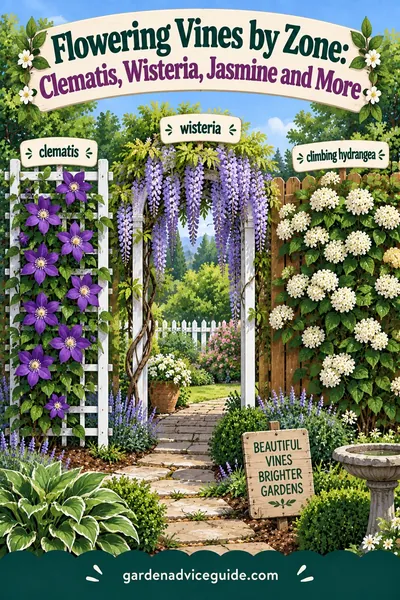
One of the few flowering vines happy in shade, it is hardy in about zones 4 to 8 and clings by itself. It barely grows for two or three years, then covers a long stretch with white summer flowers. It needs a sturdy fence and is a poor pick for one you stain often. Our list of flowering vines by zone has more choices.
Sunny side yard ideas, explained
A south- or west-facing side yard can be the hottest spot you own, because the wall bounces heat back. That suits plants that like warm, dry roots.
A lavender walk
Lavender along the path smells lovely every time you brush past. English lavender grows in roughly zones 5 to 8 and needs 6 or more hours of sun and sharp drainage. The budget is low to moderate, and care is a light trim after flowering. The usual mistake is heavy, wet clay, which rots the roots in winter. Raise the strip a few inches or mix in grit if water sits after rain.
An herb strip by the kitchen door
Thyme, oregano, chives and sage are compact, tough and cheap, and rosemary joins them where hardy, generally zone 7 and up. If the soil is full of construction rubble, grow them in pots instead; our guide to growing herbs in pots covers mixes and sizes. Creeping thyme (zones 4 to 9) also fills the gaps between stepping stones and handles light foot traffic. Plant plugs 6 to 12 inches apart and expect a full look by year two.
A narrow raised bed or an espalier
A 2 foot wide raised bed against a sunny wall grows salad greens, tomatoes or cutting flowers, all reachable from the path. It is a moderate budget idea, mostly boards and soil. For the long term, train an apple or pear flat against the fence as an espalier. It takes years of careful pruning but uses almost no floor space. Ornamental grasses are the low-effort option, softening a blank fence with almost no care.
Tricks for a really narrow side yard
Under 5 feet, think up instead of out. 'Sky Pencil' holly (about zones 6 to 9) stays roughly 1 to 3 feet wide, 'North Pole' arborvitae (zones 3 to 7) about 3 to 4 feet, and upright yews suit zones 4 to 7. Italian cypress works in zones 7 to 10 in sun. These are the priciest plants here, so buy smaller sizes and give them time.
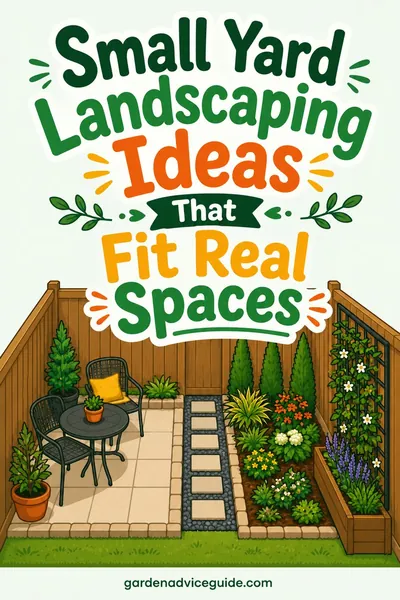
A trellis panel with clematis takes about a foot of depth. Window boxes and wall planters put color at eye level without touching the path. Running one material from end to end makes a narrow space feel longer, and square pavers set on a diagonal make a skinny path look wider. Our small yard landscaping ideas have more small-space tricks.
Working side yards: bins, dogs and storage
Some side yards are the service area, and that is fine. A trash nook is a gravel pad with a slatted screen. It costs little, hides the bins from the street and stops the lawn dying where cans sat. Keep it near the gate so the walk to the curb is short. A dog run needs pea gravel or artificial turf, a gate at each end and a shady spot. Skip cocoa mulch, which is not safe for dogs.
A slim, low shed or deck box holds hoses and tools, as long as it does not block the meters. A bench or big pot where it opens to the backyard pulls people through.
Choosing side yard plants for your zone
Zone decides what survives winter, so check yours on the growing zone finder first. In zones 3 and 4, use hosta, Christmas fern, sweet woodruff and 'North Pole' arborvitae in shade, with catmint, daylilies and little bluestem in sun. Zones 5 and 6 add hellebores, Japanese forest grass, coral bells, lavender, creeping thyme, sedum, boxwood and upright yew, plus 'Sky Pencil' holly from zone 6.
In zones 7 and 8, liriope and cast iron plant are the toughest shade picks, and rosemary joins lavender in sun. In zones 9 to 11, cast iron plant and mondo grass handle shade, lantana and grasses take the heat, and podocarpus and Italian cypress are the slim evergreens. Run your list through the plant spacing calculator to see how many fit, and ask your local cooperative extension office what does best in your county.
What each idea costs, roughly
I sort side yard ideas into three rough budget levels. Low: anything grown from small or divided plants, such as hostas, ferns, herbs, creeping thyme and moss between flagstones, plus a gravel pad for the bins. Most of the cost is your time. Middle: a full gravel path with edging, a narrow raised bed, hellebores, coral bells and a lavender walk. Higher: pavers or flagstone on a proper base, large columnar evergreens, an espalier, a slim shed or a fenced dog run.
If money is tight, build the path properly first and plant in stages. A good path makes a half-planted side yard look finished. A long plant list with a muddy path never does.
Drainage, utilities and the rules of the strip
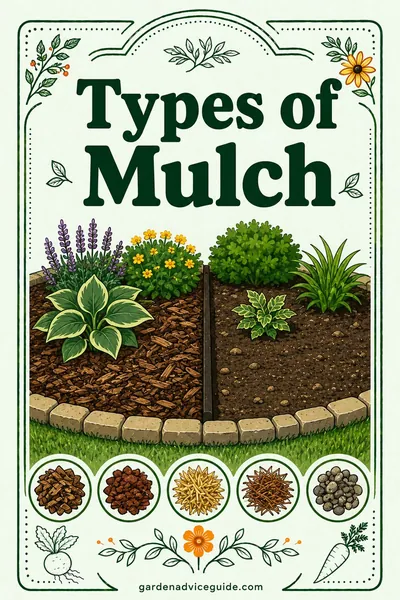
The ground should slope away from your foundation; many building codes ask for about 6 inches of drop in the first 10 feet. Keep mulch and gravel a few inches below the siding so water and insects cannot get behind it. Use stone, not fine mulch, wherever a downspout empties, since mulch floats away. Our mulch guide explains which types stay put.
Plant shrubs at least half their mature width from the house, plus a little extra for painting. Leave the AC unit the clear space its manual asks for. Call 811 before you dig, and make sure the whole project sits on your side of the property line. If you are planting the far fence as well, our fence line landscaping ideas cover that side.
Mistakes that crowd a side yard
The big one is sun lovers in shade: lavender or roses with two hours of light stretch, flop and stop blooming. The next is buying for today's size. A 2 foot shrub that grows 8 feet wide will swallow a 6 foot side yard, so read the mature width on the tag. Avoid running bamboo and English ivy, which spread fast into neighboring yards; clumping bamboo is a safer pick.
Finally, side yards under the eaves often sit in a rain shadow and stay dry after a storm. New plants there need a deep drink once or twice a week through their first summer, and the watering guide helps you set a schedule. Check your frost dates on our free frost date and zone lookup so you plant at the right time.
Quick answers about side yards
What can I do with a narrow side yard?
Make it a good path first, about 3 feet wide, so it works as a hallway. Then go up instead of out. Columnar evergreens, vines on a trellis panel, window boxes and wall planters all fit in a foot or two of depth.
What is the best landscaping for the side of a house in shade?
Ferns, hostas, hellebores, Japanese forest grass and coral bells handle shade in most zones. In zones 7 to 11, cast iron plant and liriope are tough, low-care picks. If deer visit, lean on ferns and hellebores, and use white or variegated plants to brighten the space.
Is gravel or mulch better for a side yard?
Gravel is usually better for the path. It drains, does not wash away and does not break down. Use mulch in the planting beds, kept a few inches below the siding. Wherever a downspout empties or water runs across, use stone, because fine mulch will float off.
How much gravel do I need for a side yard path?
Multiply length by width by depth in feet, then divide by 27 for cubic yards. A path 40 feet long and 3 feet wide, filled 3 inches deep, needs 30 cubic feet. That is about 1.1 cubic yards, or about 60 bags of 0.5 cubic feet each.
What plants stay narrow for a side yard?
'Sky Pencil' holly (about zones 6 to 9), 'North Pole' arborvitae (zones 3 to 7), upright yews (zones 4 to 7) and Italian cypress (zones 7 to 10) all stay slim. Check the mature width on the tag and pick plants under half the width of your planting strip.
How far from the house should I plant in a side yard?
Set each shrub at least half its mature width from the wall, plus about a foot for air and access. A shrub that grows 3 feet wide goes about 2.5 feet out. That keeps branches off the siding and leaves room to paint and reach the meters.
Can I grow vegetables in a side yard?
Yes, if it gets at least 6 hours of direct sun. A raised bed about 2 feet wide along a sunny wall grows greens, herbs, bush beans and even tomatoes. In a shady side yard, stick to leafy greens and herbs like mint, parsley and chives, which manage with less light.