How to Propagate Pothos: Where to Cut, Rooting in Water or Soil and How Long It Takes

To propagate pothos, cut a 4 to 6 inch piece of vine about 1/4 inch below a node, the small brown bump where a leaf meets the stem. Pull off the leaf nearest the cut, then stand the cutting in a glass of water with the node under the surface. In a warm, bright room you will usually see the first roots in 1 to 2 weeks, and the cutting is ready for a pot in about 3 to 5 weeks.
That is really all there is to it. Pothos is one of the most forgiving plants you can root, which makes it a perfect first try if you have never propagated anything before. The only rule that truly matters is the node. Get that right, keep the cutting warm and give it light, and the plant does the rest. Below I walk through where to cut, water versus soil, how to move rooted cuttings into a pot, and what to check when a cutting just sits there.
Key facts
- Every cutting needs at least one node; no node means no roots.
- Cut 4 to 6 inches long, with 2 or more leaves left on.
- Roots show in about 1 to 2 weeks in a room of 65 to 75°F.
- Pot up when roots are 1 to 2 inches long with a few side roots.
- The ASPCA lists pothos as toxic to cats and dogs.
The propagation timer below gives you a rough schedule for your own cuttings. Choose your rooting method, either in a glass of water or straight into soil, then choose your room: a cool room under 65°F, an average room of 65 to 75°F, or a warm room above 75°F. It tells you about how long until roots should show and when to pot up, so you know whether a slow cutting is normal or worth a second look.
Garden Advice Guide · free calculator
Propagation Timer: Days to Roots for Your Pothos Cuttings
Pick water or soil and how warm your room is. You get about how long until roots show and when to pot up.
Need more? Open the free Frost Dates.
 Planting Zones
 Frost Dates
 Planting Calendar
Quick reference: pothos rooting time by room
| Room | First roots in water | Ready to pot |
|---|---|---|
| Warm (above 75°F) | About 5 to 10 days | About 2 to 4 weeks |
| Average (65 to 75°F) | About 1 to 2 weeks | About 3 to 5 weeks |
| Cool (under 65°F) | About 2 to 3 weeks | About 5 to 7 weeks |
These are rough guides, not promises. Cuttings taken in winter run slower because rooms are cooler and windows give less light. A warm shelf near a bright window speeds things up more than anything else you can do.
Find the node before you cut anything
Roots grow only from nodes. A piece of bare stem, or a single leaf on its stalk, can sit in water for months and never root. So before you pick up the scissors, look along the vine. A node is the slightly thicker spot where a leaf stalk joins the main stem. On older vines you will often see a little brown nub there too. That nub is an aerial root, and it is a great sign, because it will turn into a real root quickly once it touches water or damp soil.
Each cutting should have one to three nodes and at least two leaves. The leaves make the energy the cutting uses to build roots, so a cutting stripped down to one tiny leaf roots slowly. A long, leggy vine can give you a dozen cuttings this way. As a bonus, the mother plant branches from the nodes just below each cut, so a trim makes it fuller rather than sparser.
Taking the cuttings
Use clean, sharp scissors or snips. Wiping the blades with hot soapy water first is plenty. Cut about 1/4 inch below a node. If you are cutting one long vine into several pieces, make each cut just below a node so every piece has one at its base.
Next, take off the leaf closest to the cut end. That leaf would sit underwater or under the soil and rot, and rot spreads. Leave the upper leaves alone. If any leaves are yellow, damaged or tiny, remove those too and keep the healthy ones.
Spring and summer are easiest, but winter cuttings still root; they just take longer.
Rooting pothos in a glass of water
Fill a clear glass or jar with room-temperature water. Clear glass lets you watch the roots form, which is half the fun and also lets you spot trouble early. Set the cuttings in so the nodes are underwater and the leaves sit above the rim. A narrow-necked bottle holds them upright nicely.
Put the glass in bright, indirect light. An east window or a spot a few feet back from a south or west window is ideal. Hot afternoon sun through glass can warm the water too much. Change the water about once a week, or sooner if it turns cloudy. Fresh water carries more oxygen, and roots need oxygen as much as moisture.
Wait until the roots are about 1 to 2 inches long and have a few small side roots before you pot them. Some people keep pothos in water for good. That works for a long time if you change the water and add a very weak dose of liquid houseplant fertilizer now and then, but plants in soil usually grow bigger and fuller.
Rooting straight in soil
You can skip the water step completely. Roots formed in soil come out a little tougher and never have to adjust to a new home. The only downside is that you cannot see what is happening.
Fill a small pot with moist, well-draining potting mix. A 4 inch pot with a drainage hole holds three or four cuttings. Poke a hole with a pencil, slide the cutting in so at least one node is below the soil, and firm the mix around it. Keep the soil lightly moist but never soggy. In dry winter air, a clear plastic bag tented loosely over the pot keeps humidity up; open it for a few minutes every day or two so mold does not settle in.
After about 3 to 4 weeks, give a cutting a very gentle tug. If it resists, it has roots. A brand new leaf unfolding is the best sign of all.
Water or soil: which should you pick?
Both work, so pick the one that suits you. I like water for a first attempt because you can see the roots and it takes the guesswork out. It is also easy to keep track of: the glass is either full or it is not. Soil suits people who want a finished plant with less fuss later, and it avoids the short sulk some cuttings go through when they move from water to a pot.
If you tend to forget about plants, water is safer, since a dried-out pot of soil can kill a rootless cutting in a few days. If you tend to overwater, soil in a pot with a good drainage hole may suit you better than you think, because the cutting needs only light moisture. For more on how wet is too wet, our watering guide explains how to read soil moisture with a finger test.
Moving water-rooted cuttings into a pot
Roots that grow in water are thinner and more delicate than roots that grow in soil. When you move them, they need a little time to adjust, and a leaf or two may yellow along the way. That is normal.
Use a small pot with a drainage hole and regular potting mix. Plant several rooted cuttings together rather than one, and spread them around the pot. Firm the mix gently so the roots are not sitting in air pockets. Then keep the soil evenly moist for the first two weeks, the way the roots were used to. After that, ease into normal watering: water when the top inch or two of soil feels dry. Our guide to container gardening covers pot sizes and drainage if you are choosing a new pot.
Making a fuller plant from your cuttings
A single rooted cutting grows into a single trailing vine, which can look thin for a year or more. The trick for a full, bushy pothos is numbers. Root five or six cuttings at the same time and plant them all in one 6 inch pot, spacing them around the edge with one or two near the middle.
You can also use your cuttings to thicken up the mother plant. Lay a long vine back across the top of its own pot and pin a node to the soil with a bent paperclip. Keep that spot moist and the node will root right there. Once it has rooted, you can snip the vine behind it, and you have a new stem growing from the top of the pot.
Pothos tolerates less light than most houseplants, but cuttings and young plants fill out faster in bright, indirect light. If your only spot is dim, a small lamp from our grow lights for houseplants guide helps through winter. Rooted cuttings in a pretty jar also make a sweet homemade gift.
Why a cutting sits there and does nothing
The most common reason is a missing node. Look closely at the base of the cutting. If the cut is between nodes and nothing is underwater but smooth stem, retake the cutting just below a node and start again.
The second reason is cold or dark. A cutting on a chilly windowsill in January can sit for a month without a root. Move it somewhere warmer, ideally 70°F or so, and brighter. The third is stale water. If the stem turns slimy, brown or mushy, that is rot. Trim the stem back above the soft part to clean, firm tissue, rinse the glass and start fresh.
The last reason is too few leaves. A cutting with no leaves, or one small leaf, has very little stored energy. Keep at least two healthy leaves. While you are looking closely, check the undersides for fine webbing or tiny moving dots; our spider mites guide explains what to do if you find them, because mites spread easily from a cutting to the rest of your plants.
Pets, kids and glasses of cuttings
The ASPCA lists pothos as toxic to cats and dogs. Glasses of cuttings on a low windowsill are easy for a curious cat or a puppy to reach, so keep them up high. If your pet chews on one, call your vet or the ASPCA Animal Poison Control Center. Our list of houseplants safe for cats has gentler options.
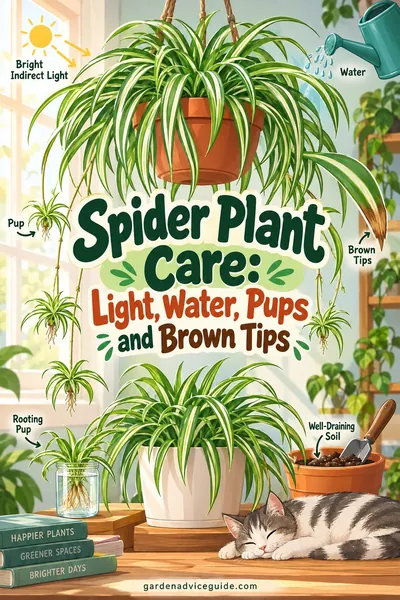
If you want an easy pet-safe project instead, spider plant babies root just as readily in a glass of water. Our spider plant care guide shows how to pot them up. For small children, the same advice applies as for pets: keep cuttings and plants out of reach and teach them that houseplants are for looking at, not tasting.
Where to go from here
Once pothos feels easy, propagating monstera follows the same idea with bigger, slower cuttings. Pothos itself is also one of the toughest low light houseplants, so rooted pieces can fill a dim bookshelf or a bathroom. If you want to move a pot outdoors to a shady porch for summer, wait until nights stay above about 55°F; your frost dates by ZIP code give a good idea of when that warmth arrives where you live. For more plant tools, visit the Garden Advice Guide home page.
Quick answers about pothos propagation
Where do you cut pothos to propagate it?
Cut about 1/4 inch below a node, the small brown bump where a leaf stalk joins the vine. Each cutting needs at least one node, and ideally two or more healthy leaves above it. Take off the lowest leaf so it does not sit in water or soil and rot. A 4 to 6 inch piece is the easiest size to handle.
How long does pothos take to root in water?
In a room of about 65 to 75°F with bright, indirect light, first roots usually show in 1 to 2 weeks. Warm rooms can do it in 5 to 10 days, while cool winter rooms may take 2 to 3 weeks. The cutting is ready for soil in about 3 to 5 weeks, once roots are 1 to 2 inches long.
Can you propagate pothos without a node?
No. Roots grow only from nodes, so a leaf on its stalk or a section of bare stem will not root, however long it sits in water. If your cutting has no node at the base, retake it just below one. Nodes are easy to spot once you know to look for the thicker joint where each leaf attaches.
Is water or soil better for rooting pothos?
Both work well. Water lets you watch the roots and is easy for beginners, though the roots need a short adjustment period when moved to a pot. Soil skips that step and gives sturdier roots, but you cannot see progress, and a dried-out pot can kill a cutting quickly. Pick whichever suits your habits.
When should I move pothos cuttings from water to soil?
Move them when the roots are about 1 to 2 inches long and have a few small side roots. Plant several cuttings in one small pot with a drainage hole, keep the soil evenly moist for two weeks, then water when the top inch or two feels dry. A yellow leaf or two after the move is normal.
Can pothos live in water forever?
It can live in water for a long time if you change the water regularly and add a very weak dose of liquid houseplant fertilizer now and then. Plain water has no nutrients, so unfed plants slowly get pale. Pothos usually grows bigger and fuller in soil, but a jar of trailing vines on a shelf can look lovely.
How many cuttings should I put in one pot?
For a full, bushy look, plant five or six rooted cuttings in a 6 inch pot, or three or four in a 4 inch pot. Space them around the edge with one or two in the middle. A single cutting grows into one thin vine and can take a year or more to look full.