Growing Herbs in Pots for Beginners

Most herb pots fail for one reason: the herbs in them want opposite amounts of water. Rosemary, thyme, oregano, sage and lavender come from dry Mediterranean hillsides and want lean soil that dries out between waterings. Basil, cilantro, parsley and mint want steady moisture and richer soil. Put those two groups in the same pot and you will drown one half or dehydrate the other, and there is no watering can setting that satisfies both.
Planning a mixed pot? Work out how many plants actually fit with our free plant spacing calculator before you buy.
Split your herbs into those two groups and container herb gardening becomes almost boring in how well it works. Below is the full chart for 13 common herbs, the harvesting technique that decides whether a plant keeps producing or quits in July, an honest look at which herbs really survive indoors over winter, and a three-pot kitchen setup you can copy exactly.
What growing herbs in pots for beginners really comes down to
Forget fertilizer brands and fancy pots. Sort your herbs into two buckets and everything else follows.
Group 1: Mediterranean herbs. Rosemary, thyme, oregano, sage, lavender, marjoram, and to a degree tarragon. These evolved on rocky, poor, fast-draining slopes with hot dry summers. They want:
- Full sun, 6 to 8 hours
- Gritty, fast-draining mix (potting mix cut with 25 to 30 percent perlite, pumice or coarse sand)
- Water only when the top inch or two is genuinely dry
- Almost no fertilizer. Rich soil makes them floppy and bland
Overwatering is how nearly every beginner kills rosemary. The plant looks droopy, you water it more, and you finish the job.
Group 2: leafy herbs. Basil, cilantro, parsley, mint, dill, chives, lemon balm. These want soft, fast, leafy growth, which takes water and nitrogen. They want:
- Full sun for basil and dill, part sun is fine for mint, parsley, chives and cilantro
- Standard potting mix, moisture-retentive
- Water when the top inch is dry, so more often
- A light liquid feed every 3 to 4 weeks during active growth
Never plant a Group 1 herb and a Group 2 herb in the same pot. Basil and rosemary in a shared planter is the most common version of this mistake and it fails every summer. Whichever one you water for, the other one suffers.
University of Maryland Extension's herb guidance makes the same distinction: the woody, resinous herbs need well-drained, low-fertility conditions, while the soft-leaved annual herbs need consistent moisture and richer soil.
Herb container chart: 13 herbs at a glance
Gallons refer to nursery pot sizes. Hardiness in a pot is deliberately colder than the in-ground rating, because a container freezes on all sides rather than being insulated by the earth. A good working rule is that a pot is one to two USDA zones less hardy than the ground.
| Herb | Group | Pot size | Sun | Water | Life cycle | Harvest tip | Hardy in a pot |
|---|---|---|---|---|---|---|---|
| Basil | Leafy | 1-2 gal, 10-12 in | 6-8 hrs | Steady, never dry | Annual | Cut the stem just above a leaf pair | Not at all. Dies at 40°F |
| Mint | Leafy | 2-3 gal, 10-12 in, own pot | 4-6 hrs, part sun fine | Steady | Perennial | Shear the whole plant back by a third | Zones 5-8 in a pot |
| Rosemary | Mediterranean | 3-5 gal, 12-14 in | 8 hrs, the most of any herb | Dry between waterings | Perennial | Snip 4-6 in tips, never into bare wood | Zones 8-10 in a pot; 'Arp' and 'Hill Hardy' a zone lower |
| Thyme | Mediterranean | 1-2 gal, 8-10 in | 6-8 hrs | Dry between waterings | Perennial | Shear stems, don't pluck leaves | Zones 6-9 in a pot |
| Oregano | Mediterranean | 2 gal, 10 in | 6-8 hrs | Dry between waterings | Perennial | Cut stems back hard before flowering | Zones 6-9 in a pot |
| Sage | Mediterranean | 3 gal, 10-12 in | 6-8 hrs | Dry between waterings | Perennial | Take whole leaves or short sprigs | Zones 6-8 in a pot |
| Tarragon (French) | Mediterranean-ish | 3 gal, 12 in | 6 hrs | Moderate, on the dry side | Perennial | Cut sprigs from the top | Zones 5-8 in a pot |
| Chives | Leafy | 1-2 gal, 8-10 in | 4-6 hrs | Moderate | Perennial | Cut to 2 in from the base, it regrows | Zones 4-8 in a pot |
| Parsley | Leafy | 2-3 gal, 10-12 in deep | 4-6 hrs | Steady | Biennial | Take outer stems at the base | Zones 6-9, often overwinters |
| Cilantro | Leafy | 2 gal, 8-10 in deep | 4-6 hrs, cooler is better | Steady | Annual | Cut outer leaves, sow again every 2-3 weeks | Cool season crop, tolerates light frost |
| Dill | Leafy | 3 gal, 12 in deep | 6-8 hrs | Steady | Annual | Snip fronds from the top | Annual, frost ends it |
| Lemon balm | Leafy | 2-3 gal, own pot | 4-6 hrs | Steady | Perennial | Shear back hard, it rebounds | Zones 5-8 in a pot |
| Lavender | Mediterranean | 3-5 gal, 12 in | 8 hrs | Dry, sharp drainage | Perennial | Cut stems as flowers open, never into old wood | Zones 6-8 in a pot, variety dependent |
The herbs worth knowing in detail
Basil
Basil is a heat lover and the most rewarding herb in a pot, but it is genuinely tender. It sulks below 50°F and turns black at the first frost. There is no saving it.
Two rules cover almost everything:
- Pinch the growing tips early and often. When the plant has three or four sets of leaves, cut the main stem just above a leaf pair. Two new stems grow from that point. Repeat every couple of weeks and you turn one lanky stalk into a bushy plant with four times the leaves.
- Never let it flower. The moment basil sets flower buds, leaf production slows and the flavor turns harsh and slightly soapy. Pinch buds off the second you see them.
Basil wants water. It will wilt dramatically on a hot afternoon and recover overnight, but repeated wilting costs you leaves. A 12-inch pot with two plants is a good kitchen-scale setup.
Mint
Mint gets its own pot. Not a corner of a big planter, not a divider, its own pot.
Mint spreads by stolons, which are runners that travel along and just under the soil surface and root wherever they touch. In a shared container, mint will fill the root zone within a single season and strangle whatever it shares with. This is the single most repeated container herb mistake, and it is completely avoidable.
The upside is that mint is nearly impossible to kill. It takes part shade, tolerates irregular watering better than basil, and comes back every spring in zones 5 through 8 even in a pot. Shear it back by a third whenever it gets leggy and it comes back thicker.
If you want mint near other pots, group the pots. Just don't share the soil.
Rosemary
Rosemary is the hardest common herb to keep alive, and the reasons are specific.
Drainage has to be sharp. Standard potting mix holds too much water for rosemary's liking. Cut it with 25 to 30 percent perlite or coarse pumice, use a pot with generous holes, and let the top two inches dry out completely between waterings. Terracotta actually helps here, because it wicks moisture out through its walls.
It needs more light than any other herb. Eight hours of direct sun outdoors, and indoors it is close to impossible in a window alone.
Overwintering indoors is where most rosemary dies. In zones 7 and colder, a potted rosemary has to come in, and indoor conditions are exactly wrong for it: low light, warm dry air, and a gardener who waters it like a Christmas cactus. If you try it, put it in the brightest window you own or under a grow light, keep it cool if you can, and water sparingly. Losses are common even for experienced growers. Varieties like 'Arp' and 'Hill Hardy' were selected for cold tolerance and give you better odds if you can leave the pot outdoors in a sheltered spot. Our guide to perennial herbs by zone covers which rosemary survives which winter, and where bay and lemongrass can stay outside all year.
Never cut rosemary back into old bare wood. It rarely resprouts from there.
Thyme, oregano and sage
These three are the easy Mediterranean herbs and they make a great shared pot.
Thyme is nearly indestructible in a sunny spot with good drainage. Harvest by shearing whole stems rather than picking individual leaves, which is both faster and better for the plant.
Oregano turns woody and mild if you let it flower. Cut it back hard, by half, before the flower buds open, and the regrowth is tender and much stronger in flavor. Flavor peaks just before bloom.
Sage is a small shrub in disguise. Give it a 3-gallon pot, don't overwater, and trim the shape in spring rather than fall.
Chives
Chives are the most forgiving perennial herb in a container. They handle part sun, tolerate cold, and come back every spring from a clump that just keeps getting bigger.
Harvest by cutting the whole leaf down to about 2 inches from the base, like a scallion. Snipping the tips off leaves you with a pot of blunt brown stubs. The purple flowers are edible and pretty, but let too many bloom and the leaves toughen.
Chives are also one of the few herbs that genuinely work on a windowsill in winter.
Parsley
Parsley is biennial. It makes leaves in year one, then flowers and dies in year two, so treat it as an annual you replace and enjoy any second-year growth as a bonus.
The key detail for containers: parsley has a taproot and needs a deeper pot than people expect. Ten to twelve inches of depth, not a 6-inch bowl. In a shallow pot it stays small and stalls.
Harvest outer stems at the base of the plant and leave the center growing point alone. Flat-leaf parsley has more flavor for cooking; curly holds up better as a garnish and looks better in a mixed pot.
Cilantro
Cilantro is the herb people fight with, and the fight is unnecessary once you accept what it is: a cool season crop that bolts fast in heat.
Summer cilantro goes from seedling to flower stalk in a few weeks, and the leaves turn thin and feathery and lose most of their flavor. That's not a mistake you made. That's the plant reacting to long days and warm soil.
Three things that fix it:
- Succession sow every 2 to 3 weeks. Always have a younger pot coming along. This is the real answer.
- Grow it in spring and fall. Fall is cilantro's best season by a distance, and late August through September is the perfect sowing window in most of the country.
- Give it some afternoon shade in summer, and a pot at least 8 inches deep for its taproot.
Buy seed rather than transplants. Cilantro resents root disturbance, and a bought plant often bolts within two weeks of coming home.
Dill
Dill is a taproot plant that wants a deep pot, 12 inches or more, and it bolts even faster than cilantro. Grow it the same way: sow directly, succession sow, and accept that each pot has a short productive life. Dwarf varieties like 'Fernleaf' are built for containers and stay under 18 inches.
Tarragon and lemon balm
French tarragon is the culinary one, and it does not grow true from seed. If a seed packet says tarragon, it's Russian tarragon, which is vigorous and nearly flavorless. Buy French tarragon as a plant. It's a perennial that wants full sun and moderate water, and it prefers to dry slightly between waterings.
Lemon balm is in the mint family and behaves like it. Aggressive, fast, and it self-seeds everywhere. Give it its own pot for the same reason mint gets one. It's genuinely useful for teas and it takes part shade.
How to harvest so the plant keeps producing
Harvesting technique matters more than fertilizer with herbs. Done right, one basil plant feeds you all summer. Done wrong, it's finished by July.
Cut above a leaf pair, not randomly. On basil, mint, oregano and most soft herbs, new shoots grow from the leaf nodes. Cut the stem about a quarter inch above a pair of leaves and two new stems branch from that point. Cut mid-stem in a bare spot and you get a dead stub.
Never take more than a third of the plant at once. The leaves are the engine. Strip a plant and it has nothing left to rebuild with. A third is the standard working limit and the plant regrows within a week or two.
Harvest in the morning. Essential oils, which are the flavor, are at their highest after the cool night and before the sun burns them off. Cut after the dew dries and before midday.
Pinch flowers off. Basil, oregano, thyme, chives, cilantro: once a herb flowers, it redirects everything into seed and the leaves turn tough and bitter. Pinching buds keeps a plant in leaf mode for weeks longer.
Harvest often, from day one. Beginners save the plant for a special meal and end up with a leggy, flowering plant they never used. Regular cutting is the pruning that makes an herb bushy.
Which herbs can share a pot
The rule is simple: same group, same pot. Same water needs, same soil, same sun.
Safe combinations:
- Mediterranean trio: rosemary, thyme and oregano. Sage works too. All want sun, grit and drought.
- Parsley and cilantro: both leafy, both want steady moisture, both want a deeper pot for their taproots. Both handle cooler weather.
- Basil on its own or with more basil. It wants so much water and sun that it's easiest alone.
- Chives with almost anything in the leafy group. Small footprint, undemanding.
Never combine:
- Mint with anything at all
- Lemon balm with anything at all
- Any Mediterranean herb with any leafy herb
- Rosemary with basil, the classic failure
Worked example: a 14-inch Mediterranean pot
Take a 14-inch (roughly 7 gallon) terracotta or plastic pot, at least 12 inches deep, with good drainage holes.
Mix: about 0.9 cubic feet of potting mix cut with 30 percent perlite. So roughly 6 parts mix to 2 parts perlite, blended in a wheelbarrow or a tote.
Planting:
- Rosemary at the back center. It's the tallest and it will reach 18 to 24 inches in year one.
- Sage to one side, about 5 inches from the rosemary.
- Oregano to the other side, same spacing.
- Thyme along the front rim, two small plants about 6 inches apart, so it trails over the edge.
Care: full sun, water only when the top 2 inches are dry (roughly every 5 to 7 days in summer, less in cool weather), and feed lightly once in spring and not again. No feeding at all is better than too much.
What it costs: three line items, in rough order of size. The pot is the biggest, and it is the one you buy once. Mix and perlite come next, and one bag covers this pot with some left over. Four small herb plants are the smallest line of the three. Everything but the plants is a one-time buy, and the pot produces for several years.
For more on which plants get along, our companion planting chart covers vegetables and herbs together.
Worked example: a 3-pot kitchen herb setup
This is the setup to copy if you cook a few times a week and have a sunny doorstep, patio or balcony rail.
Pot 1, the basil pot. A 12-inch plastic pot, about 0.6 cubic feet of standard potting mix, two basil plants spaced 6 inches apart. Put it in the sunniest spot you have. Water almost daily in summer. Pinch tops every two weeks. This is the pot you'll harvest from most.
Pot 2, the Mediterranean pot. The 14-inch gritty-mix pot described above with rosemary, thyme and oregano. Sunny spot, watered maybe once a week. This is the pot you'll ignore most, which is the point.
Pot 3, mint, alone. A 10-inch pot, standard mix, one mint plant. Put it wherever, including part shade. Never let a runner touch soil in another pot. Shear it back when it gets tall.
Optional pot 4, the fall pot. A 10-inch by 10-inch deep pot with parsley on one side and cilantro seed sown on the other. Sow more cilantro seed every 2 to 3 weeks through fall.
Total mix needed: roughly 2.2 cubic feet, so one 2-cubic-foot bag plus a small bag of perlite covers it with a little left for topping up.
Realistic cost shape, year one: the four pots and the bagged mix are most of it, and the plants are the smaller half. Year two is a small fraction of year one, because the pots stay, the mix only needs topping up, and only basil and cilantro need rebuying.
Time cost: about 5 minutes a day in summer for watering and pinching. The Mediterranean pot needs attention roughly once a week.
What to plant in herb pots right now (late August)
Late August is a genuinely good herb planting window and it favors exactly the herbs summer treated badly.
Sow or plant now:
- Cilantro. Its best season. Sow directly, sow again in mid-September, and again in early October in mild zones. Cool weather keeps it in leaf for weeks instead of days.
- Parsley. Transplants set out now root into fall and often overwinter in zones 6 and warmer, giving you an early spring harvest.
- Chives. Plant or divide now. They establish through fall and return reliably in spring.
- Dill. Worth one more sowing in a deep pot if your first frost is 8 or more weeks out.
Deal with these now:
- Basil. It will die at the first frost, and there's no rescue. Harvest hard in the two weeks before your first frost date and preserve it. Freeze chopped leaves in ice cube trays with a little olive oil, or blend into pesto and freeze in portions. Drying basil loses most of the flavor, so freezing is the better route.
- Rosemary and tender perennials. Decide now whether they come indoors, and start the transition before the heat goes on in your house.
Our guide to what to plant in September covers the wider fall planting calendar.
Overwintering herbs and the truth about indoor light
Bringing herbs indoors is the part beginners are most optimistic about and most disappointed by. Here's the honest breakdown.
Do reasonably well indoors:
- Chives. The best indoor herb. Dig a clump, pot it, give it a bright window, and it keeps cutting.
- Parsley. Slow indoors but steady. It doesn't demand intense light.
- Mint. Tolerant of lower light and irregular watering. Gets leggy, but survives and produces.
- Thyme. Manages in a bright south window if you keep it on the dry side.
Struggle indoors:
- Basil. It wants heat and intense light. Indoors it goes pale, leggy, and gets hit by aphids or spider mites. It can be done under a good grow light and rarely without one.
- Rosemary. The classic indoor casualty. Low light plus dry heated air plus overwatering equals a brown plant by February. Powdery mildew is common. Cool, very bright, and barely watered is the recipe, and even then it's a gamble.
The light reality
A south-facing window sounds like plenty of light. It usually isn't. Direct sun through a window is a fraction of outdoor intensity, the day is short in winter, and most windows deliver only two to four hours of usable direct light.
Herbs want 6 or more hours of strong light to keep producing indoors.
The practical fix is a grow light. A basic LED bar 6 to 12 inches above the plants, on a timer for 12 to 14 hours a day, changes indoor herbs from a slow decline into a real crop. It's the single upgrade that makes winter herbs work, and a small one costs less than replacing dead plants every spring.
If a grow light isn't happening, be selective. Bring in chives and mint, let the basil go, and buy new plants in spring.
Quarantine plants before you bring them in
Any pot that has been outdoors is carrying passengers. Aphids, spider mites, whitefly, fungus gnat larvae in the soil, and often a spider or two.
Indoors in winter, those populations explode. There are no predators, the air is dry, which spider mites love, and the plants are stressed and less able to defend themselves. One infested rosemary can seed mites through every houseplant you own.
Before anything comes inside:
- Hose the plant down thoroughly, including the undersides of the leaves, several days running.
- Spray with insecticidal soap and repeat after 5 to 7 days to catch newly hatched eggs.
- Check the drainage holes and under the pot rim for slugs, ants and egg masses.
- Isolate the plants in a separate room for two weeks and inspect the leaf undersides every few days before moving them near other houseplants.
It's a small amount of work that prevents a genuinely miserable winter.
FAQ
Can I plant all my herbs in one big pot?
Only if they're all from the same water group. A large pot of rosemary, thyme, oregano and sage works well. A pot mixing basil with rosemary does not, because one wants constant moisture and the other wants to dry out. And mint always gets its own pot regardless of what else is in the mix.
Why does my basil keep dying?
Three usual causes. It's too cold, since basil sulks below 50°F and dies at frost. It's too dry, because basil needs steady moisture and repeated wilting costs leaves permanently. Or it's flowering, which slows leaf production and turns the flavor harsh. Pinch flower buds off as soon as they appear.
How much sun do herbs in pots need?
Mediterranean herbs like rosemary, thyme, oregano, sage and lavender want 6 to 8 hours of direct sun, and rosemary wants the most of all. Basil and dill want 6 hours or more. Mint, parsley, chives and cilantro produce fine on 4 to 6 hours and cilantro actually prefers some afternoon shade in warm weather.
Do herbs in containers need fertilizer?
Much less than vegetables. Mediterranean herbs need almost none, and rich soil makes them leggy with weaker flavor. Leafy herbs like basil, parsley and mint benefit from a diluted liquid feed every 3 to 4 weeks in active growth. Over-feeding any herb trades flavor for soft growth.
What size pot do herbs need?
Most herbs are happy in a 1 to 2 gallon pot, roughly 8 to 10 inches across. Rosemary, sage and lavender want 3 to 5 gallons as they get woody. Parsley, cilantro and dill need depth more than width, 10 to 12 inches, because they grow taproots. Mint needs 2 to 3 gallons of its own.
Can I grow herbs indoors year round?
Chives, parsley, mint and thyme do reasonably well indoors. Basil and rosemary struggle badly without strong light. A bright south window usually delivers only 2 to 4 hours of usable direct light, and herbs want 6 or more, so a simple LED grow light on a 12 to 14 hour timer makes the difference between a crop and a slow decline.
Why does my cilantro keep bolting?
Because heat and long days trigger it, not anything you did wrong. Cilantro is a cool season crop with a short productive life in summer. Sow fresh seed every 2 to 3 weeks so a younger plant is always coming on, grow it in spring and fall rather than midsummer, and give it afternoon shade when it's hot.
How do I harvest herbs without killing the plant?
Take no more than a third of the plant at once, cut just above a leaf pair so new shoots branch from that point, and harvest in the morning when the oils are strongest. Cut chives down to 2 inches from the base rather than snipping the tips, and pinch off flower buds on everything to keep the leaves tender.
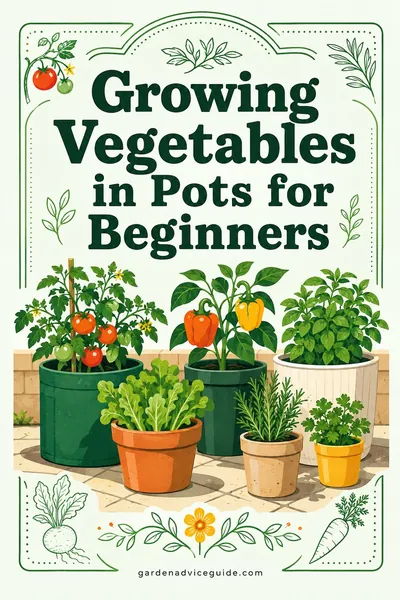
Related reading: growing vegetables in pots for beginners · companion planting chart · what to plant in September
Updated August 2026
A note on numbers. This page gives you pot sizes, spacings, watering intervals and mix volumes, not dollar figures. Pots, potting mix and herb plants are priced by your region, your supplier and the season, and we do not set any of it. Work out what you need here, then price the list at a local garden center.