How to Grow Holly Bushes and Trees: Planting, Size, Growth Rate and Berries

To grow holly, plant it in fall or early spring in well-drained, slightly acidic soil, in full sun to part shade, and water it about an inch a week through the first year. The catch most people miss is that nearly all hollies are either male or female. Only females make berries, and only when a male of a matching kind blooms within about 50 feet. Pick a holly that suits your zone and your space, plant a male nearby, and it will give you glossy green leaves and red berries for decades.
Hollies come in every size, from 3-foot shrubs that make a neat hedge to 30-foot trees. Most grow slowly, so the choice you make on planting day matters for a long time. This guide walks through choosing, planting, getting berries, pruning for Christmas sprigs and fixing the usual problems.
Key facts
- Best planting times: early spring, or fall about six weeks before the ground freezes.
- Soil: well drained and slightly acidic, about pH 5 to 6.5.
- Berries need a female plant plus a matching male within about 50 feet.
- Most hollies grow about 6 to 12 inches a year once settled.
- The ASPCA lists holly as toxic to cats and dogs.
The Holly Picker by Zone below has two choices. Pick your zone (Zone 3 or 4, Zone 5 or 6, Zone 7, or Zone 8 or 9) and the space you have: a small spot under 6 feet wide, a medium spot 6 to 10 feet wide, or a large spot with room for a 15 to 25 foot tree. You get a holly to plant, its mature size and the male you need for berries.
Garden Advice Guide · free calculator
Holly Picker by Zone: The Right Holly for Your Space
Pick your zone and how much room you have. You get the holly to plant, its mature size, and the male you need for berries.
Need more? Open the free Frost Dates.
 Planting Zones
 Plant Spacing Calculator
 Planting Calendar
Quick reference: hollies by zone and size
| Holly | Zones | Typical mature size | Berries |
|---|---|---|---|
| American holly | 5 to 9 | 15 to 30 ft tall, 10 to 20 ft wide | Red |
| Blue holly (Meserve hybrids) | 5 to 8 (some to 4) | 8 to 15 ft tall, 6 to 10 ft wide | Red |
| Nellie R. Stevens | 6 to 9 | 15 to 25 ft tall, 8 to 12 ft wide | Red |
| English holly | 7 to 9 (some to 6) | 15 to 30 ft or more | Red |
| Burford (Chinese) holly | 7 to 9 | 10 to 20 ft; dwarf 6 to 8 ft | Red |
| Yaupon holly | 7 to 10 | 10 to 20 ft; dwarf 3 to 5 ft | Red |
| Japanese holly | 6 to 8 (some to 5) | 3 to 10 ft | Black |
| Inkberry | 5 to 9 (some to 4) | 3 to 8 ft | Black |
| Winterberry | 3 to 9 | 3 to 12 ft | Bright red |
Male and female holly: the key to berries
This is where most holly disappointment starts. Holly flowers are small and white and open in spring. On a male plant they carry pollen-covered stamens; on a female plant each flower has a small green bump in the center that becomes the berry. Bees carry the pollen from male to female, so both plants must bloom at the same time and be reasonably close. Within about 50 feet is a good target, and a male in a neighbor's yard counts.
Match the kind. An American holly female needs an American holly male, and a blue holly female needs a blue holly male. Nurseries often sell pairs with matching names, such as 'Blue Princess' with 'Blue Prince'. One male can usually pollinate several females, and a common rule is one male for every three to five. Since he never has berries, tuck him at the back of a bed or around a corner where he still does his job.
Short on room for two plants? Burford holly sets berries without a male, and Nellie R. Stevens makes some on its own, though more with a partner nearby. Those two are the easy answer for a small yard in zones 7 to 9.
How to plant a holly bush
Timing comes first. Fall planting, about six weeks before the ground freezes, gives roots time to settle while the soil is still warm. Early spring works just as well. Avoid planting in summer heat, when a new holly loses water faster than its small root ball can take it up. Check your first frost date to work out a fall window; in zone 6 with a first frost around mid October, late August to late September is about right.
Pick a spot in full sun to part shade, since more sun means more berries, and in cold zones shelter it from harsh winter wind. Dig a hole two to three times as wide as the root ball and just as deep. Set the plant so the top of the root ball sits level with the ground or slightly higher, backfill with the soil you dug out, firm it gently and water slowly and deeply. Finish with 2 to 3 inches of mulch over the root area, kept a few inches off the trunk.
A simple test before planting tells you whether the soil is acidic enough; our guide on how to test garden soil explains the home kits and lab options. Shredded bark or pine needles both make good mulch for hollies, and our mulch guide covers depth and what to avoid.
Planting a holly tree
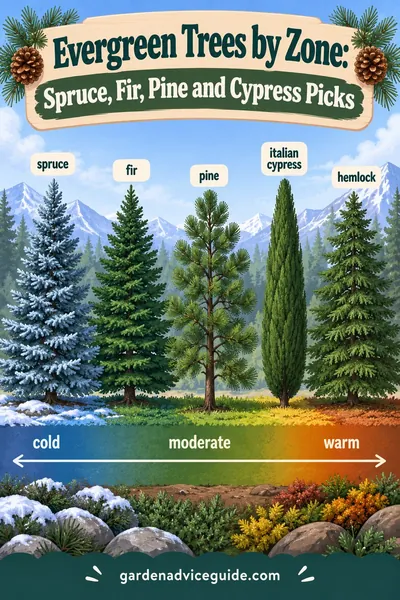
Tree hollies go in the same way, but they need room; our guide to evergreen trees by zone compares them with other evergreens. Plant them at least 10 to 15 feet from the house and from each other, and well away from power lines. For a balled-and-burlapped tree, loosen the burlap and fold it down into the hole, and cut away any wire or twine. Staking is rarely needed unless the site is very windy.
Watering the first year: a worked example
A new holly needs about an inch of water a week, from rain or the hose, for its whole first year, and more in hot or dry spells. Here's what that looks like. Say you plant a 3-gallon blue holly in zone 6 in mid September. For the first two weeks, water every two to three days so the root ball never dries. After that, give it a slow, deep soak once a week, about 3 to 5 gallons, whenever a week passes without an inch of rain. Keep going until the ground freezes in late November or December.
That fall watering matters more than people think. Evergreens keep losing water through their leaves all winter, and a holly that goes into winter dry is the one that browns by March. The next spring, pick the routine back up and continue through the summer. By the second and third year, it only needs water in long dry spells.
How big and how fast holly grows
Size depends almost entirely on the kind, as the table above shows. Always plan for the mature width, not the size in the pot. A holly planted 3 feet from the house that wants to be 12 feet wide will be a pruning chore forever.
Most hollies grow slowly to moderately, about 6 to 12 inches a year once settled. American holly is one of the slowest. Nellie R. Stevens is one of the fastest and can put on a foot or two a year in good conditions, which is why it is popular as a privacy screen. In the first year, expect almost no top growth while the plant builds roots. You'll see more from the second or third spring on.
Pruning, and cutting sprigs for Christmas
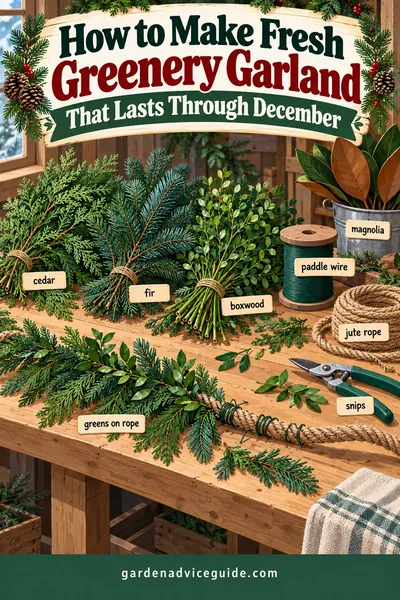
December is the perfect time for light shaping, because you get to use the clippings. Cut sprigs for wreaths and mantels evenly from all around the plant rather than stripping one side. Cut just above a leaf or a side branch so the plant fills in neatly. Holly sprigs last well in a fresh greenery garland, and the red berries look lovely next to a dried orange garland.
Save heavier pruning for late winter, before new growth starts. Avoid shearing a female hard in spring, because that cuts off the flowers that would have become this year's berries. Wear thick gloves and long sleeves. Those spines are no joke, and dry fallen leaves stay prickly for months.
Feeding and care through the seasons
In spring, feed lightly with a fertilizer made for acid-loving plants only if growth is slow or leaves look pale. In summer, water deeply during dry spells for the first two or three years. In fall, water well before the ground freezes and top up the mulch.
In winter, cold, dry wind can scorch broadleaf evergreens, browning the leaves on the windward side. In exposed spots in zones 5 and 6, a burlap screen on that side helps; our guide on when to wrap shrubs in burlap has the timing.
Problems: no berries, yellow leaves and leaf drop
No berries is the top complaint. Check the spring flowers first: if they all have pollen-covered stamens, you have a male. Other causes are no matching male nearby, a male that blooms at a different time, a young plant that needs a few more years, too much shade, a late frost that killed the flowers, or heavy spring pruning. Robins and cedar waxwings also strip berries in late winter, which is a happy problem.
Yellow leaves with green veins usually mean the soil is too alkaline, so the plant can't take up iron. Test the pH and, if it is above about 7, work in garden sulfur following the package rate and use an acid-loving plant food. Yellow leaves all over on a wet site point to poor drainage instead. For spots, scale or leaf miners, ask your local cooperative extension office.
Regional notes: cold north and hot south
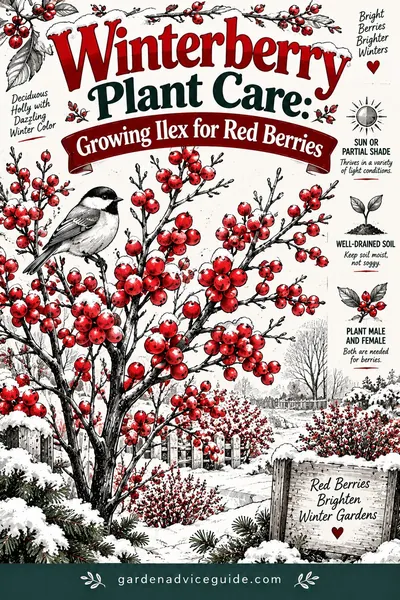
In zones 3 and 4, most evergreen hollies struggle, and winterberry is the red-berry holly that thrives. It loses its leaves in fall, so the berries shine on bare stems all winter. Our winterberry care guide covers varieties and their matching males. Some blue hollies survive zone 4 in a sheltered spot. Not sure where you stand? Our growing zone finder tells you from your ZIP code.
In zones 8 and 9, heat and summer drought matter more than cold. Yaupon holly, Burford holly and Nellie R. Stevens all handle southern heat well, and yaupon takes dry spells better than most. Give any holly afternoon shade in the hottest areas and water deeply through the first two summers. In the Pacific Northwest, skip English holly, which spreads into forests there.
Deer, birds and wildlife
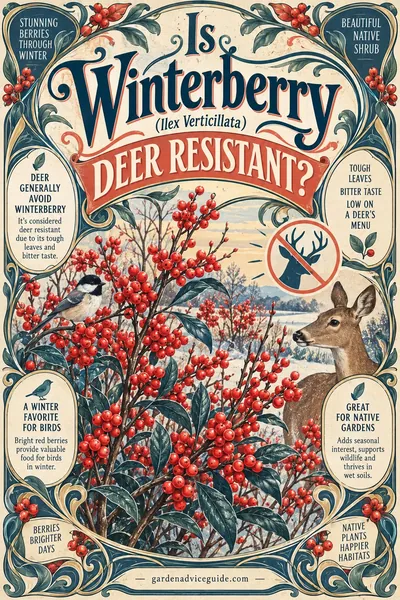
Spiny-leaved hollies are among the evergreens deer usually leave alone once established, though hungry deer will try almost anything in a hard winter, and young plants are always at more risk. Our list of deer-resistant evergreens has more choices, and shrubs by zone helps you pair holly with other plants that suit your winters. Birds love holly. The dense branches make winter shelter, and the berries feed robins, bluebirds and cedar waxwings late in the season.
Is holly safe for kids and pets?
The ASPCA lists holly as toxic to cats and dogs, and the berries aren't safe for children to eat either. Plant holly away from play areas where little ones might pick up fallen berries, and keep holly decorations indoors up high. If a pet eats some, call your vet or the ASPCA Animal Poison Control Center. For the rest of your garden planning by zone, explore the free frost date and zone tools.
Quick answers about growing holly
When is the best time to plant holly?
Fall, about six weeks before the ground freezes, or early spring once the soil can be worked. Both give roots time to settle before hot weather. Avoid planting in the heat of summer, when a new plant loses water faster than its roots can replace it. Water about an inch a week through the first year.
Do you need a male and female holly to get berries?
For most hollies, yes. Only females make berries, and they need a male of a matching kind that blooms at the same time, ideally within about 50 feet. One male can serve three to five females. Burford holly is the main exception and berries on its own, and Nellie R. Stevens sets some fruit alone.
How can I tell if my holly is male or female?
Look closely at the small white flowers in spring. Male flowers have four stamens tipped with yellow pollen. Female flowers have a small, green, rounded bump in the center, which becomes the berry. A holly that has never had berries after several years in a sunny spot is very likely a male.
How big do holly bushes get?
It depends on the kind. Japanese holly, inkberry and dwarf yaupon stay about 3 to 8 feet. Blue hollies reach about 8 to 15 feet. American, English and Nellie R. Stevens grow 15 to 30 feet in most gardens. Read the plant tag for the variety's mature width as well as its height.
How fast does holly grow?
Most hollies add about 6 to 12 inches a year once established. American holly is one of the slowest, and Nellie R. Stevens one of the fastest, sometimes a foot or two a year. Expect little top growth in the first year while the plant grows roots, then steadier growth from the second spring.
Why are my holly leaves turning yellow?
Yellow leaves with green veins usually mean soil that is too alkaline. Test the pH and lower it with garden sulfur if it is above about 7. A few yellow leaves dropping in spring is normal as new growth replaces them. Yellowing all over on soggy ground points to poor drainage.
Which holly grows best in cold zones?
Winterberry is the best red-berry holly for zones 3 and 4. It is hardy to about zone 3, drops its leaves in fall and covers its bare stems with bright berries. Blue hollies are the hardiest evergreen choice, to about zone 5 and some to zone 4 in a sheltered spot.