Succession Planting

Succession planting means a steady harvest instead of a glut. Instead of sowing a whole packet of lettuce on one April Saturday and then facing 30 heads in the same week, you spread the sowings out so something is ready every week from spring to frost. There are four distinct methods, and most gardeners only know one of them.
The one everybody knows is sowing the same crop every two weeks. The other three, replacing a finished crop with a new one in the same space, planting different varieties together so they mature at different times, and slipping a fast crop between the rows of a slow one, are where the real gains sit. Used together, they can roughly double what a small garden produces in a season without adding a single square foot.
Want your sowing dates laid out by month? Build your schedule with our free planting calendar.
The Four Succession Planting Methods
Each solves a different problem. Read them as a set, then pick which ones your garden needs.
| Method | What it does | Best for |
|---|---|---|
| 1. Same crop, staggered by time | Spreads one crop's harvest across weeks | Lettuce, radish, beans, cilantro, corn |
| 2. Different crops in the same space | Uses one bed 2 or 3 times in a season | Any bed, the biggest yield gain |
| 3. Different varieties planted together | One sowing, staggered maturity | Sweet corn, potatoes, tomatoes, cabbage |
| 4. Fast crop between a slow one | Harvests the gap before the slow crop fills it | Brassicas, tomatoes, squash, parsnips |
Method 1: The Same Crop, Sown in Stages
This is the classic version. Sow a short row now, another in two weeks, another two weeks after that.
The logic is that most fast crops have a narrow window where they are at their best. Leaf lettuce is good for about 10 to 14 days before it gets bitter or bolts. Radishes go pithy and hot within a week of hitting size. A bush bean planting sets nearly all of its pods in a 2 to 3 week burst and then quits.
So one sowing gives you a glut and then nothing. Four small sowings, spaced two weeks apart, give you eight weeks of picking from the same total amount of seed.
How to size each sowing. Ask how much your household eats in the interval. If you eat two heads of lettuce a week and you sow every two weeks, you need 4 to 5 plants per sowing, not 20. That is it. Most people sow ten times what they can use because a row looks empty.
Adjust for the season. Intervals are calendar based, but growth is not. A lettuce sowing in April takes 60 days to reach picking size, and the same variety sown in June takes 45 days because it is warmer and the days are longer. In late summer, growth slows again. The practical fix is to sow the next round when the previous sowing has germinated and is up with true leaves, rather than by a rigid date.
Where this method stops working. Heat and daylength put a ceiling on it. Lettuce and spinach sown in mid summer bolt no matter how carefully you staggered the dates, so most gardens run spring successions, take a break, then restart in late summer for fall.
Method 2: Different Crops in the Same Space Through the Season
This is the method with the biggest payoff, and the one most home gardens ignore.
A bed that grows one crop from May to September is working at maybe 40 percent of its potential. The same bed can grow spring spinach, then summer beans, then a fall planting of greens, and produce three harvests from the same soil.
The principle is simple: the moment a crop is finished, something else goes in. Not next month. That week.
How to make it work:
- Have the next crop ready before the bed is empty. Start transplants 3 to 4 weeks ahead in cells so they go in the day the bed clears. A bed sitting empty for three weeks in July is three weeks of season gone. Our seed starting guide covers the transplant timing.
- Cut, do not pull. Clip finished plants at the soil line and leave the roots. Faster to clear, and the root channels stay open.
- Top up fertility between crops. Three successive crops draw down nutrients that one crop would not. Add half an inch to an inch of compost between plantings, and a nitrogen side dressing before a heavy feeder.
- Match the sequence to the calendar. Cool, warm, cool is the natural pattern in most of the country: spring greens and peas, then summer fruiting crops or beans, then fall greens and roots.
Some sequences that work well in a zone 5 to 7 garden:
| Spring crop | Cleared by | Summer crop | Cleared by | Fall crop |
|---|---|---|---|---|
| Spinach | Late May | Bush beans | Mid August | Arugula and lettuce |
| Peas | Late June | Carrots | Late October | Overwinter under mulch |
| Radish and lettuce | Early June | Cucumbers on a trellis | Early September | Spinach to overwinter |
| Onion sets | Early August | Nothing, direct to fall | Kale and turnips | |
| Early potatoes | Mid July | Fall brassicas | Late November | Garlic |
Method 3: Different Varieties, Different Maturity Dates, Planted Together
Instead of spreading sowings across the calendar, spread the maturity dates across one sowing.
You plant everything on the same day, but you choose an early, a mid, and a late variety. They come in three weeks apart on their own. One planting session, one watering schedule, one weeding job, and a staggered harvest anyway.
This is the right method whenever repeated sowing is impractical:
- Sweet corn. Corn needs a block for wind pollination, and small staggered sowings pollinate poorly and cross badly between types. Planting an early variety at about 65 days, a mid at 78, and a late at 88 in three blocks on the same day gives you a month of corn without the pollination problems.
- Potatoes. First earlies, second earlies, and maincrop planted together yield new potatoes in July and storage potatoes in September.
- Tomatoes. An early variety at 55 to 60 days alongside a main season one at 75 to 85 gets you a first ripe tomato weeks sooner without giving up the big harvest.
- Cabbage and broccoli. Pairing an early variety with a storage type spreads the cutting over a month, which matters a lot for cabbage because heads split if they sit ready in the ground too long.
- Peas and beans. Combining a short determinate bush type with a pole type gives a quick burst followed by a long steady run.
The catch is that you have to actually check the days to maturity on the packet and buy deliberately. Two varieties described as "early" often differ by only 3 days, which is not a succession.
Method 4: Intercropping a Fast Crop Between a Slow One
A cabbage transplant set at 18 inches occupies about 3 square inches of ground on day one, and it needs eight weeks to fill that spacing. The soil in between grows weeds in the meantime, or it grows you a crop.
Intercropping, sometimes called relay planting, puts a fast crop into the gap and harvests it before the slow crop needs the room.
Reliable pairings:
| Slow crop | Fast crop between | Fast crop out by |
|---|---|---|
| Cabbage, broccoli, cauliflower | Radish, arugula, baby lettuce | Week 5 to 6 |
| Tomatoes | Lettuce, spinach, radish | Before the plants shade the row |
| Winter squash and pumpkins | Radish, bush beans, early lettuce | Before the vines run, roughly week 5 |
| Parsnips, which germinate slowly | Radish sown in the same furrow | Marks the row, out in 25 days |
| Sweet corn | Bush beans, then a squash underplanting | Beans by tasseling |
| Garlic planted in fall | Spring lettuce between the rows | Before scapes form |
| Peppers and eggplant | Cilantro, arugula | By early July |
Two rules keep intercropping from backfiring. The fast crop must be genuinely out before the slow crop needs the space and light, not "about the same time." And you have to allow for the extra water and nutrients two crops draw from the same square foot, which usually means a little more compost and slightly more frequent watering. Our plant spacing calculator helps you check whether there is actually room for the interplant, and the square foot gardening approach makes the arithmetic easier in small beds.
The classic radish and parsnip pairing deserves a mention on its own. Parsnip seed can take 3 weeks to appear, which makes weeding the row nearly impossible without disturbing the seedlings. Radish sown in the same furrow comes up in 4 days, marks the line so you can hoe confidently, and is pulled long before the parsnips need room.
Sowing Intervals by Crop
Not every crop rewards repeated sowing. Some produce for months from a single planting, and sowing those every two weeks just wastes seed and space.
| Crop | Sow every | Sowings per season | Notes |
|---|---|---|---|
| Radish | 10 days | 6 to 10 | Goes pithy fast, small sowings only |
| Leaf lettuce | 10 to 14 days | 6 to 8 | Pause in high summer heat |
| Arugula | 14 days | 5 to 7 | Bolts fast in heat, best spring and fall |
| Cilantro | 14 days | 5 to 6 | Bolts within weeks, worth the frequency |
| Spinach | 14 to 21 days | 3 to 4 | Cool seasons only, will not run through summer |
| Bush beans | 14 days | 2 to 4 | Concentrated set, this is the classic case |
| Baby turnips | 14 to 21 days | 3 to 4 | Woody past golf ball size |
| Beets | 21 days | 3 | Holds in ground well, so wide intervals |
| Carrots | 21 to 28 days | 3 to 4 | Holds in ground for months in fall |
| Sweet corn | 14 days, or use varieties | 2 to 3 | Method 3 is usually better |
| Dill | 21 days | 3 | Bolts, but self seeds readily |
| Cucumbers | 30 to 40 days | 2 | Second sowing insures against mildew |
| Zucchini | 30 to 45 days | 2 | Second plant covers borer and mildew losses |
| Peas | 10 to 14 days | 2 to 3 | Only worth it in a long cool spring |
| Kohlrabi | 21 days | 3 | Woody if oversized |
Crops that do not reward succession sowing, and why:
- Tomatoes, peppers, eggplant. Indeterminate types produce continuously for months from one planting. A second sowing will not ripen in time in most zones.
- Pole beans. They keep producing for 8 to 10 weeks if you pick regularly. One planting is enough.
- Onions and garlic. Bulbing is triggered by daylength, not by planting date, so late sowings simply make small bulbs.
- Winter squash, pumpkins, parsnips, leeks, Brussels sprouts. All long-season crops that need the entire year. There is only one window.
- Perennials like asparagus and rhubarb. Obviously, but people ask.
Counting Backward From First Frost for the Last Sowing
The most common succession mistake is a late sowing that never matures. Here is the arithmetic that prevents it.
Last safe sowing date = first frost date minus (days to maturity + fall factor + harvest window)
Two of those terms need explaining.
The fall factor is an adjustment for shortening days. Days to maturity numbers on seed packets are based on spring and summer growth, when daylength is increasing. From August onward daylength shrinks by roughly 2 to 3 minutes a day in most of the US, light intensity falls, and soil cools. A crop that takes 55 days sown in June can take 70 sown in mid August. Add 14 days for sowings made in August, and about 20 days for sowings in September.
The harvest window is how long you want to be picking. For a cut-once crop like a head of lettuce, add nothing. For beans you want to pick for two weeks, add 14 days.
Frost tolerance changes the target date. Tender crops like beans and cucumbers must finish before the first light frost. Hardy crops like spinach, kale, and carrots can be counted to the first hard freeze instead, which is often 3 to 5 weeks later, and many hold in the ground well past it under a row cover.
Worked example: the last bean sowing in zone 6
Take a garden with an average first frost of October 20. The crop is a bush bean at 55 days to maturity, and you want two weeks of picking.
- Days to maturity: 55
- Fall factor for an August sowing: 14
- Harvest window: 14
- Total: 83 days
October 20 minus 83 days is July 29. So the last worthwhile bean sowing in that garden is the end of July. Sow on August 15 and the plants will be flowering when frost arrives.
The same math for a hardy crop
Spinach at 40 days to maturity, in the same garden.
Spinach shrugs off frost and keeps going down to about 20F under a light cover, so count to the first hard freeze around November 10 rather than October 20.
- Days to maturity: 40
- Fall factor for a September sowing: 20
- Harvest window: 0, because you cut leaves as they come
- Total: 60 days
November 10 minus 60 days is September 11. Even a sowing two weeks later than that will produce, it will just be smaller plants that sit through winter and take off in February. That is the trick behind overwintered spinach.
Your own dates depend entirely on your location, so pull your real frost dates from the frost dates tool rather than a zone map, and check maturity windows for each crop with the when to harvest tool. Frost tables come from 30-year station averages spread across a wide area, and elevation, slope, and nearby water can shift your real first frost by a week or two.
Bed Planning and Record Keeping
Succession planting fails for one boring reason more than any other: the next sowing does not happen. Someone means to sow lettuce on May 3, gets busy, and sows it on May 24, and the chain breaks.
A system fixes this in about ten minutes a year.
Put every sowing date in a calendar with an alarm. Not a list, a calendar with reminders. Sit down in February, work out the dates for the season using the intervals table above, and enter them all at once. That is the single highest value hour you will spend on the garden.
Keep a bed map with dates. Draw the beds, number them, and write what is in each section and when it will clear. You need to know that bed 3 comes free around June 20 so you can start the transplants for it around May 25.
Log four things per sowing: date sown, variety, date of first harvest, and one sentence on how it went. After one season you have real days-to-maturity numbers for your own garden, which are better than any packet.
Track what you actually ate. Most gardens overproduce two or three crops and underproduce the ones the household really uses. The log tells you to cut the zucchini to one plant and double the lettuce sowings.
Start transplants on the same reminder system. Half of succession planting is having a tray of seedlings ready at the exact moment a bed clears.
Keep a small reserve of seed for late gaps. Fast crops like radish, arugula, and baby lettuce can fill any hole that appears in August or September. Our month list of what to plant in August sorts those late sowings by zone.
How Succession Planting Interacts With Crop Rotation
Fast turnover complicates rotation, and this is the part most guides skip.
Standard rotation says keep a plant family out of the same bed for 3 to 4 years, which controls soilborne disease and balances nutrient draw. Succession planting means each bed grows two or three crops a year, so a strict bed-by-bed rotation gets hard to track fast.
A few practical rules keep it workable.
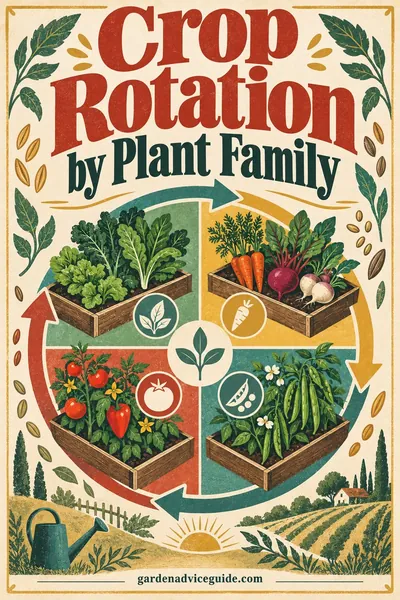
Rotate by family, not by crop. Radish, arugula, turnip, kale, cabbage, broccoli, and mustard are all brassicas. Following spring radishes with fall kale in the same bed is a brassica after a brassica, even though they look like different crops. That matters most in gardens with clubroot, where the rule tightens to 7 years. Our crop rotation guide has the family groupings.
Track the sequence, not just the season. Write the full year for each bed, all three crops, in your records. When you plan next year, look at the whole line rather than the main crop.
Use the natural cool, warm, cool rhythm to your advantage. Spring greens or peas, then a summer fruiting crop or beans, then fall roots or greens, will usually put three different families in a bed by default.
Do not stack heavy feeders back to back without adding fertility between them. Brassicas following brassicas following brassicas will strip a bed even if disease never shows up.
Accept some imprecision in a small garden. In four beds you cannot run a perfect 4-year rotation on three crops per bed per year. Prioritize the families where rotation matters most, which are brassicas, alliums, and nightshades, and be relaxed about lettuce and beans.
Slot in a cover crop when the sequence stalls. If a bed has nothing appropriate to follow with, sow oats, buckwheat, or crimson clover for six weeks. Buckwheat in particular goes from seed to flower in about 30 days and fits neatly into a summer gap.
Worked Example: One 4x8 Bed From Spring to Frost
Here is a single 4 by 8 foot bed, 32 square feet, in zone 6, with a last spring frost around May 5 and a first fall frost around October 20. The bed is divided into four 2 by 4 foot sections, A through D. Every method above appears at least once.
| Section | Sown or planted | Crop | Cleared | Next |
|---|---|---|---|---|
| A | Mar 20 | Spinach, under a row cover | May 25 | Bush beans |
| A | May 28 | Bush beans, 55 days | Aug 5 | Kale transplants |
| A | Aug 8 | Kale, from transplants | Holds to December | Done |
| B | Apr 1 | Peas, 60 days | Jun 25 | Carrots |
| B | Jun 28 | Carrots, 70 days | Lift through December under mulch | Done |
| C | Apr 5, 19, May 3, 17 | Leaf lettuce, 4 staggered sowings | Jun 15 | Cucumbers |
| C | Jun 5 | Cucumbers on a trellis at the north edge | Sep 8 | Spinach |
| C | Sep 11 | Spinach, overwintered | Cut Nov, then March | Done |
| D | Mar 25 and Apr 5 | Radish, 2 sowings | May 5 | Cabbage |
| D | May 8 | Cabbage, early and storage varieties together | Jul 20 and Aug 25 | Arugula and turnips |
| D | Aug 28 | Arugula and baby turnips | Holds to November | Done |
Where each method shows up. Section C uses method 1 with four staggered lettuce sowings. Every section uses method 2, growing 3 crops in a season. Section D uses method 3 with an early and a storage cabbage planted on the same day, spreading the cutting by five weeks. And radishes were interplanted between the cabbages in D during May, which is method 4.
The arithmetic that sets the deadlines. The August 8 kale planting: kale is 55 days, add a 14 day fall factor, and that is 69 days from August 8, so first cutting around October 16, with the plants then holding through repeated frosts. The September 11 spinach follows the calculation from the previous section exactly.
What the bed produces. Roughly 4 lb of spring spinach, 6 lb of peas in pod, 20 heads of lettuce spread across eight weeks, 12 lb of beans, 15 lb of carrots, 4 cabbages totaling about 14 lb, 25 lb of cucumbers, plus fall kale, arugula, turnips, and overwintered spinach. From 32 square feet. A single-planting version of the same bed would produce a fraction of that.
What it costs you. About 45 minutes of planning in February, seven sowing sessions instead of two, and roughly 2 cubic feet of compost added between crops. Nothing else.
Run your own frost dates and crop list through the planting calendar and the when to plant tool and the same structure builds itself around your season.
FAQ
What is succession planting in simple terms?
It is any technique that spreads a garden's harvest out over time instead of concentrating it in one week. That includes sowing the same crop in small batches every couple of weeks, replanting a bed as soon as a crop finishes, planting early and late varieties together, and slipping a quick crop between the rows of a slow one. The goal is a steady supply rather than a glut followed by an empty bed.
How often should I sow lettuce for a continuous supply?
Every 10 to 14 days, in small amounts sized to what you eat in that period. Four or five plants per sowing feeds most households, so a short row is plenty. Pause during high summer, when heat pushes lettuce to bolt regardless of the sowing date, then restart in late summer for a fall run.
Which vegetables are not worth succession sowing?
Anything that produces continuously or needs the whole season. Tomatoes, peppers, eggplant, and pole beans keep bearing for months from one planting. Onions and garlic bulb according to daylength, so a later sowing just gives smaller bulbs. Winter squash, pumpkins, parsnips, leeks, and Brussels sprouts all need the full season and have only one window.
How do I know the last date I can sow something in fall?
Take your first frost date and subtract the days to maturity, plus a fall factor of about 14 days for August sowings or 20 for September, plus however long you want to keep picking. For a 55 day bean with a two week harvest window in a garden that frosts on October 20, that is 83 days back, so July 29. Hardy crops like spinach and kale can be counted to the first hard freeze instead of the first frost.
What is the fall factor and why does it matter?
It is an adjustment for shortening days and cooling soil in late summer and fall. Seed packet maturity numbers come from spring and summer growth when daylength is increasing, so the same crop takes noticeably longer when sown in August or September. Adding 14 to 20 days to the stated days to maturity is what keeps a late sowing from being caught half grown by frost.
Does succession planting wear out the soil?
Growing three crops in a bed instead of one draws more nutrients, so yes, if you do nothing about it. Add half an inch to an inch of compost between crops, side dress heavy feeders with nitrogen, and slot a cover crop like buckwheat or crimson clover into any six week gap. Done that way, beds under succession planting usually improve rather than decline.
How does succession planting fit with crop rotation?
Rotate by plant family and track the whole year for each bed, not just the main crop. Following spring radishes with fall kale puts a brassica after a brassica even though the crops look unrelated. In a small garden, prioritize keeping brassicas, alliums, and nightshades moving on a 3 to 4 year cycle, and be more relaxed about lettuce and beans.
What is the easiest way to remember all the sowing dates?
Set them all up at once in February. Work out your intervals for the season, enter every sowing date into a calendar with a reminder alarm, and draw a simple bed map showing when each section clears. The chain breaks when a sowing gets forgotten by three weeks, and a calendar with alarms is the cheapest fix in gardening.
Updated September 2026