What to Plant in August

What to plant in August comes down to how many days you have left before frost. In zones 3 and 4, August is the final call for radishes, spinach, arugula, and bok choy, and nothing slow goes in after the middle of the month. In zones 5 and 6, August is the heart of fall planting: kale, lettuce, spinach, turnips, and broccoli transplants all fit, and zone 6 still squeezes in one last row of bush beans on the first of the month. In zones 7 and 8, you can still sow beans, cucumbers, summer squash, carrots, and beets while the fall brassicas go in. In zones 9 through 11, August is a seedling month: fall tomatoes and peppers go out, and the cool-season crops get started in shaded flats for September.
August also has a second job that gardeners overlook. Late summer is the best planting window of the year for bearded iris, Oriental poppies, fall-blooming bulbs, and divided perennials, because warm soil drives root growth while the plant itself is winding down.
Want your exact cutoff dates? Pick your zone and month in our free planting calendar and get a sowing date for every crop on this page.
Updated September 2026
What to plant in August by zone
Start with your row, then check the cutoff table below it, because several crops change from "yes" to "too late" partway through the month.
| Zone | Sow outdoors now | Transplant or start in flats | Flowers and perennials |
|---|---|---|---|
| 3 | Radish, arugula, spinach and mustard (first 10 days), cereal rye cover crop | Kale and bok choy starts, first week only | Divide iris and Oriental poppies, plant fall crocus |
| 4 | Radish, spinach, arugula, bok choy, mustard, turnips for greens, oats and field peas as cover | Kale starts through mid August | Divide iris, poppies, peonies late in the month |
| 5 | Spinach, lettuce, radish, arugula, bok choy, kale (first 10 days), cilantro (to mid August) | Broccoli (first week), kale, collards | Divide peonies and daylilies late August, plant colchicum |
| 6 | Bush beans (August 1), carrots (first 2 days), summer squash and turnips (first week), kale, lettuce, spinach, radish, cilantro | Broccoli (to mid August), cabbage (first days), cauliflower | Container perennials, divided daylilies, iris |
| 7 | Bush beans and cucumbers (first half), summer squash, carrots and beets (first half), turnips, peas (first week), kale, collards | Broccoli, cabbage, collards | Container perennials late August, Madonna lily bulbs |
| 8 | Bush beans, cucumbers, summer squash, southern peas (first week), beets, carrots, turnips, peas (by August 23) | Fall tomatoes and peppers (first half), broccoli and cabbage flats | Start pansy, snapdragon, and calendula seed in flats |
| 9 | Southern peas, bush beans and cucumbers late in the month, summer squash | Fall tomatoes, peppers, eggplant; broccoli, cabbage, lettuce flats in shade | Start cool-season annual seed for October planting |
| 10 to 11 | Okra, southern peas, calabaza, yard-long beans | Tomato, pepper, and eggplant seedlings for September setting out | Hold most planting until the rains ease |
The pattern reverses as you move south. In the north, every week of August takes a crop off the list. In the Deep South, August adds crops to the list for September, and the work is mostly in seed flats rather than in the ground.
If you are catching up from last month, our July planting guide covers the summer sowings that should be growing now, and what to plant in September takes over once this month runs out.
August fall crop cutoffs, counted back from first frost
The dates below use the same fall factor our July guide explains in full: the days to maturity on the seed packet, plus about 14 days because growth slows as daylight shrinks, plus a 10 day harvest window. Tender crops are counted to the average first light frost. Hardy crops are counted to the first hard freeze of about 28°F, which usually arrives about three weeks later.
To keep the table readable, it assumes a typical first frost date for each zone: September 25 in zone 4, October 8 in zone 5, October 15 in zone 6, October 30 in zone 7, and November 15 in zone 8. Your own date can sit two weeks either side of that, so treat these as a starting point and confirm yours in the planting calendar.
| Crop | Days needed | Counted to | Zone 4 | Zone 5 | Zone 6 | Zone 7 | Zone 8 |
|---|---|---|---|---|---|---|---|
| Bush beans | 75 | Light frost | Too late | Too late | Aug 1 | Aug 16 | All month |
| Cucumbers | 75 | Light frost | Too late | Too late | Aug 1 | Aug 16 | All month |
| Summer squash | 70 | Light frost | Too late | Too late | Aug 6 | Aug 21 | All month |
| Beets | 80 | Light frost | Too late | Too late | Too late | Aug 11 | Aug 27 |
| Carrots | 95 | Hard freeze | Too late | Too late | Aug 2 | Aug 17 | All month |
| Peas | 84 | Light frost | Too late | Too late | Too late | Aug 7 | Aug 23 |
| Turnips | 70 | Light frost | Too late | Too late | Aug 6 | Aug 21 | All month |
| Lettuce, leaf | 60 | Light frost | Too late | Aug 9 | Aug 16 | Aug 31 | Wait for September |
| Kale, direct sown | 80 | Hard freeze | Too late | Aug 10 | Aug 17 | All month | All month |
| Kale, transplants | 64 | Hard freeze | Aug 12 | Aug 26 | All month | All month | All month |
| Broccoli, transplants | 85 | Hard freeze | Too late | Aug 5 | Aug 12 | Aug 27 | September |
| Cabbage, transplants | 95 | Hard freeze | Too late | Too late | Aug 2 | Aug 17 | All month |
| Bok choy | 69 | Hard freeze | Aug 7 | Aug 21 | Aug 28 | All month | Wait for September |
| Cilantro | 74 | Hard freeze | Too late | Aug 16 | Aug 23 | All month | Wait for September |
| Spinach | 65 | Hard freeze | Aug 11 | Aug 25 | All month | All month | Wait for September |
| Arugula | 55 | Hard freeze | Aug 21 | All month | All month | All month | Wait for September |
| Radish | 45 | Light frost | Aug 11 | Aug 24 | Aug 31 | All month | All month |
Three things stand out once the dates are laid side by side.
The tender crops close first. Beans, cucumbers, and squash are finished as August options in zone 6 within the first week. If you have an empty bed in zone 6 on August 10, it belongs to kale, lettuce, or spinach, not to one more planting of beans.
Transplants buy you two weeks. Kale from a nursery six-pack fits in zone 4 until August 12, while kale from seed was out of time in July. The same is true of broccoli and cabbage. If you missed the July seed-starting window, buy starts rather than giving up on the crop.
Zone 8 has the opposite problem. The frost clock is generous, but lettuce, spinach, cilantro, and bok choy will not germinate in soil that hot. The "wait for September" entries are about heat, not time.
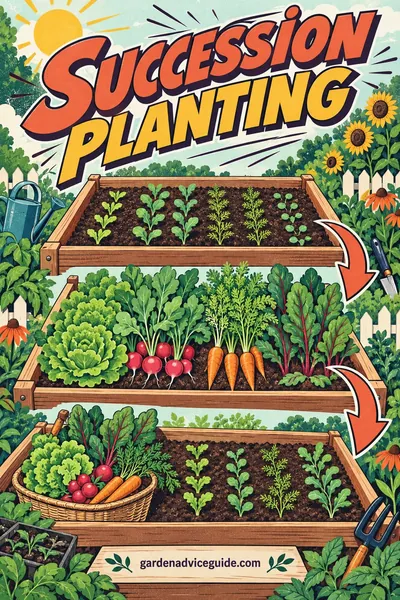
For a steady harvest rather than one big flush, split a crop into two or three smaller sowings spaced 10 to 14 days apart inside the window above. Our guide to succession planting gives the intervals for each crop and shows how to plan a bed so the last sowing lands right on the cutoff.
Sowing into hot August soil
August soil is hotter than July soil in most of the country, even when the air has started to feel cooler at night. Bare ground absorbs heat all summer, and the top two inches of an unshaded bed can sit above 90°F at mid afternoon well into late August. The seed-level fixes are covered in the July guide. What changes in August is the timing, the storms, and the insects.
Read the soil, not the air
Push a soil thermometer 2 inches down at about 8 a.m., which is when soil is coolest. That single reading tells you what the bed will accept today.
| Morning soil temperature at 2 inches | What germinates well | What to do |
|---|---|---|
| Above 80°F | Beans, cucumbers, squash, southern peas, okra | Sow warm-season crops only. Start greens in flats in the shade. |
| 75 to 80°F | Carrots, beets, turnips, kale, radish, broccoli | Sow roots and brassicas with the row shaded for a week. |
| 70 to 75°F | Spinach, lettuce, cilantro, bok choy start to take | Sow greens in the evening into pre-watered furrows. |
| Below 70°F | Everything on the fall list | The ideal range. Sow thickly and thin later. |
In zones 5 and 6, beds usually slip into the 70s during the third week of August. In zones 7 and 8, that shift may not happen until September, which is why the fall greens in the cutoff table move to next month.
Four August-specific adjustments
Water the furrow before you sow, not after. Cut the row, fill it with water twice, let it drain, then sow and cover with dry soil. The seed sits in cool, damp soil under a dry cap that will not crust. Watering from above after sowing is what forms the hard crust that carrot and beet seedlings cannot break.
Plan for thunderstorm crusting. August storms dump an inch of rain in half an hour, then the sun bakes the surface. Lay a strip of burlap or a single sheet of row cover over newly sown carrot and beet rows, and water through it. Pull it off the day sprouts appear.
Cover brassicas the day they go in. Flea beetles, imported cabbageworm, and harlequin bugs are at their yearly peak in August. A fall broccoli seedling set out uncovered can be stripped in a weekend. Lightweight insect netting or row cover sealed at the edges keeps them off until the plants are large enough to shrug off damage.
Transplant greens instead of seeding them in warm zones. In zones 7 and 8, starting lettuce, spinach, and bok choy in a flat on the north side of the house and setting them out after three to four weeks is far more reliable than trying to get seed up outdoors. Our guides to growing lettuce and spinach cover spacing and harvest for the fall crop.
Vegetables worth planting in August, ranked by payoff
Kale. The single best August crop across zones 4 to 7. It tolerates hot-soil germination better than any other green, holds in the garden through hard freezes, and gets sweeter after frost. Our kale growing guide covers the varieties that last longest into winter.
Spinach. An August sowing in zones 4 to 6 gives a fall harvest, and a sowing in the last week of August or early September can overwinter as small plants under straw for an April crop.
Broccoli from transplants. Heads that form in October are tighter and sweeter than June heads, and side shoots keep coming until a hard freeze. The broccoli guide explains how to pick the main head so the side shoots follow.
Turnips and radishes. Fast, forgiving, and a good use of a bed that opens up after garlic or onion harvest. Turnip greens are ready in about 30 days even if the roots never size up.
Lettuce. Loose-leaf and romaine types sown in August bolt far less than spring plantings, because the days are shortening. Sow small amounts every 10 days rather than one large row.
Bush beans and cucumbers, zones 7 and 8. A final August sowing produces through September when the early plantings are exhausted and covered in mildew.
Peas, zones 7 and 8. Sow in the first week in zone 7 and late August in zone 8. Choose short-season snap peas, since fall peas finish in cooling weather and slow down as they go.
Cover crops, zones 3 to 5. In a short-season garden, any bed that will not hold a fall crop should get oats and field peas in early August or cereal rye later in the month. Oats die over winter and leave a clean mulch for spring planting.
Perennials and flowers that establish best from late summer planting
August is an underused planting month for ornamentals. Soil is at its warmest of the year, which drives fast root growth, and many perennials are naturally entering a rest period after bloom, so they can put their energy into roots instead of flowers. The plants below are better planted or divided in August than in spring.
| Plant | Zones | What to do in August | Why late summer works |
|---|---|---|---|
| Bearded iris | 3 to 9 | Lift, divide, and replant rhizomes with the top of the rhizome at the soil surface | Summer is its dormant period, and new roots grow in six weeks |
| Oriental poppy | 3 to 7 | Divide or move while the foliage has died back | Fully dormant now; spring moves often fail |
| Peony | 3 to 8 | Divide late August into September, eyes 1 to 2 inches deep | Roots establish before winter and bloom resumes in 1 to 2 years |
| Daylily | 3 to 9 | Divide late in the month and cut foliage back to 6 inches | Recovers quickly in warm soil |
| Siberian iris | 3 to 8 | Divide crowded clumps late August | Roots establish before the ground freezes |
| Colchicum | 4 to 8 | Plant corms 3 to 4 inches deep | Blooms within weeks, in September and October |
| Fall-blooming crocus | 4 to 8 | Plant corms 3 inches deep | Flowers the same fall |
| Madonna lily | 6 to 9 | Plant bulbs only 1 inch deep | Makes a leaf rosette in fall and overwinters as foliage |
| Container perennials such as coneflower, sedum, aster, and salvia | 4 to 8 | Plant in the last two weeks of August in zones 4 and 5 | Gets six or more weeks of root growth before the ground freezes |
One warning about the fall bulbs. Colchicum is sold as autumn crocus or meadow saffron, and every part of it, corm, leaf, and flower, is severely poisonous. It is not the saffron crocus. Saffron comes from Crocus sativus, a true fall-blooming crocus whose red stigmas are the spice, and the two are alike enough in bloom that people have been poisoned harvesting the wrong one. Plant colchicum where children and dogs do not dig, wear gloves while you handle the corms, wash your hands afterward, and take nothing off it for the kitchen. If you want saffron rather than a flower, buy corms labeled Crocus sativus and nothing else.
A few timing notes by zone. In zones 3 and 4, move divided perennials and new container plants into the ground by the end of August, because the root-growth window closes fast once September nights drop into the 40s. In zones 6 and 7, late August through September works well for nearly everything on the table. In zones 8 and 9, hold container perennials until October, when the heat breaks, but divide iris now.
Water new divisions twice a week for the first three weeks unless it rains, then weekly until the ground freezes. Skip fertilizer on anything planted in August, since it pushes soft top growth that the first freeze will kill. For a longer list of plants that color up the garden in September and October, see our guide to fall flowering perennials.
Annual flowers. In zones 3 to 7, it is too late to sow zinnias and cosmos for bloom this year. Buy transplants of calendula, snapdragon, and sweet alyssum instead, all of which tolerate light frost. In zones 8 and 9, start pansy, viola, snapdragon, and calendula seed in flats now for planting out in October.
What not to plant in August
- Bush beans, cucumbers, and squash in zones 3 to 5. The frost clock ran out in July.
- Brussels sprouts from any start, zones 3 to 7. They need about 120 days from transplanting to harvest, which ended in July.
- Beets and peas in zone 6. Both closed at the end of July. Plant turnips instead of beets and save peas for spring.
- Garlic and tulips. Order now, plant later. See when to plant garlic for the October timing.
- Lettuce and spinach seed outdoors in zones 8 and 9. Too hot to germinate. Start transplants in the shade or wait until September.
- Sweet corn and melons almost everywhere. Only zone 8 and warmer has enough frost-free time, and even there, late-season corn earworm pressure is severe.
- Warm-season lawn seed in the north. Bermuda and zoysia need a full summer to establish.
August garden jobs that make the fall planting work
Seed the cool-season lawn in the right week. Mid August to mid September is the prime window for tall fescue and Kentucky bluegrass in the northern tier. Zones 3 and 4 should aim for the second half of August. The full timing is in when to overseed a lawn in fall.
Clear and replant the same day. Pull finished bean vines, onion and garlic beds, and bolted lettuce, spread half an inch to an inch of compost, and sow the fall crop immediately. An empty bed in August is lost harvest. Our guide on how much compost to add to garden beds converts that depth into cubic feet for a bed your size.
Keep watering the new sowings daily until they are up. A seedbed that dries out once in August heat can lose most of its germination. Once seedlings have two true leaves, switch to deep watering two or three times a week.
Stop fertilizing perennials, shrubs, and roses. Late summer feeding pushes tender growth that does not harden off before frost.
Order fall bulbs and garlic now. The best varieties sell out by early September.
Frequently asked questions
Is it too late to plant a vegetable garden in August?
No, but the list is shorter and depends entirely on your zone. Zones 3 and 4 are down to radishes, arugula, spinach, and kale transplants. Zones 5 and 6 still have lettuce, kale, spinach, turnips, cilantro, and broccoli starts. Zones 7 and 8 can plant beans, cucumbers, squash, carrots, and beets as well as the full fall brassica crop.
What vegetables grow fastest from an August sowing?
Radishes are ready in 25 to 30 days, arugula and baby mustard greens in about 30, and turnip greens in about 30. Baby spinach and leaf lettuce can be cut in 35 to 40 days. All of them handle light frost, so they are the safest August choices in a short-season garden.
Can I plant tomatoes in August?
Only in zones 8 to 10, where August is the normal fall tomato window. Set out transplants in the first half of the month in zone 8 and any time in August in zone 9, using fast determinate varieties. In zones 3 to 7, a tomato planted in August will not ripen before frost.
What flowers can I plant in August?
Bearded iris, Oriental poppies, peonies, and daylilies all divide and replant well in August. Colchicum and fall-blooming crocus corms go in now and flower within weeks. Container perennials such as coneflower, sedum, and aster establish well from late August planting in zones 4 to 8, and calendula, snapdragon, and sweet alyssum transplants give fall color until a hard freeze.
Why did my August seeds not come up?
Almost always it is soil heat or a surface crust. Lettuce, spinach, and cilantro go dormant in soil above about 75 to 80°F, and a thunderstorm followed by strong sun can seal a carrot row shut. Sow in the evening into a pre-watered furrow, cover with dry soil, and shade the row with burlap or a board until sprouts appear.
Can I still plant broccoli in August?
From transplants, yes, in zones 5 through 7. The last safe date runs from about August 5 in zone 5 to late August in zone 7. From seed, it is too late north of zone 8, since the seedlings need five weeks before they are ready to go out. In zones 8 and 9, start broccoli seed in shaded flats now for September planting.
Should I plant a cover crop in August?
In zones 3 to 5, yes, on any bed that will not hold a fall crop. Oats and field peas need about six weeks of growth before frost, so they belong in early to mid August. Cereal rye can go in at the end of August and into fall. In warmer zones, wait until September for cover crops so they do not compete with fall vegetables.
The short version
August is the month when the northern garden closes its planting window and the southern garden opens one. Check the cutoff date for each crop against your own first frost, favor transplants when the seed window has passed, and treat soil temperature as the real limit on getting fall greens up.
Use the last two weeks of the month for iris, poppies, peonies, and fall bulbs, which root better now than in spring. Get your exact dates from our free planting calendar, then spread the fall crops out with succession planting so the harvest runs from September to the first hard freeze.