Square Foot Gardening

Square foot gardening is a spacing system, not a special kind of bed. You divide any raised bed into one-foot squares with a physical grid, then plant a set number of plants in each square based on how big that crop gets: 1, 4, 9, or 16 per square. That's the entire method.
Everything else people attach to it, the 4x4 beds, the specific soil recipe, the wooden grid slats, are recommendations from the book that popularized it. The spacing chart is the part that actually changes your results, and you can apply it to a bed you already own.
Want spacing for a crop that isn't on the chart? Check it with our free plant spacing calculator.
The Plants Per Square Chart
This is the reference most people come here for. Four groups, based on the mature width of the plant. The number tells you how many plants go in one 12 inch by 12 inch square.
| Per square | Equivalent spacing | Crops |
|---|---|---|
| 1 | 12 in apart | Broccoli, cabbage, cauliflower, eggplant, pepper, tomato (caged or staked), okra, rosemary, oregano, sage, potato, zucchini and summer squash (see note), melon and winter squash (see note), sweet potato, artichoke |
| 4 | 6 in apart | Lettuce (head), Swiss chard, kale, collards, garlic, leeks, corn, marigold, basil, parsley, cilantro, dill, mint, cucumber (trellised, 2 per square is safer), strawberry, bush bean (some use 9) |
| 9 | 4 in apart | Bush beans, beets, spinach, arugula, turnips, peas (bush, trellised), garlic (tight), onions from sets (large types), leaf lettuce, Asian greens, pak choi |
| 16 | 3 in apart | Carrots, radishes, green onions, scallions, chives, small beets, mache, cress, spring onions from seed |
A few honest notes on that chart, because the standard version glosses over them.
Squash, melons, and cucumbers do not fit in a square. They're listed at 1 per square out of necessity, but a zucchini plant sprawls to 3 or 4 feet across and will smother the eight squares around it. Melons and winter squash are worse. The workable versions are trellising vertically, or accepting that one plant occupies a 2x2 block of four squares. Cucumbers work genuinely well at 2 per square when trellised.
Corn at 4 per square is technically possible and practically poor. Corn is wind pollinated and needs a block of at least 4 rows by 4 rows to pollinate reliably. A single 4x4 bed at 4 per square gives you 64 stalks, which does pollinate, but corn is also a heavy feeder that will strip a small bed. Most people are better off using the space for something else.
Bush beans appear in two rows above because both work. Nine per square gives you more plants and a denser canopy; four per square gives bigger, easier-to-pick plants with better airflow. In humid climates, go with 4.
Tomatoes at 1 per square only works if you prune and stake. An unpruned indeterminate tomato needs 2 to 3 square feet. A single-stemmed, staked indeterminate genuinely fits in a square. Determinate bush types need more room than one square, so give them 2x2.
Where Square Foot Gardening Genuinely Helps
Small spaces. The method's real gain is eliminating the paths. Conventional row spacing is built around walking between rows and running a hoe or a tiller. If you're gardening on a patio, a rooftop, or a 12 foot strip of yard, you have no reason to grow in rows, and the row-based spacing on the seed packet is wasting between 40 and 60 percent of your ground.
Beginners. This is where the method earns its reputation. The most common beginner mistake is planting far too much in too little space, and the second most common is not knowing where to start. A grid and a number per square removes both problems. You don't have to interpret "thin to 3 inches, rows 18 inches apart" or estimate a mature plant's spread. You count.
Planning. A square foot bed is a spreadsheet you can walk on. You know exactly how many plants you can grow before you buy seed, you know what's coming out and when, and you can hand someone a diagram. That's genuinely useful, and it's the reason people who use the method tend to plant more deliberately than people who don't.
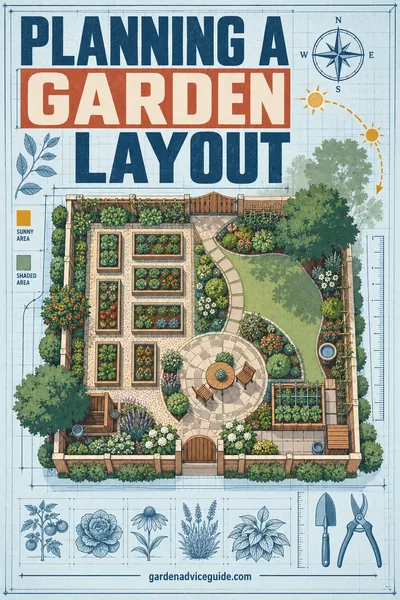
If you're starting your first bed, our vegetable garden for beginners guide covers what to grow first, and the garden layout planning guide covers where to put the beds.
Where the Method Falls Down
Enthusiast sites tend to present the method as strictly better than conventional spacing. It isn't. Here's the honest case against it, or at least against applying it everywhere.
Large sprawling crops break the model. Squash, melons, pumpkins, indeterminate unpruned tomatoes, and full-size determinate potatoes were never going to obey a one-foot grid. The chart handles them by assigning 1 per square and hoping. In practice, growing a winter squash in a 4x4 square foot bed costs you the entire bed for one or two fruits. Sprawling crops belong on the ground with room, or on a serious trellis outside the bed.
Root depth is a real constraint. The classic recommendation is a 6 inch deep bed sitting on the ground or, in some versions, on a weed barrier. Six inches is enough for lettuce, radishes, bush beans, and most greens. It is not enough for carrots beyond stubby varieties, parsnips, full-size potatoes, or a mature tomato root system, which will happily go 3 feet down. If the bed sits on open soil, roots pass through into the ground below and the depth matters much less. If it sits on concrete, a patio, or landscape fabric over compacted ground, 6 inches is the whole root zone, and it limits what you can grow and how often you must water.
Dense planting increases water demand. More plants per square foot means more total leaf area transpiring from the same volume of soil. A packed square foot bed in July can need water daily, where the same crops at conventional spacing might need it twice a week. This surprises people who chose the method partly to save effort. In a hot dry climate, that daily demand is a genuine cost. Our watering guide covers how to measure what you're actually delivering.
Airflow drops, and disease follows. Plants at chart spacing touch and overlap at maturity. That canopy shades the soil, which is good for weeds and moisture, but it also holds humidity around the leaves for hours after rain or overhead watering. Powdery mildew, downy mildew, early blight, and septoria all move faster in still humid air. If you garden somewhere humid, thin the chart numbers by a step for anything mildew-prone.
Say it plainly: some crops do better at conventional spacing. Winter squash, melons, unpruned tomatoes, full-size peppers in humid regions, sweet corn, potatoes for storage, and asparagus all produce more per plant, and often more per square foot, when given the room the seed packet asks for. Square foot spacing is a tool for compact, quick, upright crops. It's not a universal upgrade.
The Soil Mix Question, and What It Really Costs
The classic method calls for a specific blend, usually described as one third compost, one third coarse vermiculite, and one third peat moss or coir, by volume. It's a good mix. It's light, holds water, drains, and has no weed seeds. It's also expensive, and the cost scales badly with depth.
Here's the arithmetic for a 4x4 bed, which is 16 square feet.
| Bed depth | Volume needed | Classic mix | Compost plus topsoil |
|---|---|---|---|
| 6 in | 8 cu ft | Roughly three times the alternative | The baseline |
| 12 in | 16 cu ft | Still about three times, on double the volume | Double the 6 inch fill |
| 18 in | 24 cu ft | Same multiple again, on triple the volume | Triple the 6 inch fill |
The multiple stays roughly constant, which is the point of the table. Depth does not change which mix is cheaper, it changes how much the difference stings, and at 18 inches it stings enough that most people quietly switch.
Vermiculite is the line item that hurts. Coarse horticultural vermiculite costs several times what compost does by volume, and it has climbed steeply in recent years, so a single bag of it can cost more than everything else in a shallow bed put together.
The practical alternatives, roughly in order of how close they come to the original:
- Cut the vermiculite in half and replace it with more compost. You lose some water-holding capacity and gain a denser mix, but at a fraction of the price.
- Compost, topsoil, and a bulking agent in equal parts. Pine bark fines, aged wood chips, or coarse perlite all work as the bulker. This is what most experienced gardeners actually fill deep beds with.
- Fill the bottom half with cheap bulk material and reserve the good mix for the top 6 to 8 inches. Bulk screened topsoil delivered by the yard is dramatically cheaper per cubic foot than bagged anything.
- Buy in bulk, not bags. A cubic yard is 27 cubic feet, which is eighteen of the standard 1.5 cubic foot bags. Priced that way, bagged compost usually works out to somewhere around double or triple the same volume delivered loose, even after the delivery fee. Ask the landscape yard for the price per yard and the delivery charge to your zip code, then divide by 27 and compare it to the shelf price divided by 1.5. That is the whole calculation.
Our raised bed soil guide breaks down mixes and volume math in more detail, and raised bed vs in ground is worth reading before you commit, because if your native soil is decent, an in-ground bed with the same square foot spacing costs almost nothing to fill.
One more honest point: peat moss is the traditional third of the mix, and there's a legitimate environmental argument against harvesting it. Coconut coir substitutes directly at similar cost. Use whichever you prefer, but know the mix works fine either way.
Grid Marking, and Why a Physical Grid Changes Behavior
You could mark the squares with string, or paint lines on the bed frame, or just eyeball twelve inches. The original method insists on a permanent physical grid sitting on top of the soil, and this sounds like fussy detail until you use one.
It changes behavior in three ways.
It stops you overplanting. A square with four lettuce in it is visibly full. Without the grid, "a few more won't hurt" happens every single time, and by June the bed is a mat.
It makes succession obvious. An empty square is a to-do item you see from the back door. A vague gap in an unmarked bed is invisible until the weeds fill it.
It enforces the count. People who plant to a chart without a grid drift. They plant nine spinach in a space that's really 14 inches, then eleven in the next one. The grid is a physical constraint, not a reminder.
Materials that work: 1x1 or 1x2 lath, cut and half-lapped; strips of thin plywood; vinyl blind slats, which are cheap and weatherproof; or 1/2 inch PVC. Anything wider than about 1.5 inches starts shading the plants underneath, so keep it slim. Lay it on the soil surface rather than fixing it to the frame if you want to lift it out for digging.
Succession and Rotation Within Squares
The square is the unit of replanting, and this is where the method quietly outperforms row gardening.
When you pull a square of radishes on day 28, you have a defined, empty, one-foot space. You top it up with an inch of compost, and you replant it that afternoon with something else. There's no waiting for the rest of a row, no half-empty bed, no guessing where the boundary was.
Two rules make this work.
Track what was in each square. A rotation plan is only as good as your memory of what grew where, and square foot beds make this easy to record because everything has coordinates. Write down A1: spinach, A2: carrots, and so on. Our crop rotation guide covers the families to avoid repeating, and the short version is: don't follow a crop with a member of its own family, and follow heavy feeders with legumes or light feeders.
Feed each square as you replant it. A one-foot square that has grown three crops in a season has had a lot pulled out of it. An inch of compost worked into the top few inches at each turnover is the standard practice, and it's the main reason the beds stay productive.
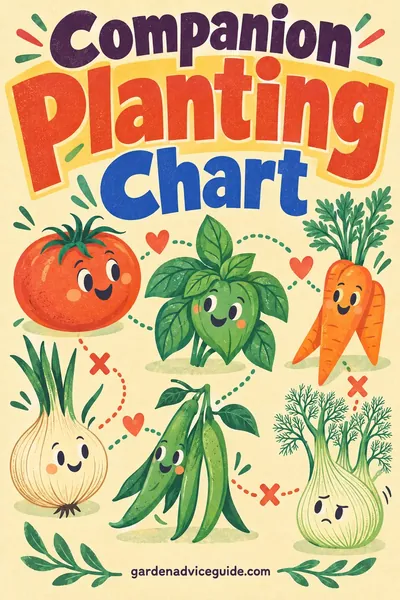
Companion planting fits naturally here, since neighboring squares are 12 inches apart. Basil beside tomatoes, marigolds scattered through the bed, and carrots next to onions are all easy to lay out on a grid. Our companion planting chart has the combinations worth bothering with and the ones that are folklore.
Worked Example: A 4x4 Bed, Square by Square
Sixteen squares, planned for a spring through summer season in a zone 6 garden. Rows are labeled A to D, columns 1 to 4.
| Square | Crop | Plants | Sown or set | Expected yield |
|---|---|---|---|---|
| A1 | Carrots | 16 | Early April | 16 roots, about 1.5 lb |
| A2 | Radishes, then bush beans | 16, then 9 | April, then late May | 16 radishes, then 1.5 lb beans |
| A3 | Spinach, then basil | 9, then 4 | Late March, then June | 1 lb leaves, then steady cutting |
| A4 | Leaf lettuce | 9 | Early April | About 2 lb, cut and come again |
| B1 | Beets | 9 | Early April | 9 roots, about 2.5 lb, plus greens |
| B2 | Swiss chard | 4 | Mid April | 4 to 6 lb over the whole season |
| B3 | Green onions | 16 | April | 16 scallions |
| B4 | Arugula, then cilantro | 9, then 9 | March, then September | Steady cutting both rounds |
| C1 | Bush beans | 9 | Mid May | About 1.5 lb |
| C2 | Bush beans | 9 | Mid May | About 1.5 lb |
| C3 | Pepper | 1 | Late May transplant | 8 to 12 peppers |
| C4 | Pepper | 1 | Late May transplant | 8 to 12 peppers |
| D1 | Tomato, staked and pruned | 1 | Late May transplant | 10 to 15 lb |
| D2 | Tomato, staked and pruned | 1 | Late May transplant | 10 to 15 lb |
| D3 | Cucumber, trellised on the north edge | 2 | Late May | 20 to 30 cucumbers |
| D4 | Marigolds and parsley | 4 | May | Pollinators, plus herb |
Put row D on the north side of the bed so the tall crops don't shade the rest. That's the one layout rule that matters more than the spacing chart.
Total plants in 16 square feet: 129 plants across the season, from a bed you can reach across without stepping in. At conventional row spacing, the same crops would need roughly 80 to 100 square feet including paths.
The honest read on that example: it's a lot of plants in 16 square feet, and in July you'll be watering it every day or close to it. The beans and tomatoes are also going to shade their neighbors more than the diagram suggests. That's the trade the method makes, and for a small garden it's usually a good one.
FAQ
How many plants per square foot in square foot gardening?
One, four, nine, or sixteen, depending on the crop's mature size. Big plants like tomatoes, peppers, broccoli, and cabbage get one per square. Medium plants like lettuce, chard, and basil get four. Beans, beets, and spinach get nine, and small crops like carrots, radishes, and green onions get sixteen.
Do you have to use raised beds for square foot gardening?
No. It's a spacing system, and you can lay a grid on top of good in-ground soil and get the same benefit. Raised beds get recommended alongside it because they define the edges, keep foot traffic out, and let you control the soil, but none of that is the method itself.
How deep should a square foot garden bed be?
Six inches is the classic depth and it works for greens, radishes, bush beans, and short carrots. Go to 12 inches if you want full-size carrots, potatoes, or healthy long-season tomatoes, and treat depth as non-negotiable if the bed sits on concrete or landscape fabric rather than open soil, since roots can't pass through into the ground below.
Is Mel's Mix worth the cost?
It's a good mix, and the vermiculite is what makes it expensive. Filling a 12 inch deep 4x4 bed with the classic blend costs roughly three times what the same volume of compost, topsoil, and a bulking agent like pine bark fines costs, and vermiculite is nearly all of that gap. Halving the vermiculite, or reserving the classic blend for the top 8 inches and filling below it with bulk screened topsoil, gets you most of the benefit for a fraction of the outlay. Price a bag of coarse vermiculite against a bag of compost at your own garden center and the decision usually makes itself.
Does square foot gardening use more water?
Yes. More plants per square foot means more leaf area drawing from the same volume of soil, so a packed bed in midsummer can need water daily where conventional spacing needs it twice a week. Shallow beds make this worse. Mulch between plants and use drip or soaker irrigation rather than overhead watering.
What crops should not be grown in a square foot garden?
Winter squash, pumpkins, melons, sweet corn, and storage potatoes are poor fits, because they either sprawl across many squares or need a block planting to work at all. Unpruned indeterminate tomatoes and asparagus also want more room than the grid gives. Grow those at conventional spacing and save the grid for compact upright crops.
Do I really need a physical grid?
You don't need one, but it changes how you behave, which is the point. A visible grid stops the overplanting almost everyone does without it, makes empty squares obvious so you replant them, and keeps your counts honest across the whole bed. Vinyl blind slats or thin lath cost almost nothing.
How do you rotate crops in a square foot garden?
Track what grew in each square by its coordinates, then avoid putting a crop back where a member of its own family grew last. Because squares are small and turn over several times a season, the simplest workable version is to move each family a bed over each year rather than trying to rotate within a single 4x4. Add an inch of compost to each square every time you replant it.
Updated September 2026
A note on numbers. This page gives you spacings, plants per square, bed depths and soil volumes, not dollar figures. Compost, vermiculite, topsoil and delivery are priced by your region, your supplier and the season, and we do not set any of it. Work out your volume here, then price that volume in bags and in bulk locally.