When to Apply Pre-Emergent Weed Control

The short answer on when to apply pre-emergent weed control: put the spring application down about two weeks before your average last frost, and no later than a week after it. The real trigger is soil temperature, not the calendar. Crabgrass germinates once soil at 2 inches holds around 55°F for several days running, and your pre-emergent barrier has to already be in place and watered in before that happens.
There's a second application most people skip. The fall one goes down roughly 65 to 50 days before your average first fall frost, as soil temperatures fall back through about 70°F, and it targets annual bluegrass and winter weeds.
Get your two dates: enter your zip code in our free lawn care schedule tool and it plots both pre-emergent windows against your own frost dates, with seeding conflicts flagged.
Updated September 2026
Pre-emergent prevents, it does not cure. Once you can see crabgrass in the lawn, the window closed weeks ago and no amount of product fixes it this year. That single fact is why timing matters more here than with any other lawn product.
How pre-emergent actually works
Pre-emergent herbicide doesn't kill weed seeds and it doesn't stop them from sprouting. It forms a thin chemical barrier in the top inch or so of soil. A germinating seed pushes its first root through that layer, absorbs the active ingredient, and the root stops developing. The seedling dies before it ever breaks the surface.
Three consequences fall out of that mechanism, and they explain almost every pre-emergent failure:
- The barrier must exist before germination. Late is useless.
- The barrier is physical and shallow. Anything that disturbs the top inch of soil breaks it: raking, aerating, dethatching, digging out a weed, even a dog wearing a path.
- It cannot tell your grass seed from a crabgrass seed. Both are seeds. Both die.
That last point is where most home lawns go wrong, and it gets its own section below.
When to apply pre-emergent weed control in spring
The spring application is the crabgrass application, and it is the one that matters most on a cool-season lawn. The window opens about 14 days before your average last spring frost and closes about 7 days after it.
Here's how that lands by zone, using the average frost dates behind our frost date tool:
| Zone | Avg last frost | Spring pre-emergent window | Apply near |
|---|---|---|---|
| 3 | May 23 | May 9 to May 30 | May 9 |
| 4 | May 19 | May 5 to May 26 | May 5 |
| 5 | May 7 | Apr 23 to May 14 | Apr 23 |
| 6 | Apr 25 | Apr 11 to May 2 | Apr 11 |
| 7 | Apr 9 | Mar 26 to Apr 16 | Mar 26 |
| 8 | Mar 19 | Mar 5 to Mar 26 | Mar 5 |
| 9 | Feb 9 | Jan 26 to Feb 16 | Jan 26 |
| 10 | Jan 12 | Dec 29 to Jan 19 | Dec 29 |
Apply at the start of the window, not the middle and never the end. The cost of being two weeks early is a few weeks of residual burned off the back end. The cost of being two weeks late is a season of crabgrass.
Those frost dates are regional averages, and a warm March can pull crabgrass germination forward by two weeks in any given year. Which brings us to the number that beats the calendar.
The 55°F soil temperature trigger
Crabgrass seed germinates when soil at 2 inches holds about 55°F for several consecutive days. That's the trigger, and it is the same number whether you garden in Georgia or Michigan.
How to read it yourself:
- Buy a soil thermometer with a 4 to 6 inch probe. A meat thermometer works in a pinch.
- Push it 2 inches into the turf, not into a bare spot or a mulch bed.
- Read it at the same time each morning, around 9 or 10 a.m., which approximates the daily average better than an afternoon reading.
- Take readings in three places: the sunny south-facing strip, the middle of the lawn, and the shaded north side.
- When the sunny strip reads 50 to 52°F, apply. Do not wait for the whole lawn to hit 55°F.
That last step is the one people get wrong. The warm edges of a lawn, along a south-facing driveway or a brick wall, hit 55°F a full one to two weeks before the shaded middle. Crabgrass starts there and spreads. Time your application to the warmest strip and the rest of the lawn is covered by default.
Two natural indicators line up with the same threshold and cost you nothing: forsythia dropping its yellow blooms, and lilac buds swelling and starting to show color. Both track soil warming more honestly than a date on a bag.
Worked example: zone 6, last frost April 25
Your average last frost is April 25, so the tool gives you a spring window of April 11 to May 2. It's April 3 and the weather has been warm.
Step 1: check soil temperature. Sunny strip along the driveway reads 49°F at 9 a.m. Middle of the lawn reads 45°F. Not yet, but close.
Step 2: check the forecast. Ten-day outlook shows highs in the low 70s. That will push the sunny strip past 52°F within about a week.
Step 3: apply April 8. Three days ahead of the calendar window, because the soil is telling you the season is running early. Being early is cheap. Being late is not.
Step 4: water it in. Apply about 0.5 inch of water within 48 hours unless the label says otherwise. The barrier does not exist until the product moves off the granule and into the soil.
Step 5: plan the follow-up. With a product carrying roughly 60 to 90 days of residual, an April 8 application protects into early July. Crabgrass germinates in waves all summer, so a second, lighter application around June 8 (60 days later) covers the summer flush. Check your label for the maximum annual rate before doing this.
Step 6: mark the seeding conflict. With that split application, the last pre-emergent goes down June 8. Most labels require 8 to 16 weeks before seeding, which puts the earliest safe seeding date somewhere between early August and late September. The fall seeding window for zone 6 runs roughly August 11 to September 5. That's tight, and it's exactly the conflict people discover after buying seed.
When to apply fall pre-emergent
The fall application targets a different set of weeds: annual bluegrass (Poa annua), henbit, chickweed, and the winter annuals that germinate in cooling soil and green up in February when everything else is brown.
The trigger is soil temperature falling back through about 70°F, which lands roughly 65 to 50 days before your average first fall frost.
| Zone | Avg first frost | Fall pre-emergent window |
|---|---|---|
| 3 | Sep 13 | Jul 10 to Jul 25 |
| 4 | Sep 22 | Jul 19 to Aug 3 |
| 5 | Oct 3 | Jul 30 to Aug 14 |
| 6 | Oct 15 | Aug 11 to Aug 26 |
| 7 | Oct 29 | Aug 25 to Sep 9 |
| 8 | Nov 14 | Sep 10 to Sep 25 |
| 9 | Dec 8 | Oct 4 to Oct 19 |
| 10 | Dec 21 | Oct 17 to Nov 1 |
Look at where those dates sit. For a cool-season lawn, the fall pre-emergent window lands directly on top of the best seeding window of the entire year. You cannot do both, and this is the single most common self-inflicted lawn mistake there is.
For a warm-season lawn, the fall application is arguably the more valuable of the two. Annual bluegrass is glaringly visible as bright green clumps against dormant brown bermuda or zoysia, in a way it never is in a green summer lawn. The trade-off there is winter overseeding: if you overseed with ryegrass for winter color, that and the fall pre-emergent cannot both happen.
Pre-emergent and grass seed cannot both happen
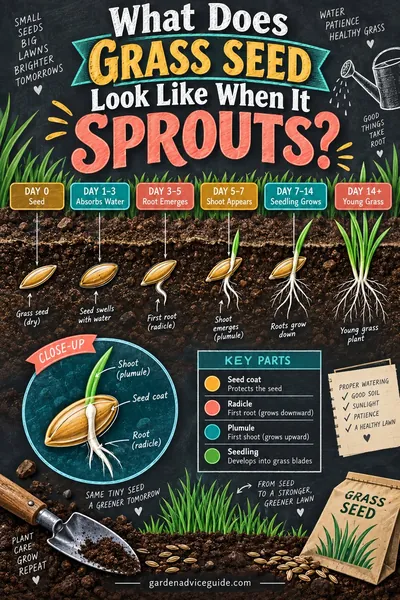
A pre-emergent barrier kills germinating grass seed exactly as efficiently as it kills germinating crabgrass. Seed sown into a treated area sprouts, sends a root into the barrier, and dies. People then conclude they bought bad seed.
| Situation | What to do |
|---|---|
| Seeding this spring | Skip spring pre-emergent. Pull or spot-treat crabgrass instead |
| Seeding this fall | Skip fall pre-emergent. Apply the spring one as normal |
| Not seeding at all | Apply both, spring and fall |
| Small bare patch only | Treat the lawn, hand-seed the patch, accept some crabgrass there |
There are two exceptions worth knowing. Siduron is labeled for use at seeding and controls crabgrass while letting desirable turf seed through. Mesotrione is labeled for application at seeding on several common turf species. Both are real options for a seeding year, and both come with species restrictions on the label. Read it.
If you're seeding, our guides on when to plant grass seed and when to overseed a lawn in fall cover the windows you're protecting.
How long does pre-emergent last?
Residual depends on the active ingredient, the rate you applied, soil temperature, and rainfall. Warm, wet soil breaks products down faster.
| Active ingredient | Typical residual | Notes |
|---|---|---|
| Prodiamine | Longest of the common ones | Rate-dependent. Strictly preventive, no post-emergent action |
| Dithiopyr | Moderate | Also kills crabgrass in the very early tiller stage |
| Pendimethalin | Moderate | Stains concrete and shoes yellow. Sweep hard surfaces |
| Isoxaben | Moderate | Aimed at broadleaf weeds rather than grassy ones |
| Corn gluten meal | Short | Organic option. Weak and needs a very high application rate |
| Siduron | Short | Labeled for use at seeding |
| Mesotrione | Short | Labeled at seeding on several turf species |
Because crabgrass germinates in waves rather than all at once, a split application covers the season better than one heavy pass. Apply roughly half the annual rate at the start of your spring window, then the second half about 6 to 8 weeks later. Never exceed the maximum annual rate printed on the label.
How to apply pre-emergent correctly
- Mow first, and don't bag. A pre-emergent needs to reach the soil, not sit on top of clippings. Mow a day or two ahead.
- Calibrate the spreader. Set it to the label rate for the product, not the last setting you used. Products vary by a factor of three or more in the amount of granules per thousand square feet.
- Apply in two passes at half rate. Walk north to south, then east to west. This eliminates the striping that produces perfect green rows of crabgrass in July.
- Stay off the beds. Most turf pre-emergents are not labeled for vegetable gardens, and they will stop your flower seed from germinating too.
- Water in with about 0.5 inch within 48 hours. Rain counts. Without water, the product sits on the surface and degrades in UV light.
- Then stop disturbing the soil. No raking, no aerating, no dethatching until the residual is spent. Every hole you punch is a hole in the barrier.
Step 6 has a practical consequence: aeration and pre-emergent belong in different seasons. On a cool-season lawn that means fall aeration and spring pre-emergent, which happens to be the right timing for both anyway. Our lawn care schedule lays the whole year out in order.
What pre-emergent does not control
Buying the wrong product for the weed you have is the second most common mistake after mistiming.
- Existing weeds. Anything already growing needs a post-emergent. Dandelions in particular respond best to a fall application, covered in our guide on when to spray dandelions.
- Perennial weeds from roots or rhizomes. Nutsedge, quackgrass, bermuda in a fescue lawn, and creeping charlie all regrow from underground parts and ignore a seed-targeting barrier entirely.
- Most broadleaf weeds. The common crabgrass products are aimed at grassy annuals. Isoxaben covers broadleaf germination, and it's a different product.
- Weeds in mulch or gravel. Different labels, different products. Turf pre-emergent is not automatically labeled for landscape beds.
For everything the barrier misses, our guide on how to get rid of weeds sorts the options by weed type.
Frequently asked questions
What soil temperature is too late for pre-emergent?
Once soil at 2 inches has held 55°F for several consecutive days, crabgrass has begun germinating and the preventive window is closing. You can still apply to catch later germination flushes, but expect some crabgrass. Past about 60°F, switch to a product with early post-emergent activity such as dithiopyr, or plan to spot-treat.
Can I apply pre-emergent and fertilizer at the same time?
Yes, and most "weed and feed" style spring products are exactly that combination. Just make sure the fertilizer timing is right on its own merits. On cool-season grass, heavy spring nitrogen buys top growth at the expense of the roots you'll need in July, so a light spring feed is the goal.
How long after pre-emergent can I seed?
Check the specific label, because the interval scales with the rate you applied. Common intervals run from about 8 weeks to 4 months. Prodiamine at a full rate sits at the long end. If seeding is the plan, the simpler answer is to skip that season's pre-emergent entirely.
Do I need pre-emergent in both spring and fall?
Only if you're not seeding. Spring targets crabgrass and the summer annuals. Fall targets annual bluegrass and winter annuals. On a cool-season lawn, the spring application is the more valuable one, so if you have to choose, keep spring and skip fall. On warm-season turf, fall is the higher-value application.
Does rain wash pre-emergent away?
Rain within 48 hours of application is exactly what you want, since it moves the product into the soil to form the barrier. Heavy rain before it's watered in can move granules on a slope, so avoid applying right before a downpour. Once the barrier has formed and settled, normal rain doesn't wash it out.
Will pre-emergent hurt my established grass or trees?
No. Established turf, trees, and shrubs with developed root systems are unaffected, because the product acts on roots emerging from germinating seed. What it will damage is anything you're trying to grow from seed, in the lawn or in a nearby bed you overspread.
Why did I still get crabgrass after applying?
Four usual causes: applied too late, never watered in, applied unevenly (look for stripes), or the barrier was broken by raking, aerating, or heavy traffic. A fifth possibility is a thin lawn. Crabgrass needs light on soil to germinate, so a dense stand of turf mowed tall is the most durable crabgrass control there is.
Is corn gluten meal a real pre-emergent?
It has genuine but weak pre-emergent activity, and it needs a heavy application rate to do anything measurable. It also carries meaningful nitrogen, so it feeds the lawn at the same time. Treat it as a soil-building product with a side benefit rather than a substitute for a conventional pre-emergent under heavy crabgrass pressure.
The takeaway
Pre-emergent timing is a soil temperature problem dressed up as a calendar problem. Watch the warm strip of your lawn, apply when it reads 50 to 52°F (which lands about two weeks before your average last frost), water in half an inch, and then leave the soil alone. Add a fall application only if you're not seeding.
Get both windows plotted against your own frost dates, with the seeding conflicts flagged, in our free lawn care schedule tool.
Local timing beats any national chart, and your county cooperative extension office publishes a turf calendar for your area and answers questions for free. Start at the USDA Cooperative Extension directory.