How to Get Rid of Weeds

Match the method to the weed's life cycle. Annual weeds are a seed bank problem, so the job is preventing seed set and blocking light at the soil surface. Perennial weeds are a root problem, so the job is exhausting stored energy in the roots by removing top growth again and again. Treating both the same way, usually by pulling whatever is visible whenever you get around to it, is exactly why weeding never ends.
Spend ten minutes identifying what you actually have and the workload drops for years. Chickweed and bindweed look like similar nuisances in a bed. One is beaten by three inches of mulch and a sharp hoe. The other laughs at both.
Working out how much mulch a bed needs? Get the exact volume with our free bed and mulch volume calculator.
Identify First: Annual, Biennial, or Perennial
Three life cycles, three completely different weak points.
Annuals germinate, grow, set seed, and die within one year. Some, called winter annuals, germinate in fall and finish in spring. They have shallow, fibrous roots and no way to survive except through seed. Kill the plant before it flowers and that individual is finished forever.
Biennials spend year one as a low rosette of leaves building a taproot, then bolt, flower, and die in year two. The weak point is the rosette stage, when the taproot is small and the plant has no seed yet.
Perennials live for years. They store energy in taproots, rhizomes, stolons, tubers, or bulbs, and they regrow from those structures after the top is removed. Many also spread from root fragments, so chopping them up multiplies them.
| Weed | Type | What actually works |
|---|---|---|
| Chickweed | Winter annual | Shallow hoeing, mulch, never let it seed |
| Purslane | Summer annual | Hoe in dry weather and remove the debris, since stems reroot |
| Lambsquarters | Summer annual | Hoe young, mulch 3 in, cut before flowering |
| Crabgrass | Summer annual | Mulch, dense planting, cut seed heads before August |
| Annual bluegrass | Winter annual | Mulch and surface cultivation in fall |
| Pigweed, amaranth | Summer annual | Hoe young, remove seed heads, one plant makes 100,000 seeds |
| Shepherd's purse | Winter annual | Hoe young, also hosts clubroot so remove it from brassica beds |
| Bull thistle | Biennial | Sever the taproot 2 in below the crown at the rosette stage |
| Common mullein | Biennial | Dig the rosette in year one, cut the stalk before seed in year two |
| Garlic mustard | Biennial | Pull the whole rosette, bag the seeding plants, never compost them |
| Dandelion | Perennial taproot | Dig the whole taproot, or cut repeatedly to exhaust it |
| Dock | Perennial taproot | Dig deep, fragments below 2 in regrow |
| Bindweed | Perennial rhizome | Repeat cutting for 2 seasons, or occultation, digging spreads it |
| Quackgrass | Perennial rhizome | Occultation or repeat cutting, tilling multiplies it |
| Canada thistle | Perennial rhizome | Repeat cutting every 3 weeks for 2 seasons |
| Ground ivy, creeping charlie | Perennial stolon | Lift the mat by hand, then mulch, improve light and drainage |
| Bramble, blackberry | Perennial crown | Dig the crown out, repeat cut regrowth |
| Horsetail | Perennial deep rhizome | Persistent cutting, improve drainage, expect years |
| Nutsedge | Perennial tuber | Remove tubers, mulch does not stop it, it pierces fabric |
| Japanese knotweed | Perennial rhizome | Do not dig or compost, get professional advice, it is regulated in some states |
If you cannot identify a weed, dig up one plant and look at the root. A thin fibrous mass means annual. A fat taproot means biennial or perennial taproot. White running cords with growth buds along them mean rhizomes, which is the hardest category.
The Seed Bank: Never Let a Weed Set Seed
Under your garden sits a reserve of viable weed seed, generally 1,000 to 10,000 seeds per square foot in the top few inches of ordinary garden soil. That is the real opponent. The weeds you can see are the tiny fraction that happened to get light this month.
The numbers behind a single escaped plant explain the whole strategy:
| Weed | Seeds from one plant | Seed viability in soil |
|---|---|---|
| Purslane | 200,000 to 240,000 | up to 40 years |
| Pigweed | 100,000 to 250,000 | up to 40 years |
| Lambsquarters | 50,000 to 75,000 | 20 to 40 years |
| Common chickweed | 15,000 to 30,000 | 10 to 20 years |
| Curly dock | 30,000 to 40,000 | 50 years or more |
| Dandelion | 2,000 to 15,000 | 2 to 6 years |
| Shepherd's purse | 20,000 to 40,000 | 10 to 30 years |
The old saying is "one year's seeding, seven years' weeding." The reasoning behind it is real. Most weed seed does not germinate the year it lands. Dormancy is staggered across years, so a single seeding event drips new seedlings into your beds for as long as those seeds stay viable. Letting one lambsquarters plant flower in August costs you a decade of pulling its children.
Three rules follow from this.
Never let a weed flower. If you do nothing else, walk the garden weekly and cut off flower heads. Ugly weeds that never seed are a smaller problem than a tidy garden weeded once a month.
Do not bring new seed in. Weed seed arrives in unfinished compost, cheap topsoil, hay bales, and manure. Straw is generally safer than hay, and a hot compost pile that holds 130 to 150F kills most seed while a cold pile does not. Our guide on how to compost covers reaching those temperatures.
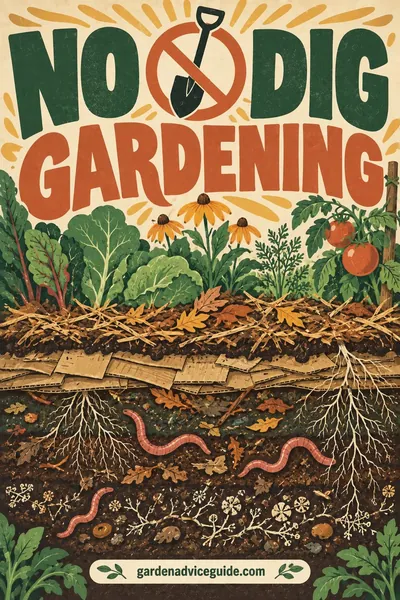
Do not lift buried seed into the light. Many weed seeds need a brief flash of light or the day and night temperature swing near the surface to break dormancy. Every tilling pass lifts a fresh cohort. This is the core argument for no dig gardening, where the seed bank stays buried in the dark and the annual weed load drops year on year.
Bag seeding weeds rather than composting them unless your pile genuinely runs hot. It is not worth the risk.
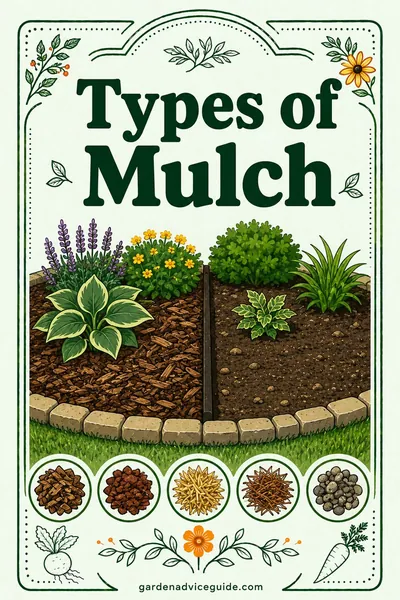
Mulch Depth: Why Thin Mulch Does Nothing
Mulch works by blocking light, and light blocking is a function of depth. A thin scatter of bark over a bed is decoration. It changes nothing.
| Mulch depth | Effect on annual weeds |
|---|---|
| 1 in | Essentially none, seeds germinate through it |
| 2 in | Partial, roughly half the seedlings still emerge |
| 3 in | Good suppression of most annuals |
| 4 in | Strong suppression, the practical target |
| 6 in plus | Excellent, but can hold soil too cold and wet in spring |
Three inches is the minimum that does real work, and 4 inches is the target for paths and perennial beds. Anything under 2 inches is a waste of money.
A few rules that make mulch work harder:
- Weed first. Mulch stops seeds from germinating. It does not kill an established perennial underneath.
- Mulch onto moist soil. Mulch holds whatever moisture state you cover.
- Keep it off the stems. An inch of clearance around crowns and trunks prevents rot and hides fewer slugs.
- Cardboard underneath doubles the effect on ground being converted from lawn or heavy weeds.
- Top up annually, because organic mulches thin as they break down, and a 4 inch layer is often 2 inches by the following summer.
- Understand the exception. Nutsedge and some rhizome perennials push straight through mulch and even through woven fabric. Mulch is an annual weed tool.
Material matters less than depth, though it does affect appearance and how fast the layer thins. Our mulch guide compares straw, wood chips, leaves, and compost for each situation.
Hoeing: Shallow, Sharp, and in Dry Weather
Most people hoe badly, which is why they think hoeing does not work.
Cut, do not dig. The goal is to sever the seedling at the soil line, about a quarter to half an inch down. Digging deeper stirs the soil, brings up new seed, and makes tomorrow's weeds. A stirrup hoe or a sharp draw hoe skimmed just under the surface does the job.
Keep the blade sharp. A file across the edge takes 30 seconds and turns a shoving job into a slicing one. Sharpen at the start of every session.
Hoe in dry, sunny weather, ideally in the morning. Severed seedlings die by desiccating on the surface. Hoe into wet soil before rain and half of them reroot and carry on.
Hoe when weeds are tiny. The white thread stage, before true leaves, is the moment when a pass takes seconds per square yard. Once weeds have a real root, you are pulling instead of hoeing and it takes ten times as long.
Walk the beds weekly during the growing season. Ten minutes a week beats three hours a month, by a lot.
Try the stale seedbed trick. Prepare a bed a couple of weeks before you plan to sow. Water it, let the first flush of weed seed germinate, then kill that flush with a shallow hoe pass or a quick flame, disturbing the soil as little as possible. You have just cleared the surface layer of seed, and your crop germinates into a much cleaner bed. This is one of the highest value techniques in vegetable growing and it costs almost nothing.
Design out the problem. Wide unplanted gaps grow weeds. Close spacing, intercropping, and cover crops fill the space that weeds would take. Planning that at the layout stage helps more than any tool, and our garden layout planning guide covers bed and path widths that keep the weeding manageable.
How to Get Rid of Weeds That Come Back Every Year
Perennials are a different fight. Hoeing a bindweed shoot removes this week's leaf and nothing else, because the plant's assets are underground.
Understand what you are up against. Bindweed roots reach 10 to 20 feet deep and can regrow from a fragment as small as 2 inches. Quackgrass spreads by white rhizomes just below the surface and every node on them is a new plant. Canada thistle grows a horizontal root system that sends up shoots many feet from the original plant. Nutsedge makes tubers that survive being dug and dried.
A single dig will not work on any of them. Say it plainly: you cannot dig out established bindweed or quackgrass. You will miss fragments, each fragment becomes a plant, and a rototiller run through that patch turns one weed into hundreds.
What does work is exhaustion. Every time the plant pushes a new shoot, it spends stored carbohydrate. If you remove that shoot before it makes enough leaf to repay the debt, the root reserves drop. Do it consistently and the plant runs out.
The exhaustion routine:
- Cut or pull every shoot at ground level as soon as it appears, before it gets past about 3 to 4 inches of leaf.
- Repeat every 2 to 3 weeks through the whole growing season. Consistency matters more than force.
- Expect 2 full seasons for bindweed and Canada thistle, and 1 to 2 for quackgrass. Horsetail can take longer.
- Do not till or dig the patch during this process. Fragmentation resets your progress.
- Keep the surrounding area mulched so that new shoots are easy to spot.
Taprooted perennials are the easier group. Dandelion, dock, and burdock can be removed in one go if you get the root. Wait until soil is moist, push a narrow spade or a dandelion fork alongside the root, and lever the whole thing out. Anything left below about 2 inches will resprout, so go deep rather than fast.
Bramble and woody crowns need the crown physically cut out with a mattock or spade, then the regrowth cut repeatedly. The crown is the target, not the canes.
Solarization and Occultation: Slower but Very Effective
When a whole area is lost, cover it. Two versions, and people mix them up.
Occultation means covering the soil with an opaque, light-blocking material such as a heavy black tarp or a silage sheet. Plants underneath cannot photosynthesize, so they burn through their reserves and die. Soil life is fine, in fact worm activity typically increases under a tarp because the surface stays moist and dark.
- Best for: perennial weeds, and clearing ground for a new bed.
- Timing: 4 to 8 weeks in warm weather for annuals and turf, and a full growing season, roughly 6 to 12 months, for bindweed, quackgrass, and thistle.
- Method: mow or trample first, water the ground, lay the tarp, weight the edges heavily so no light or wind gets under, and leave it alone.
- Works in any climate, including cool and cloudy ones.
Solarization means covering moist soil with clear plastic in the hottest part of summer. Sunlight passes through and heat builds underneath, cooking the top layer. Done properly the top 6 inches can reach 110 to 140F.
- Best for: annual weed seed in the surface layer, and some soilborne pathogens and nematodes.
- Timing: 4 to 8 weeks during the hottest stretch of the year, usually June through August.
- Method: cultivate lightly, water deeply, lay clear plastic tight to the soil surface, and bury the edges. Air gaps ruin it.
- Only effective in regions with strong summer sun and long hot days. In cool, cloudy summers it mostly grows a greenhouse full of weeds.
- Trade-off: high heat also knocks back beneficial soil organisms. They recover, but it is a real cost, so use it where the weed problem justifies it.
Choose occultation for perennials and for cool climates. Choose solarization for seed bank reduction in hot, sunny regions. After either one, disturb the soil as little as possible, so you do not lift a fresh layer of seed into the light.
Chemical Control, Last and With Care
Work through cultural, physical, and biological methods first. Most home garden weed problems never need a herbicide, and the ones that do are usually large perennial infestations or hard surfaces.
If you get to this point, a few things matter more than the choice of product.
Know the classes by what they do, not by brand:
- Non-selective systemic classes are absorbed by leaves and moved to the roots, killing the whole plant including some perennial root systems. They kill anything green they touch, including crops and lawn.
- Contact burndown classes, including the fatty acid and acetic acid based ones sold as natural options, destroy the leaf tissue they wet. They do not move into roots, so perennials regrow. Natural does not mean gentle: concentrated acetic acid burns skin and eyes.
- Selective broadleaf classes, such as the synthetic auxin group, kill broadleaf plants and leave grasses standing, which is why they appear in lawn products. They are also the residues most likely to persist through composting and damage vegetable crops later.
- Pre-emergent classes stop germinating seeds from establishing roots or shoots. They do nothing to existing weeds, and they will also stop your carrot and lettuce seed.
The label is the law. That phrase is literal in the United States. It is a federal offense under FIFRA to use a pesticide in a way inconsistent with its labeling. The label defines which sites and crops it may be used on, the legal rate, the protective equipment, the re-entry interval, and the pre-harvest interval. No article, including this one, can give you a rate, and any source that offers one without the label in front of it should be ignored. Read the whole label before you buy, not after.
Never spray a plant that is in bloom. Flowering weeds are foraging sites for bees and other pollinators, and spray drift onto blooms is one of the most avoidable harms in a home garden. Mow or cut the flowers off first, wait, then treat regrowth. Spray on still days, in the early morning or evening, and never when rain or wind is forecast.
Herbicide residue moves. Synthetic auxin residues can survive an animal's gut, a compost pile, and a season in a hay bale, then damage tomatoes, beans, and potatoes in your garden. If you bring in manure or compost from an unknown source, sow a few bean seeds in a pot of it first and watch for cupped, twisted leaves before you spread it.
Landscape Fabric, Honestly Assessed
Landscape fabric is sold as a permanent answer. It is not, and in a vegetable or perennial garden it usually creates more work than it saves.
Why it fails:
- Soil, leaf litter, and mulch settle on top and turn into a growing medium. Within 2 to 4 years weeds germinate above the fabric, root through the weave, and become far harder to pull than weeds in plain soil.
- Nutsedge, bindweed, and bamboo pierce it. Woven fabric is a light barrier, not a root barrier.
- It blocks the return of organic matter to the soil, so the soil underneath gets thinner, more compacted, and lower in worm activity year after year.
- UV exposure at the edges breaks it into plastic shreds that are almost impossible to remove fully once mulch, roots, and time have worked on it.
- Removing old fabric from an established bed is genuinely one of the worst jobs in gardening.
Where it earns its place: under a gravel path or driveway, under a permanent stone patio base, or on a steep slope for erosion control while plantings establish. Those are engineering uses on ground you never intend to plant.
What to use instead in a planted bed: cardboard topped with 3 to 4 inches of wood chips or compost. It suppresses just as well for a season or two, it feeds the soil as it breaks down, and when it is gone you top it up rather than excavating a torn plastic sheet.
Worked Example: Clearing a Weedy 10x20 Plot in One Season
Take a 10 by 20 foot plot, 200 square feet, that has been neglected for two years. Survey shows mostly annuals, chickweed and lambsquarters, plus a 4 by 6 foot patch of quackgrass in one corner and three dandelions.
March, survey and split the job. Two problems, two methods. Do not treat the plot as one.
Late March, tarp the quackgrass corner. 24 square feet under a black tarp, edges weighted with bricks. It stays down until October. Nothing else touches that corner all year, because digging it would spread the rhizomes.
Late March, dig the dandelions. Moist soil, narrow spade, full taproot to 6 inches. Three plants, ten minutes.
April, stale seedbed on the remaining 176 square feet. Rake the surface level, water it, wait 14 days. A dense flush of chickweed and lambsquarters germinates. Kill it with a shallow stirrup hoe pass on a dry, sunny morning, cutting at half an inch deep and not turning the soil.
Late April, repeat the flush once more. The second flush is noticeably thinner. Two flushes remove a large fraction of the germinable seed in the top inch.
Early May, plant, then mulch. Straw at 3 inches over the beds. 176 square feet at 3 inches deep needs 176 divided by 108, which is 1.63 cubic yards. Order 2 cubic yards to allow for settling. Run your own bed through the mulch and soil volume calculator to get the number for your plot.
May through September, ten minutes a week. Walk the plot every Saturday with a hoe. Cut anything visible. Nothing flowers. Total weeding time across the season is roughly 90 minutes.
October, uncover the corner. Pull the tarp. The quackgrass top growth is dead. Rhizomes may still hold some reserve, so cut any regrowth every 3 weeks rather than digging, and expect one more season before that corner is genuinely clean.
Fall, cover everything. Cardboard and 2 inches of compost over the whole plot, or a cover crop, so bare soil never sits exposed to wind blown seed over winter. Our fall garden cleanup guide covers what to cut, leave, and cover.
Year two. The seed bank in the top inch is much reduced, the surface is not being disturbed, and weekly hoeing becomes a five minute job. That is what winning looks like: not a weed-free garden, but a garden where weeding stopped being a project.
FAQ
What is the fastest way to get rid of weeds permanently?
There is no permanent one-time fix, because seed keeps arriving and the soil already holds thousands of seeds per square foot. What actually gets you to a low-maintenance garden is preventing seed set, keeping soil covered with 3 to 4 inches of mulch or living plants, hoeing shallowly and weekly while weeds are tiny, and exhausting perennial roots by repeat cutting over a season or two.
Why do weeds keep coming back after I pull them?
Either you are dealing with perennials that regrow from roots you did not remove, or you are lifting new seed into the light every time you disturb the soil. Pull one plant and check the root: fibrous means annual and pulling works, while a running white rhizome or a deep taproot means the plant is still there underground. Perennials need repeat cutting every 2 to 3 weeks, not one dig.
How deep does mulch need to be to stop weeds?
Three inches is the minimum that suppresses most annual weeds, and 4 inches is the practical target. One inch does essentially nothing, and two inches lets roughly half the seedlings through. Weed the area first, mulch onto moist soil, keep it an inch clear of stems, and top it up each year as the layer breaks down.
Does vinegar kill weeds?
Acetic acid based products are contact burndown materials. They destroy the leaf tissue they wet, so young annual weeds die, but nothing moves into the roots and perennials regrow within a couple of weeks. Household strength vinegar is generally too weak to do much, and the concentrated horticultural strengths are corrosive enough to injure skin and eyes. Treat them as a hard surface tool, follow the label exactly, and never spray anything in bloom.
Is it better to pull weeds or hoe them?
Hoe annuals and pull perennials. Hoeing severs shallow-rooted annual seedlings at the soil line in a fraction of the time, and it works best on tiny weeds in dry, sunny weather so the cut seedlings dry out. Perennials with taproots need to come out whole, which means moist soil and a spade, since a hoed dandelion just regrows.
How long does it take to kill bindweed or quackgrass?
Plan on 2 full growing seasons for bindweed and Canada thistle, and 1 to 2 for quackgrass. Cut every shoot at ground level as soon as it appears, every 2 to 3 weeks, so the roots never rebuild reserves. Do not till or dig the patch, because both spread from fragments and a rototiller turns one plant into hundreds.
Does landscape fabric stop weeds long term?
No. Within about 2 to 4 years, mulch and leaf litter break down on top of it into a layer that grows its own weeds, and those roots knit through the weave and become far harder to pull than weeds in bare soil. Nutsedge and bindweed also pierce it outright. Use it under gravel paths and patios, and use cardboard with 3 to 4 inches of wood chips in planted beds instead.
Can I put weeds in my compost pile?
Leafy annual weeds that have not flowered are fine, and they are a good nitrogen source. Bag anything carrying seed heads unless your pile reliably runs at 130 to 150F, and keep perennial roots and rhizomes like bindweed, quackgrass, and nutsedge out entirely, since they can survive a cold pile and be spread across the garden with the finished compost.
Updated September 2026