When to Apply Prodiamine

Put prodiamine down about two weeks before your average last spring frost, and no later than a week after it. The real trigger is soil temperature, not the calendar: crabgrass germinates once soil at 2 inches holds around 55°F for several days in a row, and the prodiamine barrier has to be in the ground and watered in before that happens. Late is the same as never with this product.
The second question people miss is how long it stays. Prodiamine has the longest residual of the common pre-emergents, roughly 12 to 16 weeks, so knowing when to apply prodiamine also means knowing what it blocks four months from now. If you plan to seed this year, that number decides your whole schedule.
Get both of your dates against your own frost data: enter your zip code in our free lawn care schedule tool and it plots the pre-emergent windows and flags any conflict with your seeding plans.
Updated September 2026
What prodiamine does, and what it can't do
Prodiamine is the active ingredient in Barricade and in most of the generic pre-emergent products sold as wettable granules, liquid concentrate, or coated onto a fertilizer carrier. It's a dinitroaniline, which means it works by stopping cell division in the root tip of a germinating seedling.
That mechanism explains every prodiamine failure you'll ever have:
- It kills at germination, not before and not after. The seed sprouts, the first root hits the treated layer, the root stops developing, and the seedling dies before it breaks the surface. A seed sitting dormant is unharmed.
- It has no post-emergent activity at all. Once you can see a crabgrass plant, prodiamine does nothing to it. Dithiopyr has some early post-emergent activity on very young crabgrass. Prodiamine does not.
- The barrier is thin and physical. It binds tightly to soil particles and stays in roughly the top inch. Rake it, aerate it, dethatch it, dig out a weed, or let a dog wear a path through it, and you've opened a gap that crabgrass will find.
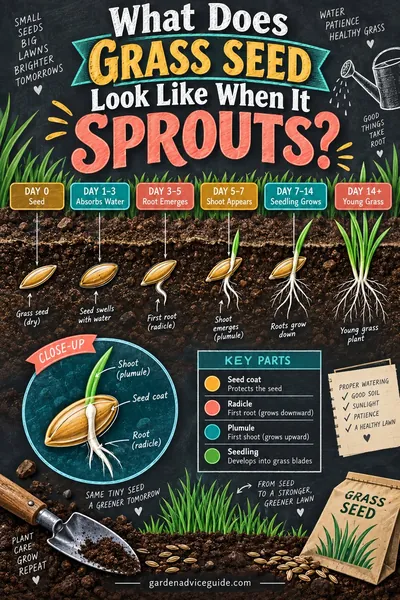
- It can't tell your grass seed from a weed seed. Both are seeds with root tips. Both die.
Everything below is about getting the timing right so that mechanism works in your favor.
When to apply prodiamine in spring
The spring application is the crabgrass application, and on a cool-season lawn it's the one that matters. The window opens about 14 days before your average last spring frost and closes about 7 days after it.
Here's how that lands by zone, using the same average frost dates behind our frost date tool:
| Zone | Avg last frost | Spring prodiamine window | Target date |
|---|---|---|---|
| 3 | May 23 | May 9 to May 30 | May 9 |
| 4 | May 19 | May 5 to May 26 | May 5 |
| 5 | May 7 | Apr 23 to May 14 | Apr 23 |
| 6 | Apr 25 | Apr 11 to May 2 | Apr 11 |
| 7 | Apr 9 | Mar 26 to Apr 16 | Mar 26 |
| 8 | Mar 19 | Mar 5 to Mar 26 | Mar 5 |
| 9 | Feb 9 | Jan 26 to Feb 16 | Jan 26 |
| 10 | Jan 12 | Dec 29 to Jan 19 | Dec 29 |
Apply at the front of the window, not the middle and never the end. Being two weeks early costs you a few weeks of residual off the back. Being two weeks late costs you the season.
Those dates are regional averages, and a warm March pulls crabgrass germination forward by up to two weeks in any given year. So use them to plan and use soil temperature to pull the trigger.
The 55°F soil temperature rule
Crabgrass seed germinates once soil at 2 inches holds about 55°F for several consecutive days. That number is the same in Georgia and Michigan, which is what makes it a better trigger than a date.
Push a soil thermometer 2 inches into an open, sunny part of the lawn in the morning. South-facing slopes, strips along driveways, and the ground beside a sidewalk warm up first, so those are where crabgrass shows up first, and they're the right places to measure.
The old folk indicator still works surprisingly well: apply when forsythia blooms are dropping. Forsythia responds to the same accumulated warmth crabgrass does, and if you have one in the yard it's a free thermometer.
Getting it activated
Prodiamine doesn't do anything sitting on top of grass blades. It has to move into the top inch of soil, and that takes water. Most labels ask for roughly half an inch of rain or irrigation within about two weeks of application.
Practically:
- Apply just ahead of a forecast rain if you can. That's free irrigation and even coverage.
- If there's no rain coming, water it in yourself within a couple of days. Waiting the full two weeks is legal on most labels and still a bad idea, because germination doesn't wait.
- Mow before you apply, not after. You want the product reaching soil, not sitting on clippings you're about to bag.
- Don't apply to a lawn covered in leaves or heavy thatch. Both intercept the product.
When to apply prodiamine in fall
There's a second window most homeowners skip, and on a warm-season lawn it's arguably the more valuable of the two. The fall application targets annual bluegrass (poa annua) and winter annual weeds, which germinate as soil temperatures fall back through about 70°F.
That lands roughly 65 to 50 days before your average first fall frost.
| Zone | Avg first frost | Fall prodiamine window |
|---|---|---|
| 3 | Sep 13 | Jul 10 to Jul 25 |
| 4 | Sep 22 | Jul 19 to Aug 3 |
| 5 | Oct 3 | Jul 30 to Aug 14 |
| 6 | Oct 15 | Aug 11 to Aug 26 |
| 7 | Oct 29 | Aug 25 to Sep 9 |
| 8 | Nov 14 | Sep 10 to Sep 25 |
| 9 | Dec 8 | Oct 4 to Oct 19 |
| 10 | Dec 21 | Oct 17 to Nov 1 |
Poa annua is glaringly obvious as bright green clumps against dormant bermuda or zoysia in winter, and nearly invisible in a green summer lawn, which is why warm-season lawn owners care about the fall date and cool-season owners often don't.
Now look at where those fall dates sit for a cool-season lawn. They land directly on top of the best overseeding window of the year, covered in when to overseed lawn in fall. You can't do both. That collision is the single most common self-inflicted lawn mistake there is.
The residual problem: prodiamine lasts the longest
This is where prodiamine differs most from its alternatives, and where the planning happens.
| Active ingredient | Common products | Wait before seeding | Notes |
|---|---|---|---|
| Prodiamine | Barricade and generics | About 12 to 16 weeks | Longest residual of the common ones. A full spring rate can still be blocking seed in early fall. |
| Dithiopyr | Dimension and generics | About 12 weeks | Also kills very young crabgrass, which prodiamine will not do. |
| Pendimethalin | Pre-M, Scotts Halts | About 8 to 12 weeks | Shortest of the three, so it's easiest to fit around a seeding date. |
| Siduron | Tupersan | None, seed the same day | The exception. Safe over new seed, but pricier and controls a narrower weed list. |
| Mesotrione | Tenacity | None on listed species | Labeled for application at seeding on several turf grasses. Check yours is listed. |
| Corn gluten meal | Various organic brands | About 6 weeks | Organic doesn't mean seed safe. It stops root formation in your seed too. |
The rate you applied moves that interval. A low rate for short control clears sooner than a full rate for season-long control, and the exact figure for the rate you used is printed on your label. Trust the label over any table online, including this one.
Core aerating before you seed helps break the barrier physically, but it does not reset the clock and it isn't a substitute for waiting. There's more on that in when to aerate your lawn.
Worked example: a zone 6 cool-season lawn
Here's the arithmetic that catches people, using zone 6 dates from the tables above.
The plan: apply prodiamine in spring, then overseed thin areas in fall.
Spring application. Average last frost is April 25, so the window is April 11 to May 2. You apply on April 11, and a rainstorm on April 13 waters it in. Good.
Now count forward.
| Milestone | Date | Days from application |
|---|---|---|
| Application | Apr 11 | 0 |
| 12 weeks residual (earliest possible clear) | Jul 4 | 84 |
| 16 weeks residual (safely clear) | Aug 1 | 112 |
| Zone 6 fall seeding window opens | Aug 25 | 136 |
| Zone 6 fall seeding window closes | Sep 25 | 167 |
That works. A single spring application on April 11 is fully cleared by August 1, three weeks before your seeding window even opens.
Now add the split application people recommend. The idea is to apply half the rate at the spring trigger and the rest about 8 weeks later, to carry protection through late summer. So a second application lands around June 6.
| Milestone | Date | Days from second application |
|---|---|---|
| Second application | Jun 6 | 0 |
| 12 weeks residual | Aug 29 | 84 |
| 16 weeks residual | Sep 26 | 112 |
The seeding window is August 25 to September 25. The second application's residual runs to September 26 at the long end. The split has eaten your entire fall seeding window.
That's the trade-off nobody prints on the bag. Split applications give better late-season crabgrass control and cost you fall seeding. Pick one. If your lawn is thin enough to need seed, the seed matters more than the crabgrass, because thick turf is the actual long-term crabgrass control.
A pre-emergent year and an overseeding year are different years. Plan them that way.
Application day checklist
- Check the 2-inch soil temperature. Below 55°F and holding, you're on time. At 55°F for several days, go today.
- Mow first, and bag or mulch the clippings so the product reaches soil.
- Rake or blow off leaves and debris. Anything covering soil blocks the barrier.
- Read the rate table on your own label for your grass species and the length of control you want. Rates differ by species, and there's an annual maximum you can't exceed across all applications in a year.
- Calibrate the spreader or sprayer. Uneven coverage on a pre-emergent shows up in June as crabgrass in exact stripes.
- Apply in two passes at half rate, at right angles, if you're using a spreader. This is the single easiest way to avoid stripes.
- Water in with about half an inch within a couple of days, or apply ahead of forecast rain.
- Then leave the soil alone. No aerating, dethatching, power raking, or digging in treated areas for the rest of the residual period.
- Write the date and the rate on the bag with a marker. In August, that note is the only thing that tells you whether you can seed.
What prodiamine won't fix
Crabgrass you can already see. The window closed weeks ago. You need a post-emergent labeled for crabgrass this year, and a properly timed pre-emergent next year.
A thin lawn. Crabgrass is opportunistic and fills gaps. If your turf is thin from compaction, drought stress, scalping, or low fertility, pre-emergent buys you a season while the underlying problem stays. Mowing height does more crabgrass prevention than any herbicide: taller grass shades the soil surface, and crabgrass seed needs light and warm soil to germinate.
Perennial weeds. Dandelions, clover, nutsedge, and creeping charlie come back from roots and rhizomes, not from seed germinating in your treated layer. They need a different product at a different time, covered in when to spray dandelions.
Bad fertility timing. Pre-emergent and fertilizer come bundled in most step programs, and the fertilizer date and the pre-emergent date don't always want to be the same day. See when to fertilize your lawn and Scotts 4 step program timing for how far apart those really should sit.
Frequently asked questions
What soil temperature should I apply prodiamine at?
Apply before soil at 2 inches holds 55°F for several consecutive days, since that's when crabgrass germinates. For the fall application targeting annual bluegrass, apply as soil temperatures fall back through about 70°F.
How long does prodiamine last?
Roughly 12 to 16 weeks, depending on the rate you applied. That's the longest residual of the common pre-emergents, longer than dithiopyr at about 12 weeks and pendimethalin at about 8 to 12 weeks. The exact figure for your rate is on the label.
Can I apply prodiamine and grass seed at the same time?
No. Prodiamine kills the root as it emerges from a germinating seed and can't tell your grass seed from crabgrass seed. Seed sown into a treated area sprouts and dies, which is why people conclude they bought bad seed. Siduron and mesotrione are the two labeled exceptions.
How long after prodiamine can I seed?
About 12 to 16 weeks, depending on the rate. Check the label for the rate you applied, since a low rate clears considerably sooner than a full season-long rate. Core aeration breaks the barrier physically but doesn't shorten the interval.
Should I split my prodiamine application?
Split it if crabgrass pressure is heavy and you have no plans to seed this year. Half at the spring trigger and the rest about 8 weeks later gives better late-season control. Just know the second application's residual usually runs straight through the fall seeding window.
Can I apply prodiamine to a new lawn?
Not until the new turf is established. Labels generally require the grass to have been mowed several times before a pre-emergent goes down, and the exact requirement varies by product and species. On a lawn seeded this year, skip the herbicide and hand pull or spot treat instead.
Does prodiamine kill existing crabgrass?
No. Prodiamine has no post-emergent activity whatsoever. Once crabgrass is visible, it needs a post-emergent product, and dithiopyr is the pre-emergent that offers some control of very young crabgrass if you're slightly late.
Do I need to water prodiamine in?
Yes. It has to move into the top inch of soil to form a barrier. Most labels call for about half an inch of rain or irrigation within roughly two weeks. Applying right before forecast rain is the easiest way to handle it.
Is prodiamine safe on bermuda and zoysia?
Both are commonly listed on prodiamine labels, including for applications over dormant turf, but rates vary by species and some grasses have tighter limits. Check that your specific grass appears on the label of the product in your hand before you spread anything.
The short version
Prodiamine goes down about two weeks before your last spring frost, before 2-inch soil temperature holds 55°F, and it needs about half an inch of water within a couple of weeks to activate. Add a fall application 65 to 50 days before your first frost if annual bluegrass is your problem. Never apply it to a lawn you intend to seed within the next 12 to 16 weeks.
Get both dates set against your own frost data with our free lawn care schedule tool, which flags the seeding conflict before you buy the bag. For a broader comparison across every pre-emergent active ingredient, read when to apply pre-emergent weed control next.