When to Lime Your Lawn and How Much to Apply

Lime your lawn in fall, and only after a soil test says the pH is below about 6.0. On a typical loam soil, figure 50 to 60 pounds of pelletized limestone per 1,000 square feet to raise pH by one full point, capped at 50 pounds per 1,000 square feet in any single application. Sandy soil needs closer to 25 to 30 pounds for the same one point move, and heavy clay needs 70 to 80.
That is the whole answer to when to lime your lawn and how much to apply. The rest of this page is the part that keeps you from wasting a weekend: how to know whether you need lime at all, why fall beats spring, and what happens if you overdo it.
Building your fall lawn calendar? Our free lawn care schedule lays out aeration, seeding, and feeding dates for your zone and grass type, so the lime goes down in the right slot instead of on top of everything else.
Updated September 2026
Do not lime a lawn you have not tested
This is the one rule with no exceptions. Lime is not a fertilizer, not a tonic, and not a general-purpose lawn treatment. It does exactly one thing: it raises soil pH. If your pH is already fine, adding lime makes the lawn worse, not better, and undoing it takes years.
Plenty of lawns never need lime. Soils across much of the West and Southwest run neutral to alkaline already. Limestone-derived soils in the Midwest often sit right at 6.8 with no help. Liming those is actively harmful.
A lab test through your county extension service is the only way to know. You mail a composite sample and get back pH, buffer pH, organic matter, and nutrient levels. The buffer pH number is the important one for liming, because it tells the lab how strongly your soil resists a pH change, and the lime recommendation is built from it rather than from pH alone. Our walkthrough on how to test garden soil covers how to pull a proper sample, which is where most home results go wrong.
Home pH meters and probe sticks are not accurate enough to base a 300 pound lime decision on. They drift, they read the water in the soil rather than the soil itself, and two readings a foot apart can differ by half a point.
Signs your lawn might be acidic
None of these prove anything on their own, but together they are a reason to test.
- Moss taking over shaded areas. Moss does not cause acidity, it just tolerates it better than grass does.
- Fertilizer that stops working. Below pH 5.5, a big share of the nitrogen, phosphorus, and potassium in the soil is chemically locked up and unavailable to roots.
- Thin, slow growth in an area that gets enough sun and water.
- Certain weeds thriving: red sorrel, plantain, and moss all favor sour soil.
- Heavy annual rainfall or sandy soil. Rain leaches calcium and magnesium downward, which is why acidity is common in the East and Pacific Northwest.
- Years of ammonium-based nitrogen fertilizer. The nitrification of ammonium releases hydrogen ions, pushing pH down over time. Regular feeding without liming will slowly acidify a lawn.
- Pine needles or oak leaves left on the lawn for years. A minor effect, and usually overstated, but it is real over a decade.
What pH range lawns actually want
| Grass | Preferred pH range | Notes |
|---|---|---|
| Kentucky bluegrass | 6.0 to 7.0 | Least tolerant of acidity, first to thin out |
| Perennial ryegrass | 6.0 to 7.0 | Similar to bluegrass |
| Tall fescue | 5.5 to 7.0 | More forgiving on the low end |
| Fine fescue | 5.5 to 6.5 | Handles poor, acidic soil best of the cool-season group |
| Bermuda | 6.0 to 7.0 | Prefers slightly acidic to neutral |
| Zoysia | 5.8 to 6.5 | Tolerates a bit lower than bermuda |
| St. Augustine | 6.0 to 7.5 | Handles alkaline soil well |
| Centipede | 5.0 to 6.0 | The exception: lime a centipede lawn only if it drops below 5.0 |
The sweet spot for most lawns is pH 6.2 to 6.8. That is where nitrogen, phosphorus, potassium, calcium, and magnesium are all reasonably available at the same time. Above 7.3, iron and manganese start locking out and the lawn yellows even with plenty of nitrogen.
Centipede grass is worth calling out separately. It is adapted to acidic Southern soil and genuinely does better at pH 5.0 to 6.0. Liming a centipede lawn to 6.5 will make it chlorotic and weak. If you have centipede, the correct amount of lime is usually none.
When to lime your lawn and how much to apply, by soil type
Lime is not soluble in the way fertilizer is. Ground limestone dissolves slowly as carbonic acid in soil water attacks it, and the reaction is measured in months, not days. A full pH change takes three to six months, sometimes a year on clay.
That timeline drives the calendar.
Fall is the best window. Lime applied in October or November has the whole winter to react. Freeze and thaw cycles work the particles down into the root zone, winter rain and snowmelt keep the reaction going, and by the time the lawn starts growing hard in April, the pH has actually moved. Lime applied in April is still barely working in July, when the lawn needs it most.
Spring is acceptable. If you missed fall, early spring works. Just do not expect a measurable change until midsummer.
Summer is fine but pointless. Lime does not burn grass, so a July application will not hurt anything. It just sits there until fall rains start the reaction.
Do not lime frozen or snow-covered ground. The pellets sit on the surface and run off with the melt instead of soaking in. You lose most of the product.
Now the rate. These figures are for pelletized or pulverized calcitic limestone and cover raising pH by one full point.
| Soil type | Lime per 1,000 sq ft to raise pH 1 point | Max per single application |
|---|---|---|
| Sand | 25 to 30 lb | 50 lb per 1,000 sq ft |
| Sandy loam | 35 to 45 lb | 50 lb per 1,000 sq ft |
| Loam | 50 to 60 lb | 50 lb per 1,000 sq ft |
| Clay loam | 65 to 75 lb | 50 lb per 1,000 sq ft |
| Heavy clay | 70 to 80 lb | 50 lb per 1,000 sq ft |
Sandy soil moves easily because it has almost no buffering capacity. Clay resists because the clay particles themselves hold a huge reservoir of hydrogen ions that keep pushing pH back down. That is what the buffer pH on your soil test measures, and it is why two lawns at the same pH can need double or half the lime.
The 50 pound cap matters. Dumping 120 pounds per 1,000 square feet in one pass creates a highly alkaline crust at the surface while the root zone underneath stays acidic. Split anything larger into two applications six months apart, or into fall applications a year apart.
Worked example: a 6,000 square foot loam lawn at pH 5.4
Here is the math end to end.
The test result: pH 5.4, loam soil, target 6.5. That is a 1.1 point rise needed.
Step 1, base rate. Loam needs about 55 pounds per 1,000 square feet per full point. For 1.1 points, that is roughly 60 pounds per 1,000 square feet.
Step 2, total lawn. 60 lb x 6 (thousand sq ft) = 360 pounds of pelletized lime.
Step 3, check the cap. 360 pounds across 6,000 square feet works out to 60 pounds per 1,000, which is over the 50 pound single-application limit. So it gets split.
Step 4, the split. Apply 300 pounds this October, which is 50 pounds per 1,000 square feet. Apply the remaining 60 pounds the following October, or skip it if the retest says you have arrived.
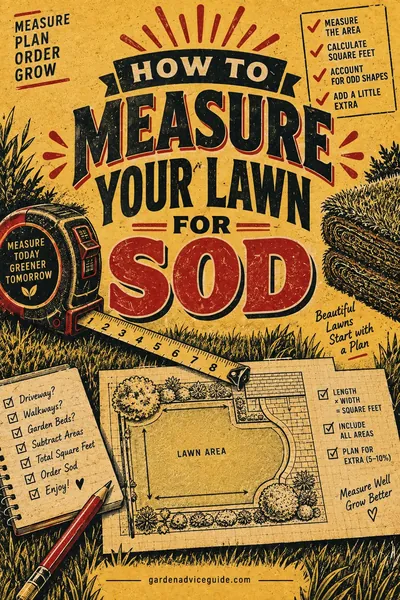
Step 5, the spreader. A broadcast spreader covering a 10 foot swath needs 60 passes of 100 feet to cover 6,000 square feet. Set the spreader to half your target rate and go over the lawn twice in a crosshatch pattern. Two light passes at 90 degrees to each other give far more even coverage than one heavy pass, and lime is exactly the product where streaking shows up as a striped lawn two years later.
Step 6, the retest. Pull a new sample the following September, eleven months later. That is long enough for the reaction to finish and short enough to correct course.
Which lime to buy
| Type | What it is | Best for | Speed |
|---|---|---|---|
| Pelletized calcitic | Ground limestone pressed into pellets, mostly calcium carbonate | The default choice for most lawns | Moderate |
| Pelletized dolomitic | Same, but with magnesium carbonate added by geology | Soils testing low in magnesium | Moderate |
| Pulverized (ag lime) | Powdered limestone, no pellet binder | Large areas, tilled soil, budget-minded | Fast, but dusty and hard to spread |
| Liquid lime | Very fine limestone in suspension | Small touch-ups, quick partial correction | Fast but small effect per application |
Pelletized is what most homeowners should buy. It flows through a standard broadcast spreader, does not blow around, and does not coat you in white dust.
The calcitic versus dolomitic question is answered by your soil test, not by preference. If magnesium is low, use dolomitic. If magnesium is already adequate or high, use calcitic, because piling on magnesium in a soil that already has plenty can interfere with calcium and potassium uptake.
Liquid lime deserves a caution. It works fast because the particles are tiny, but a jug covers a large area with a small total quantity of actual limestone. It is a supplement or a fine adjustment, not a substitute for a real corrective application. If your test says you need 300 pounds of limestone, liquid lime is not going to deliver it.
One more label detail worth checking: the effective neutralizing value, sometimes printed as ENV, ECCE, or calcium carbonate equivalent. It tells you how much acid-neutralizing power the product actually has compared to pure calcium carbonate. A product at 90 percent needs roughly 10 percent more material than one at 100 percent. Most bagged lawn lime lands between 85 and 100.
Lime and fertilizer: can they go down together?
Not on the same day, and here is why. Lime raises pH at the surface temporarily. Urea and ammonium fertilizers convert to ammonia gas faster at high pH, and that gas escapes to the air instead of feeding the grass. You can lose a meaningful share of your nitrogen that way.
Wait two to four weeks between a lime application and a nitrogen feeding, in either order. Fall works nicely for this: aerate and lime in October, feed in early November, or feed in September and lime in late October. Our guide to when to fertilize your lawn lays out the feeding windows so you can slot lime in between them.
Lime pairs beautifully with core aeration, though. Holes punched 2 to 3 inches deep give the limestone a direct route into the root zone instead of making it work down from the surface. If you are already renting an aerator, lime the same day, right after you pull the cores. See when to aerate your lawn for the right window by grass type.
Lime and grass seed also get along fine. Seeding and liming on the same fall weekend is a normal sequence, and neither interferes with the other. When to overseed lawn in fall covers that timing.
How to spread it without striping the lawn
- Mow first, at your normal height, so the pellets reach the soil instead of sitting on tall blades.
- Measure the lawn and do the math before you open a bag. Guessing is how lawns end up overlimed.
- Set the spreader to half rate and plan two perpendicular passes.
- Fill the spreader on the driveway, not on the lawn, so a spill does not create a permanent alkaline dead spot.
- Walk at a steady pace with the hopper closed at every turn.
- Water it in with about a quarter inch of irrigation, or apply just before a forecast rain, to move the pellets off the leaf surface and into the thatch.
- Sweep hard surfaces. Lime dust on a driveway tracks into the house and stains.
Lime will not burn grass, so overlapping a little is not a disaster. Overlapping a lot, repeatedly, in the same strip, is.
What happens if you use too much
Overliming is slow to show up and slow to fix. Push a lawn past pH 7.3 and iron and manganese become unavailable, so the lawn yellows between the veins even while it is well fed. Phosphorus starts tying up with calcium. Some diseases get easier, not harder.
Fixing it means adding elemental sulfur, which acidifies as soil bacteria oxidize it. Figure roughly 10 to 15 pounds of elemental sulfur per 1,000 square feet to move loam soil down about half a point, applied no more than once a season and watered in. That process takes as long as liming did, sometimes longer, because sulfur only works when soil is warm and biologically active.
The lesson is the same one from the top of the page. Test, apply the recommended amount, retest, and adjust. Do not lime every year as a routine, and do not lime because a bag was on the end cap at the garden center.
How often should you retest?
Every three years is a reasonable rhythm for a stable lawn. Test annually while you are actively correcting a pH problem, so you can see whether the lime is landing where you expected. If you are on sand, test more often, because sandy soils drift back toward acidic quickly once the lime is used up. Clay holds a correction far longer.
Keep the reports. Three tests spaced three years apart tell you the direction your soil is drifting, which is more useful than any single number. The same logic applies in the vegetable garden, where crops have their own targets. See soil pH for tomatoes for the beds, and fall garden cleanup for the seasonal order of operations that puts amendments down at the right moment.
Frequently asked questions
What is the best time of year to apply lime to a lawn?
Fall, ideally October or November. Lime needs three to six months of soil moisture and freeze-thaw action to react fully, so a fall application has moved the pH by the time growth resumes in spring. Spring works if you missed fall, but the benefit shows up much later in the season.
How much lime do I need per 1,000 square feet?
To raise pH by one point, plan on 25 to 30 pounds on sand, 50 to 60 pounds on loam, and 70 to 80 pounds on heavy clay, using pelletized limestone. Never apply more than 50 pounds per 1,000 square feet at once, and split larger totals into applications six months or a year apart.
How long does lime take to work on a lawn?
Expect three to six months for a measurable pH change, and up to a year on clay soil. Pulverized lime reacts faster than pelletized because the particles are finer, and liquid lime acts fastest of all but delivers far less total material per application.
Can I apply lime and fertilizer at the same time?
Better not to. High surface pH right after liming speeds the loss of nitrogen from urea and ammonium fertilizers as ammonia gas. Leave two to four weeks between the two, in whichever order suits your schedule.
Does lime kill moss?
Not directly. Moss grows in shade, compaction, poor drainage, and low fertility, and acidity is only one factor on that list. Liming an acidic mossy area helps the grass compete, but if the real problem is deep shade or a compacted, soggy spot, the moss comes back regardless.
How do I know if my lawn has too much lime?
The lawn yellows between the leaf veins even after feeding, response to fertilizer gets worse instead of better, and a soil test comes back above about 7.3. Correcting it means elemental sulfur applied at roughly 10 to 15 pounds per 1,000 square feet per half point of change, watered in, and it takes months.
Should I lime a new lawn before seeding?
Yes, if the test calls for it, and that is the ideal moment. Before seed goes down you can rake or till lime into the top few inches instead of waiting for it to work down from the surface, which cuts the reaction time substantially.