When to Plant Tall Fescue

Plant tall fescue in late summer to early fall, once daytime highs settle into the 70s and soil temperature at 2 inches deep sits between 60 and 75°F. Aim to get seed down about 45 days before your average first fall frost so seedlings have time to root before cold shuts them down. Spring is the backup window, not the good one, and the honest answer to when to plant tall fescue is that a September seeding beats an April seeding almost everywhere fescue grows.
Want the whole year mapped out, not just seeding week? Our free lawn care schedule builds a month-by-month plan for your zone, including the seeding, feeding, and pre-emergent dates that have to line up.
Updated September 2026
A note on numbers. This page gives you timing, quantities and spacing, not dollar figures. Seed, plant and material pricing varies by region, by supplier and by season, and we do not set any of it. Work out what you need here, then price the list at two or three local suppliers.
Get the date right and tall fescue is one of the easiest lawns in America: deep roots, real drought tolerance, and germination in about a week. Get the date wrong and you throw away a whole bag of seed that sprouts, cooks in June, and disappears.
Why fall wins for tall fescue
Tall fescue is a cool-season grass. It does its real growing when air temperatures are in the 60s and 70s, and it slows down hard above 90°F. That single fact drives every date in this article.
A late-summer seeding gets a run of conditions that spring simply cannot match:
- Warm soil, cooling air. Soil is still holding summer heat, which speeds germination, while air temperatures are dropping, which reduces stress on seedlings.
- Two cool growing seasons before summer. Fall seedlings grow through autumn, rest over winter, then grow again through spring. That is roughly eight months of root development before their first July.
- Weed pressure is falling, not rising. Crabgrass and most summer annual weeds are finishing their life cycle in September. In April they are just starting.
- More reliable moisture. Fall rain patterns in most fescue regions are gentler and more frequent than the thunderstorm-or-nothing pattern of late spring.
Spring-seeded fescue gets the opposite deal. It has maybe 10 weeks of good growing weather before summer heat arrives, and it faces that heat with a shallow root system. Losses of half the stand or more in the first summer are common.
The general principles here apply to all cool-season grasses, and our broader guide on when to plant grass seed covers the soil-temperature logic in more depth. This page is about fescue specifically, because its seeding rates, germination speed, and overseeding needs are different from bluegrass or ryegrass.
When to plant tall fescue by region
Find your row, then adjust with your own first-frost date. The target is simple: seed at least 45 days before the average first frost, and ideally 60.
| Region (typical zones) | Fall seeding window | Best two weeks | Spring backup window |
|---|---|---|---|
| Upper Midwest, northern New England (3-4) | Aug 1 to Sept 5 | Mid to late August | Apr 1 to May 1 |
| Great Lakes, northern Plains, NY, New England (5) | Aug 10 to Sept 20 | Late August to early Sept | Apr 5 to May 5 |
| Lower Midwest, Mid-Atlantic, transition zone (6) | Aug 20 to Oct 5 | Sept 1 to Sept 20 | Mar 20 to Apr 25 |
| Upper South, Carolinas, Tennessee, Oklahoma (7) | Sept 1 to Oct 20 | Sept 10 to Oct 5 | Mar 1 to Apr 10 |
| Coastal South, north Georgia, north Texas (8) | Sept 15 to Nov 1 | Oct | Feb 15 to Mar 20 |
Zone 8 is the edge of fescue country. Below that line, summer heat is usually too much for a fescue lawn to hold without heavy irrigation, and warm-season grasses take over. If that describes your yard, look at when to plant bermuda grass instead, since bermuda is seeded in late spring on the opposite schedule.
Your own frost date beats any table. Check it, count back 45 days, and that is your last acceptable seeding day. Count back 60 and that is your target.
The soil temperature numbers that matter
Air temperature is what you feel; soil temperature is what the seed responds to. Tall fescue germinates when soil at 2 to 4 inches deep holds above roughly 55°F, and it germinates fastest between 60 and 75°F.
| Soil temp at 2 inches | What happens to tall fescue seed |
|---|---|
| Below 50°F | Little to no germination. Seed sits and waits. |
| 50 to 55°F | Slow, uneven germination, often 3 weeks or more |
| 55 to 60°F | Reliable germination in about 10 to 14 days |
| 60 to 75°F | The sweet spot: 7 to 12 days, strong even stand |
| Above 85°F | Germination still happens but seedlings scorch fast |
Checking it takes 30 seconds. Push a soil or meat thermometer 2 to 3 inches into moist soil in a sunny part of the lawn, mid-morning, and read it after a couple of minutes. Do it three days running and use the average, because one cool morning after a rain can mislead you.
In practice, the fall window opens when your afternoon highs stop reaching the upper 80s and closes when overnight lows start dipping into the 40s regularly.
Seeding rates: new lawn versus overseeding
Rate is where people quietly waste money in both directions. Too little seed gives you a thin, clumpy stand. Too much creates seedlings that compete with each other and thin out anyway.
| Job | Rate per 1,000 sq ft | For a 5,000 sq ft lawn |
|---|---|---|
| New lawn from bare soil | 6 to 10 lb (8 is a good default) | 40 lb |
| Renovating a mostly dead lawn | 6 to 8 lb | 35 lb |
| Routine annual overseeding | 3 to 5 lb | 20 to 25 lb |
| Patching bare spots only | 6 to 8 lb on the spots | Depends on spot area |
Turf-type tall fescue runs roughly 200,000 to 230,000 seeds per pound, which is why the rate looks small next to how much ground it covers. At 8 lb per 1,000 sq ft, you are putting down close to 40 seeds per square inch. You do not need more than that.
Measure your lawn honestly before you buy. A yard people call "about a quarter acre" is usually 4,000 to 7,000 sq ft of actual turf once you subtract the house, driveway, and beds. Length times width, minus the hardscape, is close enough.
When to overseed fescue, and why it is an annual job
Here is the fescue-specific detail that catches people who moved from a bluegrass lawn. Tall fescue is a bunch grass. It grows in clumps and spreads only slightly, through short tillers, not through the aggressive underground rhizomes that let Kentucky bluegrass knit a bare patch shut on its own.
That means a fescue lawn does not self-repair. Every dog spot, every summer scorch patch, every heel divot from moving a trampoline stays open until you put seed on it.
So when to overseed fescue is: every fall, as routine maintenance, not just after a disaster. Same window as new seeding, at 3 to 5 lb per 1,000 sq ft, usually the first three weeks of September in the transition zone and mid to late August farther north. Our general fall overseeding guide covers the technique, and it applies here with one change: fescue's higher seeding rate.
Three things make overseeding actually work rather than just decorating the lawn:
- Mow low first. Drop to about 2 inches for this one cut and bag the clippings, so seed can reach soil.
- Open the surface. Core aerate, or rake bare areas hard enough to scratch the top quarter inch. Seed lying on thatch does not germinate.
- Keep the surface damp, not soaked. Light watering once or twice a day for 2 to 3 weeks, enough to keep the top half inch moist.
Skip step 2 and germination on an established lawn often falls below half of what the same seed does on bare soil.
Spring seeding: when it is worth doing anyway
Sometimes fall is not an option. A house closes in March, a contractor regrades in April, a winter washout leaves a bare slope. Spring seeding is a real option, just a weaker one.
If you are going in spring, do it early. Seed as soon as soil holds above 55°F, which is usually mid-March in zone 7, early April in zone 6, and mid to late April in zone 5. Every week you delay is a week less root growth before June.
Spring seeding comes with one trap that ruins more lawns than heat does: crabgrass pre-emergent. Standard pre-emergents block grass seed from rooting just as effectively as they block crabgrass, and most stay active for 8 to 12 weeks. You cannot apply your usual spring pre-emergent and seed the same season. Your options are to skip the pre-emergent and fight crabgrass by hand, or use a seeding-safe product such as siduron or mesotrione that is labeled for use at seeding. Read the label; the timing rules are on it.
Also hold off on broadleaf weed killers until new fescue has been mowed three or four times. Young seedlings are far more sensitive than mature turf.
Worked example: a 6,500 sq ft fescue lawn in zone 6
Say you are in southern Indiana, zone 6, with an average first frost around October 20, and your lawn measures 6,500 sq ft with maybe 15 percent thin or bare after a rough August.
Step 1: find the deadline. October 20 minus 45 days is September 5. That is the last safe day. Minus 60 days is August 21, which is the target. So the window to aim at is roughly August 21 to September 5, with the first week of September as the practical sweet spot once the heat breaks.
Step 2: pick the job. At 15 percent thin, this is an overseed with heavier spot work, not a full renovation.
Step 3: do the math. 6,500 sq ft divided by 1,000 is 6.5 units. At 5 lb per 1,000 for a thin lawn, that is 32.5 lb, so buy a 35 lb bag. Add roughly 4 lb extra for the bare patches, which get seeded at closer to 8 lb per 1,000.
Step 4: line up the fertilizer. Apply a starter fertilizer at seeding, then a full nitrogen feeding around mid-October and again in late fall. Fall nitrogen is what builds fescue's root reserves; the timing is laid out in when to fertilize your lawn.
Step 5: water on a schedule you can keep. Light watering twice a day for the first 14 days, then once a day through day 21, then taper to deep, infrequent soakings. Expect germination between day 7 and day 12.
Step 6: first mow. When the new grass hits about 4 inches, usually 3 to 4 weeks after seeding, mow it back to 3 inches with a sharp blade. Then keep it at 3 to 4 inches all season. Tall fescue mowed short loses its drought advantage completely.
Total elapsed time from seeding to a lawn that looks finished: about 6 weeks. Total time to a lawn that behaves like established turf: the following spring.
Dormant seeding: the late option
If you miss the fall window entirely, you have one more shot. Dormant seeding means spreading seed in late November through December, after soil has cooled below 45°F so nothing germinates, and letting winter freeze-thaw cycles work the seed into the soil. Germination happens on its own in early spring.
It is a gamble, not a plan. Heavy winter rain can wash seed off slopes, and germination rates typically run below a properly timed fall seeding. But on a bare area that will otherwise erode all winter, dormant seeding is far better than waiting until April.
The key is going late enough. Seed put down in a mild early November can sprout during a warm spell and then die in the first hard freeze, which is the worst outcome of all.
What goes wrong at the wrong time
Seeded in May or June. Seed germinates, then seedlings meet 90°F weather with a 1-inch root system. Stand losses of 50 to 90 percent are typical.
Seeded too late in fall. Grass emerges but never roots. Winter frost heaving lifts the tiny plants right out of the soil, and spring shows a thin, patchy result.
Pre-emergent applied within 10 weeks of seeding. Nothing comes up. The seed was fine; the chemical barrier was doing its job.
Watered deeply once a day instead of lightly twice. The top half inch dries between waterings, and seed that has started to swell dies. Frequency matters more than volume until germination.
Cut too short after establishment. Fescue held at 1.5 to 2 inches loses root depth and thins out the next summer. Three to four inches is where the grass earns its reputation.
FAQ
What month is best to plant tall fescue?
September in most of the transition zone, late August farther north, and October in the warmest part of fescue country. The rule underneath the month is 45 to 60 days before your first fall frost, with soil temperature between 60 and 75°F.
Can I plant tall fescue in spring?
Yes, but seed as early as soil holds above 55°F, and know the stand will be weaker through its first summer. You will also have to give up your usual spring crabgrass pre-emergent or switch to a seeding-safe product.
How long does tall fescue take to germinate?
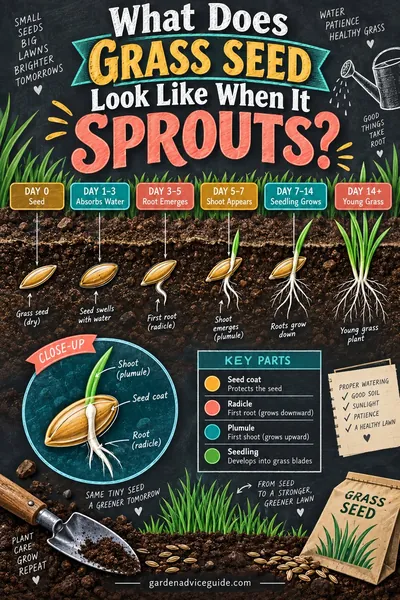
Usually 7 to 12 days in warm fall soil, stretching to 14 to 21 days in cool spring soil. It is one of the faster cool-season grasses, well ahead of Kentucky bluegrass, which can take 14 to 30 days.
How much tall fescue seed do I need?
About 6 to 10 lb per 1,000 sq ft for a new lawn on bare soil, and 3 to 5 lb per 1,000 sq ft for overseeding an existing lawn. A 5,000 sq ft lawn needs roughly 40 lb new or 25 lb for overseeding.
Do I have to overseed fescue every year?
Most fescue lawns benefit from it. Tall fescue is a bunch grass with almost no spreading ability, so thin spots stay thin until you seed them. An annual fall overseed at 3 to 5 lb per 1,000 sq ft keeps density up.
How soon can I mow new tall fescue?
When it reaches about 4 inches, generally 3 to 4 weeks after germination. Use a sharp blade, take off no more than a third of the height, and keep the mower off soft, wet ground so you do not tear seedlings out.
Can I plant tall fescue over an existing lawn?
Yes, and that is exactly what overseeding is. Mow low, bag clippings, aerate or scratch the surface so seed reaches soil, then spread seed at the overseeding rate and keep the top half inch moist for 2 to 3 weeks.
Will tall fescue spread and fill in bare spots?
Only a little. It spreads by short tillers at the crown, not by rhizomes, so a bare patch bigger than a few inches across will not close on its own. Seed it.
Sources: USDA plant materials and university extension turfgrass programs, including North Carolina State and Penn State extension guidance on tall fescue seeding dates and rates.