Cold Hardy Vegetables: What Survives Winter Outdoors, What Needs a Cover and When to Sow

The most cold hardy vegetables are kale, collards, spinach, mache, leeks, garlic, carrots and parsnips. Many of them handle hard freezes into the teens °F, especially with mulch or a row cover, and several taste sweeter after frost. In mild zones, roughly 8 to 10, winter is a main growing season, so lettuce, chard, broccoli, cabbage and peas join the list. In cold zones, a simple cold frame keeps greens going well past the first hard freezes.
The catch is timing. Winter vegetables are sown in summer and early fall, not in winter. They need to be nearly full grown before the days get short, and then they mostly hold in place while you pick from them. Count back from your first fall frost date, and the rest falls into place.
Key facts
- Kale and collards often survive into the teens °F.
- Spinach takes the low 20s °F uncovered, colder under cover.
- Sow most winter crops 6 to 12 weeks before first fall frost.
- Growth nearly stops once days drop under about 10 hours.
- A cold frame or row cover adds several degrees of protection.
The checker below sorts crops for where you live. Pick your zone (zone 3 or 4, 5 or 6, 7, or 8 to 10), and it shows which crops survive winter outdoors, which need a cold frame or row cover, and the latest sowing dates. If you do not know your zone, our planting zone finder gives it from your ZIP code in a few seconds.
Garden Advice Guide · free calculator
Winter Veg Checker by Zone: What Survives and When to Sow
Pick your zone. You get which crops survive winter outdoors, which need a cold frame or row cover, and the latest sowing dates.
Need more? Open the free Frost Dates.
 Planting Zones
 Frost Dates
 Planting Calendar
Quick reference: how much cold each crop takes
| Crop | Rough limit |
|---|---|
| Garlic | Very hardy underground |
| Parsnips, late carrots | Very hardy under thick mulch |
| Kale, collards | Teens °F, some kinds lower |
| Mache | Very hardy |
| Leeks | Hardy, winter kinds best |
| Spinach | Low 20s °F uncovered |
| Cabbage, Brussels sprouts | About the 20s °F |
| Lettuce, chard, beets | Light frost, 28 to 32°F |
Treat these as rough guides. Wind, wet soil, snow cover and plant size all change how much cold a plant can take. A big, well-rooted kale plant shrugs off a night that would kill a tiny seedling, and snow is actually a good insulating blanket.
Frost tolerant versus truly cold hardy
Gardeners sort cool-season crops into two loose groups. Frost tolerant crops handle light frosts around 28 to 32°F without much harm. Lettuce, chard, beets, broccoli and cabbage fit here. They are perfect for fall and early winter, but a hard freeze in the low 20s can turn their leaves to mush.
Cold hardy crops handle hard freezes in the 20s °F and often lower. Kale, collards, spinach, mache, leeks, garlic and root crops under mulch belong to this group. These are the plants you can still pick from in January in many zones. Knowing which group a crop belongs to tells you when to throw a cover over it and when you can leave it alone. Our guide on protecting plants from frost walks through what to do on the first cold nights.
Why frost makes some crops sweeter
Here is the good news about cold. When temperatures drop, kale, collards, carrots, parsnips and Brussels sprouts turn some of their starch into sugar. The sugar works a bit like antifreeze inside the plant cells, and it also makes the harvest taste noticeably sweeter. Many gardeners wait until after the first few frosts to start picking kale and digging parsnips for exactly this reason. Parsnips in particular are often left in the ground until after several hard frosts and dug through the winter as needed.
The short-day slowdown
Cold is only half the story. Light matters just as much. Once day length falls below about 10 hours, most crops almost stop growing, even under a cover. Winter gardeners sometimes call this stretch the Persephone period. In much of the northern United States it runs from roughly mid November to late January, and it starts earlier and lasts longer the farther north you are.
That is why sowing in late fall rarely works. A seedling that is tiny when the days turn short will stay tiny until February. The plants you will pick from all winter need to be at or near harvest size by the time short days arrive. Think of your winter garden as a living fridge: you fill it in fall and take from it through the cold months.
Sow in summer, pick in winter
Every winter sowing date hangs on your average first fall frost. Kale and collards go in about 10 to 12 weeks before it, or as transplants about 6 to 8 weeks before. Spinach for overwintering is sown about 4 to 6 weeks before first frost, and mache about 4 to 8 weeks before. Leeks are transplanted in early to mid summer. Carrots and parsnips for winter digging are sown in mid to late summer. Garlic is planted a few weeks after your first frost, before the ground freezes.
Here is a worked example. In zone 6 with a first fall frost around October 15, count back 11 weeks and sow kale around late July. Sow mache in late August and early September, and spinach in early September. Plant garlic in late October or early November. By mid November, when the days get short, the kale is full size, the spinach has a good rosette, and the mache is ready to cut. Look up your own date with our frost dates finder, and the planting calendar lists everything due in a given month. Our pages on what to plant in August and when to plant garlic fill in the details.
Zone by zone: what to expect
Zones 3 and 4
Fall-planted garlic, plus parsnips and carrots under a deep straw mulch, are your reliable outdoor winter crops. Leafy greens like kale, spinach and mache need a cold frame or a double layer of row cover to keep going past the first hard freezes. Even then, expect a pause in deep winter and a strong restart in March.
Zones 5 and 6
Kale, leeks, mache, garlic and parsnips usually make it through outdoors, especially with mulch. Spinach does best with a cover. Fall-sown spinach that goes into winter small often bounces back in early spring for a very early harvest.
Zone 7
Most cold hardy crops grow outdoors all winter. Keep row cover handy for lettuce, chard and Asian greens during cold snaps that dip into the low 20s.
Zones 8 to 10
Winter is prime time. Grow greens, roots, broccoli, cabbage, onions and peas. Your challenge is warm spells, which can push spinach and lettuce to bolt, so sow small batches every few weeks.
Varieties bred for winter
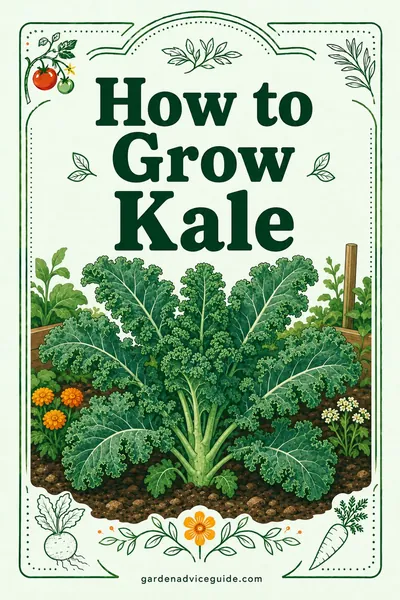
Within one crop, some varieties handle cold far better than others, so the seed packet matters. For kale, Winterbor and other curly types tend to be very hardy, and Red Russian is a good tender-leaf choice. Lacinato, sometimes sold as dinosaur kale, is a little less hardy in the coldest zones. For spinach, look for savoyed, cold-tolerant types sold for fall and overwintering, such as Bloomsdale or varieties labeled for winter. For leeks, choose winter or blue-green types rather than fast summer leeks. Mache comes in a few named types, and any of them suit winter. Our full guides to growing kale and growing spinach go deeper into variety choices and sowing.
Covers that buy you degrees
Row cover is a lightweight fabric laid over hoops. It traps a few degrees of warmth from the soil and blocks drying wind. A single layer helps on frosty nights, and two layers, or a heavier weight, help in harder freezes. Our guide to frost cloth for plants matches fabric weight to temperature.
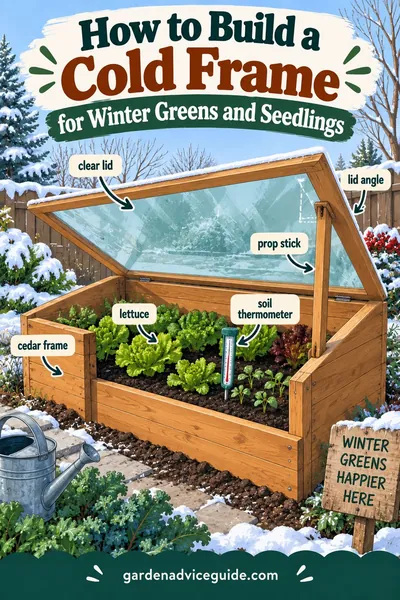
A cold frame is a bottomless box with a clear lid. It is the single best tool for winter greens in zones 3 to 6. On a still, sunny day it can be 20 degrees or more warmer inside than out, so open the lid once it rises above about 40 to 45°F outside, then close it again in the afternoon to trap warmth for the night. Our cold frame building guide shows a simple design.
Mulch protects roots. Spread 6 inches or more of straw or shredded leaves over carrots, parsnips and garlic once the soil starts to freeze. It keeps the ground from freezing hard, so you can still dig roots in midwinter.
Picking in the cold
Harvest leaves when they are thawed, not frozen. Frozen leaves bruise and turn slimy if handled, but the same leaves are fine once the sun warms them by midday. Pick a few outer leaves from each plant rather than stripping one, since regrowth in winter is slow. Plant more than you think you need so you can take a little from each one. Roots under mulch can be dug any time the soil is not frozen solid.
Too late to sow this year?
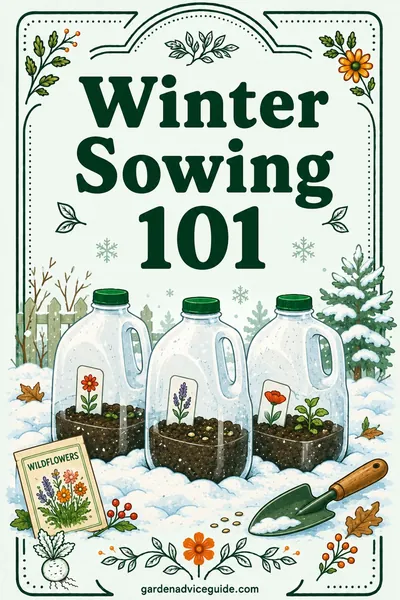
In zones 8 to 10, it usually is not. Greens, roots and garlic can still go in through December. In colder zones, it is too late to sow outdoors for winter eating, but you still have options. A cold frame built now gives you a very early spring crop of spinach and lettuce. Winter sowing in milk jugs lets hardy greens and flowers sprout on their own schedule. And our page on what to plant in January covers the next steps by zone.
Mistakes that cost a winter harvest
Sowing too late is the big one. Seeds sown in late fall barely grow before short days stop them, so start earlier than feels natural. Forgetting to water is another. Plants under covers can dry out even in winter, so check the soil on mild days. Leaving covers sealed on warm, sunny days can cook plants, since a closed frame heats up fast. Finally, expect slow growth. Winter plants grow a little each mild spell, not week after week as they do in summer. If you would also like crops that come back with no replanting at all, see our list of perennial vegetables by zone.
Quick answers about cold hardy vegetables
What vegetables grow in winter?
Kale, collards, spinach, mache, leeks, garlic, carrots and parsnips are the toughest. In zones 8 to 10, lettuce, chard, broccoli, cabbage, onions and peas also grow through winter. In colder zones, greens usually need a cold frame or row cover to keep producing.
What is the most cold hardy vegetable?
Kale, mache, leeks and garlic are among the toughest. Kale often survives into the teens °F or lower, while mulched garlic and parsnips ride out hard freezes safely underground. Mature plants always handle cold better than small ones.
When should I plant a winter garden?
Mostly in mid to late summer and early fall. Sow kale about 10 to 12 weeks before your first fall frost, mache 4 to 8 weeks before and spinach 4 to 6 weeks before. Plant garlic a few weeks after first frost, before the ground freezes.
Can I still plant vegetables in December?
In zones 8 to 10, yes: greens, roots and garlic can still go in. In colder zones it is too late to sow outdoors for a winter harvest, but you can build a cold frame for early spring greens or try winter sowing in milk jugs.
Do cold hardy vegetables need protection?
Often not in mild zones. In colder zones, row cover or a cold frame shields leaves from wind and ice and stretches the harvest. A thick mulch of 6 inches or more protects roots like carrots and parsnips so you can dig them through winter.
Why does kale taste sweeter after frost?
Cold makes kale, collards, carrots and parsnips turn some starch into sugar, which helps protect their cells from freezing. The side effect is a sweeter taste, which is why many gardeners wait for a few frosts before harvesting.
Why did my fall-sown greens stop growing?
Once days drop below about 10 hours, growth slows to a crawl even under a cover. Plants sown too late stay small until late winter. Sow earlier next year so plants are near full size by mid November.
Can I pick kale when it is frozen?
It is better to wait until the leaves thaw. Frozen leaves bruise and turn mushy when handled. By midday, after the sun warms them, the same leaves are crisp and fine to pick.