Perennial Vegetables by Zone

Perennial vegetables by zone sort out quickly once you know which crops need winter cold and which ones die in it. Asparagus, rhubarb, horseradish, sunchokes, sorrel and walking onions are cold climate crops, hardy from zone 3 and happiest where winters freeze hard. Globe artichoke and perennial kale go the other way: they come back reliably only from zone 7 or 8 south, and a zone 5 winter kills them outright. Plant any of them once, in a bed you never dig up again, and they produce for five to twenty years with less work each season than a single row of lettuce.
This page covers where each of the eight main perennial vegetables grows, how to plant it, how long before the first real harvest, how much room it takes, and how to lay out a permanent bed so the perennials and your yearly crops stay out of each other's way.
Plan the bed before you order crowns. Perennials take far more room than their bare roots suggest, so run the numbers through our plant spacing calculator to see how many plants a given bed really holds.
Updated September 2026
Perennial Vegetables by Zone at a Glance
| Crop | Zones | Sun | Spacing | First real harvest | Productive life | Spreads? |
|---|---|---|---|---|---|---|
| Asparagus | 3 to 8 | Full sun | 12 to 18 in, rows 4 to 5 ft | Third spring | 15 to 20 years | No |
| Rhubarb | 3 to 8 | Full sun, afternoon shade in zones 7 and 8 | 3 to 4 ft | Third spring | 10 to 20 years, divide as needed | No |
| Globe artichoke | 7 to 10 | Full sun | 4 to 6 ft | First or second year | About 5 years per plant | Offsets at base |
| Sunchoke | 3 to 9 | Full sun | 12 to 18 in | First fall | Indefinite | Aggressively |
| Horseradish | 3 to 9 | Full sun to light shade | 18 to 24 in | First fall, better second | Indefinite | From any root piece |
| Sorrel | 3 to 9 | Sun to part shade | 12 in | First spring after planting | 3 to 5 years, then divide | Slowly, and by seed |
| Walking onion | 3 to 9 | Full sun | 6 to 8 in | First spring after planting | Indefinite | Walks by topsets |
| Perennial kale | 7 to 10 | Full sun to light shade | 2 to 3 ft, about 4 ft for Daubenton | First season from a rooted cutting | 3 to 5 years per plant | No |
The zone ranges above describe where the plant survives as a perennial and produces well. Several of these crops can be pushed a zone colder or grown for a single season outside their range, but that turns them into annual crops, which is outside the scope of this page.
Why Perennials Need Their Own Plan
A perennial vegetable is a planting decision you live with for a decade, and it breaks three habits that work fine for annual crops.
It sits outside the rotation. Moving tomatoes, brassicas and beans to a new bed each year is one of the most effective ways to keep soil diseases down, and our crop rotation guide lays out that cycle. Asparagus and rhubarb cannot move. Put them in a separate bed or a strip along the edge of the garden, so the annual beds can rotate freely around them.
It shades what grows next to it. Asparagus ferns grow 5 to 6 feet tall by midsummer. Sunchokes reach 6 to 10 feet. Artichokes spread 4 to 6 feet wide. Site tall perennials on the north side of the garden so they do not throw shade across your summer crops.
Soil preparation happens once. You cannot work compost into an asparagus bed after planting without damaging the crowns. Test the soil, adjust the pH, clear every perennial weed, and dig in compost before anything goes in the ground. Weeds such as bindweed and quackgrass that get established inside a perennial bed are nearly impossible to remove later.
Our page on raised bed garden layout ideas shows how to reserve a dedicated perennial bed at the far end of a garden, which is the arrangement most gardeners settle on after a few seasons. Perennial herbs such as chives, thyme and oregano make natural neighbors in that bed, and our perennial herbs by zone guide lists which ones return in your climate.
Which Perennial Vegetables Grow in Your Zone
| Zone | Reliable perennials | Notes |
|---|---|---|
| 3 | Asparagus, rhubarb, sunchoke, horseradish, sorrel, walking onion | Choose cold hardy asparagus such as Millennium. Mulch rhubarb crowns the first winter |
| 4 | Same as zone 3, plus sea kale in a sheltered spot | These crops thrive here. Winter cold is an asset, not a problem |
| 5 | Same as zone 4 | The widest easy selection of cold climate perennials |
| 6 | All of the above, plus perennial kale with winter protection | Daubenton kale can survive a mild zone 6 winter with shelter, but losses are common |
| 7 | All cold climate perennials, plus globe artichoke with heavy winter mulch, plus perennial kale | The crossover zone, where nearly every crop on this page can succeed |
| 8 | Asparagus, rhubarb in afternoon shade, artichoke, sunchoke, horseradish, sorrel, walking onion, perennial kale, tree collards | Rhubarb stalks get thinner and the plant may go dormant in summer heat |
| 9 | Artichoke, sunchoke, sorrel in shade, walking onion, perennial kale, tree collards, asparagus with care | Asparagus needs a dry rest period in place of cold. Rhubarb rarely persists |
| 10 | Artichoke in coastal areas, tree collards, perennial kale, sunchoke | Most cold climate perennials lack the winter chill they need |
Not sure where your garden falls? The growing zones lookup gives your USDA zone by ZIP code.
Asparagus
Asparagus is the best known perennial vegetable, and its long payoff scares people off. A well planted bed produces for 15 to 20 years, and the first two springs of patience are what it takes.
Zones and climate. Asparagus grows best in zones 3 to 8, where winter cold forces a dormant rest. In zones 9 and 10 it can produce if the ferns are allowed to dry down in late summer or fall to create an artificial rest period, but spear yields are usually lower. Asparagus needs full sun and tolerates slightly alkaline soil, around pH 6.5 to 7.5.
Varieties. All male hybrids such as Jersey Knight and Jersey Supreme produce more spears because they put no energy into seed, and they do not drop seedlings that crowd the bed. Millennium, bred in Ontario, is one of the most cold hardy choices. Purple Passion produces purple spears that are sweeter raw and turn green when cooked.
Planting. Plant one year old crowns in early spring, a few weeks before your last frost.
- Dig a trench 12 to 18 inches wide and 6 to 8 inches deep, shallower in heavy soil and deeper in sandy soil.
- Make a low ridge of soil and compost down the center of the trench.
- Set crowns on the ridge 12 to 18 inches apart, draping the roots down the sides.
- Cover with 2 inches of soil. As the spears grow through summer, gradually fill in the trench until it is level with the surrounding ground.
- Space rows 4 to 5 feet apart.
Harvest timeline.
| Year | Harvest |
|---|---|
| Planting year | None. Let every spear grow into fern |
| Second spring | Light harvest for about 2 weeks, then stop |
| Third spring | Harvest for 4 to 6 weeks |
| Fourth spring onward | Harvest for 6 to 8 weeks |
Cut or snap spears when they are 6 to 8 inches tall and the tips are still tight. Stop harvesting when most new spears come up thinner than a pencil, which is the plant's signal that its root reserves are running low. Let the rest grow into ferns, which rebuild the crown for next year.
Seasonal care. Leave the ferns standing until they turn yellow or brown in fall, then cut them to the ground. In zones 3 to 5, some gardeners leave them standing all winter to trap snow as insulation and cut them in early spring. Hand weed carefully, since hoeing damages the shallow crowns, and mulch 3 to 4 inches deep after spear season. Watch for asparagus beetles, which chew spears and ferns. Hand picking and removing old fern debris in fall keeps them in check.
Rhubarb
Rhubarb is the other cold climate perennial staple, and it may be the most reliable vegetable in any zone 3 or 4 garden. A single established plant produces for many years, and the stalks come in April and May, when almost nothing else is ready to harvest.
Zones and climate. Rhubarb grows in zones 3 to 8 and needs a cold winter to break dormancy properly. In zones 7 and 8, give it afternoon shade, because summer heat slows growth and can send the plant into early dormancy. In zones 9 and 10, rhubarb rarely survives as a perennial.
Varieties. Canada Red and Valentine produce red stalks that keep their color when cooked. Victoria is a vigorous, heavy producer with green stalks blushed red at the base. Crimson Red is a common red nursery variety.
Planting. Plant dormant crowns or divisions in early spring as soon as the ground can be worked. Set each crown so the buds sit 1 to 2 inches below the soil surface, and space plants 3 to 4 feet apart. One healthy plant fills a circle about 4 feet across at maturity. Enrich the planting area with plenty of compost, since rhubarb is a heavy feeder that stays in one place for years.
Harvest timeline.
| Year | Harvest |
|---|---|
| Planting year | None |
| Second spring | Take a few stalks over 1 to 2 weeks |
| Third spring onward | Harvest for 8 to 10 weeks |
Pull stalks rather than cutting them: grip each one near the base and twist it away from the crown. Always leave at least a third of the stalks on the plant. Stop harvesting when new stalks come in thin, usually by late June in most zones. Eat only the stalks. The leaves contain high levels of oxalic acid and should never be eaten, though they can go on the compost pile.
Seasonal care. Cut off flower stalks as soon as they appear so the plant keeps its energy in the crown. Top dress with compost every spring. When the center of the crown gets crowded and stalks thin out, usually every 5 to 8 years, dig the plant in early spring, split it into sections with at least two buds each, and replant.
Globe Artichoke
Globe artichoke is a warm climate perennial that stays productive for about five years per plant, and it is one of the most ornamental vegetables you can grow, with silver gray leaves and a mature plant spreading 4 to 6 feet wide.
Zones and climate. Artichokes are reliably perennial in zones 8 to 10, and they grow best in mild coastal climates with cool summers and frost free or nearly frost free winters. In zone 7, established plants often survive with winter protection. In zones 6 and colder they do not survive winter in the ground.
Varieties. Green Globe is the standard. Big Heart is a large, thornless variety. Violetta produces purple buds. Imperial Star was bred to produce in its first year from seed, which suits the colder end of the range.
Planting. Plant rooted offshoots or nursery plants in fall in zones 9 and 10, or in early spring in zones 7 and 8. Space plants 4 to 6 feet apart in full sun with rich, well drained soil. Wet soil in winter rots the crown faster than cold does.
Harvest. In zones 9 and 10, established plants produce their main crop in spring, and some produce a second smaller crop in fall. Cut the central bud first, while it is tight and before the bracts start to open, with 1 to 3 inches of stem attached. Smaller side buds follow on the same stalk. A bud that has started to open is past its eating stage, though it will bloom into a large purple thistle flower that bees love.
Seasonal care. After spring harvest in hot inland areas, cut the plant down to a few inches above the ground. It rests through summer heat and regrows in fall. In zone 7, cut the plant back to about a foot tall after the first light frost, pile 8 to 12 inches of straw or shredded leaves over the crown, and cover with a bushel basket or a frost cover during the coldest weather. Remove the protection gradually in spring. Every three to four years, dig and divide the offshoots that form around the base to replace older plants that have lost vigor.
Sunchokes
Sunchokes, also sold as Jerusalem artichokes, are a native North American sunflower grown for its knobby, crisp tubers. They are the easiest crop on this page to grow and the hardest to get rid of.
Zones and climate. Zones 3 to 9. Sunchokes tolerate poor soil, heat, cold and drought, and they need full sun.
Varieties. Stampede matures early and stays shorter, which helps in northern gardens. Fuseau produces long, smooth tubers that are much easier to clean than the knobby types. Red Fuseau has red skin.
Planting. Plant tubers in early spring, 4 to 5 inches deep and 12 to 18 inches apart. Plants grow 6 to 10 feet tall and bloom with small yellow sunflowers in late summer and fall. They make a quick summer screen along a fence.
Harvest. Dig tubers after the first few frosts in fall, when the tops die back. Cold converts some of the stored inulin into sugars, so frost improves the flavor. Tubers keep well in the ground through winter wherever the soil does not freeze solid, and in colder zones you can dig through late fall and again in early spring before new growth starts. They shrivel quickly once dug, so store harvested tubers in the refrigerator in a plastic bag.
The warning. Every tuber, and every piece of tuber, left in the ground grows into a new plant. A sunchoke patch spreads outward each year and cannot be dug out completely. Plant it in a spot where you want it permanently, such as a dedicated corner or a strip bordered by lawn that gets mowed. Never plant sunchokes in a raised bed you intend to use for other crops. If you want sunflowers for the bees without the tubers, our page on when sunflowers are in bloom covers the annual and perennial types.
Horseradish
Horseradish is a vigorous perennial root crop grown for its pungent white roots, and like sunchokes, it regrows from any small piece of root left in the soil.
Zones and climate. Zones 3 to 9. Horseradish grows best where winters are cold, and roots dug after a hard frost are noticeably more pungent. In zones 8 and 9 the roots tend to be milder and smaller.
Varieties. Maliner Kren and Bohemian are the traditional types, and Big Top Western is a common commercial selection with large roots.
Planting. Plant root cuttings, often called sets, in early spring. Each set should be 8 to 10 inches long and about as thick as a finger. Plant at a 45 degree angle, with the thick end up and the top 2 to 3 inches below the soil surface. Space sets 18 to 24 inches apart. The thin end is usually cut at a slant at the nursery to show which way is down.
Harvest. Dig roots in fall after several hard frosts, or in early spring before new leaves appear. Roots harvested after one full growing season are usable, and second year roots are larger. Take the large main roots and replant a few side roots to keep the patch going. Grate horseradish outdoors or in a well ventilated room, since the fumes are strong enough to sting the eyes, and wash your hands before touching your face after handling cut roots.
Containment. Horseradish spreads from root fragments and can take over a bed. Plant it in a corner of its own, or bury a large bottomless container or a section of culvert pipe 2 feet deep and plant inside it.
Sorrel
Sorrel is a leafy perennial with a sharp, lemony flavor, and it is usually the very first green ready to pick in spring, often weeks before the first lettuce seedlings are up.
Zones and climate. Garden sorrel (Rumex acetosa) is hardy in zones 3 to 9. French sorrel (Rumex scutatus) has smaller, shield shaped leaves with a milder flavor and is hardy in zones 4 to 8. Red veined sorrel is more ornamental than culinary and is best picked young. In zones 8 and 9, sorrel needs afternoon shade and goes semi dormant in summer heat.
Planting. Sow seed in spring or set out divisions in spring or fall, spacing plants about 12 inches apart. Sorrel tolerates part shade and a wide range of soils.
Harvest. Pick young leaves when they are 4 to 6 inches long, taking the outer leaves and leaving the center to keep producing. Harvest from early spring through fall. A cold frame set over an established clump in late winter brings the first picking forward by a few weeks. Plants that bolt, sending up flower stalks, produce tougher, more bitter leaves, so cut flower stalks off as soon as they appear. That also prevents self seeding, which can spread sorrel into nearby beds. A non flowering selection, Profusion, avoids the problem.
Like rhubarb leaves and spinach, sorrel contains oxalic acid. It is safe in normal culinary amounts, but it is a flavoring green rather than a salad base.
Seasonal care. Divide clumps every 3 to 5 years when they get crowded and leaf production drops. Cut plants back to the ground in late summer if they look tired, and they regrow with fresh leaves for a fall harvest.
Walking Onions
Walking onions, also called Egyptian onions or tree onions, are a perennial onion that forms clusters of small bulblets at the top of the stalk in place of flowers. As the stalk grows heavy, it bends over, the bulblets touch the ground and root, and the plant moves up to 2 feet from where it started. Over a few years a single clump walks across the bed.
Zones and climate. Zones 3 to 9. Walking onions are among the most cold hardy vegetables grown, and they are often the first green shoots to appear in spring.
Planting. Plant topsets, the small bulblets from the top of the stalk, in late summer or fall, or in early spring. Set them 1 to 2 inches deep and 6 to 8 inches apart in full sun. Walking onions are not grown from seed.
Harvest. One plant provides three different crops:
| Part | When | Use |
|---|---|---|
| Green shoots | Early spring through fall | Use like scallions or chives |
| Topsets | Midsummer to late summer | Peel and use like pearl onions or shallots, or replant |
| Base bulbs | Fall, or any time for a strong flavor | Small, pungent bulbs, used like shallots |
Seasonal care. To keep a clump in place, harvest or remove the topsets before the stalks bend to the ground. To expand the patch, let them walk. Thin crowded clumps every few years by digging and replanting the strongest bulbs.
Perennial Kale
Most kale is a biennial that flowers and dies in its second year. A few types rarely or never flower, so they keep growing leaves year after year. These are perennial kales, propagated by cuttings rather than seed, since they produce little or no seed of their own.
| Type | Zones | Size | Notes |
|---|---|---|---|
| Daubenton kale | 7 to 9, 6 with protection | 2 to 3 ft tall, spreading 4 to 6 ft wide | Sprawling branches that root where they touch the ground. Mild, tender leaves year round |
| Tree collards | 8 to 10 | 6 to 10 ft tall | Tall, upright stalks with purple tinged leaves. Very productive in mild winters |
| Sea kale (Crambe maritima) | 4 to 8 | 2 to 3 ft tall and wide | A different plant from kale, grown for blanched spring shoots and young leaves. The cold climate option |
Planting. Root cuttings 6 to 12 inches long in moist potting mix in spring or fall, then transplant tree collards 2 to 3 feet apart and spreading Daubenton kale about 4 feet apart. Nurseries that specialize in perennial food plants sell rooted cuttings.
Harvest. Pick the lower, outer leaves year round, leaving at least half the leaves on the plant. Harvest lightly for the first few months while roots establish.
Seasonal care. Plants get woody and less productive after 3 to 5 years. Take cuttings from a healthy plant before that point and start a replacement. In zone 7, protect Daubenton kale with a frost cover during a hard freeze. Perennial kale is attacked by the same pests as annual kale, so cabbage worms and aphids need watching. For growing standard seed grown kale as a yearly crop, see our guide on how to grow kale.
Spacing and Laying Out a Perennial Bed
Perennial vegetables are planted at their mature size, not their size at planting, and that is where most layouts go wrong. A rhubarb crown the size of a fist becomes a plant 4 feet across. A row of asparagus crowns set 12 inches apart fills in with roots that spread 3 to 4 feet wide. Enter your bed dimensions and crop in the plant spacing calculator to see how many plants actually fit.
Worked example: a 4 by 12 foot perennial bed in zone 5, along the north edge of the garden.
- Back half, west end: one row of 5 asparagus crowns at 18 inches down an 8 foot stretch. The ferns will reach 5 feet by midsummer and sit on the north side, shading nothing.
- East end: one rhubarb crown in a 4 by 4 foot corner.
- Front edge: a row of walking onions at 8 inches and 4 sorrel plants at 12 inches, where you can reach them for frequent harvest.
- Not in this bed: sunchokes and horseradish. Both spread from roots and would take over the asparagus. They go in their own contained spots elsewhere.
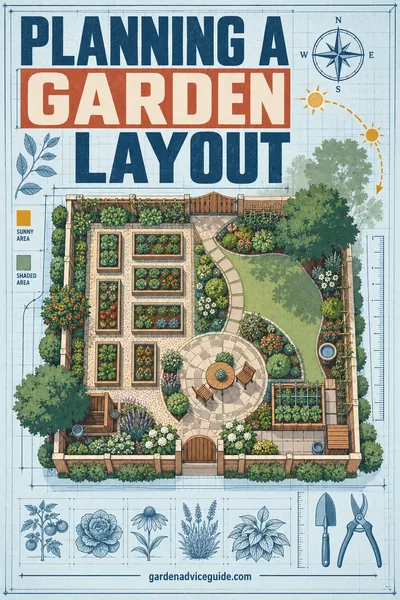
Our page on garden layout planning shows how to fit a perennial strip like this into a full garden plan with room left over for rotating annual beds. Fruiting shrubs follow the same plant once logic on a bigger footprint, and our berry bushes by zone guide covers which ones suit your climate.
When to Plant Perennial Vegetables
Most perennial vegetables go in the ground as dormant crowns, roots, tubers or topsets rather than seed, and the timing is tied to your frost dates. Our planting calendar by zone gives average frost dates and full seasonal schedules to match these windows against.
| Crop | Plant | Zones 3 to 5 | Zones 6 and 7 | Zones 8 to 10 |
|---|---|---|---|---|
| Asparagus | Crowns | Late April to May | March to April | January to February |
| Rhubarb | Crowns or divisions | April to May | March to April | Fall or late winter, zone 8 only |
| Globe artichoke | Offsets or plants | Not perennial | Early spring, zone 7 | Early spring in zone 8, fall in zones 9 and 10 |
| Sunchoke | Tubers | April to May | March to April | February to March |
| Horseradish | Root sets | April to May | March to April | February to March |
| Sorrel | Seed or divisions | Spring | Spring or fall | Fall |
| Walking onion | Topsets | Late summer or spring | Late summer, fall or spring | Fall |
| Perennial kale | Rooted cuttings | Not perennial | Spring, zone 7 | Fall or spring |
Keeping a Perennial Bed Productive
- Feed from the top. Spread 1 to 2 inches of compost over the bed every spring. You cannot dig it in, so let rain and soil life carry it down.
- Mulch year round. A 3 inch layer of straw, shredded leaves or wood chips holds moisture, suppresses weeds and insulates crowns in winter. Our mulch guide covers which materials suit vegetable beds.
- Weed early, never late. A perennial weed that establishes in an asparagus bed is there for as long as the asparagus is. Pull weeds while they are small.
- Test the soil every few years. Perennial beds slowly drift in pH and nutrient levels, and you only have one chance a year to correct it. The steps are covered in how to test garden soil.
- Divide on schedule. Rhubarb every 5 to 8 years, sorrel every 3 to 5 years, walking onions and artichokes whenever clumps crowd. Division keeps plants vigorous and gives you extra plants.
- Protect from deer where needed. Rhubarb and mature asparagus ferns are rarely touched, but spring spears are browsed. Our page on the deer resistant vegetable garden covers which crops can sit outside a fence.
FAQ
What vegetables come back every year?
The most common perennial vegetables are asparagus, rhubarb, globe artichoke, sunchokes, horseradish, sorrel, walking onions and perennial kale. Asparagus and rhubarb are the most widely grown, since they thrive across zones 3 to 8. Artichokes and perennial kale need milder winters, zone 7 or 8 and warmer, to come back reliably.
What perennial vegetables grow in zone 5?
Asparagus, rhubarb, sunchokes, horseradish, sorrel and walking onions all grow well as perennials in zone 5, and sea kale is another option. Globe artichoke and perennial kale do not survive a zone 5 winter in the ground. Cold winters actually help asparagus and rhubarb, which need a dormant period to produce well.
How long does it take asparagus to produce?
Asparagus crowns produce a light harvest for about two weeks in the second spring after planting, a 4 to 6 week harvest in the third spring, and a full 6 to 8 week harvest from the fourth year onward. The waiting period lets the crowns build large root systems, which is what keeps a bed productive for 15 to 20 years.
Can you grow rhubarb in zone 9?
Rhubarb rarely survives as a perennial in zone 9 because it needs cold winters to go dormant and regrow vigorously. Summer heat also stresses the plants. In zones 7 and 8, rhubarb grows well with afternoon shade. In zone 9 and warmer, most gardeners find the plants decline within a year or two.
Are artichokes perennial?
Globe artichokes are perennial in zones 8 to 10 and often survive in zone 7 with a heavy winter mulch. Each plant produces well for about five years, and the offshoots that form around its base can be divided to replace it. In zones 6 and colder, winter cold kills the roots.
Will sunchokes take over my garden?
They can. Every piece of tuber left in the soil grows a new plant, and a sunchoke patch expands each year. Plant sunchokes in a spot where you want them permanently, away from other vegetable beds, and consider surrounding the patch with mowed lawn to contain it.
How do I stop horseradish from spreading?
Plant it in a large bottomless container or a section of pipe buried about 2 feet deep, or give it a corner of the garden well away from other beds. Horseradish regrows from small root fragments, so when you harvest, dig carefully and remove as much root as you can from any area where you do not want it to return.
What is perennial kale?
Perennial kale refers to kale types that rarely flower, so they keep producing leaves for several years instead of dying after their second season. Daubenton kale and tree collards are the most common. Both are propagated from cuttings, grow best in zones 7 to 10, and stay productive for about 3 to 5 years before a new cutting should replace them.