Hellebore Care: Christmas Rose and Lenten Rose Bloom Times, Planting and Yearly Care

Hellebores bloom in the coldest, grayest part of the year, usually somewhere between December and April, depending on your zone and which kind you grow. The Christmas rose (Helleborus niger) can open as early as December in mild zones, while Lenten roses, the hybrid hellebores sold in most garden centers, usually flower from about February to April. Care is easy: part shade, rich soil that drains well, a little water in dry spells, and one trim of the old leaves in late winter.
They are also deer resistant and long-lived. A clump can stay in the same spot for decades and only get better. Plant one near a path, a door or a window you look out of every day, and you will have flowers when almost nothing else in the garden is awake.
Key facts
- Bloom: about December to April, by zone and type
- Hardiness: Christmas rose zones 3 or 4 to 8; Lenten rose zones 4 or 5 to 9
- Light: part shade, ideally under deciduous trees
- Main job: cut last year's leaves in late winter as buds appear
- The ASPCA lists hellebore as toxic to dogs, cats and horses
The hellebore checker below has two fields. Pick your zone, from zone 3 or colder up to zone 10 or warmer, then pick which hellebore you have: Christmas rose (Helleborus niger), Lenten rose (hybrid hellebores) or not sure. You get a hardiness check, the bloom window you can expect and when to cut the old leaves. If you do not know your zone, look it up with our planting zone finder first.
Garden Advice Guide · free calculator
Hellebore Checker by Zone: Bloom Window, Leaf Cutting and Hardiness
Pick your zone and which hellebore you have. You get a hardiness check, the bloom window and when to cut the old leaves.
Need more? Open the free Frost Dates.
 Planting Zones
 Frost Dates
 Planting Calendar
Quick reference: when hellebores bloom by zone
| Zone | Christmas rose (H. niger) | Lenten rose (hybrids) |
|---|---|---|
| 4 | About March to April | About April to May, in sheltered spots |
| 5 and 6 | About February to April | About March to April |
| 7 and 8 | About December to March | About February to April |
| 9 | Usually struggles with heat | About January to March, in shade |
A cold snap can pause the show and a mild winter can start it early. The flowers last a long time, often six weeks or more. What look like petals are really sepals, which stay on the plant and slowly fade to green or dusky pink while the seed pods swell in the center.
Christmas rose or Lenten rose?
Both are hellebores, and neither one is related to roses. The names come from their open, rose-like flowers and when they bloom. The Christmas rose, Helleborus niger, has mostly white flowers that age to pink, and it blooms earlier, in winter where winters are mild. It is the hardier of the two, to about zone 3 or 4, but a little fussier: it wants excellent drainage and does not like summer heat, so it struggles in zone 9.
Lenten roses, Helleborus x hybridus and similar hybrids, bloom later, in late winter into spring, around the season of Lent. They come in a huge range of colors: white, cream, pink, plum, slate, green, near-black, speckled and double. They are very easy and forgiving, hardy to about zones 4 or 5 through 9, and they are what you will find in most nurseries. If your tag just says hellebore and the flowers are colored, you almost certainly have a Lenten rose.
Where to plant hellebores
The classic spot is under deciduous trees or shrubs. In winter, when the branches are bare, the plants get bright light while they bloom. In summer, the leafy canopy gives them shade, which they need in hot weather. The north or east side of a house works too. Avoid deep, dark shade all year, which means few flowers, and hot afternoon sun in summer, which scorches the leaves.
Soil matters more than almost anything else. Hellebores want rich, loose soil that holds some moisture but never stays wet. Soggy winter soil rots the crowns. They grow well in neutral to slightly alkaline soil, around pH 6.5 to 7.5, so they are a good choice where acid-loving shrubs struggle. If you are unsure of your soil, our page on how to test garden soil explains simple tests. A gentle slope or a raised edge is ideal, and it has a bonus: the nodding flowers are easier to see when they sit a little above eye level.
How to plant a hellebore
Plant in spring or early fall, when the ground is workable and the weather is mild. Fall planting gives roots time to settle before the plant's first bloom season; aim for at least six weeks before your ground freezes, which you can estimate with the frost date finder. Dig a hole about twice as wide as the pot and mix compost into the soil you removed. Set the plant so the crown, where the stems meet the roots, sits at the same depth it was in the pot. Planting too deep is a common reason hellebores fail to bloom.
Firm the soil gently, water slowly until the area is soaked, and add 1 to 2 inches of shredded leaf or bark mulch around the plant, keeping it off the crown. Space plants about 15 to 18 inches apart. Mature clumps grow about 12 to 18 inches tall and up to 2 feet wide. Water regularly through the first year, whenever the top inch of soil is dry.
The late-winter leaf trim
This one job makes the biggest difference to how your hellebores look. In late winter, as soon as you see flower buds pushing up from the center of a Lenten rose, cut all of last year's leaves off at the base. Wear gloves, because the sap can irritate skin. Work carefully, leaf by leaf, so you do not snip the new buds hiding among the old stems.
Why bother? The flowers nod downward and often hide under the old, tattered leaves. Clearing them away shows off the blooms. It also removes leaves carrying leaf spot, a fungal disease, before the new leaves arrive. Bag and toss spotted leaves rather than composting them. Fresh leaves grow in during and after flowering and look good all summer. With the Christmas rose, many gardeners remove only damaged leaves instead of all of them, because its new leaves come more slowly. In zones 5 and 6, the trim usually falls in February or March; in zones 7 and 8, often January or February.
Water and food through the seasons
Hellebores need little once established. In their first year, water about once a week in dry weather. After that, they are fairly drought tolerant in shade, but a deep soak during a long summer dry spell keeps the leaves fresh and helps next year's flowers. Our watering guide helps you judge when the garden is dry enough to need it.
For feeding, a layer of compost or shredded leaves each fall is usually plenty. If growth looks weak, a light sprinkle of balanced, slow-release fertilizer in early spring helps. Avoid heavy feeding, which gives soft leaves and fewer flowers. Leaving fallen tree leaves around the plants in autumn mimics their woodland home; our mulch guide covers leaf mulch.
Other hellebores worth growing
Beyond the two common types, a few others are worth knowing. Many newer hybrids hold their flowers outward or upward instead of nodding, so you can see their faces. 'Ivory Prince' is a well-known one with cream flowers held up above the leaves. Named series of Lenten roses, such as Winter Jewels and Wedding Party, offer specific colors and doubles so you know what you are getting. 'HGC Josef Lemper' is a vigorous, free-flowering Christmas rose.
Two species have a very different look. The stinking hellebore, Helleborus foetidus, has finely cut dark leaves and clusters of pale green, bell-shaped flowers edged in maroon; despite the name, the smell is only noticeable if you crush the leaves. The Corsican hellebore, Helleborus argutifolius, has bold, toothed gray-green leaves and pale green flowers, and handles a little more sun. Both are less cold-hardy than Lenten roses, roughly zones 6 to 9, so check the tag.
Seedlings, dividing and moving
Happy Lenten roses often seed themselves around the parent plant. The babies take two to three years to bloom, and the flowers may look different from the parent, which is half the fun. Pull the ones you do not want while they are small, or dig and move a few to a new spot in spring. Dividing is not usually needed. Established plants sulk when moved and may skip a year of bloom. If you must divide, do it right after flowering in spring, cutting the clump into pieces with several buds each, and water the divisions well.
Common hellebore problems
No flowers usually means the crown was planted too deep, the spot is too shady, or the plant is still young and settling in. Check the crown depth and be patient with new plants. Black or brown blotches on the leaves are leaf spot; cut and bin affected leaves in late winter and give the plants a little more airflow. Flowers that flop after a hard freeze are usually fine and perk up when it warms. A plant that slowly fades over a summer often has soggy soil or too much heat, so improve drainage or move it to a cooler, shadier place.
Aphids sometimes cluster on new growth and flower stems in spring; a strong spray of water knocks them off, and our page on getting rid of aphids has more options. Slugs chew leaves and flowers in damp weather; see how to get rid of slugs. One serious problem is a virus called hellebore black death, which causes black streaks along the leaf veins and twisted, stunted growth. There is no cure. Remove and dispose of the whole plant, and ask your local cooperative extension office if you are unsure.
Deer, rabbits, pets and good companions
Deer and rabbits almost always leave hellebores alone, because the leaves are tough and leathery and the whole plant is toxic. That makes them one of the best choices for shady beds where deer roam. According to the ASPCA, hellebore (Christmas rose) is toxic to dogs, cats and horses. Most pets ignore it, but puppies and curious chewers may not, so plant it away from favorite chewing spots. If a pet eats some, call your vet or the ASPCA Animal Poison Control Center.
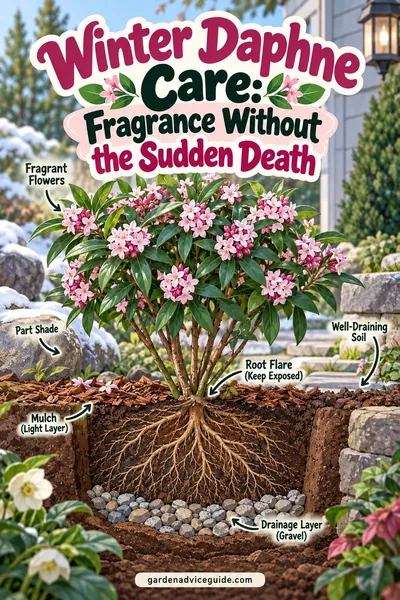
For companions, winter blooming shrubs such as witch hazel give height behind them, and winter daphne adds fragrance nearby. Snowdrops and early daffodils pop up around hellebores in late winter; see how to plant daffodil bulbs. Ferns and hostas take over the show in summer. Our lists of deer resistant shade plants and deer resistant perennials suggest more plants that share their tastes.
Quick answers about hellebores
When does hellebore bloom?
Usually between December and April. Christmas rose can flower as early as December in zones 7 and 8, but more often in late winter. Lenten roses usually bloom from about February to April, later in colder zones. The flowers then last six weeks or more, fading slowly to green or pink.
Should I cut back hellebore leaves?
Yes, for most Lenten roses. Cut last year's leaves to the ground in late winter, just as the flower buds appear in the center. It shows off the flowers and removes leaves with leaf spot. New leaves grow in during and after bloom. With Christmas rose, remove only damaged leaves.
Do hellebores need sun or shade?
Part shade is ideal, such as under deciduous trees that let in winter sun while the plants bloom and give shade in summer. Deep shade all year means few flowers, and hot afternoon summer sun scorches the leaves. They also need rich soil that drains well.
Why is my hellebore not blooming?
The usual causes are planting the crown too deep, too much shade, or a young plant that is still settling in. New plants and seedlings can take two to three years to flower well. Check that the crown sits at soil level and give the plant a brighter winter spot.
Are hellebores deer resistant?
Yes, very. Deer and rabbits usually leave hellebores alone, because the leaves are tough and leathery and the plants are toxic. They are one of the most reliable deer-resistant flowers for shady beds, though no plant is completely deer proof in a hungry winter.
Are hellebores poisonous to pets?
Yes. The ASPCA lists hellebore as toxic to dogs, cats and horses if eaten. Most pets leave them alone, but plant them away from spots where pets chew or graze. If a pet does eat some, call your vet or the ASPCA Animal Poison Control Center.
Can I grow hellebores in pots?
Yes, for a few years. Use a pot at least 12 inches wide and deep with drainage holes and a rich potting mix. Keep it in part shade and water when the top inch dries. In zones 6 and colder, move the pot to a sheltered spot in winter, since roots in pots freeze harder.