How to Plant Daffodil Bulbs

Here is how to plant daffodil bulbs so they come back for decades: set each bulb pointed end up in a hole three times as deep as the bulb is tall, which means about 6 inches to the base for a standard bulb, and space bulbs 4 to 6 inches apart. Plant in fall once the soil at that depth has cooled below 60°F, and try to finish at least 6 weeks before the ground freezes. Water once, deeply, then leave the bed alone until green noses show in late winter.
Daffodils are the easiest bulb you will ever plant, and also the one people most often plant a little wrong. They forgive nearly everything except three mistakes: planting too shallow, cutting the leaves off too soon, and leaving a clump in the same spot until it chokes itself. This guide covers all three, plus timing by zone, lawn and woodland drifts, and the other bulbs worth planting on the same afternoon.
Your planting deadline runs off your first frost. Find your first frost date with our free Frost Date Lookup, then count back from the week your ground usually freezes.
Updated September 2026
When to Plant Daffodil Bulbs: Go by Soil Temperature
The calendar is a rough guide. The soil is the real one.
Daffodil bulbs want soil below 60°F at planting depth. Above that, narcissus basal rot, a Fusarium fungus that turns the base of the bulb soft and brown, stays active and can get into a bulb before it roots. Below 60°F, the rot slows down and the bulb starts its fall job, which is growing roots.
That root growth is the reason daffodils should go in earlier than tulips rather than later. A daffodil builds a bigger root system before winter and takes longer to do it, and roots grow best while soil sits between the 40s and the mid 50s. So the practical rule is to plant as soon as your soil cools under 60°F, not to wait for the last possible week. Give daffodils 6 weeks of rooting time at a minimum, and 8 to 10 weeks if your fall allows it.
To check, push a soil thermometer 6 inches down in the morning, when soil is coolest. Two readings under 60°F a few days apart means go. No thermometer? Nights settling into the low 40s for a week or so usually line up with the right soil temperature in most of the country.
Do not wait for the leaves to fall or for the first frost to pass. Plenty of gardeners use first frost as the trigger for tulips. For daffodils, that is usually late.
Daffodil Planting Times by Zone
Most garden daffodils are reliably hardy in USDA zones 3 to 8. Some catalogs stretch that to zone 9, but standard trumpet and large-cupped types need a longer cold period than a zone 9 winter delivers, so treat 3 to 8 as the dependable range and use the warm-climate varieties noted below if you garden farther south.
| USDA Zone | Soil usually drops below 60°F | Best planting window | Notes |
|---|---|---|---|
| 3 | Early September | Early to late September | Ground can freeze by late October; plant as soon as bulbs arrive |
| 4 | Mid September | Mid September to early October | September plantings bloom noticeably stronger |
| 5 | Late September | Late September to mid October | The classic daffodil window |
| 6 | Early October | October to early November | Early October gives the best rooting |
| 7 | Mid October | Mid October to mid November | Warm Octobers happen; trust the thermometer |
| 8 | Early November | November to early December | Choose varieties that need less winter chill |
| 9 | Late November | December | Tazetta and jonquilla types only; standard daffodils fade after a year |
Zones 3 and 4 have the shortest window and the most to gain from speed. Order early so bulbs arrive in late August or early September.
Zones 5 and 6 get the easy version. Almost any October weekend works.
Zone 7 is where warm soil causes most of the trouble. A late heat spell can hold soil in the mid 60s well into October. Wait it out; a two week delay costs nothing.
Zones 8 and 9 should pick varieties bred for mild winters. Tazettas like 'Geranium' and 'Avalanche', jonquilla hybrids like 'Suzy' and 'Pipit', and paperwhites (which are tazettas too) bloom without a hard winter. Classic big trumpets like 'Dutch Master' tend to bloom once and dwindle. If you want to push standard varieties in a warm zone, the refrigerator pre-chilling steps in our guide on when to plant tulip bulbs work for daffodils as well; just give daffodils the longer end, about 12 to 15 weeks.
How Deep and How Far Apart to Plant Daffodil Bulbs
Depth is the setting that decides whether a daffodil planting lasts. Shallow bulbs split into small offsets faster, dry out in spring, heave during freeze and thaw cycles, and quit blooming sooner.
The rule is three times the bulb's height, measured from the soil surface down to the base of the bulb.
| Daffodil type | Examples | Bulb height | Depth to base of bulb | Spacing |
|---|---|---|---|---|
| Large trumpet and large-cupped | 'Dutch Master', 'Carlton', 'Mount Hood' | 2 to 2.5 in | 6 to 8 in | 5 to 6 in |
| Standard and small-cupped | 'Ice Follies', 'Thalia', poet's narcissus | 1.5 to 2 in | 6 in | 4 to 6 in |
| Tazetta and jonquilla | 'Geranium', 'Suzy', 'Pipit' | 1.5 to 2 in | 5 to 6 in | 4 to 5 in |
| Miniatures | 'Tête-à-Tête', 'Jetfire', 'Minnow' | About 1 in | 3 to 4 in | 3 in |
Adjust for your soil. In sandy soil, go an inch deeper, since it dries and warms faster. In heavy clay, stay at the shallow end of the range and fix drainage first, because a bulb sitting in a wet hole rots long before cold would ever hurt it.
On spacing, tight looks better sooner and wide lasts longer. Bulbs at 4 inches give a full look the first spring. Bulbs at 6 inches have room to multiply for five or six years before they need dividing.
For a quick count, one square foot holds about 5 large bulbs, 6 to 9 standard bulbs, or 12 to 15 miniatures. The flowers look best in groups rather than lines. Dig a hole 12 to 16 inches across, set 7 to 10 bulbs in it, and repeat, instead of spacing single bulbs down a path like fence posts.
Which End of a Daffodil Bulb Goes Up?
The pointed end goes up. That tip, called the nose, is where the leaves and flower stalk come out. The flat, wider end is the basal plate, and you can usually see dry root scars or a ring of old roots on it. That end goes down.
A few bulbs are confusing:
- Double-nosed bulbs have two or three noses joined at one base. These are premium bulbs, not defects. Plant them as a single bulb, noses up, and expect two or three flower stems.
- Offsets still attached to a mother bulb make it look lopsided. Leave them attached if they don't come apart with a gentle twist.
- Round bulbs with no clear nose can go in on their side. The shoot bends upward on its own.
A bulb planted upside down usually still comes up, but it spends energy turning around, emerges late, and may skip a year of bloom. It is worth the two seconds to check.
How to Plant Daffodil Bulbs, Step by Step
- Pick the spot. Full sun to part shade, with at least 6 hours of sun in spring while the leaves are growing. Spots under deciduous trees work well, because the trees are still bare when daffodils need the light.
- Check drainage. Dig a test hole 12 inches deep, fill it with water, and see if it empties within a few hours. If water still stands the next morning, plant on a raised area or pick another spot.
- Loosen the soil 10 to 12 inches down and mix in 2 to 3 inches of compost. Daffodils like a pH around 6.0 to 7.0; if you have never checked yours, fall is a good time to test your garden soil.
- Choose firm bulbs. A good bulb feels heavy for its size and hard like an onion. Skip soft, hollow, or moldy ones. A dry, papery outer skin that flakes off is normal.
- Dig to depth. For a group planting, dig out the whole area with a spade rather than punching individual holes. It is faster, and every bulb ends up at the same depth.
- Feed at the bottom, lightly. A balanced or low nitrogen bulb fertilizer mixed into the soil below the bulbs is enough. Bone meal adds phosphorus, but dogs love the smell and will dig for it.
- Set bulbs nose up, pressing each one gently into the soil so there is no air pocket under the basal plate.
- Backfill and water once, deeply. That settles the soil and starts root growth.
- Mulch with 2 to 3 inches of shredded leaves or bark in zones 3 to 5, where freeze and thaw cycles are hardest on shallow soil. Our mulch guide covers which materials hold too much water over bulbs.
- Mark the spot. A label or a few short stakes stop you from slicing into the bulbs when you plant something else there next June.
After that, do nothing. Fall rain handles watering in most regions. Only water again if the fall turns bone dry for three weeks or more.
Planting Daffodils in a Lawn
Daffodils in grass look wonderful in March and can be a headache in May. The problem is mowing. The leaves have to stay up for about six weeks after bloom, and a lawn wants cutting well before that.
You can make it work with the right choices.
Choose early, small varieties. Miniatures and early bloomers like 'February Gold', 'Jetfire', 'Tête-à-Tête', and 'Rijnveld's Early Sensation' flower in March and finish their foliage by early May, about when the lawn needs its first real cut. Late, tall varieties keep you from mowing that patch well into June.
Plant in thin grass, not prime turf. The edge of a lawn under deciduous trees, a slope you rarely mow, or a strip along a fence works better than the middle of the front lawn.
Use the flap method. With a flat spade, cut three sides of a square about 12 inches across, slide the spade under, and fold the sod back like the page of a book. Loosen the soil beneath, set 5 to 7 bulbs at the right depth, fold the sod back down, and step on it. For single bulbs in grass, a long-handled bulb planter or an auger bit on a drill is faster.
Mow around, not over. Raise the mower deck and cut around the patch until the leaves yellow, or mow a curved path through the drift. A crisp mown edge around longer grass looks intentional rather than messy.
Keep weed killer off the leaves. Broadleaf lawn herbicides sprayed in spring can damage daffodil foliage and weaken the bulbs. Spot treat weeds elsewhere, or skip that part of the lawn until the leaves are gone.
Skip heavy summer irrigation. Daffodils want a fairly dry summer dormancy. A lawn watered every other day all summer keeps bulbs wet and invites rot.
Planting Naturalized Drifts
Naturalizing means planting daffodils so they look wild and letting them spread on their own for years. Daffodils are one of the few bulbs that truly do this, because rodents and deer leave them alone and the clumps multiply steadily.
For a natural look, stand at one end of the area and toss handfuls of bulbs underhand, then plant each one where it lands, nudging any that fall too close together. Tossing gives you the loose, irregular spacing that looks like it happened by itself. Drifts that thin out at the edges and thicken toward the middle look the most natural.
Some varieties naturalize better than others. Good choices include 'Carlton', 'Ice Follies', 'Mount Hood', 'Thalia', 'February Gold', 'Hawera', and poet's narcissus (Narcissus poeticus). Very double, heavy-headed types tend to flop in spring rain and are better in a border than a meadow.
Plant naturalized drifts at the deeper end of the depth range, since you won't be watering or mulching them. Plan on 5 to 7 bulbs per square foot for a drift that looks full in its second or third spring.
What Else to Plant With Daffodils in Fall
Most spring bulbs share the same fall window, so it pays to plan one planting session. Here is what can go in on the same trip, and when each one fits compared with your daffodils.
| Bulb | Timing compared with daffodils | Depth | Planting note |
|---|---|---|---|
| Crocus | Same day | 3 to 4 in | Can go in the same hole, layered above daffodils |
| Snowdrops | Same day or earlier | 3 in | Plant as soon as they arrive; they dry out fast |
| Winter aconite | Same day | 2 to 3 in | Soak the dry tubers overnight first |
| Grape hyacinth | Same day | 3 to 4 in | Leaves appear in fall, which is normal |
| Siberian squill and glory-of-the-snow | Same day | 3 to 4 in | Good for layering over daffodils |
| Hyacinth | Same day | 6 in | Wear gloves; the skins irritate some people |
| Alliums | Same day | 3 times bulb height | Large alliums go 8 in deep |
| Tulips | 2 to 4 weeks later, in colder soil | 6 to 8 in | See our tulip planting guide |
| Garlic | Same few weeks | 2 in | Vegetable bed, same trowel |
| Colchicum | Earlier, in late summer | 3 to 4 in | Blooms the same fall |
Layering, sometimes called lasagna planting, gets two or three bulb types into one hole. Dig to 7 inches, set the daffodils, backfill 3 inches, set grape hyacinths or crocus, backfill, and water. The small bulbs bloom first, then the daffodils push up through them.
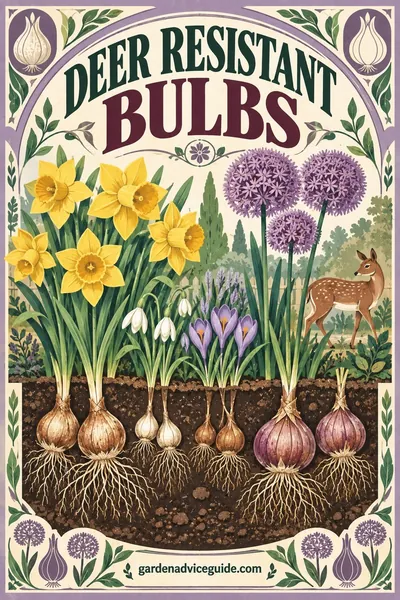
Tulips are the one to hold back. They want colder soil than daffodils, and they are the bulb that deer and squirrels target. The zone timing and critter protection for them live in when to plant tulip bulbs. A ring of daffodils around a tulip bed is one of the better defenses you can plant, and our list of deer resistant bulbs covers which other bulbs share that protection.
Garlic goes in on nearly the same schedule. If you are out with a trowel anyway, our guide to when to plant garlic has the dates by zone.
Daffodils, Pets and Kids: A Safety Note
Every part of a daffodil is toxic, and the bulb is the most concentrated part. Daffodils contain lycorine, an alkaloid, along with calcium oxalate crystals.
- Dogs are the most common victims, usually by digging up and chewing freshly planted bulbs. Signs include drooling, vomiting, and diarrhea, and large amounts can affect heart rhythm and blood pressure. Cats and horses are also affected.
- Children sometimes mistake bulbs for onions, especially bulbs stored in a kitchen, garage, or refrigerator. Keep bags of bulbs up high and away from food.
- Skin contact with the sap can cause a rash sometimes called daffodil itch. Wear gloves when planting large numbers or handling lots of cut stems.
If a pet eats a bulb, call your veterinarian or an animal poison control line right away. If a child eats any part of a daffodil, call Poison Control at 1-800-222-1222.
Cut daffodils affect other flowers too. Their stems release a sap that shortens the vase life of tulips and other cut flowers. Stand freshly cut daffodils in their own water overnight, then add them to a mixed arrangement without recutting the stems.
After They Bloom: The Six Week Foliage Rule
What you do in May decides how daffodils bloom next March. After flowering, the leaves spend about six weeks feeding the bulb and forming next year's flower bud inside it.
- Deadhead the spent flower and its swelling seed pod, but leave the stalk.
- Leave every leaf for at least six weeks after bloom, until the foliage turns yellow and flops.
- Don't braid, fold, or rubber band the leaves. It cuts their ability to feed the bulb.
- Water in dry springs. Drought during those six weeks weakens next year's bloom.
- Feed lightly with a low nitrogen bulb fertilizer as shoots emerge or right after bloom.
The same rule applies to tulips, and our guide on when to cut down tulips walks through the tug test for telling when leaves are truly finished. Planting daffodils among perennials like hostas, daylilies, or catmint hides the yellowing leaves as the perennials fill in around them.
Dividing Crowded Clumps That Stop Blooming
A clump that gave 20 flowers a few years ago and now gives a thick tuft of leaves and three blooms is almost always crowded. Each bulb splits into offsets over time, and after four to six years they compete for space, water, and nutrients until few are big enough to flower. Gardeners call this going blind.
Crowding is the most common cause, but not the only one.
| Cause | What you see | Fix |
|---|---|---|
| Overcrowded clump | Dense leaves, few flowers, narrow grassy foliage | Divide and replant |
| Leaves cut too early last year | Leaves but no flowers | Leave foliage six weeks and wait a season |
| Shade from growing trees | Fewer flowers every year, stretched leaves | Move bulbs to more sun |
| Planted too shallow | Many small bulbs near the surface | Lift and replant at proper depth |
| Too much nitrogen | Lush leaves and few flowers, often beside a fed lawn | Stop high nitrogen feeding nearby |
| Dry spring after bloom | Smaller flowers the next year | Water during the foliage period |
| Narcissus bulb fly | Soft, hollow bulb with a grub inside | Discard damaged bulbs and firm the soil after planting |
When to divide. The best time is late spring or early summer, when the leaves are yellowing but still visible, so you can find every clump. You can also divide in fall if you marked the spot.
How to divide:
- Push a garden fork into the soil 6 inches out from the clump and lever it up from below. Don't pull on the leaves.
- Shake off the soil and pull the bulbs apart gently. Offsets that separate with a light twist are ready. Leave tightly joined ones together.
- Discard soft, rotten, or hollow bulbs.
- Replant the largest bulbs right away at full depth with fresh compost, spacing them 6 inches apart. Put some back in the original spot and move the rest somewhere new.
- If you would rather replant in fall, let the bulbs dry in shade for a few days, then store them in mesh or paper bags in a cool, dry, airy spot until planting time.
Small offsets take one to two years to reach blooming size. Plant them in a spare corner or nursery bed and move them once they flower.
Worked Example: A Zone 6 Front Walk Border
Say you have a 3 by 10 foot bed along a front walk in zone 6, with a first frost around October 20 and ground that usually freezes in mid December.
- October 4: The soil reads 58°F at 6 inches two mornings in a row. Time to plant.
- The plan: 30 square feet planted in six groups of 10 bulbs. Two groups of early 'February Gold', two of mid season 'Ice Follies', and two of late 'Thalia', for 60 daffodils, plus 75 grape hyacinths layered above them.
- The dig: Excavate each group hole about 16 inches across and 7 inches deep, mix in compost, set the daffodils about 4 inches apart, backfill to 3 inches below the surface, set the grape hyacinths, backfill, and water. About two hours in all.
- Rooting time: October 4 to mid December is about 10 weeks, which is ideal.
- Bloom: Grape hyacinths and 'February Gold' open in late March, 'Ice Follies' in mid April, and 'Thalia' into early May. That is roughly six weeks of flowers from one afternoon.
- Foliage: 'Thalia' finishes blooming around May 5, so the last leaves come down in mid to late June.
- Year five: Flower counts drop in the 'Ice Follies' groups. Lift and divide them in early June while the leaves still show, and spread the extra bulbs into a new drift under a nearby maple.
FAQ
Can I plant daffodil bulbs in the spring?
You can, but dry bulbs planted in spring rarely bloom that year, because they miss the cold period that sets the flower. Potted daffodils already growing from a garden center are different. Plant those at the same depth they sat in the pot, let the leaves ripen, and they should bloom normally the next spring.
Is it too late to plant daffodil bulbs in November or December?
Not if you can still dig. Late planted daffodils root less before winter and often bloom a week or two late with shorter stems, but they almost always flower. Bulbs held in a garage until spring usually dry out or rot. If the ground is frozen, plant them in pots and keep the pots in an unheated garage until spring.
How deep do you plant daffodil bulbs?
About three times the height of the bulb, measured to its base. That is 6 inches for standard bulbs, 6 to 8 inches for large trumpet types, and 3 to 4 inches for miniatures. Plant a little deeper in sandy soil and a little shallower in heavy clay.
Do I need to soak daffodil bulbs before planting?
No. Daffodil bulbs should be planted dry, and soaking can encourage rot. The one exception on the fall planting list is winter aconite, a dried tuber that benefits from an overnight soak.
Can I plant daffodils in pots?
Yes. Use a container at least 12 inches deep with drainage holes, set the bulbs nose up so they almost touch, and cover them with 2 to 3 inches of potting mix. Keep the pot somewhere cold but sheltered over winter, such as an unheated garage, so the soil does not freeze solid. Our container gardening guide covers pot materials that won't crack in cold weather. If you want narcissus flowers indoors this winter without the long cold period, forcing paperwhites is the no-chill way to do it.
Do daffodils spread on their own?
Yes, slowly, by forming offset bulbs. A single bulb can become a clump of 10 or more in four to five years. Some species, like poet's narcissus, also self-seed in meadows, though the seedlings take several years to flower.
Why are my daffodils all leaves and no flowers?
The most common reason is a crowded clump that needs dividing. Other causes are cutting the leaves off too soon the previous spring, too much shade, planting too shallow, or heavy nitrogen fertilizer from a nearby lawn. Match your symptom to a fix in the table above.
Should I water daffodil bulbs after planting?
Yes, once, deeply, to settle the soil and start the roots. After that, fall rain is usually enough. Water again only in a very dry fall, and never water dormant beds through the summer.