No Dig Gardening

No dig gardening means you stop turning the soil and add organic matter on top instead. The soil structure and the fungal networks that hold it together stay intact, earthworms do the mixing for you, and weed seeds stay buried in the dark where they cannot germinate. Instead of forking a bed over each spring, you spread an inch or two of compost on the surface and plant into it.
The payoff is not magic yields. It is far less weeding, better soil structure every year instead of worse, and a bed you can plant the same day you build it. The cost is compost, and that is the real trade you are making.
Working out how much compost a bed needs? Get the exact volume with our free Raised Bed Soil calculator.
Why Tilling Creates the Weed Problem It Is Meant to Solve
Dig up any patch of ground and you are holding thousands of viable weed seeds. Typical garden and farm soils carry somewhere between 1,000 and 10,000 seeds per square foot in the top few inches, and some run far higher. Most of those seeds are dormant, not dead. Certain species stay viable for decades in the dark.
Many common weed seeds need one of two triggers to germinate: a brief flash of light, or the temperature swing between day and night that only happens near the surface. Buried four inches down, they get neither. They sit there and wait.
Then you till. Every pass lifts a fresh batch of that buried seed into the top inch, gives it light, warmth, and loosened soil, and you get a green haze across the bed within two weeks. So you till again to kill those seedlings, which brings up the next layer. The bed looks clean for a moment and the cycle restarts.
That is the trap. Tilling for weed control is a treatment that reliably regenerates the disease.
Tilling costs you three other things as well:
- Structure. Soil aggregates are crumbs glued together by fungal threads, root exudates, and microbial gums. A tiller smashes them. What you get is a fluffy bed that settles into a dense, crusted layer after a few heavy rains, plus a compacted pan just below tiller depth.
- Fungal networks. Mycorrhizal fungi extend the reach of plant roots for water and phosphorus. They are threads. Chopping them into pieces every spring means the network never matures.
- Organic matter. Turning soil floods it with oxygen, which lets microbes burn through carbon fast. Repeated tillage steadily draws down the organic matter you keep adding, which is why tilled gardens need more inputs each year to hold the same fertility.
No dig sidesteps all of it by working from the top down, which is how soil builds itself in a forest or a meadow anyway.
How to Start a No Dig Gardening Bed Over Grass
You can build a bed over lawn, weeds, or bare ground in an afternoon and plant it immediately. Here is the sequence.
1. Mow or trample the vegetation down. Cut the grass as short as you reasonably can, or knock tall weeds flat with your feet. Leave the clippings in place. They are free nitrogen and they will rot under the cardboard.
2. Water the ground if it is dry. Cardboard laid on dry soil does not break down and can shed water for months. Soak it first.
3. Dig out perennial weed crowns. This is the one place a no dig bed asks you to dig. Bindweed, quackgrass, bramble, dock, and Japanese knotweed will punch straight through cardboard and compost. Get the crowns out now or deal with them for years.
4. Lay plain cardboard, overlapping every seam by 6 inches. Overlap is where people fail. Grass finds any gap. Strip off packing tape, plastic labels, and staples. Skip glossy printed boxes and use plain brown corrugated. One layer is enough over lawn. Use two over thick weeds.
5. Wet the cardboard thoroughly. Soak it until it is limp. Dry cardboard blows away and stays intact far too long.
6. Spread compost on top, and be honest about the depth. This is the part videos gloss over.
| Situation | Compost depth on top of cardboard | Notes |
|---|---|---|
| Bare soil, already cultivated | 2 in | Enough to plant into right away |
| Thin lawn or weak turf | 4 in | The standard starting depth |
| Thick established lawn | 4 to 6 in | Grass has more stored energy to push through |
| Heavy annual weeds | 6 in | Also use two layers of cardboard |
| Perennial weed patch | 6 in plus a light-blocking cover for a season | Compost alone will not do it |
Four inches is the working minimum over grass. Two inches will not smother turf reliably. If you spread two inches because that was what you could afford, expect grass at the edges by week six. Once the bed is established the annual top-up drops sharply, and our page on how much compost to add to a garden covers those maintenance depths.
7. Rake it level and plant the same day. Transplants go straight into the compost. Their roots reach the cardboard within a few weeks, by which time it has softened enough to pass through.
8. Direct sow with a caveat. Small seeds like carrots and lettuce germinate well in surface compost, but a fresh, coarse compost is a poor seedbed. For the first season, transplants are more reliable. Sow directly from year two, once the surface has mellowed.
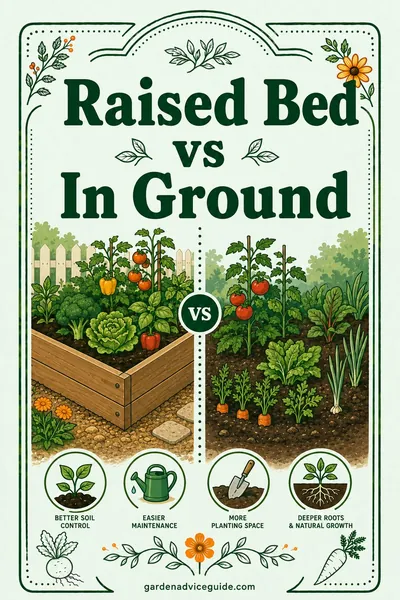
A note on edging. You do not need sides. A no dig bed can be a flat mound with sloped edges, which is cheaper and easier to reshape. Sides help if you want deep soil over concrete or if the compost keeps washing onto a path. Our comparison of raised beds versus in ground covers when the frame earns its cost.
How Much Compost You Need, and What It Really Costs
This is the honest objection to no dig, and it deserves a straight answer. The method trades labor for compost volume, and compost is not free.
The math is simple. One cubic yard is 27 cubic feet. Spread at a given depth it covers:
| Depth | Square feet covered per cubic yard | Cubic yards per 100 sq ft |
|---|---|---|
| 1 in | 324 | 0.31 |
| 2 in | 162 | 0.62 |
| 3 in | 108 | 0.93 |
| 4 in | 81 | 1.24 |
| 6 in | 54 | 1.85 |
So a 4x8 bed, which is 32 square feet, needs about 0.4 cubic yards at 4 inches, or roughly 11 cubic feet. In bagged terms, at 1.5 cubic feet per bag, that is about 7 bags.
Now the sourcing reality. Where the compost comes from matters far more to what you spend than how much of it you need, and the five routes are not close to each other:
| Source | What you buy it in | What drives what you pay | Notes |
|---|---|---|---|
| Bagged compost, garden center | 1.5 cu ft bags, about 7 per 4x8 bed at 4 in | Bag count, and you are paying for the bag and the handling as much as the compost | The most expensive route by far |
| Bulk compost, delivered | Cubic yards, dumped on the driveway | Yardage plus a flat delivery charge that does not shrink for a small load | Delivery is fixed, so order in volume |
| Municipal compost yard | Cubic yards, often self-loaded | Whether your town gives it away or charges, and whether you haul it yourself | Quality varies, ask about the feedstock |
| Arborist wood chips, aged | Whole truckloads, on the crew's schedule | Usually nothing but your willingness to take the full load | Path material and mulch, not a planting layer |
| Your own compost | Whatever your pile makes | Nothing but time and volume | A home pile rarely makes enough for a new bed |
The pattern is clear. Bagged compost makes no dig expensive. Bulk delivery makes it reasonable. A home compost system makes the ongoing maintenance nearly free, though it will not produce enough volume to build beds from scratch. Our guide on how to compost covers building a pile that keeps up with annual top ups, and the raised bed soil calculator does the volume math for any bed shape.
One caution about cheap compost. Municipal and manure-based composts occasionally carry persistent broadleaf herbicide residue, which stunts and curls tomatoes, beans, and potatoes at concentrations too low to affect grasses. Before spreading a large unknown load, sow a few bean or pea seeds in a pot of it alongside a pot of known-good soil. If the leaves come up cupped and twisted, do not use it. That test costs you ten days and can save a whole season.
What the Evidence Supports, and Where Claims Get Overstated
No dig has enthusiastic advocates, and the online version of the claim tends to outrun the data. Here is the fair version.
What holds up well:
- Weeding time falls sharply. This is the biggest and most consistent benefit. Long running side by side trials, including Charles Dowding's multi-year beds in Somerset and no till research plots in the US, report large reductions in weeding hours once the beds are established, often in the range of half or better after the first couple of seasons.
- Soil structure improves. Aggregate stability, water infiltration, and earthworm counts go up in undisturbed soil with surface organic matter. This is well established in agricultural no till literature and it holds at garden scale.
- Organic matter and stored carbon rise in the top layer. Less oxidation from tillage, plus regular surface additions, means the top few inches build up over years.
- Less erosion and less crusting. Surface cover protects soil from rain impact, so water soaks in instead of running off.
- You can plant sooner in spring. Undisturbed soil with a compost mulch drains and warms without needing to dry out enough to be worked.
What gets overstated:
- Yields. In most careful comparisons where both systems get similar fertility, no dig yields are comparable to dug beds, sometimes modestly higher, sometimes not. Dowding's own long-running trial has shown a small consistent edge to the no dig bed, but that is a single site over many years, and a good part of the difference likely comes from the compost input rather than the absence of digging. Anyone promising dramatically higher yields is selling something. Plant no dig for the weeding time and the soil, and treat any yield gain as a bonus.
- "Never weed again." You will weed. Fewer weeds, easier weeds, pulled from loose surface compost instead of chopped out of packed soil. Wind blown seed still lands on your bed every year.
- "It works everywhere immediately." A compacted, waterlogged, or perennial weed infested site needs work before no dig can carry it.
- Carbon claims. Garden scale no dig does store carbon in the topsoil, but the numbers involved are small in climate terms, and imported compost moves carbon around rather than creating it.
The reasonable conclusion is that no dig is a better default than annual tillage for most home gardens, mainly because of labor and soil structure, and that its yield claims should be held loosely.
Where No Dig Struggles
Three situations where the method needs help, and pretending otherwise sets people up to fail.
Serious compaction
No dig assumes the soil below can be colonized by roots and worms. If you are working over a construction pad, an old driveway, heavy clay that was graded wet, or a lawn that has been driven on, there is a compacted layer that surface compost will not fix quickly.
Test it. Push a screwdriver or a stiff wire straight down into moist soil. If it stops hard within 4 to 6 inches, you have a pan.
The fix is a one-time mechanical loosening, not a rototiller. Use a broadfork or a garden fork: push it in, lever it back a few inches to crack the soil, and pull it out without turning or inverting anything. That breaks the pan and keeps the layers in order. Do it once, then go no dig from that point forward. Deep rooted cover crops like daikon radish and cereal rye also open compaction over a season or two.
Perennial weeds
Cardboard and compost smother annual weeds and turf. They do not stop bindweed, quackgrass, Japanese knotweed, horsetail, or established bramble. These plants carry large energy reserves in deep roots or rhizomes and will simply grow through your new bed, arriving at the surface in a nice loose compost layer that makes them very happy.
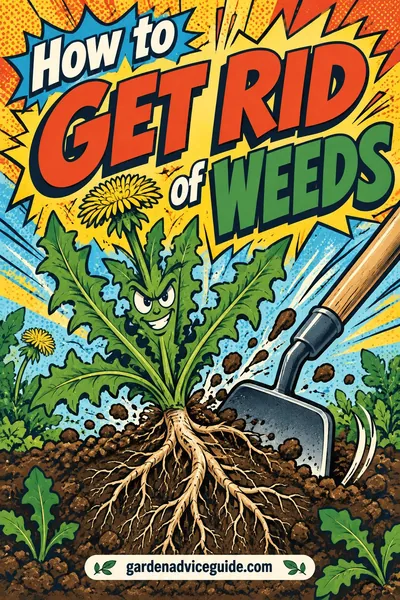
The honest approach is to deal with the perennials first. Dig the crowns out, or cover the area with a light-excluding sheet for a full growing season before you build the bed. Our guide on how to get rid of weeds separates the annual and perennial strategies in detail.
Root crops in a shallow layer
Carrots, parsnips, and long radishes grown in a 3 inch compost layer over unbroken sod will fork and stub where they hit the interface. In the first year, plant those in a deeper section, or grow shallow rooted crops and leafy greens while the bed matures. From year two onward, once worms have blended the compost into the soil below, root crops do very well and often better than in a tilled bed, because there are no stones churned up and no compacted pockets to fork around.
Potatoes are the useful exception. They grow well right on top of cardboard under a thick compost layer, and harvesting them is a matter of pulling the mulch back rather than digging.
Annual Maintenance: Top Up, Never Turn
Once the bed exists, the routine is short.
Top up once a year with 1 to 2 inches of compost. Established beds only need an inch. Hungry crops like squash, brassicas, and potatoes justify two. Spread it on the surface and leave it. Do not fork it in.
Time it for late fall or late winter. Fall application lets the compost weather and lets worms pull it down before spring. It also means the surface is never bare over winter. If you miss fall, apply in late winter before the first sowing.
Do not turn the bed, ever. That includes "just loosening it a bit" with a fork before sowing. Rake the top inch level with a rake if you need a fine seedbed, and stop there.
Cut weeds and spent crops at the soil line rather than pulling. Leaving the roots in place feeds soil life and keeps the channels they made open for water and air. That approach also shapes how you do fall garden cleanup: cut down, mulch over, and leave the root systems.
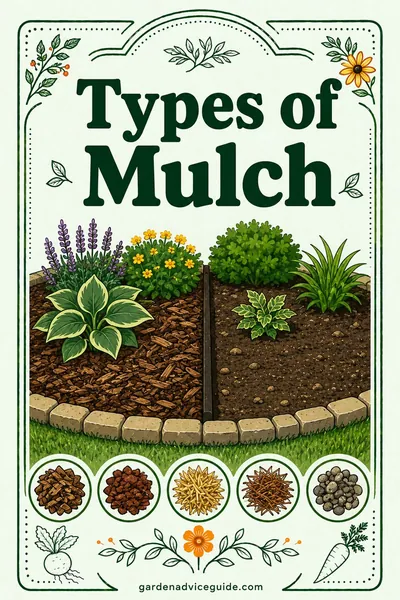
Keep the surface covered. Bare compost grows weeds and dries out. Where a bed sits empty for more than a few weeks, cover it with a mulch or a cover crop. Our mulch guide covers depth and material choices for each situation.
Stay off the beds. The whole system depends on not compacting the soil, so keep permanent paths and make beds no wider than you can reach across, generally 4 feet. Getting this right at the layout stage saves a lot of rework, and our garden layout planning guide walks through bed and path widths.
Keep rotating. No dig does not change disease and nutrient logic. Brassicas, alliums, and nightshades still need crop rotation on their normal cycle.
Worked Example: Converting a 20x20 Lawn Patch
Take a 20 by 20 foot square of ordinary lawn, 400 square feet, being converted in October for planting the following spring.
Layout first. Four beds at 4 by 16 feet, which is 256 square feet of growing space, with 2 foot paths between and around them. Beds run north to south.
Cardboard. 256 square feet of bed area, plus overlaps, means roughly 300 square feet of cardboard, which is about 25 to 30 large flattened moving boxes. Bike shops and appliance stores are the reliable source.
Compost volume. 256 sq ft at 4 inches deep is 256 divided by 81, which is 3.16 cubic yards. Round to 3.5 cubic yards to allow for settling and edge losses.
Compost sourcing. 3.5 cubic yards is a single delivered load. The bagged equivalent is roughly 95 bags, which is several car trips and, at any garden center, comfortably more than double the delivered price for the same volume. That gap is the whole argument for a delivered load, and it widens the bigger the project gets, because the delivery charge is flat while the bag count is not.
Paths. 144 square feet of path at 3 inches of wood chips is 1.33 cubic yards, usually free from a local tree crew.
Labor. Mowing, cardboard, and spreading takes two people about 5 hours. Compare that with breaking 400 square feet of sod with a fork, which is a weekend and a sore back, and the sod removal still leaves you with the buried seed bank.
Year one planting. Potatoes, squash, brassicas, beans, and lettuce, which all establish well in a fresh compost layer. Carrots and parsnips wait until year two.
Year two top up. 256 sq ft at 1.5 inches is 256 divided by 216, which is 1.19 cubic yards. That is roughly a third of what the build took, it is the same annual figure every year after, and it drops further once a home compost system is running.
What you actually avoided. At 1,000 to 10,000 viable weed seeds per square foot, those four beds sit on something like 250,000 to 2.5 million seeds that stay buried in the dark instead of being lifted into the light. No tiller rental either, and no annual sod battle as long as you keep a clean path border.
FAQ
Does no dig gardening really work, or is it a trend?
It works, and the mechanism is well understood: undisturbed soil keeps its structure and fungal networks, and buried weed seeds do not get the light flash they need to germinate. The reliable wins are much less weeding and steadily improving soil. Yields are usually comparable to a well fed dug bed rather than dramatically higher, so plant it for the labor and the soil rather than for a yield promise.
How thick does the compost layer need to be over grass?
Four inches is the working minimum over ordinary lawn, laid on top of overlapping cardboard, and 6 inches for thick turf or heavy weeds. Two inches works only over soil that is already cultivated and weed free. Skimping here is the single most common reason a new no dig bed grows grass back through the middle by week six.
Can I plant into a no dig bed the same day I build it?
Yes, for transplants. Set them into the compost layer and their roots will reach the softened cardboard within a few weeks. Direct sowing small seeds works better from the second season, once the surface compost has mellowed into a finer seedbed, so start with transplants and potatoes in year one.
Do I have to use cardboard?
No, but you need something that blocks light for several months while the vegetation underneath dies. Cardboard is popular because it is free, breaks down into the soil, and lets water through. Thick newspaper layers work but tear more easily, and a deeper compost layer alone, around 6 inches, works over weak vegetation. Use plain brown corrugated and pull off tape and labels first.
Will no dig gardening kill bindweed or quackgrass?
No. Perennial weeds with deep roots or rhizomes carry enough stored energy to grow straight through cardboard and compost, and they will thrive in the loose layer once they get there. Deal with them before you build: dig the crowns out, or cover the area with a light-excluding sheet for a full growing season, then build the bed on cleared ground.
How much compost does a no dig bed need each year?
About 1 to 2 inches on the surface annually, which is roughly 0.3 to 0.6 cubic yards per 100 square feet. Established beds and light feeders manage on an inch, while brassicas, squash, and potatoes justify two. Apply in late fall or late winter and let the worms take it down rather than forking it in.
Is no dig cheaper than a raised bed?
Usually, yes, because you are not buying lumber, hardware, or the deeper fill volume a framed bed needs. A flat no dig bed uses cardboard, which is free, and about 4 inches of compost, while a 12 inch raised bed needs three times the fill plus the frame. The frame earns its cost where you need soil over concrete, better drainage on a wet site, or a comfortable working height.
Do I still need to rotate crops in a no dig garden?
Yes. No dig improves soil structure and biology, but it does not change how soilborne diseases build up or how different families draw on nutrients. Keep brassicas, alliums, nightshades, and legumes moving on a 3 to 4 year cycle, and stretch that to 7 years in any bed that has shown clubroot.
Updated September 2026
A note on numbers. This page gives you depths, volumes in cubic yards, bed dimensions and timing, not dollar figures. Compost, delivery and wood chips are priced by your region, your supplier and the season, and we do not set any of it. Work out your yardage here, then price that same yardage at two or three local suppliers.