How to Grow Asparagus: When to Plant Crowns and When You Can Harvest

To grow asparagus, plant 1-year-old crowns in early spring, about 2 to 4 weeks before your last frost, in a sunny, well-drained bed that is free of weeds. Let the plants grow into ferns the first year, pick lightly for a week or two the second spring, and harvest fully for 4 to 6 weeks from the third spring on. It is a slow start, but a healthy bed keeps producing for 15 to 20 years or more.
That long life is why the planning matters so much. You are not planting a crop for one summer, you are building a permanent bed. Most of the mistakes people make with asparagus happen on day one: a shady spot, wet soil, or grass left in the bed. Get the site right, be patient for two seasons, and asparagus is one of the easiest vegetables you will ever grow.
Key facts
- Plant crowns in early spring, once soil can be worked.
- Set crowns 12 to 18 inches apart in a 6 to 8 inch trench.
- No harvest in year 1, a light pick in year 2.
- Full harvest of 4 to 6 weeks from year 3.
- Grows best in zones 3 to 8, with a cold winter rest.
Use the planner below before you order anything. Pick your zone group (zones 3 to 5, zones 6 to 8, or zone 9 and warmer) and what you are starting with: 1-year-old crowns, seed, or a potted nursery plant. It shows your planting window and the year of your first light harvest, so you know how long the wait really is. Pair it with our frost dates by ZIP code to turn the window into calendar days.
Garden Advice Guide · free calculator
Asparagus Planner: Crown Planting Window and First Harvest
Pick your zone group and what you are starting with. You get a planting window and the year of your first light harvest.
Need more? Open the free Frost Dates.
 Planting Zones
 Frost Dates
 Planting Calendar
Quick reference: the asparagus timeline
| Year | What you do |
|---|---|
| Year 1 | Plant crowns, no picking, let ferns grow |
| Year 2 | Pick pencil-thick spears for 1 to 2 weeks |
| Year 3 on | Pick for 4 to 6 weeks, then let ferns grow |
| Every fall or late winter | Cut brown ferns, add compost and mulch |
Does asparagus suit your zone?
Asparagus does best where the ground freezes in winter, roughly zones 3 to 8. The cold forces the crowns into a rest, and they come back with a strong flush of spears in spring. If you are unsure of your zone, our planting zone finder gives it from your ZIP code.
In zones 3 and 4, spears usually appear from late April into May. In zones 5 to 7, expect them in April. In zone 8 they can start in March. Spears begin to push up once the soil warms to about 50°F, so a sunny, south-facing spot gives you the earliest picking.
Zone 9 and warmer is harder, because the plants never get a true rest. Gardeners there have more luck with varieties bred for warm climates, such as UC157, and some let the bed dry out in late summer to give the plants a partial rest. Your local cooperative extension office is the best source for which varieties work in your area.
Choosing a spot you will not regret
Pick the site as though you will never move it, because you will not want to. Asparagus needs full sun, at least 6 to 8 hours a day. The ferns grow 4 to 6 feet tall by midsummer, so put the bed on the north or east edge of the garden where it will not shade your other crops.
Drainage is the next big thing. Crowns sitting in wet soil over winter tend to rot. If your ground stays soggy after rain, build a raised bed at least 12 inches deep. Our raised bed soil calculator works out how much mix you need for any size. Aim for a soil pH of about 6.5 to 7.0, which is a little higher than many vegetables prefer. Our guide to testing garden soil explains how to check it.
Finally, clear every weed, especially grass and perennial weeds with running roots. Once the crowns are in, you cannot dig the bed over, and quackgrass or bindweed tangled in asparagus roots is very hard to remove. Taking a whole season to clear a spot is not wasted time. While you wait, the when to plant tool can line up the rest of your spring crops.
Crowns, seed or a potted plant?
Crowns are what most people plant. A crown is a 1-year-old plant with a clump of long, fleshy roots, sold dormant in late winter and early spring. Starting with crowns saves you a full year compared with seed.
Seed is cheaper, and a packet gives you many plants. Start seeds indoors about 10 to 12 weeks before your last frost, at around 75°F, and set the seedlings out after frost. Expect your first light harvest a year later than with crowns. The seed starting calculator gives you the indoor start date for your ZIP code.
Potted nursery plants are growing actively when you buy them. Plant them after your last frost, at the same depth they sat in the pot, and treat them like a crown in its first year.
Planting crowns in a trench
Plant crowns as soon as the soil can be worked in spring, when a handful of soil crumbles instead of forming a wet ball. In zone 5 with a last frost around May 1, that is often mid April. Do not leave crowns sitting in the bag for long; if they arrive early, keep them cool and dry and plant within a few days.
- Dig a trench 6 to 8 inches deep and about 12 inches wide. Mix compost into the soil you removed.
- Make a low ridge of soil down the middle of the trench.
- Set each crown on the ridge with its roots draped down both sides.
- Space crowns 12 to 18 inches apart, with rows 3 to 5 feet apart.
- Cover with 2 to 3 inches of soil and water well.
- Fill the trench gradually as spears grow, until it is level by late summer.
How many crowns should you plant? A common rule is about 10 plants per person who loves asparagus, or 20 to 25 for a family that wants enough to freeze. Our plant spacing calculator shows how many fit a given bed. A 4 by 8 foot raised bed holds about 12 to 16 crowns in two staggered rows.
Why the wait is worth it
The first year is all about roots. Every fern the plant grows is feeding the crown underground, and the bigger the crown, the thicker the spears in future years. If you cut spears in year one, you take away the leaves the crown needs to grow.
In the second spring, pick only for a week or two, and only spears about as thick as a pencil or thicker. Then stop and let everything grow into ferns. By the third spring, a well-fed bed can be picked for 4 to 6 weeks. Mature beds sometimes go up to 8 weeks in good years. Pushing too hard too early is the most common reason a bed stays thin and weak for years.
Harvest season: how and when to pick
Pick spears when they are 6 to 8 inches tall and the tips are still tight. Snap them off at ground level with your fingers, or cut them just at or slightly below the surface with a knife. In warm spells spears can grow several inches a day, so check every day or two.
Stop for the season when most new spears come up thinner than a pencil. That is the plant telling you it has used up its stored energy. In zone 6, a mature bed that starts in mid April usually wraps up in late May or early June. Our when to harvest guide has harvest signs for your other crops too.
Fresh spears are best eaten soon. Stand them upright in an inch of water in the fridge, like flowers, and they keep for several days. They are lovely roasted, steamed or added to eggs and pasta.
A year of bed care
In early spring, before spears appear, spread an inch or two of compost over the bed and pull any weeds. After harvest ends, let the ferns grow freely all summer. Water deeply, about an inch a week, during dry spells, since the plant is building next year's crop. A 2 to 4 inch layer of straw or shredded leaf mulch holds moisture and keeps weeds down.
In fall, leave the ferns standing until they turn yellow or brown. Cutting them while green robs the crown of food. Once they are brown, cut them to the ground, either in late fall or in late winter. Leaving them over winter can help hold snow in cold zones, while cutting them in fall removes places for asparagus beetles to spend the winter. Pick whichever suits your garden, and check the planting calendar for the month's other jobs. Our fall garden cleanup checklist slots this in with your other end-of-season jobs.
Picking a variety
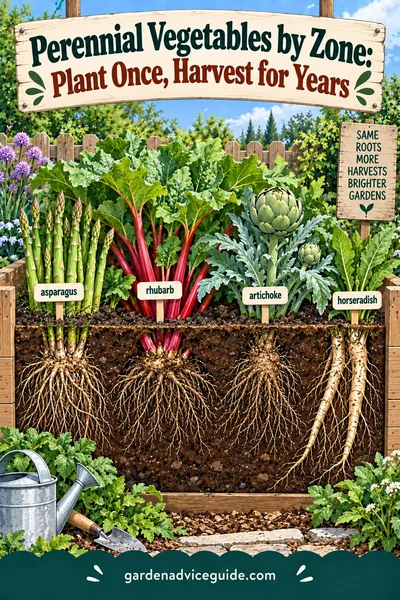
Most modern varieties are all-male hybrids. Male plants put their energy into spears instead of seeds, so they yield more and do not drop seedlings that crowd the bed. Jersey Knight, Jersey Giant and Jersey Supreme are widely grown and dependable in zones 4 to 8. Millennium is known for handling cold winters well. Purple Passion has purple spears that turn green when cooked and taste a little sweeter. Mary Washington is an older open-pollinated type with a mix of male and female plants, still grown in many home gardens. If you want more crops that come back every year, our list of perennial vegetables by zone covers rhubarb and others, and a strawberry patch makes a good neighbor, as our strawberry companion plants guide explains. You can find all of the site's free tools on the Garden Advice Guide home page.
Problems you might see
Asparagus beetles are the most common pest. The adults are small and colorful, and their larvae chew the ferns. Handpick them in the morning, knock them into soapy water, and clean up old ferns to reduce the places they overwinter. Thin, weak spears usually point to overpicking, poor drainage, or a hungry bed. Give the bed a season off, feed it with compost and pick less.
Crowns that never come up often rotted in wet soil or were planted too deep. Fusarium crown rot can also weaken old beds over time; resistant varieties and good drainage help. If plants keep failing, ask your cooperative extension office about local disease issues before replanting in the same spot.
Female plants of older varieties make red berries in late summer. These are not for eating, and they can seed unwanted plants. If you have curious pets, check the ASPCA toxic plant list, since it lists some asparagus fern species, and keep berries out of reach.
Quick answers about asparagus
How long does asparagus take to produce?
From 1-year-old crowns, plan on a light harvest in the second spring and a full harvest from the third spring on. From seed, add about a year. Potted plants are similar to crowns. A healthy bed then keeps producing every spring for 15 to 20 years or more.
When should I plant asparagus crowns?
In early spring, as soon as the soil can be worked and is no longer frozen or soggy. That is usually 2 to 4 weeks before your last frost. In zone 5 that often means mid April; in zone 7, March. Order crowns in winter so they arrive on time.
How deep do you plant asparagus?
Dig a trench 6 to 8 inches deep. Set crowns on a low ridge with roots spread down the sides, cover with 2 to 3 inches of soil, then fill the trench gradually as spears grow. Planting deeper than this can delay or weaken spears.
Should I grow asparagus from crowns or seed?
Crowns suit most home gardeners because they save a full year. Seed is cheaper and gives many plants, but it needs indoor starting about 10 to 12 weeks before your last frost and an extra year before you can pick. Both make long-lived beds.
Why are my asparagus spears so thin?
Thin spears usually mean the crowns are short on stored energy. Common causes are picking too long, cutting ferns while green, wet soil, weeds or a young bed. Stop picking when spears get thin, let ferns grow all summer and add compost each spring.
Can asparagus grow in a container?
It can survive for a few years, but it is not ideal. The roots spread wide and the plant lives for decades. A raised bed at least 12 inches deep is a much better home if your ground soil is poor or wet.
When do I cut back asparagus ferns?
Wait until the ferns turn yellow or brown in fall, then cut them to the ground, either in late fall or late winter. Cutting them while still green takes away food the crown needs for next spring's spears.
Does asparagus grow in hot climates?
It is harder in zone 9 and warmer because plants never get a cold rest. Some warm-climate varieties such as UC157 do better there. Ask your local extension office which varieties succeed in your area.