Ranunculus Growing Zone

Ranunculus (Ranunculus asiaticus, also called Persian buttercup) are perennial in USDA zones 8 to 10, where the corms go in the ground in fall and bloom from late winter into spring. Zone 7 can plant in fall too, but only with frost protection over the winter. In zones 3 to 7, the reliable ranunculus growing zone approach is to plant pre-sprouted corms in late winter or early spring and grow them as annuals. Some catalogs list ranunculus as hardy from zone 7 all the way to zone 11; zones 8 to 10 are the safer range to plan around.
The catch with ranunculus is that they dislike both extremes. Hard freezes kill them, and summer heat shuts them down. Your zone doesn't just tell you whether they survive winter. It tells you when to plant so their growing season lands in the cool weather they need.
Spring planting in cold zones runs off your last frost. Look up your frost dates with our free Frost Date Lookup before you order corms, because every planting step is worked out backward from that date.
Updated September 2026
Ranunculus Growing Zone Chart
| USDA Zone | Average winter low | When to plant | How to grow them | Typical bloom |
|---|---|---|---|---|
| 3 to 4 | -40 to -20°F | Pre-sprout in March; plant out 2 to 3 weeks before last frost with cover | Annual | June into July |
| 5 to 6 | -20 to 0°F | Pre-sprout in February or early March; plant out about 4 weeks before last frost with cover | Annual | May into June |
| 7 | 0 to 10°F | Fall under a low tunnel or cold frame, or late winter planting in February to March | Annual, or perennial with protection | April into May |
| 8 | 10 to 20°F | October to November | Perennial where summers are dry; often lifted in humid areas | March into May |
| 9 | 20 to 30°F | November to December, once soil cools | Perennial where summers are dry | February into April |
| 10 | 30 to 40°F | November to January | Perennial where winters run cool; struggles where winters stay warm | February into April |
Two things to read into that table.
Cold zones plant early, not late. It feels backward to put a tender plant out before the last frost, but ranunculus are cool-season plants. In zones 5 and 6, corms planted in mid May after the last frost run into June heat just as they try to bloom, and you get a handful of short stems. Planted in late March under cover, the same corms bloom for four to six weeks.
Warm zones plant in fall, not spring. In zones 8 to 10, fall planted ranunculus grow slowly through winter and bloom in late winter and spring. Spring planted corms in those zones meet heat almost right away.
Why Ranunculus Need Cool Weather
Ranunculus grow best with nights in the 40s and days from the 50s to the mid 60s. That matches their Mediterranean and southwest Asian homeland, where they grow through a cool, damp winter and go dormant in the dry summer.
When days climb into the high 70s and 80s, plants stop setting new buds, stems get shorter, and the foliage starts to yellow. That isn't a disease. It is the corm going dormant on schedule.
So the zone question for ranunculus is really two questions. Will winter kill the corm? And when does your spring turn hot? A zone 7 garden in coastal Virginia and a zone 7 garden in north Texas have very different windows before the heat arrives, even though they share a zone number.
How Much Frost Ranunculus Foliage Can Take
Established ranunculus leaves are tougher than they look. Sources put the damage point anywhere from 20°F to 28°F. The safer number to plan around is about 25°F for established foliage, and closer to 28°F for newly planted, freshly sprouted corms.
| Temperature | Effect on ranunculus | What to do |
|---|---|---|
| 32 to 29°F | Light frost; established plants are fine | Nothing for established plants; cover new transplants |
| 28 to 25°F | Some leaf damage possible; buds most at risk | Cover with frost cloth overnight |
| 24 to 20°F | Foliage damage likely; young plants can die | Double layer of frost cloth or a low tunnel |
| Below 20°F | Foliage killed; corms at risk if the soil freezes | Low tunnel plus cover, or plant in late winter instead |
Flower buds and open blooms are more tender than leaves, so cover plants in bud on any night near freezing. Our guide to frost cloth for plants covers fabric weights and how to anchor the cloth so it doesn't blow off overnight.
Zones 8 to 10: Fall Planting
This is ranunculus country, where the corms act as true perennials.
When: Plant once the soil has cooled below about 60°F and nights settle into the 40s and 50s. That is usually October to November in zone 8 and November to January in zones 9 and 10. Corms planted into warm soil tend to rot before they root.
Where: Full sun and soil that drains fast. Winter rain sitting in heavy clay is the most common reason fall planted corms disappear. Raised beds or mounded rows fix it.
Winter care: Water only when the top inch of soil is dry until plants have several leaves; after that, keep the soil evenly moist. Cover plants on the rare nights forecast below 25°F.
After bloom: Once heat arrives and the foliage yellows, stop watering. In dry summer climates like much of California, the corms can stay in the ground and regrow when fall rains return. In humid zone 8 and 9 gardens in the Southeast, where summer thunderstorms keep the soil wet, corms usually rot in place, so lift them or plant fresh corms each fall.
Zone 7: Fall Planting With Protection
Zone 7 is the edge. Winter lows of 0 to 10°F kill unprotected foliage and can freeze corms in the top few inches of soil. You have two workable options.
Option 1: Fall planting under cover. Plant pre-sprouted corms in October in a raised bed, then set up a low tunnel of wire hoops and frost cloth, or grow them in a cold frame. Close the cover on any night forecast below 25°F and open it on mild days so plants don't overheat. A basic cold frame is enough for a short row. Fall planted corms in zone 7 bloom earlier and produce noticeably more stems than spring planted ones, which is why cut flower growers go to the trouble.
Option 2: Late winter planting. Pre-sprout corms in late January or early February and plant them out in late February to March, covering them on cold nights. This is less work and less risk, with a somewhat shorter bloom period.
If you don't want to manage covers all winter, choose option 2.
Zones 3 to 7: Late Winter or Spring Planting as an Annual
North of zone 7, grow ranunculus as annuals. The goal is to get them growing as early as your spring allows, so they bloom before summer heat.
Here is a timeline worked backward from your last frost date.
| Weeks before last frost | Job |
|---|---|
| 10 to 8 | Soak corms and pre-sprout them in a cool spot |
| 8 to 6 | Move sprouted corms into cell trays or pots under lights or in a cool, bright window |
| 6 to 4 | Harden off plants outdoors on mild days |
| 4 to 2 | Plant out into beds, covering on nights below 28°F |
| Last frost onward | Remove covers once nights stay above freezing |
Zones 5 and 6 can plant out at the early end of that range. Zones 3 and 4, where spring swings harder, are safer planting out 2 to 3 weeks before last frost. Our seed starting calendar is handy for lining up the indoor steps with your frost date.
Buy corms in fall or early winter while selection is good, and store them dry at room temperature until soaking day.
How to Soak and Pre-Sprout Ranunculus Corms
Ranunculus corms arrive dry, shriveled, and hard. They look dead. They aren't.
Soaking: Put the corms in room-temperature water for 3 to 4 hours. They swell to about twice their dry size. Some growers soak overnight, but corms left too long in still water can start to rot, so stick with 3 to 4 hours unless you are running an aquarium bubbler in the water.
Pre-sprouting: This step is optional, but it gives you earlier flowers and weeds out corms that won't grow.
- Fill a shallow tray with an inch of damp, not wet, potting mix.
- Set the soaked corms on it, claws down, close together.
- Cover them with another thin layer of mix.
- Keep the tray somewhere cool, ideally 40 to 50°F, such as an unheated garage or basement. Warmer temperatures invite mold.
- Check every few days. Within 10 to 14 days, white roots about a quarter inch long appear on the claws.
- Throw out any corm that turns soft or grows fuzzy mold.
Once rooted, plant them outside if the weather allows, or pot them up in cell trays until planting day.
Planting Depth: Claws Down
A ranunculus corm looks like a tiny dried octopus. The claws point down, because that is where roots form. The flatter top with a small nub goes up.
- Depth: 2 inches deep, measured to the top of the corm.
- Spacing: 6 inches apart in a garden bed. Cut flower growers often go to 9 inches for better airflow and longer stems.
- Soil: Loose, fast draining, and rich in compost, with a pH around 6.0 to 7.0.
- Sun: Full sun in zones 3 to 8; a little afternoon shade helps in zones 9 and 10.
- Watering: Water well once at planting. Unsprouted corms rot in wet soil, so hold off watering again until you see growth unless the soil dries out. Pre-sprouted corms can take steady moisture.
If a corm is hard to read, plant it on its side. It will sort itself out, though claws down gets the fastest start.
Corms are sold by size grade, and larger corms produce more stems per plant. A jumbo corm grown in cool weather can send up 15 or more stems over a season.
When to Cut Ranunculus for the Vase
Ranunculus usually bloom about 90 days after you start the corms, counting from soaking day rather than from the day the plants go in the ground. Fall planted corms take longer because they grow slowly through the winter.
Cut when buds reach what growers call the marshmallow stage: the bud shows full color and feels soft, like a marshmallow, when you gently squeeze it, but it has not opened flat. Cut at that point, a stem lasts 7 to 10 days in a vase and keeps opening. Wait until the flowers are fully open and vase life drops to a few days.
- Cut early in the morning, when stems are full of water.
- Cut the stem all the way down near the base of the plant. Long cuts encourage more side shoots.
- Put stems straight into cool water.
- Wear gloves if you cut a lot, since the sap can irritate skin.
Each plant keeps sending up new buds for four to six weeks in cool weather, so cut every few days.
Lifting and Storing Ranunculus Corms
When warm weather arrives, ranunculus slow down, the foliage yellows, and the plant goes dormant. That is your cue.
- Stop watering once the foliage starts yellowing.
- Wait until the leaves are mostly yellow or brown. They are sending their last reserves down to the corms.
- Lift the corms with a garden fork. Each plant usually yields one main corm, sometimes with small offsets attached.
- Brush off the soil and remove the dead foliage.
- Dry the corms in a single layer in shade with good airflow for one to two weeks, until they are hard and shriveled again.
- Store them dry in a paper or mesh bag, loose or packed in dry peat, somewhere cool, dark, dry, and airy, such as a closet or basement shelf. Keep them away from humidity.
- Replant in fall or late winter following your zone's timing, and soak them again first.
Ranunculus corms store dry, which is very different from the chilled, humid storage dahlias need. It is also a separate process from the one in our hardy gladiolus guide, so don't carry the gladiolus steps over. The cold, damp packing that dahlia tubers want is explained in our guide on how to prepare dahlias for winter, and ranunculus corms treated that way rot.
An honest note: stored corms often come back less vigorous the second year, especially in cold climates where the growing season was short. Many cut flower growers compost them and start with fresh corms each year. If you have the space, store yours and plant them beside a few new ones to compare.
Pets, Deer, and Pests
Toxicity: Ranunculus belong to the buttercup family and contain a compound that turns into protoanemonin when the plant tissue is crushed. It irritates the mouth and gut in dogs, cats, and horses, causing drooling, vomiting, and diarrhea, and the sap can irritate human skin. The plants taste bitter, so serious poisoning is uncommon, but keep corms away from dogs that dig, and call your vet if a pet eats one.
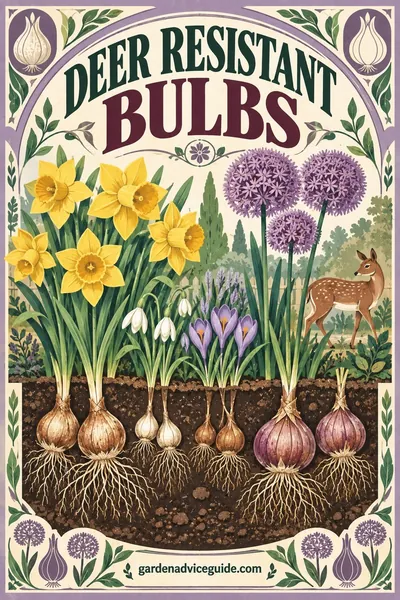
Deer and rabbits: The bitter sap keeps most browsing low, though not zero. If deer are a problem in your yard, pair ranunculus with the tougher bulbs on our deer resistant bulbs list.
Birds and rodents: Birds sometimes peck at young shoots in spring, and squirrels or voles may dig up freshly planted corms. A layer of bird netting or hardware cloth over new plantings solves both.
Aphids and powdery mildew show up as the weather warms. Knock aphids off with a spray of water, and space plants for airflow to limit mildew. How to get rid of aphids covers the rest.
Ranunculus With Tulips and Other Spring Bulbs
Ranunculus pair beautifully with spring bulbs, but the planting calendars differ by zone.
In zones 3 to 7, tulips and daffodils go in during fall while ranunculus wait until late winter or spring, so plant the fall bulbs first and follow our guide on how to plant daffodil bulbs for their depth and timing. Mark where the tulips are before you plant ranunculus between them. Our guide on when to plant tulip bulbs has the tulip side of the schedule.
In zones 8 to 10, tulips need refrigerator chilling while ranunculus don't, so the two go into the ground on slightly different dates in late fall and early winter.
Anemones (Anemone coronaria) grow on nearly the same schedule as ranunculus in every zone, with the same soaking and pre-sprouting steps, and the two are often planted side by side. Summer bloomers like gladiolus can follow in the same bed once the ranunculus finish.
Worked Example: Zone 6 With an April 20 Last Frost
Say you garden in zone 6 near Columbus, Ohio, with an average last frost around April 20, and you want a 4 by 8 foot bed of ranunculus for cutting.
| Date | Job |
|---|---|
| February 20 | Soak 50 corms for 3 hours |
| February 20 to March 5 | Pre-sprout in a tray in the garage at 45°F; 3 corms mold and get tossed |
| March 5 to March 22 | Grow the 47 sprouted corms in cell trays under shop lights in the basement |
| March 18 to 24 | Harden off on mild afternoons |
| March 25 | Plant 2 inches deep, about 8 inches apart in 4 rows; set hoops and frost cloth |
| Late March to April 20 | Close covers on nights below 28°F, about 8 nights this year |
| May 12 | Cut the first marshmallow stage buds |
| May 12 to June 18 | Cut every two to three days, roughly 5 stems per plant |
| Late June | Days hit the mid 80s, foliage yellows, watering stops |
| July 8 | Lift corms, dry in shade for 10 days, store in a mesh bag |
The bed yields over 200 stems across five weeks. The same corms planted on May 10, after the last frost, would likely start blooming in late June and quit within two weeks. A few weeks of opening and closing covers buys roughly three extra weeks of flowers.
FAQ
What is the best ranunculus growing zone?
Zones 8 to 10 are ideal, especially where winters are cool and summers are dry, like much of California. There the corms can be planted in fall and left in the ground as perennials. Ranunculus still grow in every zone as annuals with the right planting date.
Can ranunculus survive winter in zone 7?
Sometimes, with protection. Plant in a raised bed and cover plants with a low tunnel or cold frame on nights below 25°F. Unprotected, a zone 7 winter often kills the foliage and can freeze the corms. Late winter planting is the lower risk choice.
Should I plant ranunculus in fall or spring?
Plant in fall in zones 8 to 10, and in zone 7 if you can protect them. Plant in late winter or early spring in zones 3 to 7, a few weeks before your last frost.
Can ranunculus handle frost?
Established plants handle light frost down to about 25°F. Newly planted sprouts and flower buds are more tender, so cover them on any night forecast at 28°F or colder.
How long do you soak ranunculus corms?
Soak them 3 to 4 hours in room-temperature water. Longer soaks in still water can cause rot.
Which way do you plant ranunculus corms?
Claws down, 2 inches deep. The claws are where the roots form.
Do ranunculus come back every year?
In zones 8 to 10 with dry summers, yes. In colder zones or humid summer climates, most gardeners lift and store the corms or treat ranunculus as annuals, since second-year corms are often weaker.
Are ranunculus poisonous to dogs and cats?
Yes, mildly. All parts contain compounds that irritate the mouth and stomach, and the corms are the most concentrated. Keep pets from digging them up, and call your vet if one gets eaten.