When to Plant Tulip Bulbs

Plant tulip bulbs in fall, once your soil temperature drops below 60°F and about 6 to 8 weeks before the ground freezes. For most of the northern US that means September or October; in the South it's November or December, and in zones 9-10 you'll need to chill the bulbs in the fridge first. The bulbs spend those weeks growing roots underground, then sit dormant through winter and bloom in spring.
Not sure when your ground freezes? Find your first frost date free with our Frost Date Lookup and count back from there.
Here's the problem with tulips: the planting window matters more than almost anything else you do. Plant too early and the bulbs can rot or sprout before winter. Plant too late and they bloom weak, or not at all. This guide gives you the exact window for your zone, plus depth, spacing, and what to do if you find a forgotten bag of bulbs in December.
The Soil Temperature Rule (the Only Number That Really Matters)
Tulips don't care what the calendar says. They care what the soil says.
The trigger is soil temperature below 60°F at planting depth, measured in the morning. Above that, the soil is warm enough for fungal diseases like Fusarium basal rot to attack the bulb before roots can establish. Below 60°F, the bulb roots happily and the rot organisms slow way down.
The second half of the rule: get the bulbs in the ground 6 to 8 weeks before the ground freezes solid. Tulips need that window to grow a root system. A bulb with good roots pulls water all winter and pushes up a strong stem in April. A bulb planted the day before a hard freeze has to do all that root work in spring, and it shows.
So the ideal window looks like this: soil under 60°F, ground freeze still 6-8 weeks away. As a shortcut, that usually lines up with nighttime temperatures settling in the 40s. If you want a hands-on check, push a cheap soil thermometer 6 inches down at 9 a.m. Two readings under 60°F a few days apart means you're clear to plant.
When to Plant Tulip Bulbs in Each Zone
Here's the month-by-month breakdown. Find your USDA hardiness zone (the USDA zone map at planthardiness.ars.usda.gov has a zip code lookup), then match it below.
| USDA Zone | Best Planting Window | Notes |
|---|---|---|
| Zone 3-4 | September | Ground freezes early; don't wait past early October |
| Zone 5-6 | October | The classic "after the first light frost" window |
| Zone 7 | October to November | Wait for real cool-down; warm Octobers happen |
| Zone 8 | November to December | Soil stays warm late; be patient |
| Zone 9-10 | December to January, after 8-12 weeks of pre-chilling | Bulbs must be refrigerated first (see below) |
A few things worth knowing about that table:
Zones 3-4: Your window is short. Ground can freeze by late October, so September planting gives the bulbs their full 6-8 weeks of rooting time. The upside: your winters are cold enough that tulips often come back for years.
Zones 5-6: This is tulip country. October is nearly always right. If you get a freak warm spell, wait it out; a week's delay costs you nothing, but planting into 65°F soil invites rot.
Zone 7: October can still run warm, especially in the Southeast. Trust the soil thermometer over the calendar. Many zone 7 gardeners plant around Halloween through mid-November.
Zone 8: November is your month, and December works fine. Your bulbs still get enough natural chill over winter in most zone 8 areas, though borderline spots (coastal zone 8b) do better with pre-chilled bulbs.
Zones 9-10: Your winters don't get cold enough. Tulips need roughly 12-14 weeks of temperatures below 45-48°F to trigger blooming, and Phoenix or Orlando won't deliver that. The fix is below.
When Can I Plant Tulip Bulbs in Zones 9-10? (The Fridge Trick)
You can absolutely grow tulips in Houston, Sacramento, or central Florida. You just have to fake winter.
Here's the process:
- Buy bulbs in September or early October, while selection is good.
- Refrigerate them for 8-12 weeks in a paper bag (never plastic; it traps moisture). The crisper drawer works. Aim for 35-45°F.
- Keep them away from ripening fruit. Apples, bananas, and pears release ethylene gas, which kills the flower bud inside the bulb. You'll get leaves in spring and no bloom. A separate fridge or a fruit-free shelf solves it.
- Plant in December or January, straight from the fridge into the ground. Don't let them warm up on the counter for a week first.
- Treat them as annuals. Warm-winter tulips bloom once, beautifully, and are done. Compost them after flowering and chill fresh bulbs next fall.
Count backward to plan it: chilling started October 1 plus 10 weeks lands you at a December 10 planting date, with blooms in late February or March.
What Happens If You Plant Too Early?
Early planting is the more common mistake, because bulbs show up in stores in late August and it's tempting to get the job done. Three things go wrong:
Fungal disease. Warm, moist soil is where Fusarium and other bulb rots thrive. A bulb sitting in 68°F soil for three weeks in September can be mush by October. Cornell Cooperative Extension and other university programs consistently list warm-soil planting as a top cause of bulb failure.
Premature sprouting. A bulb planted in warm soil thinks it missed spring and sends up leaves in October. Those leaves get shredded by winter, which drains energy the bulb was saving for the real bloom. (A tiny nub of green poking up in late fall usually survives fine; a full set of leaves is the problem.)
Wasted chill. The cold period that triggers blooming starts counting once the bulb is cool. Bulbs baking in warm soil delay that clock.
If you've already bought bulbs and it's too warm to plant, store them right: a paper bag in a cool (50-60°F), dark, ventilated spot like a basement or garage. They'll hold for several weeks that way.
What Happens If You Plant Too Late?
Late planting is more forgiving than early planting, but it has costs:
- Weak root systems. Roots grow best in soil between about 40 and 55°F. Plant two weeks before a hard freeze and the bulb gets a fraction of the rooting time it wanted.
- Shorter stems and smaller blooms the following spring. The flower is already formed inside the bulb, so you'll usually still get something, just less of it.
- Later, staggered flowering as the bulbs finish rooting in early spring.
The practical rule: as long as you can physically get a trowel into the ground, it's not too late. A tulip planted in cold-but-workable December soil beats a tulip stored until spring every single time. Which brings us to the question we get most.
Found Unplanted Bulbs in December? Plant Them Anyway
This happens to everyone eventually. The bag falls behind the potting bench, and you find it in mid-December.
Plant them. Today if you can.
Tulip bulbs are not seeds; they can't wait a year in the garage. A bulb held indoors until spring will either dry out, rot, or sprout weakly in the bag, and spring-planted tulips almost never bloom because they missed their cold period in the ground. Meanwhile, a December-planted bulb still gets 10+ weeks of chill in most of the country and usually blooms close to normal.
If the ground is frozen solid:
- Check for a workable spot. Soil under mulch, against a house foundation, or in a raised bed often stays diggable weeks after open ground freezes.
- Pot them up. Plant bulbs in containers of potting mix, water once, and hold the pots somewhere cold but not brutal: an unheated garage, shed, or window well (35-48°F is the sweet spot). Move outside in early spring.
- Worst case, force them indoors. Twelve weeks in the fridge in a pot, then bring them into a bright room and let them bloom on the windowsill. If twelve weeks of chilling sounds like too much trouble, force paperwhites instead, since they skip the cold period entirely.
A worked example: say you find 25 bulbs on December 14 in zone 6 and your soil is frozen only in the top inch. You chip through the crust, plant all 25 at 7 inches deep, water once, and mulch with 2 inches of shredded leaves. Those bulbs get about 11 weeks of ground chill before March warm-up. Expect most of them to bloom in late April, maybe an inch or two shorter than fall-planted neighbors. That's a win versus a bag of mummified bulbs in May.
How Deep and How Far Apart to Plant Tulip Bulbs
Depth is the other half of tulip success, and shallow planting is the silent killer of year-two blooms.
Depth: 6 to 8 inches, measured from the base of the bulb to the soil surface. The general rule is 3 times the bulb's height, and since most tulip bulbs run about 2 inches tall, the math lands at 6 inches minimum. Go toward 8 inches in light, sandy soil and in cold zones; stay near 6 in heavy clay.
Spacing: 4 to 6 inches apart. Closer (4 inches) gives you that dense, catalog-photo look; wider (6 inches) is better if you're hoping the bulbs perennialize and multiply.
Pointy end up. The pointed tip is where the stem emerges; the flat side with dried root remnants goes down. If a bulb is so round you honestly can't tell, plant it on its side and the shoot will sort itself out.
Quick numbers for a real bed: a 2-foot by 4-foot patch is 8 square feet. At 5-inch spacing you'll fit roughly 40-45 bulbs. Dig the whole area out to 7 inches with a spade instead of drilling 45 individual holes; it's faster and the depth stays consistent. Set the bulbs, backfill, water thoroughly once, and you're done until spring. No watering needed over winter unless you're in a dry-winter western climate with no snow cover.
Iowa State University Extension and Outreach recommends this same 6-8 inch depth range and notes that deeper planting also protects bulbs from temperature swings and critters, which is a nice segue.
Keeping Squirrels Out of Your Tulip Bed
Squirrels and chipmunks treat freshly planted tulip beds like a buffet, and they find bulbs by the smell of disturbed soil. The same animals work over the pumpkins on your front steps in the same weeks. The basics that actually work:
- Lay chicken wire or hardware cloth flat over the bed after planting, pinned with landscape staples. Cover it with an inch of mulch. Stems grow through the mesh; squirrels can't dig through it. Remove it in early spring or leave it if the mesh is 1 inch or larger.
- Clean up planting debris. Papery bulb skins left on the surface are an advertisement. Bag them.
- Delay the mulch a week or two if squirrel pressure is heavy. Freshly mulched, freshly dug soil is exactly what they search for.
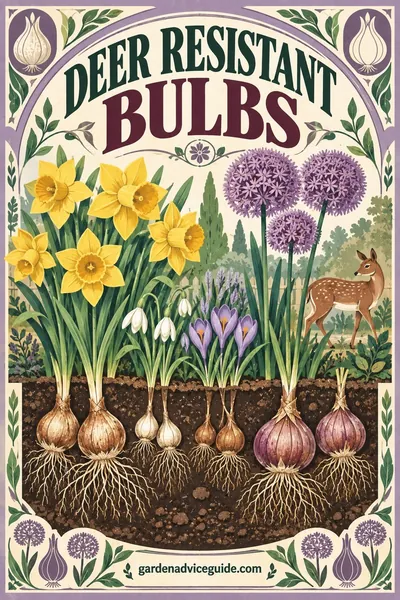
- Interplant with daffodils or alliums. Both are unpalatable to rodents and give tulip beds some cover.
- Repellents (capsaicin or predator-scent granules) help short-term but wash out; reapply after rain.
Deep planting helps too. A bulb at 8 inches is a lot more work to excavate than one at 3.
Will Tulips Come Back Every Year?
It depends on your climate and your expectations, so plan at planting time.
In zones 3-7, tulips can perennialize, meaning they return for several years, if you help them: plant at full 8-inch depth, choose varieties known for it (Darwin hybrids, Emperor/Fosteriana, and species tulips like Tulipa clusiana), feed with a balanced bulb fertilizer at planting and again when shoots emerge, and let the foliage yellow completely before cutting it. Even then, expect blooms to shrink over 3-5 years. Big showy hybrids like parrots and doubles are naturally short-lived.
In zones 8-10, treat tulips as annuals. Summers are too warm for the bulbs to reset, so pull them after bloom and plant fresh (pre-chilled where needed) each fall. It sounds wasteful, but it's how public gardens in warm cities get those flawless displays.
If the annual-replacement routine bugs you, put your money into daffodils for the permanent backbone, following our guide to planting daffodil bulbs, and buy a smaller batch of tulips each fall for the color hit. And if you like starting plants in winter anyway, winter sowing is a cheap way to fill the rest of the spring bed with hardy annuals while your bulbs chill underground.
Tulips and Garlic: Same Window, Same Trip to the Garden
Here's a scheduling bonus: garlic wants nearly the same fall planting window as tulips, a few weeks before the ground freezes, in cool soil. If you're already out there with a trowel in October, it's the perfect time to tuck in a row of garlic too. Our guide on when to plant garlic breaks down the timing by zone the same way this one does.
FAQ
Can I plant tulip bulbs in the spring?
You can put them in the ground, but they almost certainly won't bloom that year. Tulips need 12-14 weeks of cold soil to trigger flowering, and spring planting skips it. If you're stuck with bulbs in spring, chill them 12 weeks in the fridge and force them in pots, or accept a foliage-only year.
Is November too late to plant tulips?
In zones 7-8, November is right on time. In zones 5-6 it's later than ideal but still fine; the bulbs just get less rooting time. Even in zone 4, if the ground isn't frozen, plant them. Late beats never by a wide margin.
Should I water tulip bulbs after planting?
Yes, once, deeply. That settles the soil around the bulbs and kicks off root growth. After that, fall rain handles it in most of the country. Only water again if you're in a dry western climate with no rain or snow for weeks.
Do tulip bulbs need to be chilled before planting?
Only in zones 9-10 (and warm parts of 8b), where winters don't provide 12-14 weeks below about 48°F. Everywhere else, the ground does the chilling for you. If you do fridge-chill, keep bulbs away from fruit; ethylene gas from apples and bananas destroys the flower bud.
What's the latest I can plant tulip bulbs and still get flowers?
As long as the soil is diggable and the bulbs are firm, plant them: December and even January plantings bloom in zones 6-8, usually a little short and a little late. The real deadline is a solidly frozen ground, and even then, containers in a cold garage are a workaround.
How cold is too cold to plant tulips?
Air temperature barely matters; soil condition does. If you can dig, you can plant, even on a 28°F day. Bulbs are far more at risk sitting in your garage than they are in cold soil.
Why didn't my tulips come up after I planted them in fall?
The usual suspects, in order: squirrels or voles ate them, the bulbs rotted in warm or soggy soil, they were planted too shallow and froze or heaved, or the bulbs were soft and moldy at planting. Dig a test spot; if there's no bulb, it's animals. If there's mush, it's rot, so check your drainage and plant later next fall.
Can I leave tulip bulbs in the ground all year?
In zones 3-7 with decent drainage, yes; that's how they perennialize. In zones 8-10, or in beds that get heavy summer irrigation, the bulbs tend to rot or split into non-blooming daughter bulbs, so lifting or replacing them each year works better.
Updated August 2026