Terrarium Plants: What Grows in a Closed Jar, What Needs an Open Bowl, and How to Build One

The best terrarium plants depend on one question: will your container have a lid? For a closed terrarium, choose small plants that love damp air, such as fittonia (nerve plant), cushion moss, baby tears, small ferns, peperomia and polka dot plant. For an open container, choose plants that like dry air and bright light, such as haworthia, echeveria, small jade and little cacti.
Mixing those two groups in one jar is the most common reason terrariums fail. The ferns dry out, or the succulents rot, and you are left wondering what went wrong. Pick the lid question first, then the plants, then the size, and a terrarium can stay healthy for years with very little work.
Key facts
- Closed jars suit humidity lovers; open bowls suit succulents.
- Layers: about 1 inch of pebbles, a thin barrier, then 2 to 3 inches of mix.
- Bright, indirect light only; direct sun overheats glass.
- A balanced closed jar may need water only every few weeks or months.
- Light morning fog that clears by afternoon means the moisture is right.
The terrarium planner below takes two picks. Choose your terrarium, either a closed jar with a lid or an open container with no lid, and then your container size: small (under 1 gallon), medium (1 to 3 gallons) or large (over 3 gallons). It gives you a mix of plants that will thrive together in that setup and lists the layers in the order you add them.
Garden Advice Guide · free calculator
Terrarium Planner: Plant Mix and Layer Order for Your Jar
Pick open or closed and your container's size. You get a plant mix that will thrive together and the layers in order.
Need more? Open the free Frost Dates.
 Planting Zones
 Frost Dates
 Planting Calendar
Quick reference: closed jar vs open bowl
| Closed jar | Open bowl | |
|---|---|---|
| Plants | Fittonia, moss, baby tears, small ferns, peperomia | Haworthia, echeveria, small jade, small cacti |
| Mix | Regular potting mix | Cactus mix |
| Light | Bright, indirect | As bright as possible |
| Water | A few sprays every few weeks | A little, only when dry |
Start with the lid question
A closed terrarium is a tiny rainforest. Water evaporates from the soil and leaves, fogs the glass and runs back down, so the air inside stays damp almost all the time. Plants from forest floors, where it is shady and humid, love it. Plants from deserts hate it, because their leaves and roots never get a chance to dry.
An open terrarium is closer to a pot with no drainage hole. Air moves freely, the soil dries between waterings, and the plants get more light from above. That suits succulents, cacti and air plants. It does not suit ferns or mosses, which crisp up in ordinary room air, especially in a heated home in winter.
So before you buy a single plant, decide whether your container will have a lid. A bottle, a cookie jar, a fish bowl with a glass cover or a cloche over a plate are all closed. A wide bowl, a cut-off glass globe or a shallow dish are open.
Plants that love a closed jar
Fittonia, often called nerve plant, is the classic. Its leaves have bright pink, red or white veins, and it stays small in a jar. Polka dot plant has speckled pink, red or white leaves. It grows faster, so pinch the tips every few weeks to keep it bushy and small.
Moss is the ground cover that makes a closed terrarium look like a little forest. Cushion moss forms soft mounds, and sheet moss lays flat like a carpet. Both hold moisture and look lovely on their own. Baby tears has tiny round leaves that form a soft, bright green mat, and it fills gaps between stones beautifully.
Small ferns add height and texture. Button fern has round, leathery leaflets, maidenhair has delicate fronds on dark stems, and small rabbit's foot fern has fuzzy creeping rhizomes. Small peperomias, with their chunky leaves and slow growth, are some of the easiest of all, and there are dozens of leaf patterns to choose from. Selaginella, sometimes sold as spikemoss, has a soft, ferny look and loves a closed jar.
Miniature plants of larger houseplants can work too, but they grow. A mini prayer plant or calathea looks great for a while and then fills the jar, so plan to trim or move it on. Our prayer plant care guide explains what those leaves need once they outgrow the glass. Miniature African violets also do well in roomy, humid containers, and the African violet care page covers their light and bloom needs.
Plants for an open bowl
Haworthia is my top pick for an open terrarium. It is small, striped, slow, and happy in bright indirect light, which most windows can give. Echeveria makes neat rosettes in blue-green, pink or purple, but it needs a lot of light, so put it in your sunniest window or under a grow light. Small jade and other crassulas have chunky little leaves and handle dry rooms well.
Small cacti look sculptural and grow very slowly. Handle them with tongs, or wrap a folded strip of paper around them, so you can plant them without getting spines in your fingers. Air plants can sit right on top of the sand or stones with no soil at all, but take them out to soak and dry separately. Our air plant care guide walks through the soak.
For any open bowl, use a cactus or succulent mix rather than regular potting soil. It drains faster and does not stay soggy at the bottom.
Matching plants to the size of the container
Size matters more than most people expect. In a small jar under a gallon, choose one or two slow plants and a moss carpet. A single fittonia with cushion moss and a stone looks finished and stays in proportion for a long time. Peperomia or a tiny fern works too, but not all three.
A medium container of 1 to 3 gallons can hold three to five plants. Here is a worked example. In a 2-gallon closed jar, you might plant one button fern at the back for height, one fittonia in the middle for color, one small peperomia to the side, and sheet moss across the front, with a few stones and a piece of wood. That gives you three heights and three textures without crowding.
A large container over 3 gallons gives you room for a real scene, with a slope of soil from back to front, a path of small stones, and five or more plants. In a big open bowl, group succulents by the light they need, keeping the sun lovers in the middle and the haworthias near the edge, where they get a little shade from the rim.
Building a terrarium, layer by layer
Gather a clear glass container, small pebbles or clay balls, a bit of dried moss or a piece of mesh, activated charcoal if you want it, potting mix or cactus mix, your plants, a spoon, long tweezers or chopsticks and a small spray bottle.
Start with a drainage layer of about an inch of pebbles or clay balls. Terrariums have no drainage hole, so this gives extra water a place to collect away from the roots. For a closed jar, add a thin barrier of dried moss or mesh on top so soil does not sift down into the pebbles. Many builders add a sprinkle of activated charcoal here to help keep things fresh, though how much it really helps is debated, so treat it as optional.
Add 2 to 3 inches of mix, using potting mix for closed jars and cactus mix for open bowls. Arrange your plants on the table first, with tall ones at the back or center and short ones in front. Then dig a hole with the spoon, loosen the roots gently, tuck the plant in and firm the soil with a chopstick. Lay moss, stones and a small piece of wood last.
Water lightly. A closed jar needs only a few sprays around the plants and the moss. An open bowl needs a few spoonfuls of water at the base of each plant, not a soak. Wipe the inside of the glass clean and find a spot with bright, indirect light.
Light and placement
Glass magnifies heat. A closed jar in direct sun can get hot enough to cook the plants inside in an afternoon, so keep closed terrariums in bright, indirect light, such as a few feet back from an east or west window, or near a north window. Open succulent bowls can take more direct light, and they need it to stay compact.
In winter, most homes are too dim for succulents. A small LED light about 12 inches above an open bowl, on a timer for 12 hours a day, keeps them from stretching. The grow light hours and distance chart has the details. Terrariums make a great project for the long indoor season between your first fall frost and last spring frost. If you are curious how long that stretch is where you live, our frost date lookup shows it by ZIP code.
Watering by reading the fog
A closed terrarium tells you what it needs through the glass. Light fog in the morning that clears by afternoon is perfect. Glass that streams with water all day means it is too wet, so take the lid off for a day or two and let it breathe. No fog at all, with moss that looks pale and dry, means add a few sprays. A balanced closed jar may need water only every few weeks, and some go months.
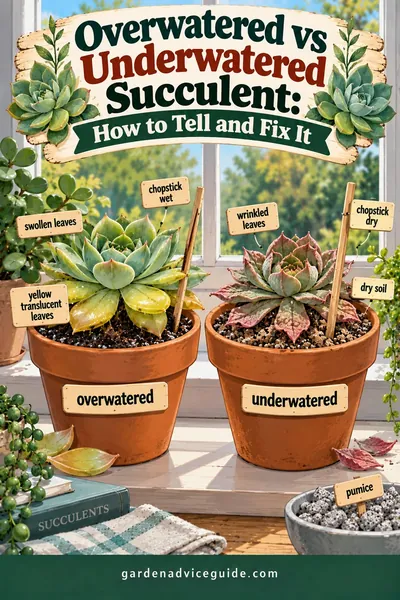
Open bowls are different. Water only when the soil is dry an inch down, and add only a little, since there is nowhere for extra water to drain. Pour slowly at the base of each plant, not over the leaves. Our overwatered vs underwatered succulent guide helps you read wrinkled or mushy leaves before it is too late.
Trouble in the jar and how to fix it
White fuzzy mold on the soil or a plant means too much water and too little air. Remove the moldy bits with tweezers, leave the lid off for a few days and water less. Succulents that turn soft and translucent have almost always been planted in a closed jar or watered too much, so move them to an open bowl with dry cactus mix.
Plants that stretch, with long pale stems reaching toward the window, need more light. Bleached or brown patches on leaves usually mean direct sun through the glass, so move the container back from the window. Plants pressing against the glass are simply growing. Trim them, or lift the plant out, give it a pot of its own, and replace it with a smaller one.
Plants that sound good but rarely last
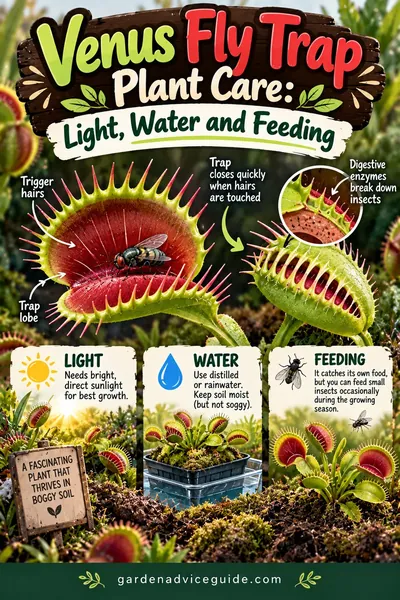
The Venus flytrap is the most tempting terrarium plant there is, and one of the worst fits. Flytraps need strong sun and a cool winter rest of a few months, which a closed jar on a shelf cannot give. Our Venus flytrap care page explains what they really need.
Fast growers like pothos and creeping fig look great for a month or two and then take over. Pothos is better as a trailing pot plant, and you can root extra pieces in water with our pothos propagation steps. Succulents in closed jars, flowering plants that need bright sun, and anything sold already crammed into a tiny jar with glued-on sand all tend to decline within weeks.
Pets, kids and safe picks
If you share your home with a cat that likes to explore, choose plants that are listed as non-toxic. The ASPCA lists fittonia (nerve plant), polka dot plant, baby tears, peperomia, haworthia and echeveria as non-toxic to cats. Jade and creeping fig are on its toxic lists, so leave them out of a jar a cat could tip over. Check our houseplants safe for cats list before you shop. A lidded jar also keeps curious paws and small fingers away from loose stones and tiny figures.
For more plant care guides and the site's free garden tools, visit the Garden Advice Guide home page.
Quick answers about terrarium plants
What plants are best for a closed terrarium?
Small plants that love humidity and stay compact. Fittonia, cushion or sheet moss, baby tears, small ferns like button fern, small peperomias, polka dot plant and selaginella all do well. Pick one or two slow growers for a small jar and three to five plants for a medium one.
What plants go in an open terrarium?
Plants that like dry air and bright light, such as haworthia, echeveria, small jade and small cacti. Air plants can sit on top of the stones. Use cactus mix, leave space for air between plants, and water only when the soil is dry an inch down.
Can you put succulents in a closed terrarium?
It is not a good idea. The trapped humidity keeps their leaves and roots wet, and most rot within weeks. Put succulents in an open bowl with cactus mix and give them as much light as you can, or a grow light in winter.
How often do you water a closed terrarium?
Rarely. A balanced closed jar may need a few sprays only every few weeks or months. Light morning fog that clears by afternoon means the moisture is right. Glass streaming with water all day means too wet, so open the lid for a day.
Do terrariums need drainage?
They have no drainage hole, so build one in. Start with about an inch of pebbles or clay balls, add a thin barrier of dried moss or mesh for closed jars, then 2 to 3 inches of mix. Water lightly so the pebble layer never fills up.
Why is there mold in my terrarium?
Mold means too much water and too little air movement. Pick out the moldy bits with tweezers, take the lid off for a few days, and water less from then on. Remove any dead leaves promptly, since they are where mold usually starts.
Can I keep a terrarium in a dim room?
Only for a short time. Even shade-loving terrarium plants need bright, indirect light to stay compact and green. In a dim room, add a small LED light above the jar on a timer for about 12 hours a day, or grow pot plants from our low light houseplants list instead.