When to Roll Your Lawn

Roll your lawn in early spring, once the surface has thawed and the soil is damp but not soggy, and only for three reasons: pressing frost-heaved grass crowns back down, firming new sod, or improving seed-to-soil contact after overseeding. That is the whole list. Rolling to flatten bumps, smooth ruts, or level a wavy yard does not work, and doing it on wet soil compacts the ground and makes the lawn worse for years.
The short version: one light pass, one time, on damp soil, for a specific reason. If you can't name the reason, skip it.
Rolling is one job on a calendar that has a dozen others, and the order matters more than the individual tasks. Our free lawn care schedule tool builds your season around your grass type and location, including when to aerate, seed, and feed.
Updated September 2026
When to roll your lawn, by season
Rolling has a narrow window, and it closes fast. Here's the calendar for both grass families.
| Timing | Cool-season lawn | Warm-season lawn | Roll? |
|---|---|---|---|
| Late winter, ground still frozen underneath | Soil is saturated on top, frozen below | Lawn dormant, soil cold | No. Worst possible timing |
| Early spring, surface thawed, soil damp | Best window, right at green-up | Too early, lawn still dormant | Yes for cool-season |
| Late spring, active growth | Acceptable if damp, lawn recovers fast | Best window, at green-up | Yes |
| Summer | Grass is stressed and slow to recover | Fine if you must, water first | Avoid |
| Early fall, after aeration and seeding | Light roll after seed only | Lawn heading to dormancy | Light roll after seeding only |
| Late fall | Soil is wet, grass is not growing | Dormant | No |
The reason spring works is not the calendar, it's the soil. Winter freeze and thaw cycles loosen the top few inches of soil and push plant crowns upward. That loose soil is easy to settle with light pressure. By June it has settled on its own and a roller just squeezes it.
A cool-season lawn (Kentucky bluegrass, tall fescue, perennial ryegrass) hits that window in the two or three weeks after the surface thaws, before mowing season really starts. A warm-season lawn (bermuda, zoysia, St. Augustine, centipede) hits it later, at green-up in late spring, because a dormant warm-season lawn can't repair anything you do to it. Our lawn care schedule lines this up with the rest of the spring tasks so you're not rolling the same week you're spreading pre-emergent.
The three real reasons to roll
1. Frost heave
This is the legitimate one. In climates that freeze hard, water in the soil expands as it turns to ice and lifts everything above it. Grass crowns get pushed up, roots get torn, and the plant sits with air around its base. You'll see it as a lawn that feels spongy and uneven in March, with individual tufts standing proud of the surface.
A single light pass presses those crowns back into contact with soil. Root hairs need to touch soil particles to take up water. A crown sitting in an air pocket dries out and dies even in a wet spring.
Frost heave matters most for lawns seeded the previous fall. A seedling with six weeks of root growth is barely anchored, and one hard freeze-thaw cycle can lift it out. If you overseeded in September, a spring roll is worth doing.
2. New sod
Sod gets rolled twice, and for different reasons each time.
Before laying, you roll the prepared soil to firm the grade so the sod doesn't settle into soft spots later. After laying, you roll across the seams to press the sod pad into the soil underneath so roots can cross the boundary. That second roll is the important one. Air gaps under sod are the single most common reason new sod dries out and dies in week two.
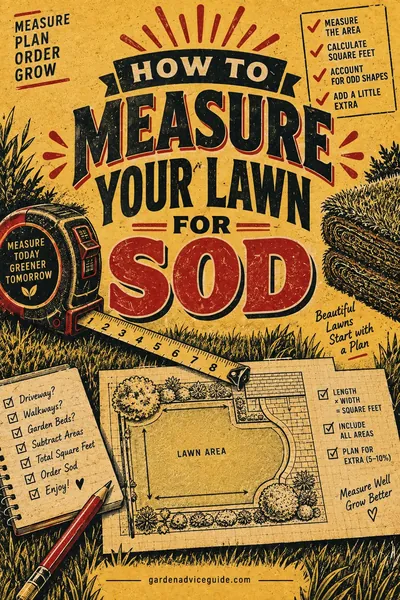
Roll new sod within a day of laying, then water immediately. The new sod watering schedule covers the first six weeks, and if you're still at the ordering stage, how to measure your lawn for sod gets the quantity right the first time.
3. After overseeding
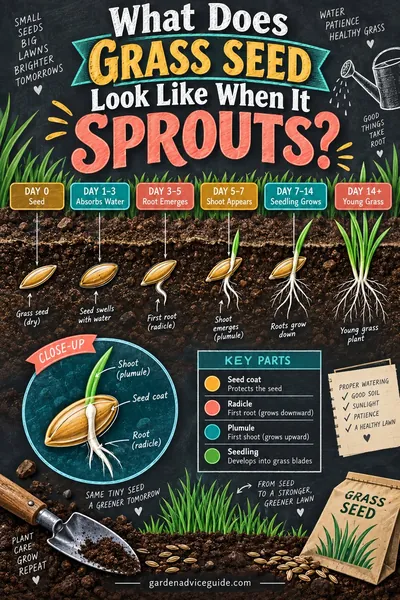
Seed needs to touch soil to germinate. Seed lying on top of thatch dries out between waterings and never sprouts. A light roll after spreading presses seed down to soil level without burying it.
The key word is light. Grass seed should sit at about a quarter inch deep, not an inch. A nearly empty roller, or even a lawn roller pulled with no water in it, is plenty. If you core aerated first, skip the roller entirely, because the plugs and holes already give you all the soil contact you need. That pairing is covered in when to overseed a lawn in fall.
The squeeze test: is your soil ready?
Soil moisture decides everything. Too dry and the roller does nothing. Too wet and you compact the soil into something close to pottery. There's a simple field test that takes ten seconds.
- Dig up a handful of soil from about 3 inches down.
- Squeeze it into a ball in your fist.
- Open your hand and poke the ball with a finger.
| What happens | Moisture level | Roll? |
|---|---|---|
| Crumbles apart, won't form a ball | Too dry | No, water lightly and wait a day |
| Forms a ball, crumbles when poked | Just right | Yes, this is the window |
| Forms a ball, holds its shape when poked | Too wet | No, wait 2 to 3 days |
| Water squeezes out between your fingers | Saturated | Absolutely not |
Footprint test as a backup: walk across the lawn and look behind you. If your prints stay visible with water pooling in them, the soil is too wet. If the grass springs back within a minute, you're fine.
Clay soils hold that "too wet" state for a week or more after rain. Sandy soils drain in a day. If you garden on heavy clay, the honest answer is that your safe rolling window may only be two or three days all year, and it's usually not worth chasing.
How heavy should the roller be?
Lighter than people think. The goal is contact, not force.
Most homeowner rollers are a poly or steel drum you fill with water or sand. Water is the right choice: it's free, it drains out when you're done, and it stores light. Sand is heavier per gallon and can't be dumped between uses, which is exactly how people end up over-rolling.
Water weighs 8.34 pounds per gallon. That number lets you set the weight precisely:
| Fill level | Water added | Weight added | Use |
|---|---|---|---|
| Empty | 0 gal | 0 lb | After overseeding, seed contact only |
| One-quarter | 5 gal | 42 lb | Light frost heave, sandy soil |
| One-third | 8 gal | 67 lb | Typical spring roll, most lawns |
| One-half | 12 gal | 100 lb | Firming sod seams, heavy loam |
| Full | 24 gal | 200 lb | Grading bare soil before sod only |
Never run a full drum on established turf. A drum filled to the top is a grading tool for bare soil, not a lawn tool.
The other rule people miss: pull, don't ride. A tow-behind roller on a lawn tractor adds the tractor's weight and tire pressure to the equation, and tractor tires do far more compacting than the drum does. Walking a hand roller gives you feedback, and if the drum starts sinking you'll feel it and stop.
How to roll a lawn without wrecking it
- Mow first, one notch lower than usual. Shorter grass means the drum touches soil, not leaf blades. Don't scalp it.
- Clear the lawn. Sticks and stones under a roller press into the soil and stay there.
- Run the squeeze test. If the soil is too wet, stop and come back in three days.
- Fill to about one-third. Add water, roll a short test strip, and look at it.
- Walk one pass, overlapping by about 4 inches. One pass. Not two, not a crosshatch.
- Vary your direction year to year. If you rolled north to south this spring, roll east to west next time so you're not building a pattern.
- Water afterward if the soil was on the dry side. About half an inch settles the surface naturally.
- Stay off it for a few days. Foot traffic on freshly rolled damp turf undoes the point.
If you're rolling new grass, be extra careful about traffic and mowing afterward. New seedlings shouldn't be mowed until they hit about 3 to 4 inches, which is covered in when to mow new grass.
Worked example: rolling a 5,000 square foot lawn
Say you've got a typical suburban back lawn, 5,000 square feet, cool-season tall fescue, seeded last September, and it feels lumpy after a hard winter. You've got a 24-inch wide, 18-inch diameter poly roller.
Soil check. Mid-April, three days after the last rain, sandy loam. The squeeze ball crumbles when poked. Good to go.
Weight. The drum's capacity is about 24 gallons. Filling to one-third puts in roughly 8 gallons, so 8 x 8.34 = 67 pounds of water on top of a drum that weighs about 30 pounds empty. Call it just under 100 pounds total across a 24-inch face. That's about 4 pounds per inch of width, which presses crowns down and does not crush soil structure.
How far you'll walk. The drum is 24 inches wide, but with a 4-inch overlap your effective width is 20 inches, or 1.67 feet. Divide the area by the effective width:
5,000 sq ft / 1.67 ft = 2,994 linear feet, so about 3,000 feet of walking, or a little over half a mile.
How long it takes. At a comfortable 2.5 mph you cover 3,000 feet in about 14 minutes. Add turns at each end, filling the drum, and mowing first, and the whole job is under an hour.
What you should see. The spongy feeling goes away. The tufted look flattens out. Small bumps under an inch mostly disappear. Anything bigger than that is still there, because it was never a rolling problem.
What it will not fix. The 3-inch-deep tire rut from the sod delivery truck is still a rut. Rolling presses turf down into a low spot rather than lifting the low spot up. That needs topdressing, which is a different job entirely.
What rolling can't fix (and what actually fixes it)
This is where most lawn rollers get bought for the wrong reason. Rolling is a contact tool, not a leveling tool.
| Problem | Does rolling help? | What actually works |
|---|---|---|
| Spongy lawn after frost heave | Yes, this is the job | Light spring roll |
| Loose new sod, open seams | Yes | Roll after laying, then water |
| Seed sitting on top of thatch | Yes, lightly | Empty-drum roll after seeding |
| Bumps taller than about an inch | No | Topdress with sand and compost blend |
| Low spots and ruts | No, it makes them worse | Topdress in thin layers, or cut and fill |
| Mole tunnels | Barely, they collapse and return | Trap the moles, then topdress |
| Wavy yard from old grading | No | Regrade, or strip and re-sod |
| Thick thatch | No | Core aerate or dethatch |
| Hard, compacted soil | No, it causes it | Core aerate in fall |
| Weeds | No | Feed and mow high so turf outcompetes them |
Topdressing math, since it's the real answer for most bumpy lawns. Never add more than half an inch of topdressing at once or you smother the grass. Half an inch over 1,000 square feet works out to:
1,000 sq ft x (0.5 / 12) ft = 41.7 cubic feet, and 41.7 / 27 = 1.5 cubic yards per 1,000 square feet.
For that same 5,000 sq ft lawn you'd need about 7.7 cubic yards for a full half-inch pass. Most people spot-treat the low areas instead, which cuts it to a fraction of that. Repeat every 4 to 6 weeks during active growth until the grade is where you want it. A truly wavy lawn takes two or three seasons of topdressing to fix, and that's normal.
The compaction problem nobody warns you about
Healthy soil is roughly half solid particles and half pore space, with that pore space split between air and water. Roots grow into the pores. Water moves through the pores. Earthworms and microbes live in the pores.
Rolling squeezes pore space out. On sandy soil with a light drum in spring, the effect is small and mostly reverses on its own through freeze-thaw and root growth. On clay soil, with a heavy drum, on wet ground, the effect is severe and can last for years.
Signs you've compacted your lawn:
- Water puddles instead of soaking in, and runoff appears during normal rain
- A screwdriver won't push 6 inches into moist soil with hand pressure
- Grass thins out and stays thin no matter how you feed it
- Weeds that thrive in compaction take over: knotweed, plantain, annual bluegrass
- The lawn goes dormant early in a dry spell because roots are shallow
The fix is core aeration, which is the exact opposite of rolling. It pulls plugs out and creates pore space. Which is why rolling every year is a bad habit: you spend spring compacting and fall aerating the same ground. Roll when there's a reason, and let it be years between rolls if nothing gives you a reason.
Feeding is not a substitute for structure either. A compacted lawn responds poorly to fertilizer because the roots can't reach it. Get the timing right first with when to fertilize your lawn, and fix the soil separately.
Renting versus buying
You'll use a roller once every three to five years if you use it correctly. That points hard at renting, and most rental yards and big-box stores carry them.
Buying makes sense in two cases: you're installing sod or seeding new lawns regularly, or you live somewhere with hard freeze-thaw winters and genuinely heave every spring. A poly drum roller stores empty and takes very little space.
If you rent, book it for a half day and check the weather three days out, not the morning of. The whole plan collapses if it rains the night before, since you're back to soil that's too wet.
FAQ
Should I roll my lawn every spring?
No. Roll only when something specific calls for it: frost heave, new sod, or fresh seed. Annual rolling on a lawn that doesn't need it steadily compacts the soil, and by year four or five you'll be aerating to undo damage you created.
Will rolling my lawn get rid of bumps?
Only bumps under about an inch, and only if they're caused by heaved soil rather than roots, rocks, or old grading. Real bumps and low spots need topdressing in half-inch layers or a cut-and-fill repair. Rolling a bumpy lawn usually just presses the high grass down temporarily and it springs back within weeks.
Can I roll my lawn after seeding?
Yes, with an empty or nearly empty drum. The goal is pressing seed down to soil level for good contact, not burying it. Grass seed wants to sit at about a quarter inch deep. If you core aerated before seeding, skip the roller since the holes and plugs already give you the contact.
Does rolling a lawn cause compaction?
It can, and this is the main risk. Compaction depends on three things: soil type, soil moisture, and drum weight. A one-third-full drum on damp sandy loam in spring is low risk. A full drum on saturated clay is how you get a lawn that puddles for the next five years. Use the squeeze test every time.
Is it too late to roll if my lawn has already greened up?
Not quite, but you're at the edge of the window. Once a cool-season lawn is actively growing you can still roll if the soil is damp, and the grass recovers quickly. Once you're into hot weather and the lawn is stressed, wait until next spring. Warm-season lawns are actually best rolled just after green-up, so green-up is the signal rather than the deadline.
How heavy should a lawn roller be for an average yard?
Around 80 to 120 pounds total on established turf, which for most drums means filling about one-third with water. Water weighs 8.34 pounds per gallon, so 8 gallons is roughly 67 pounds. Save the full drum for firming bare soil before you lay sod.
Can I roll a lawn with a riding mower attachment?
You can, and the drum itself is fine, but the tractor's tires do more compacting than the roller does. If you go this route, keep the drum light, drive slowly in a straight line, avoid turning sharply on turf, and never do it on soil that fails the squeeze test.
What if I skip rolling entirely?
Most lawns are fine. Grass recovers from mild frost heave on its own once roots start growing in spring, and consistent mowing height, proper watering, and fall aeration matter far more than rolling ever will. The exception is a lawn seeded last fall, where heaved seedlings genuinely benefit from being pressed back down. If you're planning fresh seed instead, when to plant grass seed sets the timing.