How to Grow Sweet Corn: When to Plant, How Far Apart, and When to Pick

To grow sweet corn, sow seeds 1 to 3 weeks after your last spring frost, once the soil is at least 60°F (65°F for supersweet types). Plant them 1 to 1.5 inches deep and 8 to 12 inches apart, in a block of at least 4 short rows rather than one long row. Give the plants full sun, plenty of nitrogen and about an inch of water a week, then pick the ears roughly 18 to 24 days after the silks appear.
If you remember just one thing, make it the block. Corn is pollinated by the wind, and a single long row lets most of the pollen blow away. That is why so many home gardeners pick ears with gaps and missing kernels even when the plants look healthy. A compact block, even a small one, fixes most of that.
Key facts
- Sow when soil is 60°F, or 65°F for supersweet (sh2) types.
- Seeds 1 to 1.5 inches deep, 8 to 12 inches apart.
- Plant in blocks of at least 4 rows for good pollination.
- Most varieties take 65 to 90 days from sowing.
- Pick about 18 to 24 days after silks first show.
The finder below works from your own frost dates. Type your ZIP code or pick your zone, and it gives you your sweet corn sowing window based on your last spring frost, your last sowing date for a harvest before fall frost, and when to feed and pick. Run it once in spring and keep the dates on the fridge. The full planting calendar fits corn in with the rest of the summer garden.
Garden Advice Guide · free calculator
Corn Planting Date by Zone: Your Sweet Corn Sowing Dates
Type your ZIP code or pick your zone. You get your sweet corn sowing window from your own last frost date, your last sowing date for a harvest before fall frost, and when to feed and pick.
Need more? Open the free Frost Dates.
 When to Plant
 Frost Dates
 Plant Spacing Calculator
Quick reference: corn sowing windows by zone
| Zone | Typical last frost | First sowing | Last sowing |
|---|---|---|---|
| 3 | Late May to early June | Early to mid June | Mid June, early kinds |
| 4 | Mid to late May | Late May to early June | Mid June |
| 5 | Early to mid May | Mid to late May | Late June |
| 6 | Late April to early May | Early to mid May | Early July |
| 7 | Early to mid April | Late April to early May | Mid July |
| 8 | March | Early to mid April | Late July |
| 9 | Late Jan to Feb | March | August, fall crop |
| 10 | Rare | Feb to March | September, fall crop |
Soil temperature beats the calendar
The table gives typical windows, but corn really responds to soil warmth. Seeds sown into cold, wet soil sit still and often rot, and supersweet seed is the fussiest of all because it has less stored starch to fuel germination. Push a soil thermometer 2 inches deep in the morning, when the soil is coolest. When it reads 60°F for several days in a row, sow.
Here is how that plays out. In zone 6 with a last frost around April 25, the soil usually reaches 60°F somewhere between May 5 and May 15. A warm spell might let you sow a few days earlier; a cold, rainy spring might push it later. If you want to know your exact frost date first, look it up with our frost dates by ZIP code, and the when to plant tool will show which other warm-season crops go in that same week.
For a head start in cool areas, you can lay black plastic over the bed a week before sowing to warm the soil. Some gardeners also start corn in deep cells indoors 2 to 3 weeks early and transplant carefully, but corn dislikes root disturbance, so direct sowing is simpler and usually just as fast.
Sweet corn types and what the codes mean
Seed packets often show a short code. It tells you how sweet the corn is, how long it stays sweet after picking, and how picky it is at planting time.
Normal sugary (su) is the old-fashioned type with creamy, classic corn flavor. Golden Bantam and Silver Queen are well-known examples. Its sugar turns to starch quickly after picking, so it is best eaten the same day. Sugary enhanced (se) is sweeter and more tender and holds its sweetness for a few days in the fridge. Peaches and Cream, Ambrosia and Bodacious fall in this group, and they germinate about as easily as su types. Supersweet (sh2), such as Illini Xtra Sweet, is the sweetest of all with a crisp bite, and it stays sweet for a week or more after picking. The trade-off is that it needs warmer soil, about 65°F, and must be kept apart from other corn.
There are also blends sold as synergistic or augmented types that mix these traits. For a first try, an se variety is a forgiving choice. Days to maturity on the packet range from about 65 days for early types to 90 days or more for late ones, so short-season gardeners in zones 3 and 4 should pick the earliest varieties they can find.
Keeping different corn apart
Supersweet corn that crosses with su, se, field corn or popcorn can produce starchy, tough kernels. The usual advice is to keep blocks of different types about 250 feet apart, which is not realistic in most backyards. The easier fix is timing. Plant so the two types tassel at least 2 weeks apart, either by sowing them 2 to 3 weeks apart or by choosing varieties whose days to maturity differ by at least 14 days. If that sounds like a puzzle, simply grow one type each year.
Laying out a block that pollinates well
Each strand of silk leads to one kernel. Pollen falls from the tassels at the top of the plant, and if a silk does not catch a grain, its kernel never fills. In a block of at least 4 rows side by side, pollen drifting in any direction lands on a neighbor.
Here is a worked example. A 10 by 10 foot plot fits 4 rows spaced 30 inches apart. With plants every 10 inches, each row holds about 12 plants, so you have 48 plants. At roughly one good ear per plant, sometimes with a small second ear, that is about 48 to 60 ears. A 4 by 4 foot raised bed planted on a 12 inch grid holds 16 plants and gives about 16 to 20 ears, which is a tiny block but still a block. Our plant spacing calculator runs these numbers for any bed size.
In a very small planting, help nature along. On a calm morning when the tassels are shedding yellow pollen and the silks are fresh, shake the tassels gently over the silks, or snap off a tassel and dust it across a few ears.
Sowing step by step
Start by working compost or a balanced fertilizer into the bed. Sow seeds 1 to 1.5 inches deep, or up to 2 inches in sandy, dry soil, dropping 2 seeds every 8 to 12 inches in rows 30 to 36 inches apart. Water well and keep the soil moist until seedlings appear, usually in 7 to 10 days. When they are about 4 inches tall, snip off the weaker seedling at each spot. If you are building a new raised bed for corn, the raised bed soil calculator tells you how much mix to buy.
Snipping with scissors is gentler than pulling, which can tear the roots of the plant you keep. If birds pull up young seedlings, cover the bed with row cover or netting until the plants are about 6 inches tall.
Planting for a longer harvest
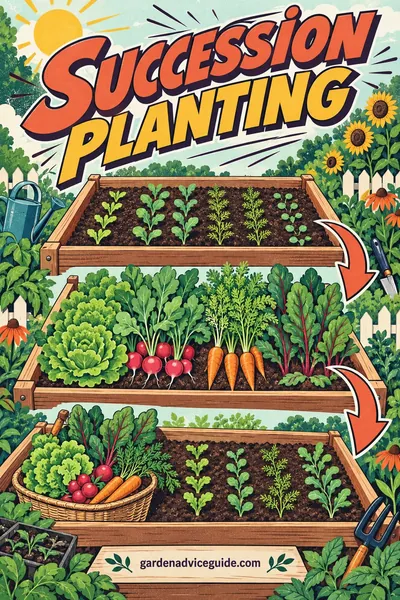
A single block ripens within about one to two weeks. That is great for freezing, but if you would rather eat fresh corn for a month and a half, sow smaller blocks every 2 weeks instead. In zone 6, that might mean sowings on May 10, May 24, June 7 and June 21, each a block of 4 short rows. Stop when you reach the last sowing date in the table, or the one the finder above gives you, so the final crop ripens before fall frost. Our guide to succession planting explains the method in more detail. For other crops that go in at the same time, see what to plant in May.
Feeding a hungry crop
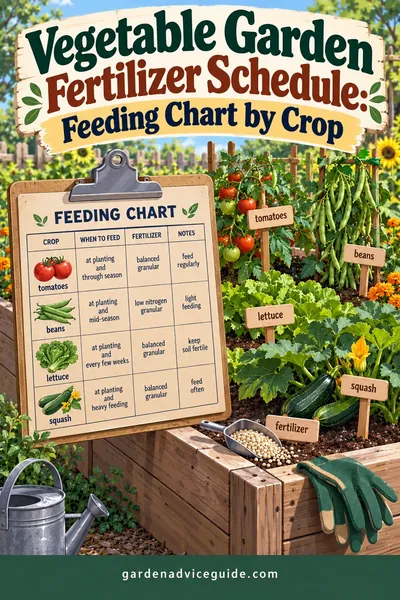
Corn uses more nitrogen than most garden vegetables. Mix in compost or a balanced fertilizer before sowing, then side-dress with a nitrogen fertilizer when the plants are about knee high, roughly 4 to 6 weeks after sowing. A second, lighter feeding when the tassels first show helps fill the ears. Spread the fertilizer in a band a few inches from the stalks and water it in. The vegetable garden fertilizer schedule gives amounts per row, and our guide to fertilizer numbers explains what the three figures on the bag mean. Pale, yellowish lower leaves while plants are still growing are a common sign of low nitrogen.
Water when the tassels show
Corn needs about an inch of water a week, more in hot, windy weather. The critical stretch is the two to three weeks around tasseling and silking. Dry soil then means poorly filled ears, no matter how well you did everything else. Water deeply at the base rather than sprinkling the tops, and check the soil a few inches down before deciding to skip a watering.
Corn roots are shallow, so weed gently with a hoe or by hand. Once the plants are a foot tall, a layer of straw or grass clipping mulch keeps weeds down and holds moisture. Pulling a little soil up around the base of each stalk also helps them stand up to summer storms.
The three sisters and other neighbors
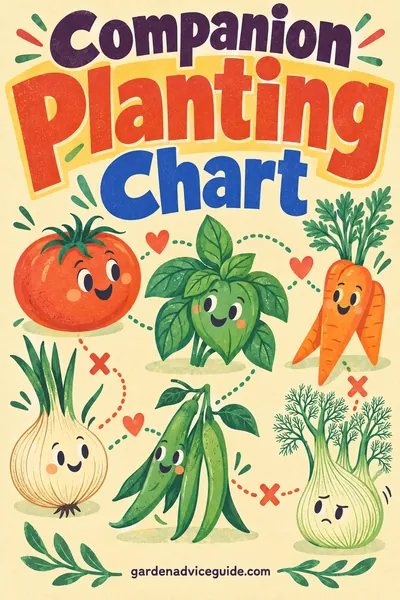
The traditional three sisters planting grows corn, pole beans and squash together. The beans climb the stalks and the squash leaves shade the soil. It is a lovely project for families, but it needs extra space, and the beans are best sown once the corn is about 6 inches tall so they do not smother it. Our companion planting chart shows which pairings have good evidence behind them and which are mostly tradition.
Picking at the milk stage
Most sweet corn is ready 18 to 24 days after the silks first appear, a little sooner in hot weather. Watch for silks that are brown and dry at the tip, and an ear that feels full and rounded right to the end. Then peel back a strip of husk and press a kernel with your fingernail. Milky juice means it is ready. Clear juice means wait two or three days. Thick, pasty juice means it is past its best.
Pick in the cool of the morning with a firm downward twist. Get the ears into the fridge or the pot quickly, especially su types. Our when to harvest tool gives ripeness signs for the rest of your garden.
When ears go wrong
Ears with missing kernels usually point to poor pollination from a single row, dry soil at silking or extreme heat. Seeds that never came up were most likely sown into cold, wet soil, so wait for 60°F and resow. A worm at the tip of the ear is usually a corn earworm; cut off the damaged tip and the rest is fine to eat. Plants flattened by wind often straighten on their own within a few days, and hilling soil around the base helps prevent it.
Raccoons tend to raid the patch the night before you planned to pick. A low electric fence or picking promptly when ears are ready are the most reliable answers. For local pest pressure, your cooperative extension office can tell you what is active in your area. When you are done, find more planning help on the Garden Advice Guide home page.
Quick answers about sweet corn
When should I plant sweet corn?
Sow 1 to 3 weeks after your last frost, once the soil is at least 60°F at 2 inches deep, or 65°F for supersweet types. That is usually mid to late May in zone 5 and late April to early May in zone 7.
How far apart do you plant corn?
Sow seeds 1 to 1.5 inches deep and 8 to 12 inches apart, in rows 30 to 36 inches apart. In a raised bed, use a grid with plants about 12 inches apart each way. Many gardeners sow 2 seeds per spot and snip the weaker one.
Why plant corn in blocks instead of a row?
Corn is pollinated by wind. Pollen falls from the tassels onto the silks, and each silk makes one kernel. A block of at least 4 short rows catches far more pollen than one long row, so the ears fill out fully.
How many ears does one corn plant make?
Usually one good ear, and sometimes a smaller second one. Plan on about one ear per plant. A 10 by 10 foot block of 48 plants gives roughly 48 to 60 ears, enough for a family to eat fresh with some to freeze.
When is sweet corn ready to pick?
About 18 to 24 days after the silks first appear. The silks turn brown and dry at the tip, the ear feels full to the end, and a kernel pressed with a fingernail squirts milky juice. Clear juice means wait; paste means it is overripe.
What is the last date I can plant sweet corn?
Count back from your first fall frost by the variety's days to maturity plus about 2 weeks. In zone 6 that is often early July; in zone 5, late June. The finder above calculates this last sowing date from your own frost dates.
Can I grow corn in a raised bed?
Yes. A 4 by 4 foot bed holds about 16 plants spaced 12 inches apart, which is a small but well-pollinated block. Pick a shorter, early variety, water often since beds dry out faster, and feed generously.
Why is my corn not sweet?
It may have been picked too late, left too long before cooking, or cross-pollinated with another corn type. Pick at the milky stage, chill or cook it quickly, and keep supersweet corn apart from other kinds.