Vegetable Garden for Beginners

Start much smaller than you want to. A well-tended 4x8 bed will feed you better than a neglected 20x20 plot, because the small bed gets weeded, watered, and picked while the big one turns into a jungle by the Fourth of July. Overreach is the single most common reason beginners quit after one season, and it has nothing to do with talent.
So the plan below is deliberately modest: one bed, six or seven crops, and a schedule built around two dates you can look up in a minute.
Everything in a first-year garden hangs on your frost dates. Look up your last and first frost dates with our free frost date tool before you buy a single seed packet, because those two dates decide what you plant and when.
A note on numbers. This page gives you bed dimensions, spacings, frost dates, yields and timing, not dollar figures. Lumber, bulk soil, seed and transplants are priced by your region, your supplier and the season, and we do not set any of it. Work out what you need here, then price that list at two or three local suppliers.
How big should a vegetable garden for beginners be?
One raised bed, 4 feet by 8 feet, is the right size for a first year. That is 32 square feet. It sounds tiny next to the pictures you have been looking at, and it will produce more food than you expect.
Here is the reason 4 feet matters. You can reach the center from either side without stepping on the soil, which keeps the soil loose and the roots happy. Anything wider and you end up walking in the bed, compacting it, and undoing your own work.
The 8 foot length is just convenience. Lumber comes in 8 foot lengths, and 32 square feet is about 20 minutes of work a week once the bed is planted. That is a number you can actually keep up with in July when it is 95 degrees out and the novelty has worn off.
If a bed is not possible, three to five large containers on a sunny patio is a fine first year instead. The rules are the same, only the watering gets more demanding.
What a 4x8 bed realistically produces
A single well-run 4x8 bed in a normal season gives you roughly 60 to 100 pounds of vegetables, spread across the summer. That is a salad most nights for a few months, plus more zucchini than you want and a real tomato harvest. It is not a year of groceries, and nobody's first garden is.
Site selection: sun, water, and the front door test
Three things decide where the bed goes, and only one of them is negotiable.
Six to eight hours of direct summer sun. This is the non-negotiable. Tomatoes, peppers, squash, beans, and cucumbers all need it. A spot with four hours of sun will grow lettuce and herbs and will produce sad, pale tomatoes no matter what you do to the soil. Watch the spot for a full day before you build. Morning shade from a neighbor's roof is easy to miss in March and impossible to fix in July. If the plant tags say part sun or part shade and you are not sure what that buys you, full sun vs partial sun vs partial shade puts real hours behind each label.
Water within a hose length. If watering means carrying buckets, the garden gets watered when you feel like it, which in August is never. A hose bib within 50 feet is the practical limit.
Proximity to a door. This one sounds soft and it genuinely predicts whether a garden gets tended. A bed you walk past on the way to the car gets weeded in two-minute increments all week. A bed at the back of a half-acre lot gets visited on Saturdays, and by then the squash bugs have won. If you have two candidate spots with equal sun, pick the closer one every time.
Also check drainage. After a heavy rain, if water stands in the spot for more than a few hours, build the bed higher or move it. Roots in standing water rot within days.
The easiest first-year crops, and why each one forgives you
Every crop below tolerates something a beginner will get wrong. That is the whole selection criterion.
| Crop | Days to harvest | Why it forgives beginners |
|---|---|---|
| Radishes | 22 to 30 | Fastest feedback in the garden. Sown too thick or too early, most still size up. Failure costs you three weeks, not a season. |
| Bush beans | 50 to 60 | Direct sown, no transplanting, no staking. They fix their own nitrogen, so poor soil barely slows them. Picking them makes more of them. |
| Leaf lettuce | 30 to 45 | Cut and come again, so one sowing feeds you for weeks. Tolerates part shade and cool weather, which forgives planting too early. |
| Zucchini | 45 to 55 | Absurdly productive. One plant covers your mistakes on every other plant. Even a stressed vine usually gives you a dozen fruits. |
| Cherry tomatoes | 60 to 70 from transplant | Far more forgiving than slicing tomatoes. They crack less, set fruit in heat better, and keep producing after a watering lapse. |
| Cucumbers | 50 to 60 | Fast, vigorous, and happy to climb a cheap trellis. Bitter fruit is the only common issue, and steady water fixes it. |
| Green onions | 60 to 80 | Nearly impossible to kill. Shallow roots, tolerates crowding, harvest any size. |
| Basil | 60 to 75 | Loves the same heat and water as tomatoes, so it fits your existing routine. Pinching it makes it bushier. |
Two habits double the return on this list. Pick often, because most of these crops stop producing once they set mature seed. And sow radishes and lettuce again every two to three weeks instead of all at once, so you get a steady supply rather than 40 heads of lettuce in one week.
New to two of the easiest ones? Read how to grow lettuce and how to grow radishes for the specifics on sowing depth and timing.
Crops to skip in your first year
None of these are impossible. They just punish a beginner's normal mistakes hard enough to be discouraging.
Corn. It needs a block of at least 4 rows by 4 rows for wind pollination, which is most of a 4x8 bed for one meal. It is also a heavy feeder and a raccoon magnet.
Melons and winter squash. A single vine runs 10 to 20 feet and will smother everything else in the bed. Save them for year two when you have space to give away.
Cauliflower. Needs steady cool temperatures and uninterrupted moisture. Any stress makes it button, which means a head the size of a quarter after 90 days of care.
Celery. Long season, constant water, and a real chance of stringy, bitter stalks even when you do everything right.
Carrots in unimproved soil. Carrots are easy in loose sandy soil and miserable in clay or rocky ground, where they fork and stub. Try them in year two after a season of compost.
Anything from a fussy heirloom seed packet. Heirloom tomatoes crack, split, and catch disease more readily than hybrids. Grow a reliable hybrid first, then experiment.
Raised bed, container, or in-ground?
All three work. They differ in cost, control, and how fast they dry out.
Raised beds give you the best first-year odds, because you fill them with soil you choose instead of fixing soil you inherited. They drain well, warm up two weeks earlier in spring, and stay out of the reach of foot traffic. The cost is real: lumber plus roughly a cubic yard of fill for a 4x8 bed at 10 inches deep.
In-ground costs almost nothing and holds water far better in a dry summer, which matters more than people expect. The catch is that you are stuck with whatever soil is already there for the first season while compost does its slow work.
Containers are the answer for patios, decks, and rentals. Full sun and a 5 gallon minimum for tomatoes, and expect to water daily in high summer.
For a real comparison of the first two, see raised bed vs in-ground. If a patio is all you have, container gardening covers pot sizes and mix.
Soil first: the highest-return hour you will spend
If you only do one serious thing before planting, make it the soil. Great soil grows decent plants in mediocre weather. Bad soil wastes good seed, good weather, and your whole summer.
Start with a test. A basic soil test tells you pH and the major nutrients, and it costs less than a flat of transplants. Most vegetables want a pH between 6.0 and 7.0. Outside that range, plants cannot take up nutrients that are physically present in the soil, which is why fertilizer sometimes seems to do nothing. Walk through it with how to test garden soil.
Then add organic matter, and keep adding it every year. Two to three inches of finished compost worked into the top 6 to 8 inches is the standard first-year improvement, and it does four jobs at once: it feeds soil life, holds water in sandy soil, loosens clay, and releases nutrients slowly all season. Our page on how much compost to add to a garden converts that depth into cubic yards for your bed size. How to compost covers building your own supply so year two is free.
For a new raised bed, do not shovel in native topsoil or bagged "garden soil," which compacts. A blend of roughly 50 percent topsoil, 30 percent compost, and 20 percent coarse material like bark fines or perlite drains and holds water at the same time. Our raised bed soil guide gives the volume math so you order once.
Your first-season timeline, built from frost dates
Everything in the calendar counts backward or forward from your last spring frost date and your first fall frost date. Look yours up first, then use this shape.
| When | What you do |
|---|---|
| 10 to 12 weeks before last frost | Order seeds. Plan the bed on paper. |
| 6 to 8 weeks before last frost | Start tomato, pepper, and basil seeds indoors, or plan to buy transplants. |
| 4 to 6 weeks before last frost | Build and fill the bed. Direct sow lettuce, radishes, spinach, and peas as soon as the soil can be worked. |
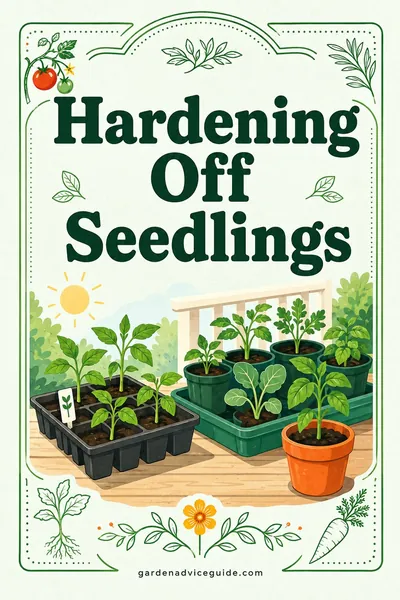
| 1 to 2 weeks before last frost | Harden off indoor seedlings over 7 to 10 days. |
| Last frost date | Direct sow beans, cucumbers, and squash. |
| 1 to 2 weeks after last frost | Transplant tomatoes, peppers, and basil once nights stay above 50 degrees. |
| Mid summer | Succession sow lettuce, beans, and radishes. Keep picking. |
| 10 to 12 weeks before first fall frost | Sow fall lettuce, spinach, and radishes. |
| First fall frost | Pull spent vines, plant cover crop or mulch the bed. |
Two tools do the lookup work. When to plant converts your frost dates into a sowing date per crop, and the planting calendar prints the whole season as one page you can pin up. If you want to know when each crop is actually ready, when to harvest sets expectations so you do not pick everything green.
The single most common timing error is transplanting warm-season crops too early. Tomatoes planted into 50 degree soil sulk for three weeks and get overtaken by ones planted two weeks later into warm soil. Waiting costs you nothing.
Spacing, and the temptation to overplant
Every beginner overplants. The seedlings look absurdly small and the bed looks empty, so you tuck in a few extras. Ten weeks later the bed is a mat of leaves, air cannot move through it, and powdery mildew takes the whole thing.
Plant spacing is really about mature size, not seedling size. A tomato that needs 24 inches needs it in August, not in May. Crowded plants compete for light, water, and nutrients, and the crowded bed yields less total food than the correctly spaced one, not more.
A few practical numbers for a 4x8 bed: tomatoes 24 inches apart, zucchini 24 to 36 inches, cucumbers 12 inches on a trellis, bush beans 4 to 6 inches, lettuce 8 inches, radishes 2 inches. Our plant spacing tool gives per-crop distances and tells you how many plants a bed will actually hold.
Thinning is the same problem in miniature. When your radish or lettuce seedlings come up in a thick line, pull most of them out. It feels wasteful. Doing it is the difference between radishes and a row of leaves with nothing underneath.
Planning the layout on paper first solves most of this before you buy anything. See garden layout planning for how to place tall crops so they do not shade short ones, and companion planting chart for which neighbors actually help. Leave one corner of the plan out of the annual shuffle, because perennial vegetables by zone covers the asparagus, rhubarb and sunchokes that stay put for years.
Water deeply, and less often
Frequent shallow watering is the most common care mistake in a first garden. A light daily sprinkle wets the top inch, so roots stay near the surface where the soil dries first, and the plant wilts every hot afternoon.
Water deeply instead. Soak the bed until moisture reaches 6 to 8 inches down, then leave it alone until the top 1 to 2 inches are dry. Roots follow water downward, and a deep-rooted plant rides out a hot week without you.
In practice that is roughly 1 to 1.5 inches of water per week for most vegetables, delivered in one or two soakings rather than seven. For a 4x8 bed, 1 inch of water is about 20 gallons. Push a finger 2 inches into the soil to check before watering. If it is damp, wait.
Two other habits matter. Water the soil, not the leaves, because wet foliage overnight invites fungal disease. And mulch with 2 to 3 inches of straw or shredded leaves, which cuts evaporation sharply and suppresses most weeds. Our watering guide turns this into a schedule for your climate and soil type.
The five mistakes that sink a first garden
1. Planting too much. The biggest one. A 200 square foot plot in year one becomes a weed patch by July. Start at 32 square feet and expand next year if you finished the season wanting more.
2. Ignoring the soil. Seeds are cheap and soil is the actual product. Skipping compost and a soil test to spend the money on more plants is backwards, and once the bed is planted a simple vegetable garden fertilizer schedule keeps it fed without guesswork.
3. Planting warm-season crops too early. Impatience in May costs you weeks in June. Wait for warm soil.
4. Watering a little every day. Shallow roots, constant wilting, and disease. Soak less often instead.
5. Not harvesting often enough. Beans, zucchini, cucumbers, and lettuce all shut down once fruit or seed matures on the plant. Picking every two to three days at peak season roughly doubles what a plant gives you over the summer.
Worked example: a full first-year plan for one 4x8 bed
Here is the whole thing as one concrete plan. The bed runs north to south so tall crops on the north end do not shade the rest. Fill is about 0.8 cubic yards at 10 inches deep, and the raised bed soil calculator will confirm the order for your exact dimensions.
| Position in bed | Crop | Plants | Spacing | Rough season yield |
|---|---|---|---|---|
| North end, 2 ft | 2 cherry tomatoes, caged | 2 | 24 in apart | 20 to 30 lb |
| Next 2 ft | 1 zucchini | 1 | center of section | 6 to 12 lb |
| Next 2 ft, trellised on north side | 3 cucumbers | 3 | 12 in apart | 15 to 25 lb |
| Next 1 ft strip | Basil and green onions | 4 basil, 20 onions | 10 in and 2 in | Continuous cutting |
| South 1 ft, succession strip A | Bush beans, sown twice | 2 rows of 16 | 5 in apart | 8 to 12 lb |
| South edge strip B | Lettuce and radishes, sown every 2 weeks | rotating | 8 in and 2 in | 25 to 35 heads, 60 to 80 radishes |
Total is roughly 70 to 100 pounds of food from 32 square feet, with about 20 minutes of care a week from June through September, plus a couple of weekend hours to build and plant.
Buy the tomatoes, cucumbers, and zucchini as transplants in year one. Direct sow the beans, lettuce, radishes, and onions. Nearly all of the first-year spend is lumber and soil, both one-time costs that you never repeat. Year two is seeds and compost, and it is a small fraction of year one.
Updated August 2026
Frequently asked questions
How much space does a vegetable garden for beginners really need?
One 4x8 raised bed, or 32 square feet, is plenty for a first season. It produces 60 to 100 pounds of vegetables and takes about 20 minutes a week to maintain. Expand next year only if you got to the end of the season wanting more work, not less.
When should I start my first vegetable garden?
Build the bed 4 to 6 weeks before your last spring frost, sow cool-season crops right away, and hold warm-season crops until after the frost date. Look up both frost dates first with the frost date tool, since every other date counts from them.
Do I need to buy seeds or transplants?
Both, and the split matters. Buy transplants for tomatoes, peppers, and squash, since those need an indoor head start you probably are not set up for. Direct sow beans, radishes, lettuce, cucumbers, and greens, because they resent transplanting and germinate readily in warm soil.
How often should I water a new vegetable garden?
Aim for 1 to 1.5 inches of water per week, delivered in one or two deep soakings rather than daily sprinkles. Check by pushing a finger 2 inches into the soil, and water only when it comes out dry. Deep watering builds deep roots that survive hot weeks.
What is the best soil for a raised vegetable bed?
Roughly 50 percent topsoil, 30 percent compost, and 20 percent coarse material like bark fines or perlite. Do not fill a raised bed with bagged garden soil alone, since it compacts into a dense layer that drains poorly and starves roots of air.
Can I grow vegetables with only four hours of sun?
You can grow leafy crops and herbs. Lettuce, spinach, kale, chard, arugula, mint, and parsley all crop reasonably in four to five hours. Fruiting crops such as tomatoes, peppers, squash, and cucumbers need six to eight hours and will underperform badly below that, no matter how good the soil is.
How much money does a first vegetable garden cost?
It depends almost entirely on two line items, and everything else is rounding. The first is lumber for the frame: untreated pine is the cheapest and lasts a few seasons, cedar costs several times more and lasts many, and a prebuilt kit costs more again than buying boards. The second is soil to fill it, which is where most beginners get surprised. A 4x8 bed a foot deep swallows about a cubic yard, and bagged mix costs far more per yard than a bulk load delivered, so price both routes before you buy. Seeds and transplants are the small line. From year two onward the yearly spend is just compost and seed, because the frame and the fill are already paid for.
What should I do with the bed at the end of the first season?
Pull spent plants once they stop producing, add another inch or two of compost, and cover the bed with mulch or a cover crop over winter. Do not leave bare soil exposed. A covered bed keeps its structure, feeds soil life, and is ready to plant two weeks earlier next spring.