What to Plant in October

October is garlic month and bulb month for most of the country, and a full vegetable month for the South. In zones 3-5 you're planting garlic if the ground isn't frozen, spring bulbs, cover crops, and herbs on the windowsill. Zones 6-7 hit their prime garlic and tulip window plus cold-frame greens. Zones 8-9 plant an entire fall vegetable garden: brassicas, root crops, greens, peas, and onions. Zones 10-11 are at their peak planting month of the whole year.
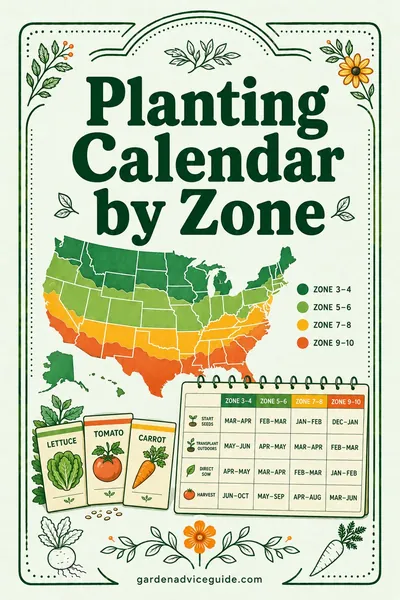
Want the exact list for your garden? Pick your zone and month in our free monthly planting calendar.
Here's the trap with October: half the internet tells you the season is over, and half tells you to plant a salad garden. Both are right, for different places. This guide splits it by zone so you can stop guessing which advice was written for your climate.
October is the garlic month
If you plant one thing this month, plant garlic. For the bulk of the US, October sits right in the middle of the window: cool enough that cloves root instead of sprouting tall, early enough that they get 4 to 6 weeks of root growth before the ground freezes.
- Zones 3-4: you're at the tail end. Plant in the first week or two, or as long as you can still get a trowel in the ground.
- Zones 5-6: dead center. Early to late October is the classic window.
- Zone 7: all month, and into early November.
- Zones 8-9: wait. November into December is yours.
- Zones 10-11: pre-chill cloves in the refrigerator for 4 to 8 weeks, then plant in December or January.
Plant cloves pointy end up, 2 inches deep (3 to 4 inches in zones 3-4), 4 to 6 inches apart, then mulch with 3 to 6 inches of straw. The full breakdown of variety choice, seed sourcing, and timing is in our guide to when to plant garlic.
The second thing to plant this month is spring bulbs, and October is genuinely better than September for tulips in most zones because the soil has finally cooled below 60°F. Daffodils, alliums, crocus, muscari, and hyacinths all go in now too. Timing and depth for tulips specifically are covered in when to plant tulip bulbs.
The frost math for October planting
October planting has a tighter clock than September, so the arithmetic matters more. Three steps:
1. Count the days from your planting date to your average first frost.
2. Add about 14 days to every seed packet's "days to maturity." Catalog numbers come from spring trials with lengthening days. In October, daylight is shrinking fast and growth slows in step with it. That 14-day fall factor is a working minimum; slow crops like cabbage and carrots often need more.
3. Decide whether frost is actually your deadline. For tender crops (beans, squash, cucumbers, tomatoes, basil), yes: 32°F ends them. For hardy crops it isn't. Kale takes 10°F. Spinach handles the teens. Carrots and turnips hold in the ground under mulch for months. For those, the real cutoff is when daylight drops below roughly 10 hours a day and growth almost stops, which happens between mid-November and early December depending on your latitude. A hardy crop that's near full size by then just waits for you.
That distinction is what makes October planting worthwhile at all. You're rarely growing crops to maturity in October weather. You're growing them to size, then harvesting out of cold storage that happens to be your garden bed.
Worked example: zone 7, first frost November 10
You're in zone 7, it's October 1, and your average first frost is November 10. That's 40 days, so your budget for anything that must finish is about 26 catalog days.
| Crop | Catalog days | + fall factor | Ready around | Verdict |
|---|---|---|---|---|
| Radish | 25 | 39 | Nov 9 | Fits, by one day |
| Arugula | 30 | 44 | Nov 14 | Fits. Takes frost to the mid-20s |
| Spinach | 40 | 54 | Nov 24 | Fits as a hardy crop, and overwinters |
| Leaf lettuce | 45 | 59 | Nov 29 | Baby leaf yes, full heads need row cover |
| Cilantro | 45 | 59 | Nov 29 | Fits. Overwinters in zone 7 |
| Kale (transplant) | 50 | 64 | Dec 4 | Fits as a cut-as-you-go crop through winter |
| Peas | 60 | 74 | Dec 14 | No. Peas die near 26°F. September crop |
| Bush beans | 55 | 69 | Dec 9 | No. Frost ends them a month early |
| Broccoli (transplant) | 60 | 74 | Dec 14 | Risky. Only under a low tunnel |
| Garlic | 240-270 | n/a | Next July | Yes. Not on this clock |
The lesson repeats from September: fast crops and hardy crops win, tender crops and slow crops lose, and the fall plantings that pay best (garlic, bulbs, cover crops, perennials) aren't racing frost at all.
Now add a low tunnel over that bed and the whole table shifts, which is the next section.
Season extension: what a cover actually buys you
Row cover, cold frames, and low tunnels are the difference between "too late" and "still fine" for about a month of the calendar, and the fabric weight you choose decides how many degrees you actually buy. Here's roughly what each one gives you.
| Cover | Frost protection | Effective shift | Best for |
|---|---|---|---|
| Lightweight row cover (0.5 oz) | 2-4°F | About 1-2 weeks | Extending lettuce, greens, and tender transplants |
| Heavyweight row cover (1.5 oz) | 6-8°F | 2-4 weeks | Hardy greens and brassicas through hard frosts |
| Low tunnel (hoops + plastic) | 6-10°F | About one zone warmer | Winter salad greens, spinach, carrots |
| Cold frame | 6-10°F | About one zone warmer | Small-scale winter greens, hardening off |
| Low tunnel inside a hoop house | Roughly 2 zones | 6-8 weeks | Serious winter harvest |
Two things worth knowing before you buy anything:
Covers protect, they don't grow. A cold frame keeps kale alive in January; it doesn't make it grow much, because the limit in midwinter is daylight, not temperature. Plant early enough that the crop is nearly full size before the short days arrive, then use the cover to hold it. Eliot Coleman's winter-harvest work made this the standard approach, and it's why the "get it sized up by Thanksgiving" rule matters more than the cover itself.
Vent on sunny days. A closed cold frame on a sunny 50°F day can hit 90°F inside and cook the lettuce. Prop it open, or fit an automatic vent opener, which is inexpensive and does the job on the days you are not home to do it yourself.
Under a low tunnel in zone 7, that October 1 planting of spinach, arugula, lettuce, mache, and carrots effectively becomes a zone 8 planting. Every "risky" line in the worked-example table turns into a yes.
What to plant in October in zones 3-5 (cold)
Outdoor vegetable planting is finished here. First frost has come and gone in most of zones 3-4, and the ground starts locking up. What's left is worth doing anyway.
Plant now:
- Garlic, if you can still work the soil. Zones 3-4 should go in the first week or so; zone 5 has most of the month. Mulch heavily after planting.
- Spring bulbs. Daffodils, tulips, crocus, alliums, muscari, and hyacinths, right up until the ground freezes solid. Bulbs planted late still bloom; they just root less.
- Cover crops. Cereal rye is the only reliable choice this late. It germinates in cold soil and can be sown until a hard freeze. Winter wheat works in zone 5.
- Trees and shrubs, in the first half of the month, if you can give them 4 to 6 weeks before freeze-up. Water deeply and mulch.
- Herbs indoors. Basil, chives, parsley, mint, thyme, and oregano in a south window or under a cheap shop light. Chives and mint can be dug from the garden and potted up now.
- Greens in a cold frame. Spinach, mache, and claytonia sown early in the month reach eating size and hold through winter under glass. University of Minnesota Extension covers cold frames as a workable northern method for exactly this.
What to do instead of planting. In zones 3-5 the highest-return October work isn't planting at all:
- Clean up strategically. Remove diseased foliage and squash-family debris (both harbor next year's problems). Leave hollow stems and seed heads standing where you can, since they shelter native bees and feed birds.
- Amend the soil now. Lime takes months to shift pH, and compost spread in October is worked in by worms and freeze-thaw by April. Fall amendment is real work done while you're not in a hurry.
- Mulch. Shredded leaves are free and they're the best mulch most gardens will ever get. Run the mower over a pile and spread 2 to 3 inches on beds, thicker over garlic and new perennials. Mulch's real job in winter isn't warmth, it's keeping soil temperature steady so freeze-thaw cycles don't heave plants out of the ground.
- Dig tender bulbs after frost blackens the tops: dahlias, cannas, gladiolus, caladium, elephant ear.
- Drain and store hoses, empty ceramic pots, shut off outdoor spigots. A cracked glazed pot costs more than the plant that was in it.
- Clean, sharpen, and oil tools. Ten minutes per tool, and they come out of the shed usable in March.
- Plan and order. Sketch next year's beds while this year is fresh, then order seed and garlic before the good varieties sell out in January.
And if you want something to start now that pays off in spring, save your milk jugs. Winter sowing lets you start hardy annuals, perennials, and cool-season vegetables outdoors from December through March with no grow lights and no hardening off.
What to plant in October in zones 6-7 (moderate)
October is the busiest fall month here. You have garlic, bulbs, and a real greens window all at once.
Vegetables to plant:
- Spinach. The single best October sowing in zones 6-7. Sow now for late fall picking, and whatever doesn't size up overwinters under mulch and explodes in March.
- Arugula, mache, claytonia, mustard. Fast, hardy, and better in cold weather than warm.
- Leaf lettuce, early in the month, with row cover on standby. Harvest as baby leaves rather than waiting for heads.
- Radishes, in the first week or two of October in zone 6, all month in zone 7.
- Kale and collard transplants in zone 7. They'll grow slowly, hold all winter, and taste better after every frost.
- Cilantro and parsley in zone 7. Both overwinter reliably with light protection.
- Garlic. Your main event. Zone 6 all month, zone 7 all month and into November.
- Onion sets or transplants in zone 7 for an overwintered crop harvested in early summer.
- Spring bulbs. October is the correct tulip month for zones 6-7, once soil is under 60°F. Daffodils and alliums too.
- Cover crops. Cereal rye and winter wheat now; hairy vetch and crimson clover only in the first week or two, since they need establishment time.
- Perennials, trees, and shrubs. Still good through mid-October. Water until the ground freezes.
Cold frames earn their keep here. A frame or low tunnel over a zone 6 bed sown in early October gives you spinach and mache to cut on and off all winter, then a jump-start harvest in February when nothing else is alive.
If you're reading this in early fall and haven't planted yet, the September list overlaps heavily and has more options: see what to plant in September.
What to plant in October in zones 8-9 (warm)
Full fall vegetable garden. This is your best growing season, and October is the heart of it.
Direct sow or transplant now:
- Brassicas: broccoli, cabbage, cauliflower, kohlrabi, Brussels sprouts. Use transplants so they mature before the short days.
- Root crops: carrots, beets, turnips, radishes, rutabaga. Direct sow all of them.
- Greens: lettuce, spinach, kale, collards, chard, mustard, bok choy, arugula. Continuous sowing every two weeks keeps the harvest rolling.
- Peas. Snap and shelling peas planted now mature in the cool of December and January.
- Onions and leeks. Short-day onion seed or transplants in zone 9 for a spring harvest; leeks now for late winter.
- Herbs: cilantro, dill, parsley, chervil, fennel. All of them thrive in falling temperatures.
- Strawberries in zone 9. Fall-set plants root through winter and crop the following spring.
- Wildflower and native seed. Fall sowing gives seeds their natural cold and moisture cycle.
Not yet: garlic. Zones 8-9 plant in November and December, and softneck varieties suit mild winters better than hardnecks. Clemson Cooperative Extension and Texas A&M AgriLife both publish county-level fall planting calendars for the Southeast and Texas, and they're worth checking because the spread inside zone 8 alone is a couple of weeks.
What to plant in October in zones 10-11 (hot)
South Florida, south Texas, coastal Southern California, and Hawaii hit peak planting in October. Nothing is ending. Everything is starting.
Warm-season crops:
- Tomatoes, peppers, eggplant. Transplants, not seed, for a winter harvest.
- Bush and pole beans. No frost deadline to worry about.
- Summer squash, zucchini, cucumbers. Fall planting misses the worst pest pressure.
- Sweet corn in zone 10.
- Sweet potatoes in the first half of the month in zone 11.
Cool-season crops, now that it's finally cooled off:
- Lettuce, spinach, chard, kale, collards, mustard.
- Broccoli, cabbage, cauliflower from transplants.
- Carrots, beets, radishes, turnips.
- Peas, cilantro, dill, parsley, green onions.
October is one of the few months in zones 10-11 when you can plant both categories at once, which is why it's the best planting month of the year in these zones. The University of Florida IFAS Extension's Florida Vegetable Gardening Guide breaks the state into north, central, and south calendars, and it's the reference to use if you garden anywhere in the peninsula.
The full October planting table
| Crop | Zones that can plant in October | Days to maturity | Notes |
|---|---|---|---|
| Garlic | 3-7 | 240-270 | The month's headline crop. Harvest next summer |
| Spring bulbs (daffodil, tulip, allium, crocus) | 3-8 | n/a | Plant until the ground freezes |
| Cereal rye cover crop | 3-9 | n/a | Germinates in cold soil, sow very late |
| Spinach | 4-11 | 35-45 | Best October sowing in zones 6-7. Overwinters |
| Mache (corn salad) | 4-9 | 50-70 | The hardiest salad green there is |
| Arugula | 5-11 | 25-40 | Handles frost into the mid-20s |
| Radish | 6-11 | 22-30 | First half of October in zone 6 |
| Leaf lettuce | 6-11 | 45-55 | Baby leaf, or row cover for full size |
| Kale (transplants) | 7-11 | 50-65 | Grows slowly, holds all winter, sweetens |
| Collards | 7-11 | 55-75 | The South's most reliable winter green |
| Cilantro | 7-11 | 40-55 | Overwinters in zone 7 and warmer |
| Onion sets/transplants | 7-10 | Overwintered | Short-day types in the South |
| Swiss chard | 8-11 | 50-60 | Holds through light freezes |
| Turnips and rutabaga | 8-11 | 40-60 | Greens early, roots later |
| Beets | 8-11 | 50-60 | Direct sow, thin early |
| Carrots | 8-11 | 60-80 | Mulch and dig through winter |
| Broccoli, cabbage, cauliflower | 8-11 | 55-90 from transplant | Transplants only this late |
| Peas | 8-11 | 55-70 | Matures in the cool of December |
| Bush beans | 10-11 | 50-60 | Tender, but no frost is coming |
| Summer squash, cucumbers | 10-11 | 45-65 | Fall planting dodges peak pests |
| Tomatoes, peppers (transplants) | 10-11 | 60-90 from transplant | Peak planting month |
| Strawberries | 9-10 | Spring harvest | Fall-set crowns root over winter |
| Trees, shrubs, perennials | 3-9 | n/a | First half of October in cold zones |
Not sure which zone you're in? Check your zip code on the USDA Plant Hardiness Zone Map, updated in 2023.
Why October plantings pay off
Roots, not leaves. Soil in October still holds summer warmth while the air has cooled. That ratio pushes root growth and suppresses top growth, which is exactly what garlic, bulbs, perennials, shrubs, and trees need. A tree planted in October has a full extra season of root establishment behind it by the time next July's heat arrives.
Cold makes food taste better. Frost triggers hardy plants to convert starch into sugar. Kale, collards, carrots, parsnips, Brussels sprouts, and spinach all measurably sweeten after their first hard frosts. October-planted greens harvested in December beat anything you grew in June.
Bulbs need the chill. Tulips, daffodils, and most spring bulbs require 12 to 16 weeks below about 45°F to bloom. Planting in October is how you deliver that for free instead of running a refrigerator crisper full of bulbs.
Nothing is competing. Weeds have stopped germinating, most insect pests are done, and October rain usually handles watering. A fall crop is generally less work per pound of harvest than a spring one.
FAQ
What can I plant in October in a cold climate?
Garlic if the soil is still workable, spring bulbs until the ground freezes, cereal rye as a cover crop, and cold-frame greens like spinach and mache. Trees and shrubs go in during the first half of the month. Outdoor vegetable sowing for fall harvest is over in zones 3-5, so shift to mulching, soil amendment, and next year's plan.
Is October too late to plant vegetables?
Not below zone 6. Zones 6-7 can still sow spinach, arugula, mache, radishes, and baby lettuce; zones 8-9 plant an entire fall garden; zones 10-11 are at peak season. In zones 3-5 outdoor vegetable sowing has closed, though a cold frame reopens it for hardy greens.
What can you plant in October for spring?
Garlic, spring-flowering bulbs, onion sets in zone 7 and warmer, overwintering spinach, strawberries in zones 9-10, and any perennial, shrub, or tree. Wildflower and native seed sown now gets its natural winter chill. All of these use October for roots and winter for dormancy, then arrive weeks ahead of spring plantings.
What plants grow in October outdoors without protection?
Spinach, mache, arugula, kale, collards, claytonia, parsley, and radishes all keep growing through October frosts, and carrots and turnips hold in the ground once mature. Growth slows steeply after daylight drops below 10 hours a day, so what you're really doing is sizing them up before that point and harvesting from cold storage afterward.
How much extra time does a cold frame or row cover give me?
Lightweight row cover buys 2 to 4°F of protection, heavyweight buys 6 to 8°F, and a cold frame or low tunnel is worth roughly one zone or 2 to 4 weeks. Stacking a low tunnel inside a hoop house is worth about two zones. Remember that covers hold crops rather than growing them, since midwinter's limit is daylight, not temperature.
Can I still plant tulip bulbs in October?
October is the ideal tulip month in most of the country, since the soil has finally dropped below 60°F. Zones 3-5 should plant early in the month, zones 6-7 anytime, and zones 8-9 in November or December after pre-chilling. Late is still better than never: bulbs planted in December usually bloom, just shorter.
What plants can I grow in October indoors?
Herbs are the most reliable: basil, chives, parsley, mint, thyme, and oregano in a south-facing window or under an inexpensive shop light. Microgreens and salad greens work well too, since they never need to flower. Chives, mint, and parsley can be dug out of the garden now and potted up rather than started from seed.
Should I plant a cover crop or just mulch bare beds?
Either beats leaving soil bare, and they do different jobs. A cover crop feeds soil life, adds organic matter, and holds nitrogen that would otherwise leach out over winter; mulch is faster, protects the surface, and needs no spring termination. If you're planting in October, cereal rye is the safest bet almost anywhere. If you're past that, 2 to 3 inches of shredded leaves does most of the work.
Updated August 2026
A note on numbers. This page gives you zones, frost dates, sowing depths and timings, not dollar figures. Seed, bulbs, covers and frames are priced by your supplier and your region, and we do not set any of it. Every number here is one you read off a calendar or a zone map.