What to Plant in June

June splits the country in half. In zones 3 through 6, June is the last full month to get warm-season crops in the ground: tomatoes, peppers, squash, cucumbers, beans, corn, and melons all still have time. In zones 7 through 9, the spring window has closed and June belongs to heat lovers like okra, southern peas, sweet potato slips, and Malabar spinach. In zones 10 and 11, June is the wet season, so you plant tropical staples and let the beds rest through the worst of the humidity.
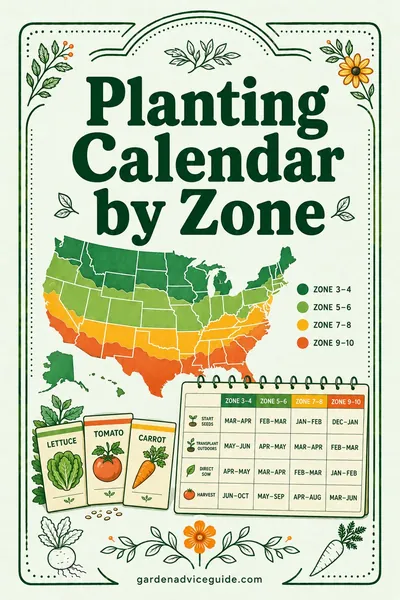
Want the exact list for your zip code? Pick your zone and month in our free monthly planting calendar and get a planting date for every crop.
Updated September 2026
A note on numbers. This page gives you days to maturity, frost dates, soil temperatures and sowing windows, not dollar figures. Seed, transplants and garden supplies are priced by your region, your supplier and the season, and we do not set any of it. Every number here is one you count on a calendar, not one you pay.
The mistake almost everyone makes in June is planting on spring instructions. A crop that sails through a 65°F May can bolt, drop its blossoms, or refuse to germinate in an 85°F June. The lists below are sorted by zone, and each one tells you what actually survives being planted this month instead of what a generic seed packet says.
The two clocks running in June
Every June planting decision answers to two deadlines at once, and confusing them is why gardens stall in July.
Clock one: soil temperature. June soil in most of the country sits between 65°F and 80°F. That is perfect for beans, corn, squash, and okra, and it is too warm for lettuce, spinach, peas, and cilantro, which germinate poorly above 75°F and bolt fast once they do sprout. An inexpensive soil thermometer pushed 3 inches deep, read mid-morning, settles more arguments than any calendar.
Clock two: your first fall frost. Anything you plant now has to finish before that date. Count backward from it, and remember that June and July plantings grow faster than catalog numbers suggest because days are long and warm. Spring maturity numbers are a fair estimate in June, unlike fall plantings, which need about two extra weeks added.
Here is the soil temperature map for the crops people plant this month:
| Crop | Minimum soil temp | Ideal soil temp | Germination time at ideal |
|---|---|---|---|
| Bush and pole beans | 60°F | 70 to 80°F | 6 to 10 days |
| Sweet corn | 60°F (supersweet: 65°F) | 70 to 85°F | 5 to 8 days |
| Cucumbers | 65°F | 70 to 90°F | 4 to 7 days |
| Summer squash and zucchini | 65°F | 70 to 90°F | 4 to 7 days |
| Winter squash and pumpkins | 65°F | 70 to 90°F | 5 to 10 days |
| Melons and watermelon | 70°F | 75 to 90°F | 4 to 8 days |
| Okra | 70°F | 75 to 90°F | 7 to 14 days |
| Southern peas (cowpeas) | 65°F | 75 to 90°F | 6 to 10 days |
| Basil | 65°F | 70 to 85°F | 5 to 10 days |
| Lettuce | 40°F | 60 to 68°F | Poor above 75°F |
| Spinach | 40°F | 50 to 68°F | Very poor above 75°F |
| Carrots | 45°F | 60 to 75°F | 12 to 18 days |
Read the bottom three rows as a warning, not a ban. You can still grow lettuce and carrots in June, but you have to change the technique: shade cloth, a heat-tolerant variety, and a soaked seed bed. More on that below.
Worked example: zone 6, planting on June 10
You garden in zone 6 with an average first fall frost of October 15. From June 10, that is 127 days of growing season.
| Crop | Days to maturity | Ready around | Fits? |
|---|---|---|---|
| Bush beans, 'Provider' | 50 | July 30 | Yes, with room for two more sowings |
| Zucchini, 'Black Beauty' | 50 | July 30 | Yes, and it will out-produce you |
| Cucumbers, 'Marketmore 76' | 58 | Aug 7 | Yes |
| Sweet corn, 'Bodacious' | 75 | Aug 24 | Yes |
| Tomato transplant, 'Celebrity' | 70 from transplant | Aug 19 | Yes, buy plants not seed |
| Watermelon, 'Sugar Baby' | 80 | Aug 29 | Yes, direct sow now |
| Winter squash, 'Waltham Butternut' | 100 | Sept 18 | Yes, but this is the last week for it |
| Pumpkin for Halloween, 'Howden' | 115 | Oct 3 | Cutting it close, sow this week |
| Sweet potato slips | 100 | Sept 18 | Yes |
| Brussels sprouts from seed | 100 | Sept 18 | Yes, and frost improves them |
Notice the pattern: on June 10 in zone 6, nearly everything still fits. By July 10 that same table loses winter squash, pumpkins, sweet potatoes, and melons. June is the last month where the calendar is generous, which is exactly why it is worth using fully.
The value version of that math: a single 'Black Beauty' zucchini plant sown from seed costs a fraction of what the same plant costs as a nursery transplant, and a healthy plant in zone 6 produces 6 to 10 pounds of fruit over the season. Weigh that against grocery-store zucchini and one seed sown in June returns many times what the whole packet cost.
What to plant in June in zones 3 to 5 (cold north)
Your last frost falls between late May and mid-June, so June is your real planting month. Everything goes in now.
Transplants to set out (buy plants, do not start seed): - Tomatoes, peppers, and eggplant. Seed started now will not ripen before frost. - Basil, once nights stay above 50°F. Cold nights turn basil leaves black. - Broccoli, cabbage, and cauliflower transplants for a fall crop, set out late June.
Seeds to direct sow: - Bush beans and pole beans, first week of June and again every 2 to 3 weeks through mid-July - Sweet corn, in blocks of at least 4 rows for pollination, not one long row - Summer squash, zucchini, and cucumbers - Winter squash and pumpkins, early June only in zone 3 - Carrots, beets, radishes, and turnips - Swiss chard, kale, and collards, which handle heat better than spinach - Dill, cilantro, and borage - Sunflowers, right through the end of the month
Still worth planting late June: a second sowing of beans, more carrots and beets, and fall brassica transplants. Zone 3 gardeners should skip melons and long-season winter squash entirely and grow fast varieties instead.
For row-by-row spacing that keeps a short season efficient, see our garden layout planning guide. If you are growing in beds, the square foot gardening approach fits a lot of June crops into a small footprint.
What to plant in June in zones 6 and 7 (middle)
Your last frost passed in April or early May, so June is a bridge month: finish the warm-season planting and start thinking about fall.
Direct sow now: - Bush beans, lima beans, and pole beans - Sweet corn (last practical sowing in zone 6 is around June 20 for a 75-day variety) - Cucumbers, summer squash, and zucchini - Melons, watermelon, and cantaloupe - Okra and southern peas, once soil hits 70°F - Winter squash and pumpkins, first two weeks of June - Sweet potato slips, all month - Malabar spinach and New Zealand spinach as heat-proof greens - Basil, dill, and summer savory
Transplants: - Tomatoes and peppers through about June 15. After that, look for short-season varieties. - Fall broccoli, cabbage, and Brussels sprouts started from seed in late June for August transplanting
What is closing: peas, spinach, lettuce, radishes, and cilantro will bolt in zone 7 heat. Sow those again in late August. For the full second-season list, see what to plant in September.
Keep the beds working. A bed that finishes garlic or spring peas in June should not sit bare. Follow it with bush beans, which fix their own nitrogen, or a fast round of summer squash. Our succession planting guide has the timing charts.
What to plant in June in zones 8 and 9 (hot south)
June in the Deep South is not a planting month in the spring sense. Daytime highs above 90°F stop tomato and pepper fruit set, so the strategy shifts to crops that thrive in real heat.
Plant now: - Okra, the single most reliable June crop in the South - Southern peas: black-eyed, crowder, purple hull, and zipper cream - Sweet potato slips, through the end of June - Yard-long beans and lima beans - Peanuts - Malabar spinach, New Zealand spinach, and amaranth (callaloo) - Cucuzza and luffa gourds - Hot peppers, which set fruit at temperatures that shut sweet peppers down - Basil, roselle, lemongrass, and Mexican mint marigold - Pumpkins in late June for a Halloween harvest, since a June 25 sowing of a 110-day variety lands mid-October
Hold off on: tomatoes (plant fall transplants in July), broccoli and cabbage (August), lettuce and spinach (October), and anything in the pea and brassica families.
Watering matters more than variety here. A bed in zone 9 in June can lose an inch of water in two days. Our watering guide sets a real schedule by crop and soil type, and how often to water tomatoes covers the crop most likely to crack and split in this weather.
What to plant in June in zones 10 and 11 (tropical)
June starts the rainy season in south Florida, coastal Texas, Hawaii, and Puerto Rico. Humidity, fungal pressure, and 90°F nights make this the hardest gardening month of the year.
Plant now: - Okra, southern peas, and yard-long beans - Sweet potato and boniato slips - Cassava, taro, and Seminole pumpkin - Malabar spinach, amaranth, and katuk - Papaya, banana, and other tropical fruit, which appreciate the rain for establishment - Hot peppers and eggplant, both of which keep producing
Rest the rest. Many zone 10 and 11 gardeners deliberately fallow their vegetable beds from June to August, sow a cover crop like sunn hemp or cowpeas, and restart in September. That is not giving up, it is the local growing calendar. Cover crops smother weeds, add organic matter, and break disease cycles.
What flowers to plant in June
June is a great month for annuals and summer bulbs, and a mediocre one for planting perennials, which struggle to establish roots in heat.
| Flower | Type | Plant as | Bloom starts | Zones |
|---|---|---|---|---|
| Zinnia | Annual | Seed | 60 days | All |
| Cosmos | Annual | Seed | 60 to 75 days | All |
| Sunflower | Annual | Seed | 55 to 100 days | All |
| Marigold | Annual | Seed or plant | 45 to 60 days | All |
| Nasturtium | Annual | Seed | 50 days | All |
| Celosia | Annual | Plant | 6 to 8 weeks | All |
| Vinca (Catharanthus) | Annual | Plant | Immediate | All, loves heat |
| Portulaca / moss rose | Annual | Plant | Immediate | All, loves heat |
| Dahlia | Tender bulb | Tuber | 8 to 10 weeks | Lift in zones 3 to 7 |
| Gladiolus | Tender bulb | Corm | 70 to 90 days | Lift in zones 3 to 6 |
| Caladium | Tender bulb | Tuber | Foliage all season | Lift below zone 9 |
| Elephant ear (Colocasia) | Tender bulb | Tuber | Foliage all season | Lift below zone 8 |
Sow zinnias, cosmos, and sunflowers in succession. A second sowing on June 20 gives you fresh flowers in September, when the first sowing looks tired. For sunflower timing by zone, see when to plant sunflowers.
Plant gladiolus every two weeks through June. Each corm produces one spike. Staggered planting turns a one-week show into a two-month cutting supply.
Deadhead early and often. Pinching the first bud off a zinnia or celosia delays the first flower by about a week and roughly doubles the number of stems the plant produces all season.
If you are adding flowers to support fruit set in the vegetable garden, our guide on how to attract pollinators lists which June bloomers actually pull bees rather than just looking pretty.
What not to plant in June
Saying no saves more of a garden than saying yes.
- Peas. They germinate poorly above 75°F and the vines cook. Wait for a late-summer sowing.
- Spinach. Bolts within two weeks of germination in June heat.
- Cilantro. Flowers almost immediately. Sow coriander seed for the seed heads if you want, or grow culantro instead in hot zones.
- Broccoli and cauliflower in zones 7 and warmer. Heat causes buttoning, which is a tiny premature head that never sizes up.
- Bare-root anything. Trees, roses, and perennials sold bare-root belong in spring or fall. Container stock is fine in June with careful watering.
- Cool-season grass seed. June-seeded fescue and bluegrass usually die in July. Our lawn care schedule tool sets the right window for your zone.
- Onions from seed. The bulbing signal is daylength, and that ship sailed. See when to plant onions for the real timing.
June garden care that protects what you just planted
Planting is half the job in June. Here is the other half.
Mulch within a week of planting. A 2 to 3 inch layer of straw, shredded leaves, or grass clippings cuts soil moisture loss by roughly a third and keeps root-zone temperatures 8 to 12°F cooler than bare soil. Our mulch guide covers depth by material.
Water deeply, not often. Most June gardens need about 1 to 1.5 inches of water per week, delivered in one or two soakings rather than daily sprinkles. Shallow daily watering trains roots to stay in the top inch of soil, which is the first place to dry out.
Get supports in on planting day. Trellises, cages, and stakes installed after a plant sprawls will break roots. Put them in before the plant needs them.
Watch for the first pest wave. Squash vine borers, cucumber beetles, and Japanese beetles all show up in June. Catching them in week one is dramatically easier than in week four. See squash vine borer and Japanese beetles for the specific timing.
Feed the heavy feeders at week three. Tomatoes, peppers, corn, and squash benefit from a side dressing of balanced fertilizer about three weeks after planting. Beans and peas do not: extra nitrogen gives you leaves and no pods.
FAQ
Is it too late to plant tomatoes in June?
Not in most of the country. In zones 3 through 7, a tomato transplant set out in the first half of June still has 90 to 120 days before frost, which is plenty for a 70-day variety. Buy transplants rather than starting seed, and pick a determinate or early variety if you are planting after June 20. In zones 8 through 10, June is too hot for fruit set, so plant your fall tomatoes in July or August instead.
What vegetables can I still plant in late June?
Fast crops and heat lovers. Bush beans (50 days), summer squash (50 days), cucumbers (55 days), and a final round of sweet corn all fit almost everywhere. Add okra, southern peas, and sweet potato slips in zones 7 and warmer. Late June is also the right moment to start fall broccoli, cabbage, and Brussels sprouts from seed for transplanting in August.
Can I plant lettuce in June?
Yes, with adjustments. Choose heat-tolerant varieties like 'Jericho', 'Muir', or 'Nevada', water the seed bed cold before sowing, and shade the row with 30 to 40 percent shade cloth. Harvest as baby leaves at 25 to 30 days instead of waiting for full heads, because a June lettuce that sits too long turns bitter and bolts. In zones 8 and warmer, swap to Malabar spinach or amaranth.
What flowers can I plant in June that bloom this summer?
Zinnias, cosmos, marigolds, sunflowers, and nasturtiums all go from seed to flower in 45 to 75 days, so a June sowing blooms from August into fall. For instant color, set out transplants of vinca, portulaca, celosia, and lantana, all of which handle heat without wilting. Dahlia tubers planted in early June flower by late August and keep going until frost.
Should I plant perennials in June?
You can, but fall is easier. A perennial planted in June spends its first weeks fighting heat instead of growing roots, so it needs deep watering twice a week for at least a month. If you do plant now, buy container-grown stock, plant in the evening, mulch immediately, and skip the fertilizer. September and October give the same plant cool air and warm soil, which is the combination roots want.
How do I know if my soil is warm enough in June?
Push a soil thermometer 3 inches into the bed and read it around 9 or 10 a.m., which gives you a fair daily average. Beans and corn want 60°F or above, cucumbers and squash want 65°F, and melons, okra, and southern peas want 70°F. Black plastic or a dark landscape fabric laid over a bed for a week raises soil temperature by roughly 5 to 10°F, which matters in a cold zone 4 June.
What should I plant in June for a fall harvest?
Start fall brassicas from seed in late June: broccoli, cabbage, cauliflower, and Brussels sprouts, transplanted out in August. Direct sow carrots, beets, and rutabagas late in the month in cold zones. Winter squash and pumpkins planted in early June mature in September and store for months. Sweet potatoes planted now are dug just before frost, cured for a week, and keep until spring.
Can I direct sow pumpkins in June for Halloween?
Yes, and June is the right month for it. A large jack-o-lantern variety needs 100 to 120 days, so sowing between June 1 and June 25 puts harvest in early to mid October, right on schedule. Sow later than that in a cold zone and frost will catch the fruit before it colors up. Our when to plant pumpkins guide has the countback date for each zone.